| Jazz |
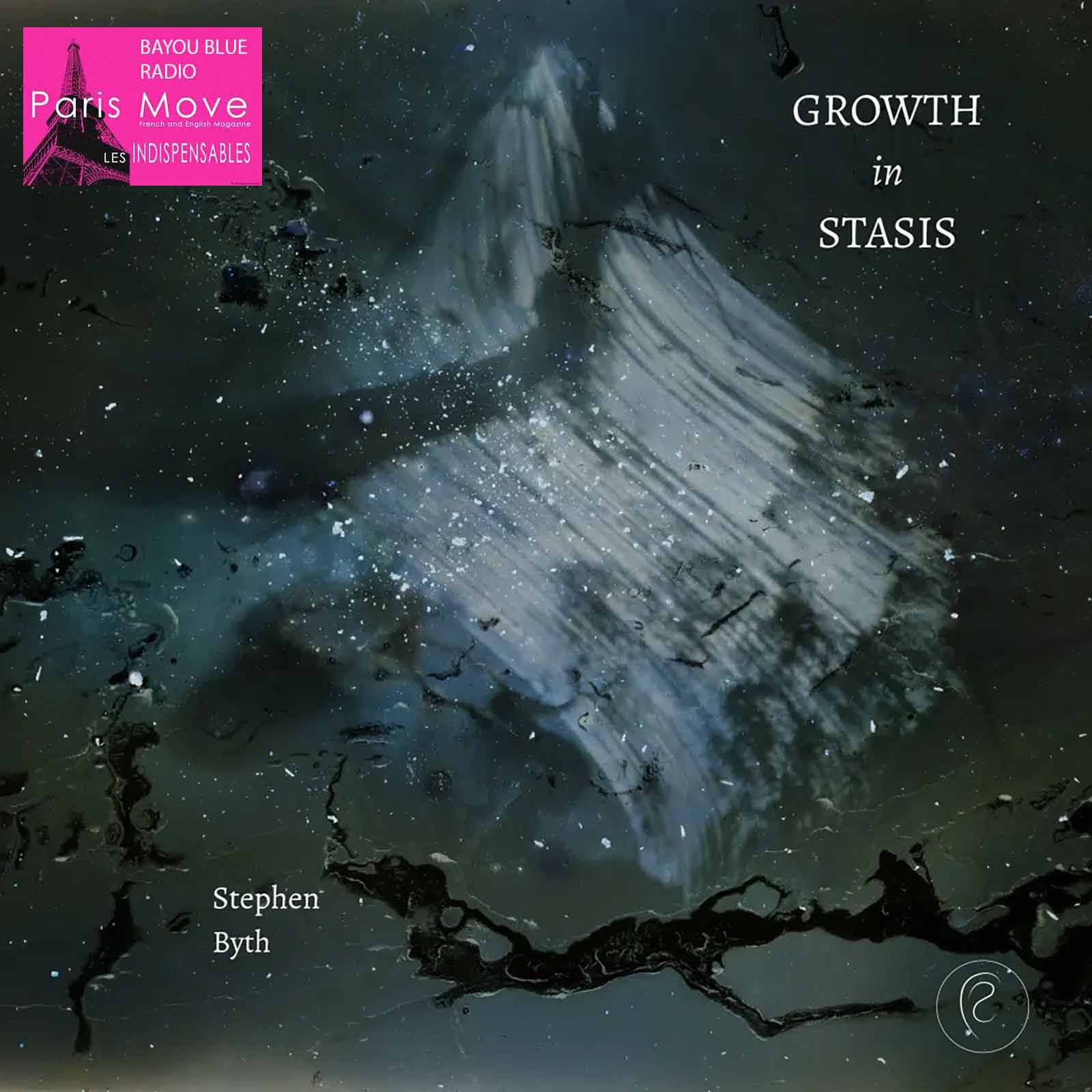
Summary: Australian saxophonist and composer Stephen Byth explores jazz, classical influences and Wayne Shorter’s philosophy on Growth in Stasis, a deeply melodic and intellectually adventurous new album.
Stephen Byth’s Growth in Stasis: A New Jazz Language Inspired by Wayne Shorter
John Coltrane, Duke Ellington and Wayne Shorter are not simply names on a list of influences for Stephen Byth. They are part of a larger musical conversation that the Australian saxophonist and composer, now based in New York, has been gradually making his own. With Growth in Stasis, due October 16, Byth takes that conversation into territory that is at once melodic, intellectually restless and deeply connected to the history of jazz. The album does not announce its ambitions with grand gestures. Instead, it unfolds patiently, revealing an artist interested in what can happen when composition becomes a way of thinking.
The first clue comes almost immediately. Growth in Stasis begins with “Seed of Thought,” a piece of less than two minutes that functions almost like a door opening onto the album. It ends with “Upon Reflection,” another brief piece that closes the circle. Those two compositions are small in duration but significant in purpose. They suggest that Byth is less interested in presenting a collection of unrelated performances than in creating a complete musical argument, one in which ideas are introduced, developed, questioned and eventually left open to interpretation.
That sense of architecture is one of the album’s defining characteristics. Byth writes music that can be immediately attractive without ever becoming predictable. His melodies have a poetic quality, sometimes intimate and almost fragile, but they can also become restless, angular and unexpectedly wild. There is a tension between beauty and instability that gives the music much of its character. Just when a melody appears to have established a comfortable direction, Byth can introduce a rhythmic shift, a harmonic complication or an unexpected change of texture that forces the ear to reconsider what it thought it understood.
It would be easy, at first, to hear Byth as a European jazz musician. His relationship with classical music is strong, and his compositions often display the kind of attention to detail, orchestration and formal development associated with European chamber music. But that comparison only goes so far. Byth is an Australian musician living in New York, and his music reflects the particular experience of an artist who has moved between musical cultures rather than belonging entirely to one of them.
That distinction can be heard in the rhythmic character of his writing. The classical influence may provide architecture, but jazz supplies movement. There is a sense of groove beneath the sophistication of the arrangements, a physical quality that prevents the music from becoming overly cerebral. This is one of the fascinating consequences of Byth’s position as a musician who has developed his identity outside the place where his musical language was originally formed. Living and working in the United States does not simply expose an international musician to American jazz. It changes the way rhythm, phrasing, space and interaction are understood.
Growth in Stasis is particularly interesting because Byth does not try to hide those different influences. He allows them to coexist. The result is not a conventional fusion between jazz and classical music, but a more mature synthesis in which the boundaries have largely disappeared. The listener does not necessarily hear where one influence ends and another begins. Instead, they become part of a single language.
The conceptual foundation of the album makes that idea even more compelling. The project grew out of a question Byth once asked Wayne Shorter during a workshop: how can poison be transformed into medicine through music? Shorter’s response was characteristically concise: “The poison is the medicine.” Byth carried that idea with him, and it became a central principle behind Growth in Stasis.
The phrase is more than an anecdote attached to the album. It explains much of what Byth is doing musically. Rather than treating uncertainty, contradiction and struggle as things that must be eliminated, he approaches them as necessary elements of growth. The music does not always seek resolution. Sometimes it deliberately remains suspended between opposing possibilities, allowing tension to become productive rather than destructive.
This is also where the connection to Shorter becomes particularly powerful. Growth in Stasis certainly contains elements that can evoke Shorter’s world: melodies that refuse obvious conclusions, harmonic structures that remain slightly elusive, rhythmic ideas that seem to move independently of the melody. But Byth is not attempting to recreate Shorter’s music. The more interesting tribute is philosophical. Like Shorter, he understands that ambiguity can be an expressive tool and that a composition does not necessarily become stronger by explaining everything.
“The Light in Everything” perhaps captures that philosophy most clearly. The title itself suggests a search for illumination, but the music approaches the idea without turning it into a simple declaration of optimism. There is something more demanding at work. To look for light in everything requires attention, curiosity and a willingness to question one’s first impression.
That idea has an intriguing historical resonance. The Enlightenment was built in part around the belief that knowledge could liberate individuals, that understanding the world could be a form of emancipation. Byth’s music seems to approach a similar proposition through a very different medium. His melodies provide an entry point, but the deeper layers of the composition invite the listener to investigate. The music can be enjoyed immediately, but it also asks to be examined.
That duality is essential to Growth in Stasis. Byth does not confuse accessibility with simplicity. A melody can be memorable without being uncomplicated. A sophisticated arrangement can remain emotionally direct. A piece can invite an audience in before revealing how much is happening beneath the surface.
The musicians surrounding him are crucial to that balance. The central quartet brings together Byth with pianist Yessaï Karapetian, bassist Simón Willson and drummer Angus Mason. On four tracks, the group expands to include trumpeter Alexandra Ridout, alto saxophonist Alfredo Colón, trombonist Caleb Smith and bass clarinetist John Ellis. The larger ensemble gives Byth additional colors to work with, but the album never loses the intimacy of its core group.
What makes the quartet particularly effective is the way it negotiates the space between written music and spontaneous interaction. Byth’s compositions are carefully constructed, but they do not feel overdetermined. The musicians have room to react, to reshape a phrase and to change the emotional temperature of a passage. The arrangements provide a framework, not a cage.
Karapetian’s piano is particularly important in that respect, helping to connect the album’s lyrical passages with its more adventurous harmonic territory. Willson and Mason provide a rhythmic foundation that is flexible enough to accommodate Byth’s shifting ideas without flattening them into a conventional pulse. When the additional musicians enter, the sound expands, but the principle remains the same: composition and improvisation are meant to remain in conversation.
There are moments when the music feels almost like chamber music, with individual voices carefully placed within a larger texture. Elsewhere, the ensemble opens outward and the improvisational element becomes more prominent. Byth moves between those extremes with a confidence that suggests he understands orchestration not simply as a matter of adding instruments, but as a way of changing the perspective of the listener.
That may be the album’s most compelling quality. Growth in Stasis constantly asks us to reconsider what we are hearing. A passage that initially seems intimate may reveal a larger structural purpose. A rhythm that appears decorative may turn out to be fundamental to the composition. A melody that sounds familiar may take an unexpected turn and suddenly acquire an entirely different emotional meaning.
The title Growth in Stasis contains the apparent contradiction at the heart of the project. Growth implies movement. Stasis implies the absence of movement. By placing the two ideas together, Byth suggests that transformation does not always look like progress from the outside. Sometimes change takes place internally, gradually and almost invisibly. A person can remain in the same place while becoming someone different.
That is a surprisingly useful way to understand the album. Byth is not offering a musical escape from contradiction. He is asking what might happen if we stop treating contradiction as something that needs to be resolved. His compositions create spaces where opposing ideas can coexist: lyricism and abstraction, precision and freedom, intellectual rigor and physical groove, tradition and experimentation.
This is why the album feels more substantial than a simple showcase for a talented saxophonist and composer. Byth is clearly a formidable instrumentalist, but his ambitions extend beyond performance. He is developing a musical language in which composition itself becomes a form of inquiry. The questions remain visible in the music, and that is precisely what makes it compelling.
There is also something refreshing about an artist willing to make intellectually ambitious music without making the listener feel as though they are sitting an examination. Growth in Stasis does not demand that the audience understand its conceptual framework before enjoying it. The ideas are there for those who want to pursue them, but the music works on a more immediate level as well.
That accessibility matters. Jazz has spent decades negotiating the tension between innovation and communication, between music that challenges its audience and music that invites it in. Byth seems unwilling to choose between the two. His music can function on both levels. Someone encountering the album casually can follow the melodies and textures. A more attentive listener can return to the same passages and discover new relationships.
And perhaps that is where the album’s connection to the Enlightenment becomes most interesting. Knowledge, after all, is rarely acquired in a single moment. It accumulates through curiosity, repetition, doubt and reflection. Growth in Stasis operates in much the same way. It does not reveal everything at once. It encourages the listener to return, to question and to hear differently.
By the time “Upon Reflection” brings the album to its conclusion, the opening idea of “Seed of Thought” has taken on a different significance. The two short pieces become bookends to a larger process. One introduces the possibility of an idea; the other looks back at what that idea has become. Between them, Byth creates a musical landscape in which the act of listening becomes inseparable from the act of thinking.
That is ultimately what makes Growth in Stasis stand out. It is a record shaped by the certainty of its influences but driven by the curiosity to move beyond them. Coltrane, Ellington and Shorter are present in the background, but Byth does not appear trapped by their shadows. He uses what he has inherited as material for something personal, drawing from the history of jazz while allowing his own experience as an Australian musician in New York to reshape that vocabulary.
The result is music with a strong personality and an unusually open horizon. It is sophisticated without being sterile, melodic without being predictable, and ambitious without losing its sense of pleasure. Most importantly, it leaves the listener with the feeling that the album has not exhausted its ideas. It has only begun to reveal them.
That is exactly the kind of jazz that deserves to live in both worlds: the large festival stage, where a broad audience can encounter its expansive sound, and the small club, where the details become impossible to ignore. Growth in Stasis belongs in either setting because it understands something fundamental about jazz. The music can be intellectually demanding and physically immediate at the same time. It can make you think without forgetting that you came to hear music.
Stephen Byth’s achievement is to turn that contradiction into the very substance of his art. The poison becomes the medicine. Uncertainty becomes a form of knowledge. Stillness becomes a place where growth can begin.
Thierry De Clemensat
Member at Jazz Journalists Association
USA correspondent for Paris-Move and ABS magazine
Editor in chief – Bayou Blue Radio, Bayou Blue News

PARIS-MOVE, September 1st, 2026
Follow PARIS-MOVE on X
::::::::::::::::::::::::
Musicians :
Stephen Byth | Tenor Saxophone, Clarinet, Flute, Bass Clarinet
Yessaï Karapetian | Piano, Synthesizers
Simón Willson | Upright bass
Angus Mason | Drums
Alexandra Ridout | Trumpet
Alfredo Colón | Alto saxophone
Caleb Smith | Trombone
John Ellis | Bass clarinet
Track Listing :
Seed of Thought
All is Not Lost
The Light in Everything
Cutting Ties
New Eyes
Freedom (!/?)
Illusions
Time is Now
Growth in Stasis
Upon Reflection