| Jazz |
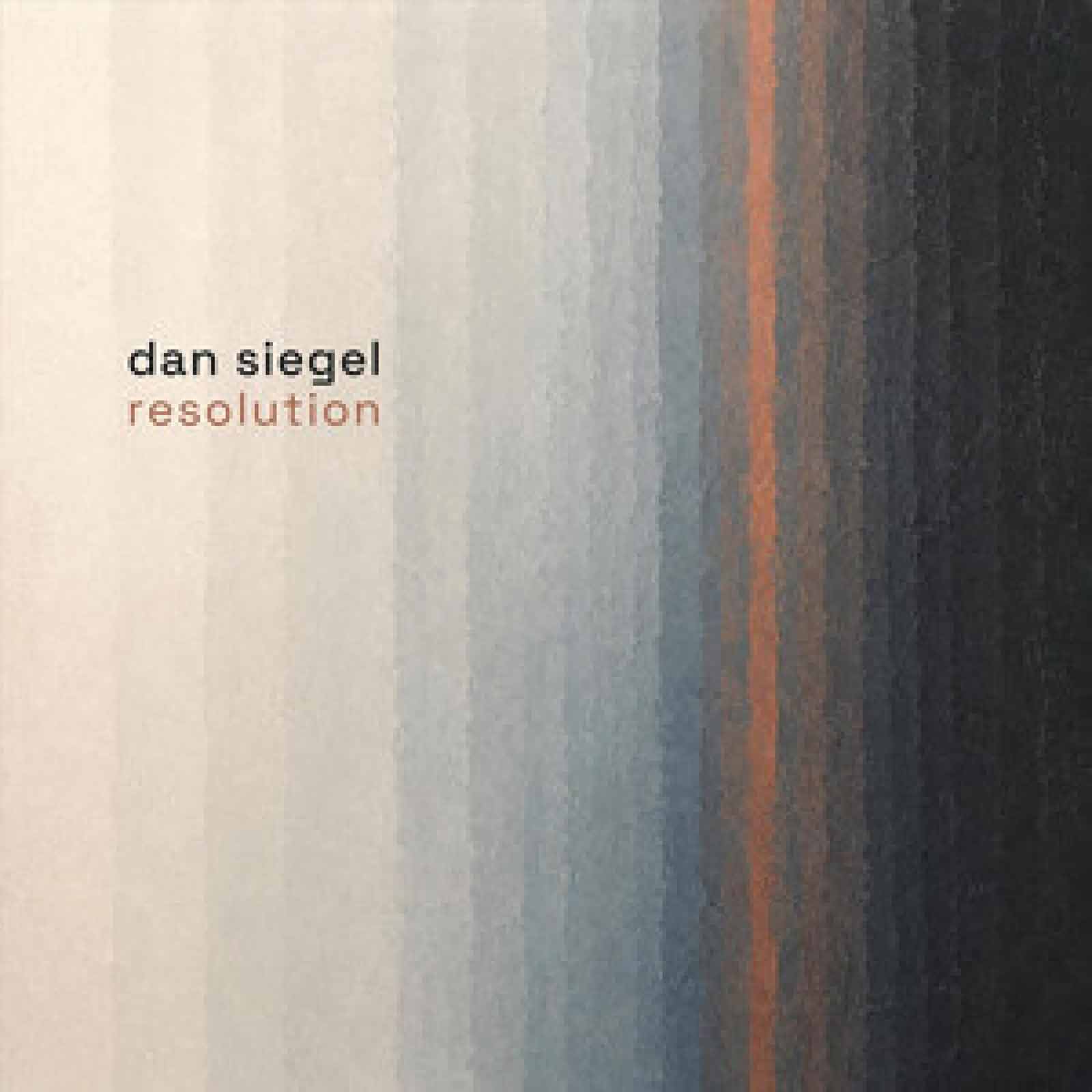
Summary: Dan Siegel’s Resolution embraces the human side of music, preserving emotion, spontaneity and imperfections in an era of increasingly polished studio production.
Dan Siegel’s Resolution: The Sound of a Musician Finally Letting Go
You may have seen Dan Siegel’s name without necessarily remembering where. It may have appeared in the credits of the 1986 cult film Reform School Girls, on the television series Hard Copy a year later, or in connection with CBS’s Overtime with Pat O’Brien in 1990. Siegel has spent much of his career moving through the less visible but highly demanding world of professional music, working as a composer, producer, arranger, performer and musical director while building a parallel career as a recording artist. His professional history includes 24 solo albums and hundreds of other credits, as well as collaborations with musicians ranging from Glenn Frey and Chaka Khan to Herbie Hancock and the London Symphony Orchestra.
That history is important when listening to Resolution, because the album makes considerably more sense when heard as the work of a musician who has spent decades learning how recordings are made, how performances are shaped and, perhaps most importantly, how easily the pursuit of perfection can remove something essential from the music. Siegel is not a newcomer trying to establish his credentials. He has already spent a lifetime inside professional studios and performance spaces, and that experience gives his latest work a particular kind of confidence. The music does not seem desperate to prove anything. Instead, it sounds increasingly comfortable with the idea that a recording can be technically imperfect and still be emotionally right.
That is a deceptively simple idea in an industry where almost every aspect of a performance can now be corrected. Digital recording has given musicians and producers extraordinary control over pitch, timing, dynamics, noise and editing. A performance can be moved closer to perfection one adjustment at a time, often without the listener ever knowing how much intervention took place. For a musician like Siegel, who understands the recording process from virtually every angle, that technology can be both a remarkable creative resource and a temptation that is difficult to resist.
He has described a tendency to work on things too much, to smooth out every small rough edge until the performance becomes increasingly polished. That instinct is understandable, particularly for someone who has spent so many years in professional environments where precision matters. The trouble begins when the pursuit of technical perfection becomes more important than preserving the character of the original performance. A recording can become cleaner, tighter and more accurate while simultaneously becoming less human.
Resolution appears to be Siegel’s answer to that problem. Rather than trying to erase every irregularity, he allowed more of the original trio performances to remain intact. The result is a recording that has a little more air around it and a little less of the obsessive studio polish that can make contemporary instrumental music sound interchangeable. The imperfections are still there, but they do not feel like mistakes waiting to be corrected. They feel like traces of the musicians who were actually present when the music was created.
That distinction becomes especially important when considering the role of drummer and percussionist Jay Bellerose. Siegel originally imagined the project as a trio with a more roots oriented sound, drawing on Americana without becoming a conventional Americana record. What he heard in Bellerose’s playing was something more elusive than technical proficiency. The drummer had a subtle approach to rhythm, an ability to find grooves that were not immediately obvious and to create movement without overwhelming the music. For Siegel, that quality suggested that Bellerose could bring something to the project that another technically accomplished drummer might not have been able to provide.
The decision pays off throughout the album. Bellerose’s playing gives the music a sense of elasticity, and the rhythm section rarely feels as though it is simply keeping time beneath the piano. Instead, the percussion becomes part of the conversation. The drummer leaves space, responds to the phrasing and allows the compositions to breathe. There is precision in the playing, but it is not the kind of precision that announces itself. It works quietly, creating an environment in which Siegel’s melodies can develop without being forced into a rigid structure.
That relationship is one of the album’s most rewarding features, particularly for listeners willing to pay attention to what happens beneath the melodies. On the surface, the compositions may sound accessible and even deceptively straightforward, but the rhythmic interaction gives them a depth that becomes more apparent with repeated listening. Bellerose does not simply accompany Siegel. He helps define the emotional temperature of the pieces, and the restraint in his playing gives the piano room to become more conversational.
Siegel’s melodies often have that same conversational quality. They do not seem designed primarily as demonstrations of virtuosity, even though the musician behind them has more than enough technical experience to make that approach possible. Instead, they often resemble small stories or fragments of memory, ideas that suggest a place, a mood or a passing impression without insisting that the listener arrive at a particular interpretation. There is something almost cinematic about the way some of these compositions unfold, which is perhaps unsurprising given Siegel’s history as a composer for film and television as well as a recording artist. His career has moved repeatedly between worlds, and that experience seems to have given him an instinct for atmosphere as much as for melody.
His broader musical history also helps explain the unusual range of his work. Over the years, Siegel has moved through electronic fusion, jazz, world music and contemporary instrumental music, collaborating with musicians from remarkably different backgrounds. His catalog includes projects involving artists such as Bela Fleck, Ottmar Liebert, Andy Narell and Dori Caymmi, while his production work has brought together musicians including Larry Carlton, Boney James and Ernie Watts. His career has never been confined to a single musical vocabulary.
That diversity is useful context for Resolution, because the album does not sound like an attempt to manufacture a new identity. Siegel has already spent decades exploring different directions. What he seems interested in now is something more personal and perhaps more difficult: allowing a particular group of musicians to reveal what the music already contains.
Most of the piano performances on the album come directly from the original trio sessions, and that decision gives the recording much of its character. Siegel has explained that, unlike many of his previous projects, the shape of this music became apparent almost immediately. The musicians seemed to understand the identity of the project within the first day or two of recording rather than discovering it gradually through layers of overdubs and extensive reconstruction. That kind of clarity can be rare in a studio, where the temptation is often to keep working simply because more work is possible.
The danger is obvious. Once a musician knows that a passage could technically be played better, it becomes difficult to resist trying again. Perhaps the pianist could play it faster. Perhaps the rhythm could be tightened. Perhaps a particular phrase could be made cleaner. Perhaps another take would eliminate a small imperfection that has become impossible for the musician to ignore. The studio offers an almost endless supply of second chances. But the second chance does not necessarily contain what the first one captured.
That realization seems to have been central to the making of Resolution. When Siegel revisited some of the original performances, he could recognize moments that were not technically perfect but nevertheless possessed something more important. They had feeling. In other instances, he found that when he tried to reproduce a particular moment, the atmosphere that had existed during the original performance was simply gone. The notes could be played again, but the emotional circumstances surrounding them could not.
That is where the album becomes more interesting than a simple collection of well played instrumental pieces. It becomes a record about judgment. Siegel has spent enough time in professional music to know that technical improvement and artistic improvement are not necessarily the same thing. A musician can play a passage more accurately and still make the music less convincing. A producer can make a recording cleaner and inadvertently remove the small details that gave it personality.
The distinction is particularly relevant now, when recording technology makes it increasingly difficult to tell where a performance ends and a construction process begins. There is nothing inherently wrong with editing. Correction has always been part of recording, and modern tools have opened creative possibilities that earlier generations could barely imagine. The problem is not the technology itself. The problem is the assumption that because something can be corrected, it should be corrected.
Resolution suggests a more selective approach. Before changing a performance, the musician might ask whether the change actually improves the music or merely improves the technical appearance of the recording. That question should probably be asked more often, particularly in an age when perfection has become so easy to manufacture that it can sometimes feel almost meaningless.
The best recordings are not necessarily the ones in which nothing goes wrong. They are often the ones in which the listener can sense that something real happened between the musicians. A slight rhythmic tension, a note that arrives with a little more weight than expected, a phrase that does not resolve exactly as anticipated or a drummer who leaves a fraction more space than another player might have chosen can all become part of the emotional identity of a performance. Once those details are removed, they may be impossible to reconstruct.
That is why the imperfections on Resolution matter. They do not turn the album into a rough or unfinished project. Instead, they give the polished elements somewhere to breathe. The music remains carefully constructed, but it does not feel trapped inside its construction. There is enough room for the musicians to sound like people responding to one another rather than components of a perfectly calibrated machine.
In that sense, the album works almost like a travel journal. Each composition feels like another page containing an impression, a memory or a mood that Siegel decided was worth preserving. There is no obvious desire to impress the listener with complexity for its own sake, and there is little sense that the music needs to justify its existence by making a grand statement about the future of instrumental music. It is content to document a particular moment and allow that moment to remain what it was.
That quality may explain why Resolution benefits from being heard more than once. The album does not necessarily reveal everything immediately. It rewards listeners who are willing to stay with the music long enough to notice the details of the interaction between piano and percussion, the spaces inside the arrangements and the subtle shifts in mood. The experience is less about waiting for a spectacular musical event than about noticing how the pieces gradually establish their own emotional worlds.
There will certainly be listeners who want something more radical. They may argue that the album does not attempt to reinvent the instrumental record or push Siegel’s music into territory that has never been explored. That criticism is fair as far as it goes, but it also misses the point. Not every experienced musician needs to reinvent himself with every release, and not every album has to arrive accompanied by a manifesto. Sometimes an artist reaches a stage in his career where the more interesting question is not what else can be added, but what can finally be left alone.
That restraint feels particularly meaningful in Siegel’s case because his professional background gives him every reason to pursue the opposite approach. He has worked in television, film, recording and live performance, and his long catalog reflects a willingness to move between musical worlds rather than remain inside one formula. His work has included dozens of albums and hundreds of credits, which means that Resolution arrives after a career built on experience rather than experimentation for its own sake
The album therefore suggests a useful lesson for musicians and producers working today. The goal of recording should not be to preserve every mistake, but neither should it be to eliminate every trace of human uncertainty. The better approach is to determine which imperfections genuinely interfere with the music and which ones have become part of its identity. If a correction makes the musical idea clearer, it has a purpose. If it merely makes the recording look more perfect on a screen, it may be worth reconsidering.
For younger musicians in particular, that distinction could be liberating. The modern studio can create the illusion that every performance should be definitive, that every take should be flawless and that every release should represent the absolute best version of a song. But musicians are not machines, and listeners do not necessarily connect with music because it contains no imperfections. They connect because they hear intention, emotion and personality.
The practical suggestion is therefore simple: record more, edit more selectively and listen to the original takes before deciding that they need to be replaced. Give the musicians time to respond to one another rather than forcing every part into a grid. Preserve the performances that contain an emotional quality that cannot be recreated. Most importantly, do not confuse the ability to correct something with the obligation to correct it.
Resolution makes that argument without ever needing to announce it. The album is not a manifesto against modern production, nor is it a nostalgic rejection of technology. It is something more useful: an example of an experienced musician using judgment to decide where technology should stop. Siegel knows how to polish a recording, but on this project he also seems to recognize that polishing can become destructive when it removes the evidence of human interaction.
That may ultimately be what makes the album worth hearing. The music does not ask to be admired simply because it is technically accomplished, and it does not demand that the listener treat every composition as a major artistic statement. Instead, it offers a collection of carefully shaped impressions that become more revealing when approached without expectations of spectacle.
After a career spent composing, producing, arranging, performing and adapting his music to countless professional situations, Siegel appears to have reached an unusually mature conclusion: sometimes the most important decision in the studio is the decision to stop. The musician can always play another take, the producer can always make another adjustment and the engineer can always make another correction, but none of those things guarantees that the next version will contain what made the original special.
That is the quiet strength of Resolution. Its imperfections do not suggest that Siegel failed to finish the job. They suggest that he understood when the job was finished. In an era in which music can be endlessly corrected, endlessly polished and endlessly optimized, there is something genuinely refreshing about a record that allows a performance to remain human, even when that means allowing a few rough edges to survive.
The result is not an album that tries to shout for attention. It is an album that asks the listener to pay attention, and there is a meaningful difference between the two. Resolution is ultimately less concerned with proving how perfect music can become than with preserving the moment when music was still being made by people, in real time, responding to one another. For a musician with Siegel’s experience, that may be the most convincing statement he could make.
Thierry De Clemensat
Member at Jazz Journalists Association
USA correspondent for Paris-Move and ABS magazine
Editor in chief – Bayou Blue Radio, Bayou Blue News
PARIS-MOVE, August 25th, 2026
Follow PARIS-MOVE on X
::::::::::::::::::::::::
Musicians :
Dan Siegel – Piano, Keyboards
Brian Bromberg – Bass
Jay Bellerose – Drums, Percussion
Lenny Castro – Percussion
Craig Fundyga – Vibraphone
Matt Hornbeck Guitar – 1, 4, 7, 8
Allen Hinds Guitar – 2, 5, 6
Dean Parks Guitar – 3
Greg Liesz – Steel Guitar
Patrick Warren – Accordion
Rogerio Jardim – Vocal
Jimmy Branly – Drums – 7
Alex Hahn, Chris Sullivan – Alto Saxophone
Tristan Cappel, Jacob Scesney – Tenor Saxophone
Track Listing :
- RESOLUTION
- FACTOTUM
- ROOM TO MOVE
- IN SEARCH OF
- EASY DOES IT
- QUIET PLACE
- GIVE OR TAKE
- SOMETIME SOMEWHERE
- TIME OF NEED
For Mom, Elizabeth Siegel, 1929 -2026
Produced by Dan Siegel
All Songs composed and arranged by Dan Siegel, Seal Stone Music ASCAP
Recorded and Mixed by Tom McCauley
Mastered by Chris Bellman at BGM
Recorded January 9th – April 19th, 2026 at The Hideaway, Chatsworth, CA; East West
Studios, Sunset Sound, Boulevard Recording, Hollywood, CA.
Assistant Engineers: Eric Astor, Timothy Jones, Tucker Andrew, Charlie Daniels
DS Photography: Mark Maryanovich
Album Design: Joe Sherbanee