| Contemporary music |
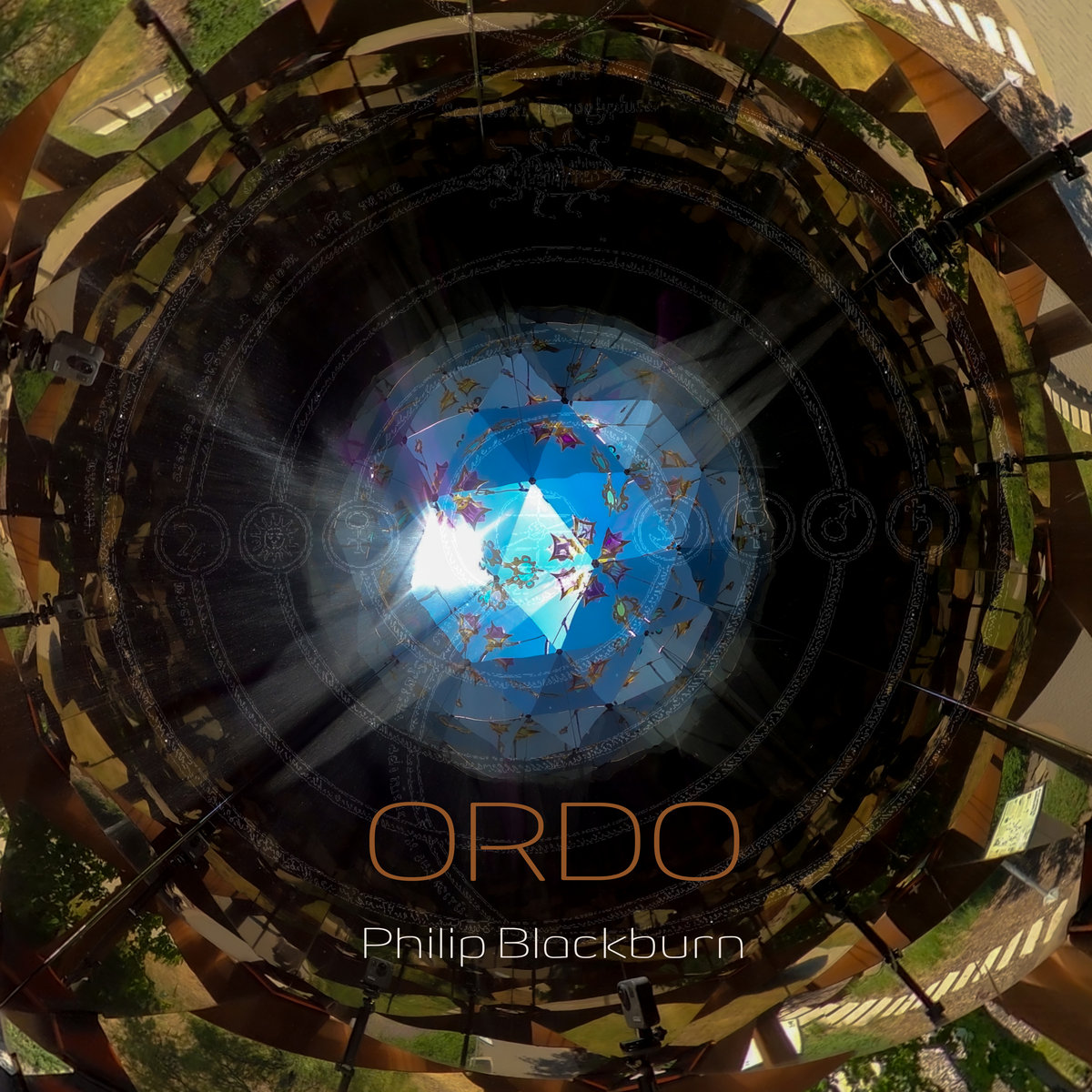
ORDO: Philip Blackburn turns four decades of listening into one extraordinary album
Across the two discs and thirteen works that make up ORDO, spanning more than forty years of Philip Blackburn’s career, that is essentially the whole project: an artist who has spent a lifetime treating wind harps, storm sewers, ships’ horns, brainwaves, and Indian ragas as equally valid source material, finally gathered into a single, richly sequenced listening experience. The result is one of the most genuinely surprising, generous, and rewarding releases in Neuma’s catalog, an album that asks you to listen “more carefully, and with greater imagination“, as its own liner notes put it, and then makes that request effortless to follow.
To understand why ORDO feels less like a conventional album and more like a career-spanning act of generosity, it helps to know who’s behind it. Philip Blackburn was born in Cambridge, England, in 1962, trained as a choral scholar at Clare College, Cambridge, and then crossed the Atlantic to study composition at the University of Iowa under Kenneth Gaburo, a pioneer of text-sound and experimental vocal composition whose influence on Blackburn’s freewheeling, boundary-erasing aesthetic is easy to hear throughout this collection. While in Iowa he immersed himself in the archives of Harry Partch, the legendary hobo-composer-instrument-builder, and his resulting book, Enclosure Three: Harry Partch, won an ASCAP Deems Taylor Award and remains a landmark of American music scholarship.
But Blackburn’s real gift to American new music may be the three decades he spent, from 1991 to 2020, running innova Recordings for the American Composers Forum, a tenure that produced more than 650 albums and two Grammy Awards, and that helped build the infrastructure an entire generation of experimental composers relied on to be heard at all. Since 2020 he has brought that same championing energy to Neuma Records as its president, which makes ORDO‘s release doubly satisfying: this is a composer who has spent a career amplifying other people’s voices, finally stepping fully into the light with his own.
That light, fittingly, tends to come from unusual places. Blackburn’s work as a public sound artist has taken him into ships’ harbours, state fairs, art galleries, and – in one of his most delightfully strange projects, the Sewer Pipe Organ – St. Paul’s own storm drain system, where sound emerged from manholes across the city to make audible an acoustic space most people will never think to notice. He built a kinetic sculpture, The Scope, on the site of a former 3M plant, and turned the history of a Colorado tuberculosis sanatorium into a 60-minute film, The Sun Palace, that premiered at Anthology Film Archives in New York. He has performed with brainwave sensors, dowsing rods, balloon flutes, conch shells, and car horns. Signal to Noise magazine once called him “a startlingly original voice, one that encompasses all periods of music history in a uniquely engaging vision”, and after spending time with ORDO, it’s hard to disagree.
Philip Blackburn is, and will forever remain, a creative innovator, a man ahead of his time, a figure who leaves and will continue to leave his mark on the history of modern music. The proof? ORDO!
Disc One: Wind, Grief, and the Sound of the Earth Itself
ORDO opens with “Weft Sutra,” a shimmering, hypnotic duet between Nirmala Rajasekar’s veena and a sextet of bowed electric guitars, its title playing on the Sanskrit root of “sutra” itself, thread. Rajasekar’s melodic line spins out over the drone with the improvisatory freedom of a raga, and it’s an immediately arresting way to open a two-disc set: intimate, luminous, and unmistakably telling you that conventional genre categories are not going to be much use for the next eighty minutes.
The title track that follows is the emotional heart of the entire album. Nearly twenty minutes long, “Ordo” sets Blackburn’s own Latin translation of Aaron Freeman’s celebrated NPR piece “Eulogy from a Physicist”, a text that finds real comfort in the physics of energy and entropy, in the idea that nothing is ever truly lost, only transformed. Written soon after Blackburn’s own parents passed away in close succession, and featuring counter-tenor Ryland Angel’s extraordinary, liturgical delivery over Rajasekar’s veena and Blackburn’s own atmospheric electronics, “Ordo” achieves something genuinely rare: music that is scientifically literate and spiritually moving in equal measure, grief transformed into something closer to reassurance. It’s the kind of piece that justifies an entire album on its own.
“The Song of the Earth” takes a field recording of one of Blackburn’s own outdoor wind harps and pairs it with Patti Cudd’s shimmering vibraphone “transcription” of those same sounds, and the effect is uncannily seamless, nature and instrument answering each other so closely that the line between them essentially dissolves. “The Sound of a Going in the Tops of the Mulberry Trees” takes on far more ambitious material, weaving together the history of the Underground Railroad through pre-Civil War Ohio with the composer’s own family history, an ancestor’s failed attempt to farm mulberry trees for silkworms nearby, into a piece built from vibraphone, strings, flute, and piano that moves from hushed, ghostly beginnings into real forward momentum. You don’t need to know the backstory to feel the piece’s slow-building tension, though knowing it adds a whole additional layer of resonance.
“Lilacs and Lightning” offers a welcome change of scale: a brief, gorgeous miniature for piano and Blackburn’s own “virtual rhythmicon”, a nod to Henry Cowell’s pioneering theremin-adjacent instrument, originally designed for members of the public to play alongside decorated street pianos in the Twin Cities. Disc one then closes with “Albi,” a remarkably assured 22-minute string quartet Blackburn wrote while still a teenager, structured around the eight Rasa (moods) of Indian classical music. Its architecture is genuinely impressive for a student work, and it makes a fascinating bookend to the veena-driven pieces that opened the disc — the same interest in Indian musical thought, filtered here through an entirely Western instrumental form.
Disc Two: Memory, Mischief, and the Sound of Being Human
The second disc opens in a lighter, more playful spirit with “A Cambridge Musick,” conceived as a “composed rehearsal” for a college trio-sonata group of Blackburn’s university friends, designed to capture the intuitive, half-verbal way musicians communicate with each other before a performance even officially begins. It’s a wonderfully affectionate piece, full of the kind of in-joke warmth that only decades of friendship can produce.
“Over Again” shifts into far more solemn territory: a percussion-duo piece built around a devastating recording of a World War II glider pilot describing his mission delivering ammunition to Allied forces during the Normandy landings, a mission the young pilot would not survive much longer. Blackburn’s percussion writing responds to the recording’s cadences with real sensitivity, turning documentary material into what he rightly calls a ritual of tribute. “More Fools Than Wise” pairs Carrie Henneman Shaw’s soprano, deconstructing an Orlando Gibbons madrigal syllable by syllable, with a field recording of ship horns from Newfoundland’s harbour, a genuinely unusual combination that becomes strangely moving as the “ships” fade into the piece’s closing horizon.
“Sonata Homophobia” is the album’s most emotionally direct statement: flautist Zachary Meier, wired to an EEG and confronted with a collage of homophobic hate speech, responds first by reconstructing his instrument and then by naming friends lost to suicide, before settling into a hard-won, soothing solo passage layered over a choral setting of a Thomas Weelkes madrigal. It’s a difficult, brave piece of music, and one of the clearest demonstrations on the album of how Blackburn uses sound as a genuine vehicle for empathy rather than mere effect.
“Unearthing” and “Stuck” push furthest into pure sonic adventure, the former an ever-accumulating archive of performers responding to recordings of previous performances, the latter a delightfully chaotic homage to call-in car-repair radio shows, complete with honking horns and mechanical mayhem. Both are the sound of an artist genuinely unafraid to follow an idea all the way to its strangest conclusion, and they give the album some of its most purely fun, unguarded moments. The collection closes with “Air: Air, Canary, New Ground,” a clarinet-and-piano piece built on a Purcell-inspired ground bass, its punning title drawn from a misread inventory of harpsichord works, a fittingly playful, erudite way to close a career-spanning set that has never once taken itself too seriously even at its most profound.
What makes ORDO such a satisfying listen, start to finish, is how much genuine range it captures without ever feeling like a scattered odds-and-ends compilation. Blackburn’s four decades of work, from a teenage string quartet to a brainwave-triggered flute piece, from Underground Railroad history to a loving Cambridge in-joke, cohere here because they all share the same underlying instinct: an unshakable curiosity about what counts as musical material, and a genuine warmth toward the people, histories, and landscapes that material comes from. The performances, from Rajasekar’s veena to the Mänk Quartet’s string playing to Ryland Angel’s extraordinary vocal command on the title track, all rise to meet Blackburn’s ambition.
ORDO is, in the best sense, a “rewilding” of the concert hall, a reminder that some of the most beautiful music available to us has been playing all along in wind harps, harbours, and storm drains, waiting for someone patient and imaginative enough to notice. This is a genuinely essential release for anyone drawn to experimental composition, environmental sound art, or simply music that trusts its listeners to follow it somewhere unexpected. Highly, warmly recommended. A must!
Frankie Pfeiffer
Editor in chief – PARIS-MOVE
PARIS-MOVE, August 24th, 2026
Follow PARIS-MOVE on X
::::::::::::::::::::::::
To buy this great album (2 CD set)
Tracklisting:
CD1
- Weft Sutra 7:35
- Ordo 19:48
- The Song of the Earth 12:38
- The Sound of a Going in the Tops of the Mulberry Trees 11:23
- Lilacs and Lightning 4:34
- Albi 21:29
CD2
- A Cambridge Musick 13:41
- Over Again 9:47
- More Fools Than Wise 6:22
- Sonata Homophobia 10:55
- Unearthing 3:55
- Stuck 2:32
- Air: Air, Canary, New Ground 13:56
Performers include:
Philip Blackburn, instruments and electronics
Nirmala Rajasekar, veena
Ryland Angel, voice
Patti Cudd, vibraphone
NO EXIT New Music Ensemble
Emanuele Arciuli, piano
The Mänk Quartet
Galan Trio
Quey Percussion Duo
Carrie Henneman Shaw, soprano
Zachery Meier, flute and neural activity
Chris Mann, voice
University of Minnesota Solo Improvisers
UCCS Creative Music Ensemble