| Jazz |
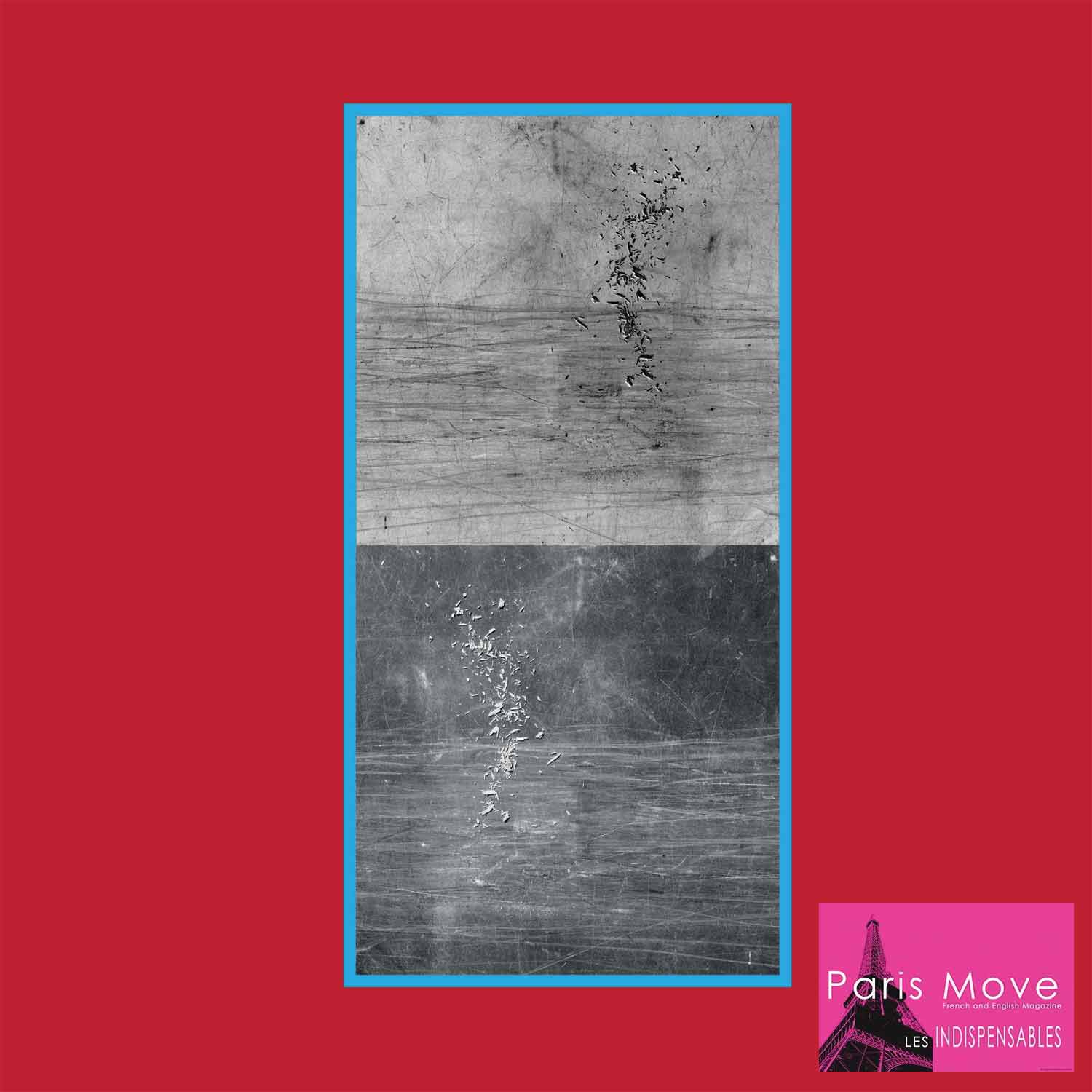
Summary: Wadada Leo Smith’s Constellations and Hemispheres is an ambitious jazz project blending improvisation, studio composition and cosmic imagery, while exploring light, humanity, collaboration and the transformative power of music.
Wadada Leo Smith’s Constellations and Hemispheres: Listening Beyond the Music
It is tempting to imagine jazz critics as machines that process albums, identify their strengths and weaknesses, assign a few adjectives to the music and move on to the next release. The reality is almost the opposite. Anyone who takes music seriously knows that listening is never a purely mechanical act. We bring our memories, our experiences, our expectations and our emotions to every record. Sometimes an album reaches us immediately. Sometimes it takes months. Sometimes it simply does not speak to us at all. There are occasions when the most honest thing a journalist can do is decline to review a record because the connection is not there. That does not necessarily diminish the music or the artist. On the contrary, it leaves open the possibility that another listener, another critic or another audience will discover something in the work that we were unable to hear.
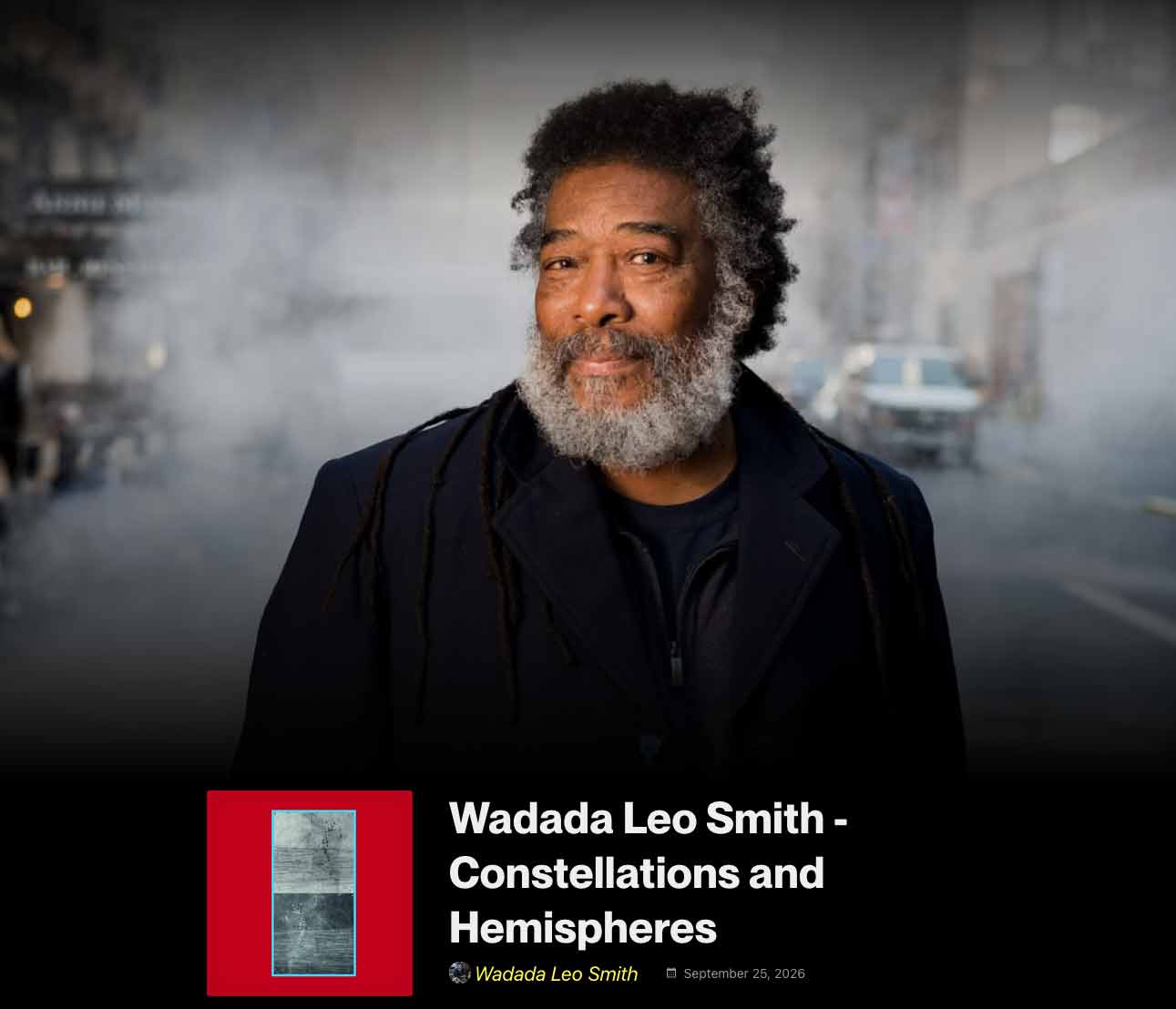
I found myself thinking about all of this while looking through the material surrounding Wadada Leo Smith’s Constellations and Hemispheres. The photograph of Smith is difficult to ignore. His expression is deeply human and quietly joyful, with the suggestion of a smile and a face that seems to carry an extraordinary intelligence, only partly concealed by a white beard. Behind him is a smoky urban street that could have come from a 1950s film noir. There is something almost cinematic about the image, but what remains with me is the humanity in his gaze. It seems to tell us something about the musician before we hear a single note.
Smith is one of those artists whose work has accompanied my own intellectual and emotional life without his ever knowing it. Miles Davis belongs to that category for me as well, as does Médéric Collignon, and so does the pianist and composer Satoko Fujii. Their music does not simply occupy a place in my listening habits. It has a way of feeding both thought and feeling, sometimes simultaneously. There are musicians whose technical achievements can be admired from a distance, and there are others whose work gradually becomes part of the way we understand music itself. Smith has long belonged to the latter group.
Constellations and Hemispheres is an especially fascinating example of that approach because the project refuses to remain tied to a single ensemble. What begins with one core configuration expands and contracts through several combinations of musicians. Smith is joined by vibraphonist Bobby Naughton, bassists Bill Laswell and Melvin Gibbs and drummer Pheeroan akLaff, while other pieces bring in guitarist Lamar Smith and percussionists Brian Jarawa Gray and Mauro Refosco. The personnel can appear complicated when listed on paper, but the music makes the logic much easier to understand. The album is less concerned with presenting a fixed band than with exploring what happens when different groups of musicians occupy the same larger musical landscape.
For anyone who finds themselves wondering who plays on which track, there is a much better solution than trying to memorize the personnel. Put the record on and listen. The physical edition is limited to 500 copies, although the project is also available digitally, with a vinyl edition expected later through Smith’s label, Kabell. In a project this carefully conceived, the physical object has a certain appeal, but the important thing is the music itself and the unusual way in which it has been assembled.
Each Wadada Leo Smith album tends to feel like an intellectual investigation, and Constellations and Hemispheres continues that tradition. The material comes from several sessions and has been combined and recontextualized through extensive studio post production. Most of the pieces remain within one particular ensemble configuration, but the central 22 minute suite, Dark Matter, Particles of Light, Mirror of the Unseen, moves between trio and octet settings. The changes are not simply a matter of adding musicians to an existing performance. The studio becomes part of the composition, allowing Smith to place different musical environments beside one another and create relationships that could not necessarily exist within a single live performance.
In that respect, the album can be heard as a continuation of Fire Illuminations, Smith’s 2023 digital release. The connection is not merely stylistic. It lies in the way Smith thinks about the recording studio as a creative space. For many musicians, post production is associated with correction, refinement or the preservation of a performance. Smith approaches it differently. He uses the studio as a place where music can be reconsidered, rearranged and given another life. The recorded performance becomes raw material for a larger composition.
The central idea behind this album is light and its movement. Smith describes light as having a continuous flow. When it encounters an obstacle, it does not simply stop. It passes through, around or beneath it, continuing along its course. He wanted to represent that movement by bringing different ensembles together through a horizontal approach rather than treating them as isolated musical units.
That idea gives the album an unexpectedly broad cultural dimension. Smith’s use of the studio connects with the Jamaican Rastafari tradition and with a much larger history of musicians who have understood recording technology as a means of shaping music rather than merely documenting it. The studio can become a place where a musical work acquires another perspective, one that extends beyond the internal relationships a listener can perceive when musicians are playing together in the same room. This is an important distinction in an era when recording technology is everywhere and yet the idea of the studio as an artistic instrument can sometimes seem almost invisible. Smith reminds us that editing can itself be a form of composition. A recording does not have to be a transparent window onto a performance. It can become its own world.
The beauty of the core trio is what first makes that world accessible. There is a sense of movement through space, almost as though the music were allowing us to drift among constellations. The dialogue between trumpet, percussion and the other voices is extraordinarily sensitive. The musicians listen to one another with such intensity that their communication can feel almost instinctive. What emerges is beautiful without becoming decorative, sophisticated without becoming self conscious and intellectually demanding without ever requiring the listener to approach it as an academic exercise. There are moments when the best response is simply to follow the musicians and allow the music to determine the direction of the listening. The longer one stays with it, the more apparent the internal relationships become. A gesture from one musician changes the meaning of what another musician has just played. A space in the music becomes as important as a note. The movement between ensembles begins to feel less like an editorial decision and more like a change in perspective.
The album’s cosmic imagery might initially seem far removed from the environmental and human concerns that have occupied so much of Smith’s career. Dark matter, Martian canyons, particles of light and dark energy belong to a vocabulary of astrophysics, while Smith has repeatedly used his music to address questions of human coexistence, history, justice and the fragile condition of life on Earth. Yet he sees these subjects as part of the same intellectual territory.
For Smith, light is also a revealer. It brings hidden things into view and exposes what has been concealed. His understanding of the artist’s role grows from that metaphor. His work has sought to illuminate a particular reality, namely that human beings inhabit a very small planet and continue to struggle to create enough space for one another to live without war.
His most profound conviction is that war will continue as long as humanity fails to understand love. It is difficult to read that statement without hearing the music differently. It could easily sound sentimental when removed from the context of Smith’s career, but in his case it carries the weight of decades spent composing, improvising, teaching and engaging with musicians across cultures. His humanism does not appear as an idea added afterward to explain the work. It is embedded in the way he approaches sound, silence, collaboration and improvisation.
That may be why the album resists the conventional language of music criticism. Calling it avant garde jazz is not necessarily wrong, but the label tells us very little. Smith has spent too much of his career moving between composition and improvisation, history and futurism, spirituality and experimentation for a genre label to capture what he is doing. The music belongs to jazz, but it also belongs to a much larger tradition of artists using sound to investigate the world around them.
This is where the comparison with Miles Davis becomes useful, although not because Smith sounds like Davis. They are very different musicians with very different vocabularies. What connects them is a refusal to treat the trumpet as a fixed object with a predetermined purpose. Davis repeatedly changed his relationship to the instrument, the ensemble and the studio. Smith has pursued his own version of that independence, developing a language in which the trumpet can sound intimate, questioning, ceremonial, fragile or forceful without losing its identity.
Médéric Collignon and Satoko Fujii offer similarly instructive comparisons. Their music also demonstrates what happens when musicians refuse to regard their previous work as a limit on what comes next. Each new project becomes an opportunity to test the boundaries of the instrument, the ensemble and the composition itself. What matters is not novelty for its own sake, but the sense that the artist is still searching.
Smith is still searching. That quality is increasingly rare in a musical environment dominated by immediacy. Much of contemporary listening culture is built around speed. Songs are expected to reveal themselves quickly. Albums compete for attention with thousands of others. Promotional language tends to reduce complicated artistic projects to a handful of convenient descriptions. Even serious music can become another piece of content moving through an endless stream.
Constellations and Hemispheres asks for a different kind of attention. It does not demand that the listener understand every conceptual reference before beginning. It simply rewards patience. The more time one spends with the record, the more the different layers begin to communicate with one another. That patience is particularly important because Smith’s music does not separate intellectual curiosity from emotional experience. The cosmic imagery is not there simply to make the album sound grand. It provides a framework for thinking about distance, connection, movement and perception. The changing ensembles create their own form of conversation. The studio editing becomes a way of reconsidering time. The trumpet provides a human voice moving through all of these spaces.
The title, Constellations and Hemispheres, captures much of this philosophy. A constellation exists because human beings draw connections between points that may be unimaginably distant from one another. A hemisphere is part of a larger whole, defined partly by its relationship to another hemisphere. The album operates in much the same way, continually bringing separate elements into relation.
The trio becomes part of the octet. Different recording sessions become part of a single work. Scientific ideas meet spiritual reflection. Jamaican musical traditions enter into dialogue with American jazz. The studio becomes an extension of the ensemble. The past meets the present without either one being asked to surrender its identity. Perhaps this is why I find it difficult to approach Constellations and Hemispheres as I would a conventional review assignment. There are albums that can be discussed in terms of execution, arrangement, production and performance, and there is nothing wrong with that. But Smith’s work seems to require something else from the listener. It asks us to consider what music is capable of becoming when an artist is willing to treat every new project as another stage in a lifelong investigation.
That does not mean the album should be placed beyond criticism. Quite the opposite. Serious music deserves serious listening, and serious listening includes questioning, disagreement and the possibility of not connecting with everything an artist does. The responsibility of a critic is not to celebrate every ambitious project simply because it is ambitious. It is to listen closely enough to explain why the music succeeds, where it challenges us and what it might be attempting to accomplish.
With Smith, however, the challenge is inseparable from the reward. His music carries an unusually pure form of humanism, not because it offers easy answers but because it continues to ask difficult questions. What does it mean to live together? What does it mean to understand another person? Can music create a space in which difference becomes a source of dialogue rather than conflict? Can a recording preserve the energy of a moment while also transforming it into something larger?
These questions are present in Constellations and Hemispheres, but they never need to be announced as a manifesto. They emerge through the interaction of the musicians and through the strange, patient architecture of the record. For that reason, I would suggest listening to the album twice, perhaps with some distance between the two sessions. The first listening can simply be an encounter with the sound. The second can come after reading Smith’s thoughts about light, the studio, humanity and the relationship between different musical traditions. The experience changes when the ideas behind the music become part of the listening process.
If the limited physical edition can be found, it is worth seeking out, particularly for listeners who still value the relationship between music and the physical object. But the format is ultimately secondary. What matters is giving this music enough time to reveal its internal geography.
Wadada Leo Smith has reached a point in his career where the distinction between composer, improviser, philosopher and listener becomes increasingly difficult to maintain. All four roles seem to exist simultaneously in his work. He listens in order to compose, composes in order to question, improvises in order to discover and continues discovering because the questions have never stopped. That is also why his music can feel so personal to those of us who listen to it closely. The listener is not simply being shown what Smith has discovered. We are being invited to participate in the discovery.
In the end, Constellations and Hemispheres is less interested in giving us conclusions than in creating the conditions under which we might arrive at our own. That is a quality I value deeply in music, particularly at a moment when so much culture is designed to tell us immediately what something means and how we are supposed to feel about it.
Smith leaves room for something more complicated and more human. He leaves room for uncertainty, for beauty, for thought and for the possibility that listening carefully to another person’s music might also teach us something about ourselves. That is perhaps the most convincing reason to keep returning to his work, and one of the reasons Constellations and Hemispheres deserves to be heard not simply as another release in an extraordinary discography, but as another chapter in an artistic life that continues to treat music as a way of understanding the world.
Thierry De Clemensat
Member at Jazz Journalists Association
USA correspondent for Paris-Move and ABS magazine
Editor in chief – Bayou Blue Radio, Bayou Blue News

PARIS-MOVE, August 21st, 2026
Follow PARIS-MOVE on X
::::::::::::::::::::::::
Wadada Leo Smith, trumpet
&
Diamonds (tracks 1 & 3)
- Sylvie Courvoisier, piano
- Marcus Gilmore, drums
Nda Kulture (tracks 2 & 5)
- Bobby Naughton, vibraphone
- Lamar Smith, electric guitar
- Mauro Refosco, percussion
- Brian Jarawa Gray, percussion
- Pheeroan akLaff, drums
Michael Sarian – trumpet/FX
Santiago Liebson – keyboards, Mini Moog
Marty Kenney – electric bass/FX
Nathan Ellman-Bell – drums
Blue Dreams (track 3)
- Bobby Naughton, vibraphone
- Lamar Smith, electric guitar
- Bill Laswell, electric bass
- Melvin Gibbs, electric bass
- Mauro Refosco, percussion
- Brian Jarawa Gray, percussion
- Pheeroan akLaff, drums
SpringTime 5 (track 4)
- Bobby Naughton, vibraphone
- Bill Laswell, electric bass
- Melvin Gibbs, electric bass
Recorded by Luis Bacqué on September 2, 2025
- Pheeroan akLaff, drums
at Bacqué Recording in Roselle, NJ
Mixed and mastered by Luis Bacqué
Recorded at Firehouse 12 Studio,
Art and design: I.A. Freeman
New Haven, CT
Executive Producer: Wadada Leo Smith
Art & Design: I.A. Freeman