| Jazz |
Summary: Skinny Hightower blends jazz, funk and 1970s soul into a modern, deeply personal sound, revealing a remarkably versatile musician with plenty more to say.
Skinny Hightower Takes Jazz, Funk and the Spirit of the 1970s Somewhere Deeper
Monday mornings tend to follow one another without ever really being the same, particularly in August, when the flow of jazz CDs arriving for review seems to become almost impossible to keep up with. Albums intended for August continue to arrive while the September and October releases are already beginning to appear in increasingly large numbers, creating the familiar situation in which the desk is covered with music waiting to be heard, examined and understood. It is in the middle of that constant flow that one particular album suddenly demands attention, not because it announces itself loudly, but because its cover has something strangely familiar about it.
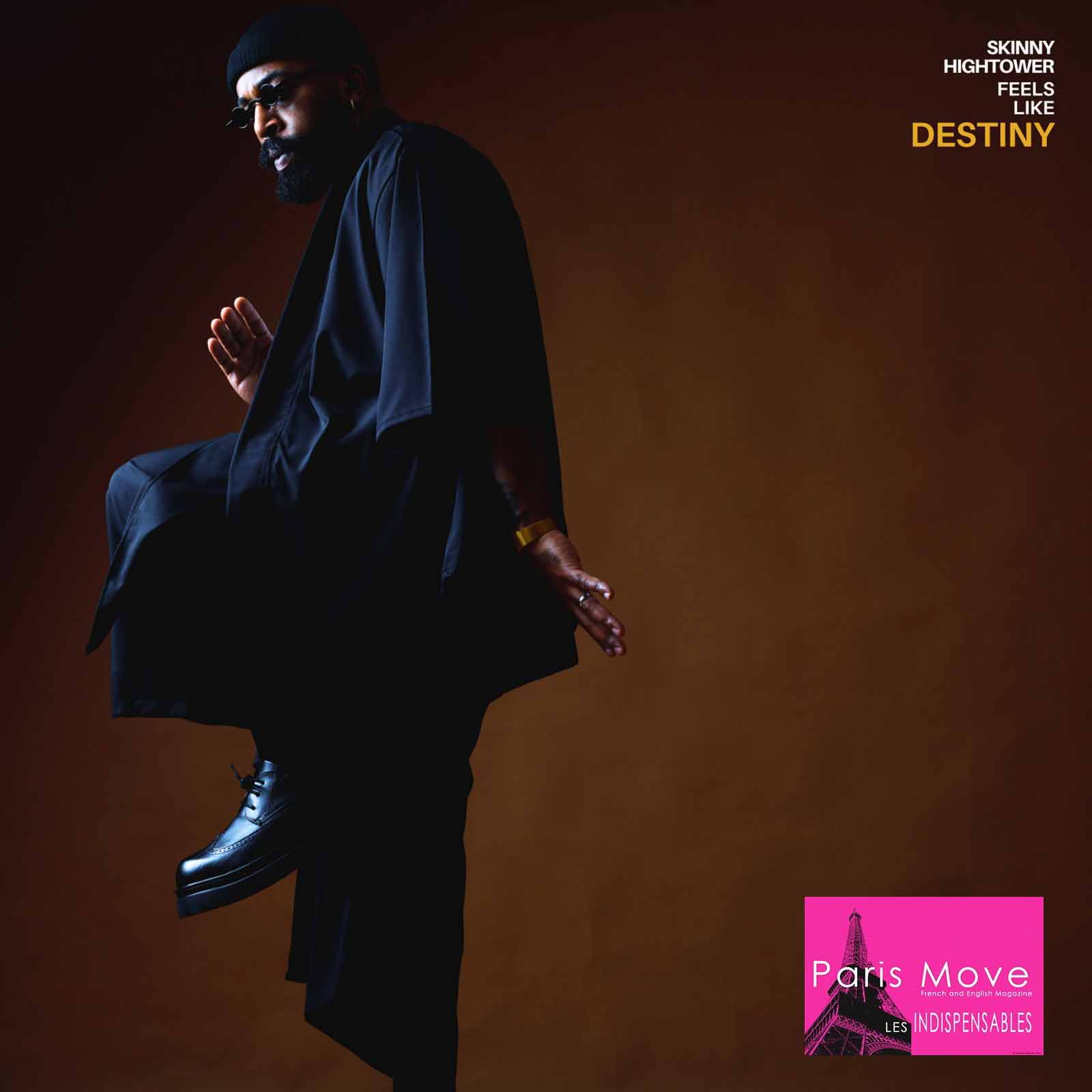
The cover is brown, and Skinny Hightower appears with one leg raised, caught in what looks almost like a dance step. There is a sense of movement in the photograph, and for some reason the image immediately brings to mind the great album covers of Isaac Hayes. It is an unexpected association, but one that becomes considerably more convincing once the record begins to play. From the opening moments of “Devotion,” there is an emotional atmosphere that belongs unmistakably to the great tradition of 1970s soul, funk and jazz, although Hightower is not attempting to recreate that period as a piece of musical archaeology. He takes something from it, understands its language and then moves it into a much more contemporary environment.
That distinction matters because there is a considerable difference between an artist who simply imitates the past and one who has absorbed it deeply enough to use it as part of his own vocabulary. Hightower belongs much more naturally to the second category. The warmth and sensuality associated with the great soul and funk records of the 1970s are present, but the music has a different physicality. The rhythms can be harder and more insistent, the production is cleaner, and there is a certain psychedelic quality in the way the grooves are constructed and allowed to develop. The result is music that looks backward without sounding trapped in the past.
What becomes immediately striking is just how much of the musical architecture Hightower is responsible for himself. He is a multi-instrumentalist who handles keyboards, bass, drums, percussion, guitar and production across the album, and that level of involvement gives the record an unusual degree of internal consistency. There are moments when the guitar riffs seem to lean toward Santana, while the rhythmic construction can become almost psychedelic, with layers of percussion and keyboard creating an atmosphere that feels less like conventional contemporary jazz than a meeting point between jazz fusion, funk, soul and modern studio production.
At that point, it is tempting to start making comparisons, because music criticism often depends upon familiar reference points to help listeners locate something new. Yet Hightower makes that exercise surprisingly difficult because there are so many possible directions in which to go. The album can evoke Isaac Hayes, Santana, Stevie Wonder, Herbie Hancock, George Benson or Billy Cobham without ever settling comfortably inside the identity of any one of them. There is even something reassuring about the fact that two flutists appear as additional musicians, because if Hightower had also played flute on the record, we would have been forced to search for yet another comparison to describe the extraordinary range of what this musician is doing.
The humor in that observation points toward a more serious question about the album. When one musician performs so many of the instrumental and production roles, does the music become more personal because every decision passes through the same artistic sensibility, or does it risk becoming too controlled? In Hightower’s case, the answer seems to be that his control is part of the attraction. The instruments do not sound as though they have been assembled merely to demonstrate technical ability. They serve a broader musical purpose, and the grooves remain at the center of the experience.
That sense of groove is particularly important because Hightower arrives at a moment when funk is once again becoming increasingly visible within contemporary jazz. There seems to be a renewed interest among jazz musicians in the musical culture of the 1970s, although the revival taking place today does not necessarily sound like a simple return to that era. The contemporary version can be more direct, more compressed and sometimes more aggressive, reflecting a musical environment in which jazz, electronic production, hip hop, soul and fusion have been interacting for decades.
Hightower understands that history. His music draws from the great cultural movements of the 1970s and 1980s without treating them as a collection of stylistic ornaments. His influences include Stevie Wonder during his extraordinary 1970s period, the sophisticated writing of Steely Dan, the harmonic imagination of Herbie Hancock, the polished musicianship and sound of George Benson, the rhythmic power of Billy Cobham and the more contemporary language of Brad Mehldau. What is interesting is not simply that these artists appear somewhere in his musical education, but that Hightower seems to have understood what each of them represented.
Stevie Wonder demonstrated that popular music could be harmonically sophisticated without losing its emotional immediacy. Steely Dan showed how studio production, jazz harmony and carefully constructed arrangements could become a musical language of their own. Hancock demonstrated how a jazz musician could constantly reinvent the relationship between acoustic instruments, rhythm and technology. Benson brought together virtuosity, elegance and groove, while Cobham made rhythm itself feel like a source of propulsion rather than simply a foundation. Mehldau, meanwhile, represents a more contemporary approach to harmony and improvisation, one that demonstrates how deeply rooted jazz can continue to evolve.
Hightower seems to have taken something from all of these approaches while maintaining a strong sense of his own identity. That is perhaps why the album feels more convincing when listened to as a whole than when reduced to a list of influences. The references are there, but they are absorbed into a larger musical personality.
His background helps explain some of that personality. Born and raised in Wichita, Kansas, Hightower grew up around gospel, jazz, R&B and the expressive traditions that have played such an important role in American music. Those traditions tend to place considerable importance on feeling, rhythm and communication, even when the underlying musical construction is sophisticated. Hightower’s work at the keyboard reflects that combination of discipline and instinct. There is the ear of a composer and producer, but there is also an evident understanding that groove cannot simply be calculated.
This is where the album becomes particularly interesting for me, because the more I listen to it, the more I wonder whether Hightower should eventually allow another dimension of himself to enter the music more directly. He has already demonstrated that he can build an extraordinarily complete instrumental environment, but there is a feeling that something else is waiting to emerge. His compositions often seem to contain more information, emotion and intention than the instruments alone are capable of expressing.
That is why I would be genuinely curious to hear Hightower use his own voice on a future project. I do not necessarily mean that he should suddenly become a conventional jazz singer, because that would be an unnecessarily narrow interpretation of the idea. Spoken word could work. A few carefully placed vocal passages could work. Gospel influenced backing vocals could add another dimension. Even a collaboration with a vocalist capable of understanding the spiritual and rhythmic character of his compositions could open an entirely new area of his music.
The suggestion is not based on a perceived weakness in the current album. Quite the opposite. It comes from the impression that Hightower has reached a point where the instrumental vocabulary he has developed is beginning to suggest another form of expression. There is a sense that he has something to say beyond the notes themselves, and that possibility becomes particularly intriguing when the album eventually arrives at its final track, “Deeper Than You Think.”
The title feels increasingly appropriate by the time the record reaches that point. Recorded almost entirely by Hightower himself, with keyboards, bass, drums, percussion, guitar and production all under his direction, the album can be heard as a kind of personal journey. It begins with the warmth and spiritual intensity of “Devotion,” gathers momentum through the explosive jazz fusion of “Chain Reaction,” and then moves through pieces such as “Strides” and “Hypnotic,” where rhythm becomes one of the principal forces shaping the music.
“Hypnotic,” in particular, benefits from the strength of the drumming, which gives the composition a physical quality that helps prevent the more complex musical elements from becoming overly cerebral. Hightower understands that sophistication is most effective when the listener can still feel the pulse underneath it. The music can be harmonically ambitious while remaining accessible through rhythm, which is one of the qualities that links his work to the great funk and fusion records that clearly influenced him.
By the time “Deeper Than You Think” arrives, the album has earned its quieter atmosphere. The track, a reinterpretation of a George Benson composition, brings the record toward a more spiritual conclusion and provides an appropriate sense of resolution. It is not simply the final song on the sequence. It feels like the point toward which the rest of the album has been moving.
Hightower has explained that the title was not the product of a brainstorming session or an elaborate conceptual exercise. Once the music was completed, he says, the name simply seemed inevitable. That explanation is consistent with the album itself, because the concept does not feel imposed from outside. It appears to have emerged naturally from the music and from the emotional direction of the compositions.
This is Hightower’s seventh album, following his 2016 debut, “Cloud Nine,” which already offered an indication of the musician he would become. In the years since, he has continued to develop his own work while also accompanying and collaborating with other artists, experiences that have inevitably contributed to the breadth of his musical understanding.
That broader experience is worth exploring, particularly because Hightower’s career cannot really be understood through his albums alone. Anyone discovering his music for the first time should spend some time exploring his official website, Skinny Hightower’s official website, which is unusually well documented and provides a much fuller picture of his artistic development, his collaborations and the aesthetic world surrounding his work. The website makes it easier to understand that the albums are only one part of a larger creative process.
What remains most compelling, however, is the balance between the discipline of the musician and the freedom suggested by the music. Hightower clearly knows the history from which he is drawing, but he does not seem interested in becoming trapped by it. The references to the great artists of the past are audible, yet the record has enough contemporary energy to avoid becoming another exercise in 1970s revivalism.
The brown cover that first caught my attention now seems more appropriate than it did before the music began. That raised leg suggests movement, but it also suggests balance, and balance may be one of the central characteristics of Hightower’s work. He is balancing jazz and funk, composition and improvisation, technical control and emotional expression, the traditions of the past and the possibilities of contemporary production.
There is also something appealing about the fact that an album arriving in the middle of an overwhelming August pile of jazz releases can still make you stop, look twice at the cover and decide that this is the one you want to hear immediately. In a marketplace where so much music arrives accompanied by carefully constructed descriptions and endless references to influences, there is considerable value in simply encountering a record that makes you curious enough to put it on.
Skinny Hightower’s new album rewards that curiosity because the deeper you go into it, the less interested you become in identifying exactly which artist or decade it resembles. The more important question becomes what Hightower is doing with everything he has absorbed, and whether the next stage of his career will allow him to expand that vocabulary even further.
After seven albums, he has already demonstrated that he can compose, arrange, perform and produce with an unusual degree of independence. What makes the future particularly interesting is the possibility that he might now open that carefully constructed musical world to new voices, new collaborators and perhaps even his own voice in a more direct way. The music already suggests that there is more beneath the surface than the impressive musicianship, and “Deeper Than You Think” may be the most revealing indication yet that Skinny Hightower is still exploring where his music can take him.
Thierry De Clemensat
Member at Jazz Journalists Association
USA correspondent for Paris-Move and ABS magazine
Editor in chief – Bayou Blue Radio, Bayou Blue News

PARIS-MOVE, August 11th, 2026
Follow PARIS-MOVE on X
::::::::::::::::::::::::
Musicians :
SKINNY HIGHTOWER – Drums, Bass, Rhodes, Vibraphone, Piano, Clavinet, Wurlitzer, Guitar, Hammond B3 Organ, Synthesizers, Percussion, Moog Bass, String Arrangements, Horn Arrangements
ALTHEA RENE – Flute (”Devotion”)
CHARLOTTE GLASSON – Flute
Track listing :
Devotion
Chain Reaction
Between the Lines
Nimbus
Velour
The Fifth Floor
Strides
Hypnotic
Ridin’ High
Deeper Than You Think