| Soul Jazz |
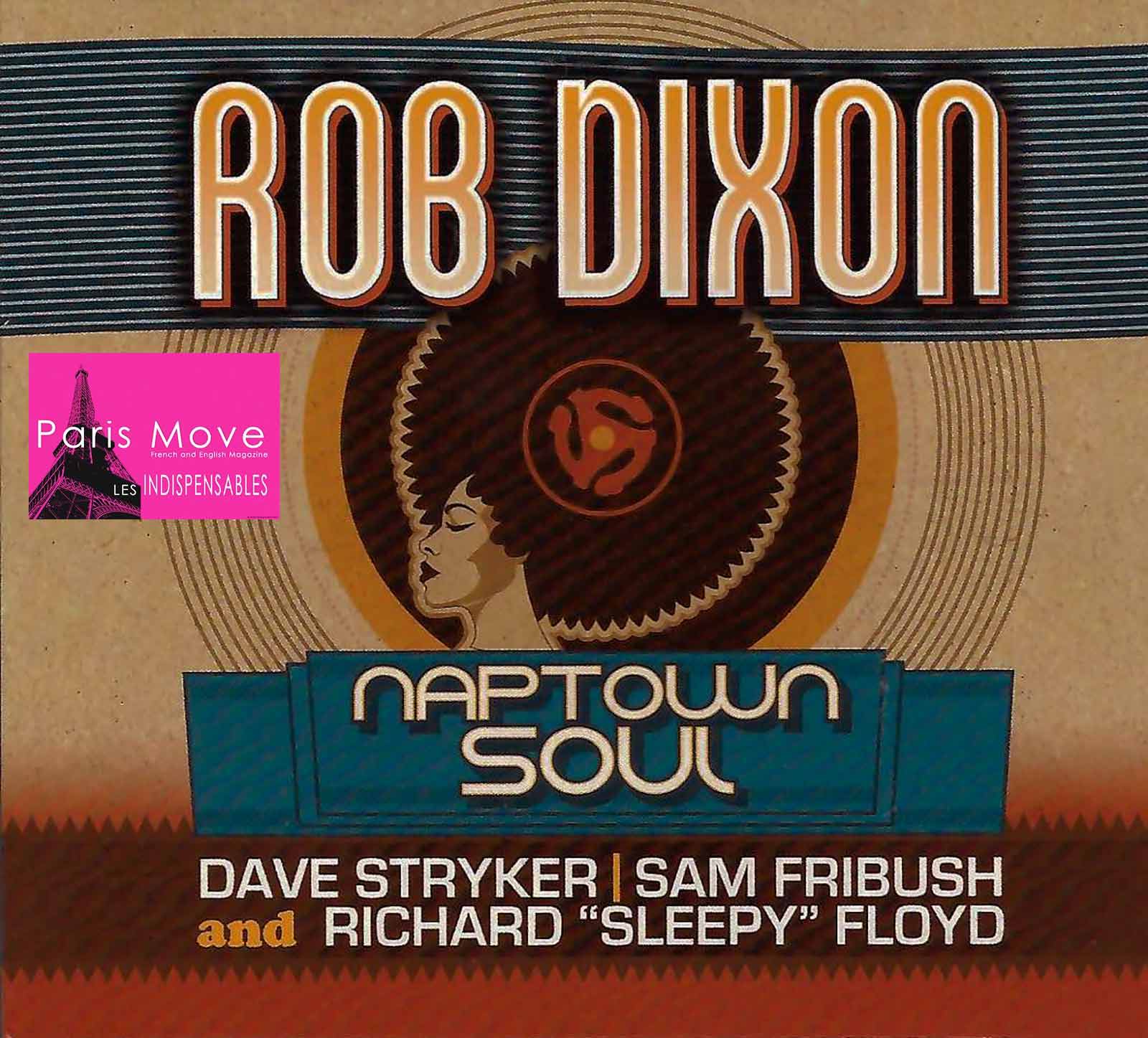
Summary: Rob Dixon’s Naptown Soul celebrates Indianapolis’ rich Black musical heritage, blending jazz, funk, soul and history into a powerful tribute to Indiana Avenue and the city’s legendary musicians.
Rob Dixon’s Naptown Soul: When a City’s Musical Memory Comes Alive
Sunday morning was moving slowly, almost imperceptibly, through the familiar torpor of the weekend. The sunlight was beginning to push through the curtains, casting long rays across the room, while a bottle of water sat on the desk beside the computer. I had decided to write, although I had no idea how long it would take or, for that matter, exactly where the morning would lead me. There are times when writing begins with a plan, and there are other times when it begins with a sound. This was one of those mornings. Almost without thinking, I put on Rob Dixon’s Naptown Soul, and within a few moments a warm, sophisticated blend of jazz and funk was filling the studio monitors. It was the kind of music that makes it difficult to remain a passive listener. I found myself stopping what I was doing and simply listening.
There was an immediate familiarity to the sound, but also something deeper that kept revealing itself as the record progressed. Dixon, a saxophonist and composer originally from Baltimore who has spent his adult life in Indianapolis, has created an album that is inseparable from the city that became his adopted home. Yet Naptown Soul is not simply an exercise in local pride, nor is it a nostalgic reconstruction of a musical past. It is something more interesting: an attempt to understand a place through the music that helped define it, while at the same time allowing that music to continue evolving.
To understand what Dixon is doing, it helps to understand where the word “Naptown” comes from and what Indianapolis once represented to generations of Black musicians. Before the nickname became broadly associated with Indianapolis, it emerged within the city’s Black musical community, and its history is closely connected to Indiana Avenue, which for much of the 20th century stood at the center of Black cultural life in the city. Indiana Avenue was famous for its jazz clubs and for the remarkable musicians who performed there, among them J.J. Johnson, Freddie Hubbard, Wes Montgomery and Slide Hampton. But the avenue’s musical identity was never limited to jazz. Blues, gospel, classical music, funk and soul all formed part of the same cultural landscape, influencing one another and creating an environment in which musical traditions could develop, overlap and reinvent themselves.
That history matters because Naptown Soul is not merely a collection of songs inspired by Indianapolis. It is an album that understands music as a form of memory. Dixon is working with sounds that existed before him, but he is not treating them as artifacts that belong behind glass. He is treating them as material that can still breathe.
The opening track, “Sky Vibe,” establishes that approach almost immediately. Organ, saxophone, drums and guitar come together with an ease that can initially make the arrangement sound deceptively simple. The guitar, in particular, has an expansive quality, capable of suggesting something much larger than the four musicians actually present. The saxophone moves naturally through the arrangement, while the rhythm section gives the entire performance its muscular but unforced sense of motion. It is a sophisticated piece of musical construction that never feels overly constructed, and that may be one of the most difficult things for a musician to achieve.
Dixon has earned that confidence over a career that gives him an unusually broad perspective on American music. He spent four years performing alongside the legendary saxophonist Illinois Jacquet, an experience that alone would provide a substantial education in the history and vocabulary of jazz. His career has also included recording and collaborations with A Tribe Called Quest, pianist Weldon Irvine, Mike Clark of The Headhunters and innovative guitarist Charlie Hunter. Those connections help explain the unusual flexibility of his musical language. Dixon is clearly comfortable within the jazz tradition, but he also understands the rhythmic and cultural connections between jazz, funk, soul and the broader history of Black American music.
That background becomes particularly important because Naptown Soul never sounds as though it is trying to prove how much its creator knows. The musicianship is obvious, but it remains in service to the compositions. The album has a natural flow, moving from one piece to another without unnecessary displays of virtuosity. There is something almost conversational about the arrangements, with the musicians constantly responding to one another and leaving enough room for each instrument to contribute without overwhelming the whole.
This is especially impressive in a quartet setting, where there are relatively few places to hide. Every musician has to understand not only what to play but when to play it, when to step forward and when to leave space for someone else. The apparent simplicity of the music therefore conceals a considerable amount of discipline. What sounds effortless is the result of musicians who know the vocabulary well enough to stop thinking about the vocabulary and concentrate instead on communicating.
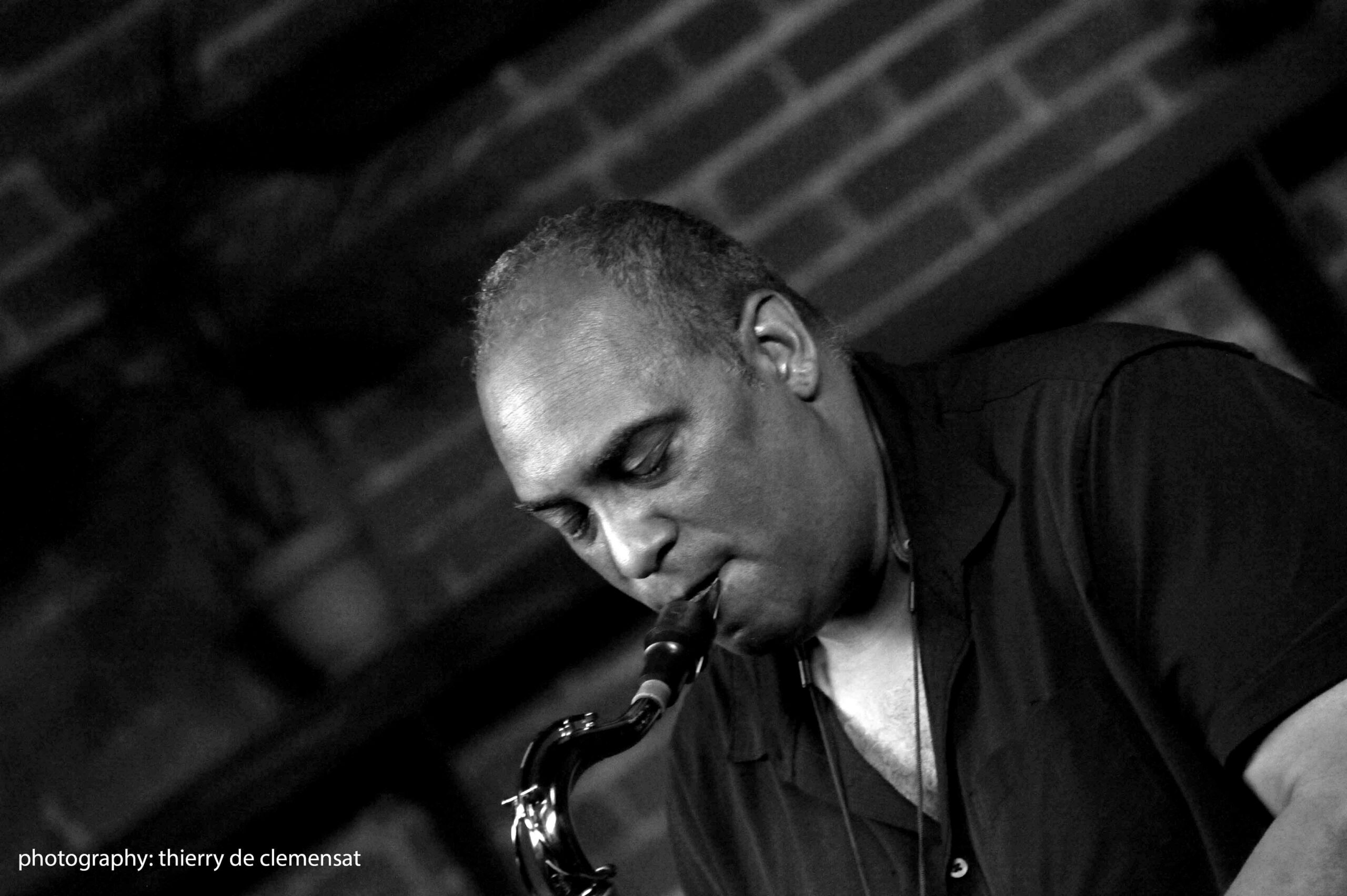
Dixon’s saxophone playing is central to that communication. His sound is warm and precise, with a rhythmic character that gives the music a strong sense of movement without making it feel hurried. There are individual qualities in his phrasing that make his playing recognizable, but there is also a remarkable willingness to allow the music around him to shape the performance. That combination gives Naptown Soul its particular personality. Dixon is clearly the leader, but he never treats leadership as a reason to dominate the music.
The Indianapolis connection becomes even more explicit through his decision to include two compositions by Wes Montgomery, “Naptown Blues” and “Bumpin’ on Sunset.” Montgomery is one of the defining figures in the musical history of Indianapolis, and his influence remains impossible to ignore. His guitar playing helped reshape the possibilities of jazz guitar, while his relationship with the city made him one of its most important musical ambassadors.
Yet there is always a danger when a contemporary musician revisits the work of a legend. Reverence can easily become imitation, and imitation can quickly turn an album into a museum piece. Dixon avoids that problem by approaching Montgomery’s compositions not as sacred objects but as living material. He respects the history without allowing it to dictate exactly what the music must sound like today.
The same approach can be heard in his interpretation of “Walking in Rhythm,” originally recorded by The Blackbyrds. Rather than attempting to reproduce the past with photographic accuracy, Dixon places the song within his own musical environment. The result feels less like a reconstruction than a conversation between generations. The original recording remains part of the song’s identity, but it is no longer the only reference point.
That distinction is crucial because Naptown Soul would be far less interesting if it were simply a beautifully executed tribute album. Dixon’s four original compositions give the record its contemporary center of gravity. Their grooves are immediate and their arrangements are sophisticated, but they do not feel disconnected from the historical material surrounding them. Instead, the originals make it possible to hear the entire album as a continuation of a musical tradition rather than an attempt to recreate one.
There are moments when the arrangements are so naturally integrated that a listener unfamiliar with the original recordings could easily assume that every composition had been written specifically for Dixon’s quartet. That is not the case, of course, and the fact that the music can create that impression says something important about his command of the material. He has understood the spirit of these compositions well enough to make them sound as though they belong naturally within his own musical vocabulary.
That sense of ownership is not about claiming someone else’s work. It is about interpretation, which is one of the fundamental principles of jazz. A great interpreter does not erase the history of a composition; the interpreter adds another layer to it. Dixon does exactly that, and the choices he makes extend beyond the notes themselves. The musicians he has selected, the instruments they play, the balance between them and the textures created by the arrangements all contribute to the album’s identity.
The result is an album that feels polished without becoming sterile, sophisticated without becoming academic and funky without sacrificing musical detail. It is easy to enjoy Naptown Soul simply as a record that sounds good, and there is nothing wrong with that. But the deeper pleasure comes from realizing how much history is moving beneath the surface.
That history deserves attention because the story of Black music in Indianapolis is part of the larger American story. Indiana Avenue was not simply a street where musicians happened to find work. It was a cultural center where communities created institutions, developed audiences and established a musical identity of their own. The clubs, churches and neighborhood businesses surrounding the avenue formed an environment in which music could become both a profession and a means of cultural expression.
Jazz emerged from that environment alongside blues, gospel, soul and funk, and the boundaries between those traditions were never as rigid as the categories used by music historians might suggest. Musicians listened to one another. Audiences moved between styles. A player could hear something in a church on Sunday, encounter another idea in a jazz club that evening and carry both experiences into the next rehearsal. American music has always developed through this kind of exchange, and Indianapolis was one of the places where that exchange became particularly fertile.
There is also a broader social history behind this music. On Aug. 4, 1963, the Indianapolis chapter of the NAACP organized a historic civil rights march that brought approximately 3,000 demonstrators from the intersection of St. Clair and Pennsylvania streets to University Park, in the period leading up to the March on Washington. That event belongs to the larger national history of the civil rights movement, but it is also a reminder that the cultural life of Indianapolis existed within a community confronting the political realities of segregation and racial inequality.
It is impossible to separate the history of Black American music entirely from those realities. The music was not created in some abstract cultural vacuum. It was created by people living in particular neighborhoods, attending particular churches, working particular jobs and confronting particular social circumstances. Music offered entertainment, but it also offered community, identity and a language through which experiences could be shared.
That does not mean that every jazz album needs to be turned into a political manifesto. Quite the opposite. One of the strengths of Naptown Soul is that Dixon allows the history to remain present without making it the subject of a lecture. The record does not tell the listener what to think. It simply carries traces of the people and places that came before it. Perhaps that is why the album feels so human.
The music contains memory without becoming sentimental. It acknowledges the past without becoming trapped in it. Dixon understands that a tradition remains alive only when musicians are allowed to change it, and jazz has always been one of the great American examples of that principle. It borrows, absorbs, transforms and reinvents. It can preserve a melody while changing its meaning, or revisit a familiar rhythm and discover something new inside it.
In that sense, Naptown Soul is not really about going backward. It is about moving forward with the past still audible. That idea also makes the timing of the album’s release feel worth considering. An August release invites us to remember that Indianapolis, like so many American cities, carries layers of history that remain visible beneath contemporary life. Streets change. Neighborhoods change. Buildings disappear. Musical venues close. Generations move on. But culture has a way of surviving in unexpected forms, and sometimes the most effective archive is not a building or a document but a recording made by someone who remembers enough to reinterpret what came before.
I first encountered Rob Dixon in person at The Monk’s in Austin in 2023, and that experience has remained with me while listening to Naptown Soul. I could not find a recent 2026 video that seemed to capture what I wanted to convey, so I decided instead to link to the 2023 performance, a concert I attended after being invited by saxophonist J. Serrato. At the time, it was simply a memorable evening of live music and a particularly enjoyable discovery. Listening to the new album now, however, I find myself returning to that night with a different perspective.
Dixon was impressive onstage, not simply because of his technical command but because of the ease with which he communicated with the other musicians. There was a sense that nothing needed to be forced. The music could develop naturally, with each player listening and responding to the others. That quality is difficult to capture on a recording, but it is unmistakable when you encounter it in a live room. It also helps explain why Naptown Soul works so well.
The album has the same underlying sense of confidence. Dixon knows the tradition, but he does not seem burdened by it. He knows the history of Indianapolis, but he does not need to turn that history into decoration. He knows the importance of Wes Montgomery and the musicians who came before him, but he also understands that honoring them means continuing to create rather than simply repeating what they already did. That is perhaps the most meaningful way to think about the album. Naptown Soul is not a monument. It is a continuation.
There are many ways for a musician to acknowledge a musical heritage. One can reproduce it faithfully, document it academically or simply mentions it in interviews. Dixon chooses a more demanding approach. He absorbs it, understands it and then asks what he can do with it. The answer is a record that feels both familiar and personal.
For listeners who know Indianapolis and its musical history, the album offers another way of hearing a city they may already think they know. For listeners encountering that history for the first time, it provides an inviting entry point. And for anyone who simply enjoys a sophisticated, deeply grooving jazz record, Naptown Soul works without requiring a history lesson before the first note.
That may ultimately be its greatest achievement. The album does not ask the listener to choose between history and the present. It demonstrates that the two can exist together. The past can be heard without being imitated. Tradition can be respected without becoming rigid. A city can remember itself without living entirely in memory.
On that quiet Sunday morning, I put on Naptown Soul almost casually, without knowing that the album would send me back through the history of Indianapolis, Indiana Avenue and the extraordinary musicians who helped make the city part of the American musical imagination. What began as background music gradually became something else, a reminder that the most compelling records often do more than entertain us. They create connections between places, people and moments that might otherwise remain separated by time. That is what I hear in Rob Dixon’s music.
I hear Indianapolis, but I also hear the larger story of American jazz, a tradition built by musicians who learned from one another and continually transformed what they inherited. I hear the influence of Wes Montgomery, the history of Indiana Avenue and the rhythmic language of Black American music, but I also hear Dixon himself, which is ultimately what makes this album more than an exercise in remembrance.
A musician can inherit a history, but he cannot simply inherit its future. That has to be created. With Naptown Soul, Rob Dixon appears to understand that responsibility. He takes the musical memory of his adopted city and gives it another life, not by freezing it in the past but by allowing it to move, breathe and groove in the present.
And perhaps that is what a great musical tradition is supposed to do. It is supposed to remember where it came from without forgetting where it is going. Naptown Soul does exactly that.
Thierry De Clemensat
Member at Jazz Journalists Association
USA correspondent for Paris-Move and ABS magazine
Editor in chief – Bayou Blue Radio, Bayou Blue News
PARIS-MOVE, August 10th, 2026
Follow PARIS-MOVE on X
::::::::::::::::::::::::
Musicians :
Rob Dixon, tenor & soprano saxophone
Dave Stryker, guitar
Sam Fribush, organ
Richard “Sleepy” Floyd, drums
Track Listing :
Sly Vibe
Bumpin’ On Sunset
Walking In Rhythm
Naptown Blues
I Want You
The Earth, The Sky
Fields And Valleys
Four