| Jazz |
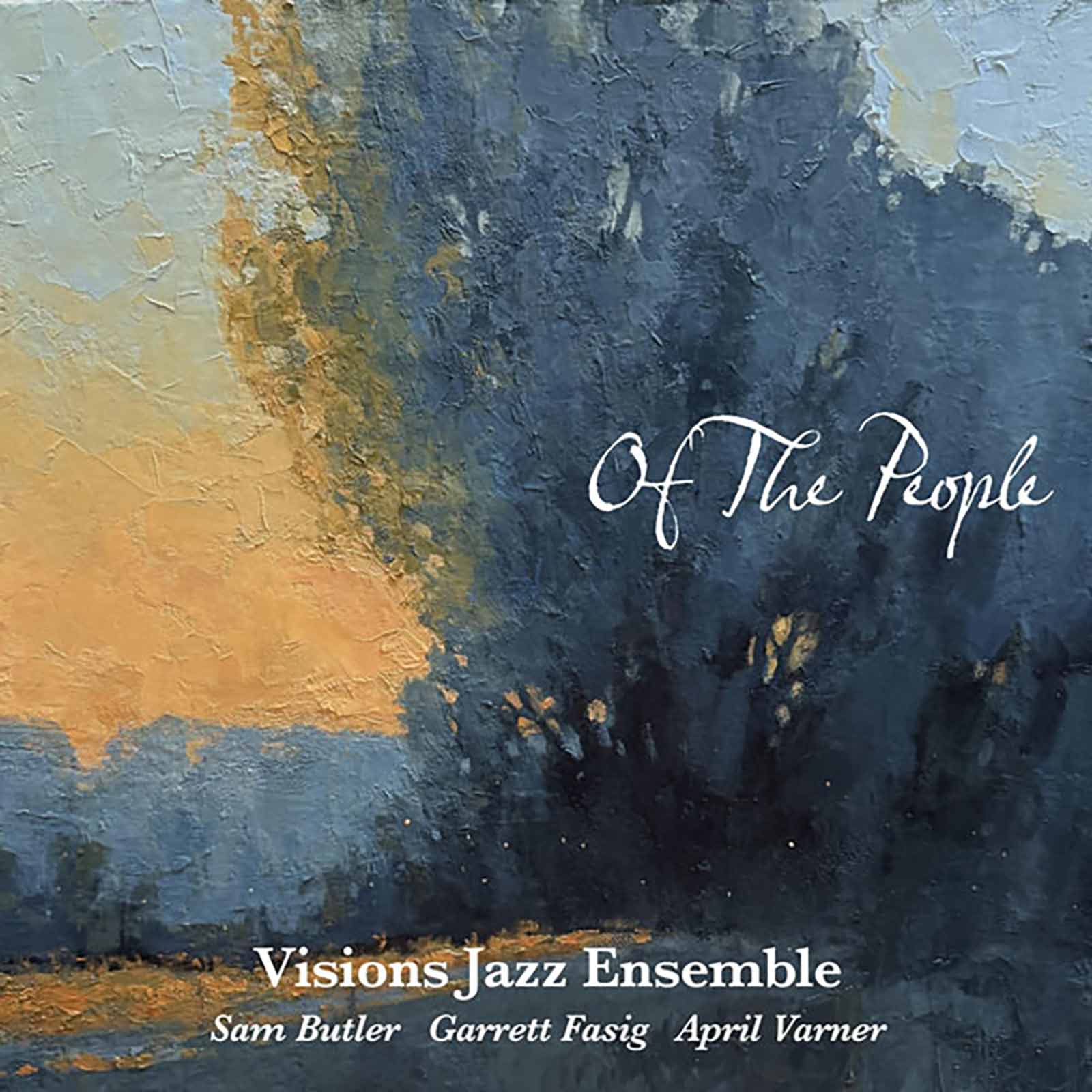
Summary : Discover how the Visions Jazz Ensemble celebrates America’s 250th anniversary through inspired jazz interpretations of folk, country, and classic American songs, creating a moving tribute to the nation’s rich cultural heritage.
America at 250, Told Through the Language of Jazz
There are countless ways to celebrate the 250th anniversary of the United States. Across the country, commemorations will undoubtedly take many forms, from public ceremonies and historical exhibitions to community gatherings and fireworks that have long defined the nation’s most symbolic occasions. Yet some of the most meaningful tributes are often the quietest ones. Rather than relying on spectacle, the Visions Jazz Ensemble chooses to celebrate America by returning to one of its greatest cultural achievements: its music.
It is an ambitious idea, but also a remarkably thoughtful one. Instead of attempting to summarize two and a half centuries of American history through words or images, the ensemble tells that story through songs. Their repertoire reaches across generations, drawing from traditional American folk music while embracing works by Patty Griffin, Dolly Parton, Antonín Dvořák, Stephen Foster, and other composers whose music has become woven into the country’s cultural identity. These selections are not made for commercial appeal or nostalgic comfort. They are artistic choices, each carefully reconsidered, reshaped, and ultimately transformed into something that feels both familiar and entirely new.
The result is not simply another jazz recording. It is a meditation on what America has sounded like throughout its history and, perhaps more importantly, on what it continues to sound like today.
Over the course of 250 years, the United States has been shaped by an extraordinary convergence of cultures. Every generation has carried its own songs, traditions, languages, and memories across oceans and borders. Some arrived seeking opportunity, others fled hardship or persecution, while many were forced onto American soil against their will. Together, these voices created a cultural landscape unlike any other. Music became one of the country’s most enduring forms of expression, capable of preserving memory while constantly reinventing itself.
Few genres embody that evolution more completely than jazz. Born in the early years of the twentieth century, jazz emerged from an extraordinary meeting of traditions. African American musical heritage, blues, gospel, European harmony, military brass bands, Caribbean rhythms, and countless local influences gradually merged into an art form that would become one of America’s greatest cultural exports. More than simply a style of music, jazz became a philosophy. It celebrates individuality without abandoning collaboration. It values discipline while leaving room for spontaneity. It rewards technical mastery yet constantly encourages risk, imagination, and personal expression.
Those qualities make jazz a particularly fitting soundtrack for the nation’s quarter millennium anniversary. America has never been a finished story. It is a country defined by constant reinvention, where traditions are preserved not by remaining untouched, but by being reinterpreted by each new generation. Jazz follows precisely that same principle. Every performance acknowledges the past while creating something entirely new. That philosophy lies at the heart of this remarkable recording.
The Visions Jazz Ensemble approaches America’s musical heritage neither as historians nor as preservationists. Instead, the musicians act as storytellers. They recognize that every composition carries a history, but they also understand that history remains alive only when artists continue to engage with it creatively. Their arrangements never attempt to imitate the original recordings. Instead, they uncover new emotional possibilities hidden within songs that many listeners already know by heart.
The project itself is built upon meticulous research. Trumpeter Sam Butler and drummer Garrett Fasig assembled an ensemble that includes vocalist April Varner, Caleb Robinson, Jeff Parker, David Linard, Alex Turner, Alex Hoberty, and Francis Bassett. Together they explored public domain scores alongside works by artists whose influence continues to resonate throughout American music. Their goal was never to create a museum exhibition in musical form. Rather, they sought to demonstrate that these songs remain vibrant, relevant, and capable of speaking to contemporary audiences.
That distinction is essential. Many commemorative recordings become trapped by reverence. They reproduce familiar material with technical precision while leaving little room for artistic imagination. The Visions Jazz Ensemble chooses a far more challenging path. Respecting tradition does not mean preserving every note exactly as it was first performed. Instead, respect is expressed through curiosity, craftsmanship, and the willingness to discover fresh perspectives within established works.
That creative ambition becomes apparent from the very first moments of the album. Every arrangement feels carefully considered, yet nothing sounds calculated or overly intellectual. Complexity exists beneath the surface rather than announcing itself. The musicians resist the temptation to showcase virtuosity simply for its own sake. Instead, every instrumental choice serves the broader narrative, allowing the recording to unfold with remarkable elegance and emotional clarity.
Perhaps the album’s greatest strength is its refusal to separate musical styles into rigid categories. Folk music, country, early American song, and modern jazz coexist naturally, revealing relationships that may not have seemed obvious before. Listening to the album feels less like moving through a collection of unrelated tracks than turning the pages of a single story whose chapters span centuries.
The voice guiding listeners through that journey belongs to April Varner. Rather than dominating these familiar songs, Varner approaches them with extraordinary restraint. Her singing possesses a quiet confidence that invites listeners closer instead of overwhelming them. She understands that emotional honesty often speaks more powerfully than dramatic gestures. Throughout the recording, she becomes less an interpreter standing before the music than a companion gently leading the audience through America’s shared musical memory.
That sensitivity allows every song to retain its own identity while contributing to a larger artistic vision. Each performance feels deeply personal, yet every piece also belongs naturally within the album’s broader narrative. It is a difficult balance to achieve, particularly when working with repertoire drawn from such diverse musical traditions. This is where the Visions Jazz Ensemble truly distinguishes itself.
Rather than presenting a collection of individual performances, the musicians have created something closer to a conversation across generations. Songs separated by decades, sometimes even centuries, begin speaking to one another. Folk melodies illuminate contemporary compositions. Country songs reveal unexpected jazz harmonies. Historical works suddenly feel remarkably current. The album quietly reminds us that American music has always been built upon dialogue rather than isolation. As the United States reflects on two and a half centuries of history, that message feels especially timely. This recording is not interested in offering easy patriotism or uncomplicated nostalgia. Instead, it celebrates the country’s greatest cultural strength: its extraordinary ability to absorb influences from every direction while continually reinventing itself. Few artistic traditions illustrate that process more convincingly than jazz. Few contemporary ensembles demonstrate it with greater intelligence than the Visions Jazz Ensemble.
Reimagining Familiar Songs Without Losing Their Soul
One of the greatest challenges facing any ensemble that revisits well known repertoire is finding the delicate balance between preservation and reinvention. Stay too close to the original recordings and the music risks becoming little more than an exercise in admiration. Move too far away and the emotional core that made those songs endure can disappear altogether. The Visions Jazz Ensemble succeeds because it understands that reinterpretation is not about replacing the past. It is about entering into a conversation with it. That philosophy is evident throughout the recording. Every arrangement reveals careful listening, not only to the melodies themselves but also to the stories they carry. The musicians never appear interested in demonstrating how inventive they can be. Instead, their creativity remains entirely at the service of the music. The arrangements breathe naturally, allowing each composition to unfold with patience and quiet confidence. The album’s coherence is perhaps its most remarkable achievement.
On paper, bringing together traditional American folk songs, the writing of Patty Griffin, Dolly Parton, Stephen Foster and even the influence of Antonín Dvořák could easily have resulted in a fragmented listening experience. The stylistic differences between these composers span centuries, cultures and musical traditions. Yet none of those divisions are audible once the ensemble begins to play. The reason lies in the intelligence of the arrangements.
Rather than forcing every piece into the same jazz vocabulary, Butler and Fasig allow each composition to retain its own personality. The ensemble adapts itself to the music instead of asking the music to adapt to the ensemble. That subtle reversal makes all the difference. Every performance feels authentic to its source while simultaneously becoming unmistakably part of the Visions Jazz Ensemble’s own artistic identity. Among the album’s many highlights is Patty Griffin’s Not a Bad Man. The original recording possesses an intimacy that has made it one of Griffin’s quietly powerful compositions. Attempting to recreate that atmosphere would have been both unnecessary and ultimately impossible. Instead, the ensemble chooses another path entirely. Their version preserves the emotional vulnerability of the song while introducing new harmonic colors that allow listeners to hear familiar lyrics through a different emotional lens. April Varner deserves enormous credit for the success of this transformation. One of the easiest mistakes a vocalist can make when approaching an iconic songwriter is imitation. Griffin’s unmistakable phrasing and vocal character have become inseparable from her music. Varner wisely avoids that trap. She never attempts to sound like Patty Griffin. Instead, she trusts her own musical instincts, offering a reading defined by sincerity rather than imitation.
The result is deeply affecting. There is remarkable emotional restraint in her performance. Every phrase feels considered without becoming calculated. She allows silence to become part of the interpretation, understanding that what remains unspoken often carries as much emotional weight as the words themselves. Rather than overwhelming the listener with dramatic gestures, she quietly invites them into the story. That same artistic maturity shapes her interpretation of Dolly Parton’s Coat of Many Colors. For generations, Parton’s recording has represented far more than a country classic. It has become a universal story about dignity, family, poverty and unconditional love. Those themes remain entirely intact here, yet the ensemble approaches them through a different musical vocabulary. The jazz harmonies introduce fresh emotional shades without ever obscuring the song’s essential simplicity. That restraint deserves recognition because many contemporary reinterpretations mistake complexity for originality. The Visions Jazz Ensemble understands precisely the opposite. Sophistication often lies in knowing what not to change.
Listening closely, one begins to appreciate just how carefully every musical decision has been made. Instrumental lines never compete for attention. Solos emerge naturally from the ensemble before gently returning to the collective sound. The rhythm section supports rather than dominates. Every musician appears fully aware that this is not a collection of individual showcases but a shared artistic statement. That spirit of collaboration may ultimately define the recording more than any single performance. Trumpeter Sam Butler’s presence is felt throughout the album, even during moments when he is not the musical focal point. His playing possesses a warmth and lyrical quality that quietly shapes the recording’s emotional atmosphere. Rather than pursuing technical brilliance for its own sake, Butler consistently chooses melodic clarity. His trumpet often functions almost like another voice within the ensemble, extending conversations rather than interrupting them. Garrett Fasig exercises a similarly understated influence.
As both drummer and co artistic director, his contribution extends well beyond rhythm. There is remarkable discipline in the pacing of the album. Tempos evolve organically, dynamics remain carefully controlled and transitions between pieces feel almost cinematic. Listeners rarely notice these structural decisions consciously, yet they contribute enormously to the recording’s sense of unity. That unity becomes increasingly impressive as the album progresses. The more diverse the repertoire becomes, the more clearly one recognizes the intelligence guiding the entire project. Songs that appear unrelated on paper gradually reveal shared emotional threads. Hope, resilience, memory, longing and quiet optimism emerge again and again through entirely different musical languages. What initially appears to be a simple collection of beautifully performed songs slowly reveals itself as something considerably more ambitious. It becomes a portrait of America told not through politics or historical events but through emotion. That perspective feels particularly refreshing at a moment when discussions about national identity often become polarized. The Visions Jazz Ensemble avoids slogans entirely. Instead, it trusts music to accomplish what debate often cannot. Songs become places where different traditions, generations and experiences meet naturally. Perhaps that is the album’s greatest accomplishment. It reminds listeners that American music has never belonged to a single community, a single region or even a single genre. It has always evolved through exchange, borrowing and reinterpretation. Every generation leaves its own imprint while preserving something of what came before. The Visions Jazz Ensemble embraces that philosophy with uncommon elegance. Their arrangements do not merely revisit history. They allow history to continue speaking.
A Quiet Celebration of an Ever Changing Nation
By the time the album reaches its closing moments, one idea has become unmistakably clear. This recording was never intended simply as a commemorative project. While its release coincides with the United States’ 250th anniversary, its ambitions extend far beyond marking a historical milestone. Rather than looking backward with nostalgia, the Visions Jazz Ensemble asks a more compelling question. How does a nation remember its past while continuing to reinvent itself? The answer arrives not through speeches or grand declarations but through music.
One of the recording’s most remarkable qualities is its refusal to impose a single definition of America. Instead, it embraces contradiction. Folk traditions exist alongside contemporary songwriting. Country music finds common ground with jazz improvisation. European classical influence quietly intersects with distinctly American musical voices. Nothing feels forced because these connections have always existed beneath the surface of American culture. The ensemble simply brings them into sharper focus. This approach reflects the very history the album seeks to honor. The United States has never been shaped by a single cultural tradition. Its artistic identity emerged through centuries of encounters between people carrying different languages, beliefs, customs and musical traditions. Some of those encounters were joyful, others deeply painful. Together they produced a cultural landscape defined not by uniformity but by constant transformation. That spirit of evolution runs through every page of this recording.
Perhaps that explains why the album feels surprisingly contemporary despite drawing so heavily upon historical repertoire. The songs never sound trapped inside the era in which they were written. Instead, they continue speaking to the present. Themes of resilience, belonging, compassion and hope remain just as relevant today as they were generations ago. Few selections illustrate that better than Stephen Foster’s Hard Times. It is an inspired choice for the album’s conclusion.
Written during another period of profound uncertainty, the song has endured because its emotional truth extends well beyond the circumstances of its original composition. Every generation eventually discovers its own version of difficult times. Economic hardship, political division, social uncertainty and personal loss are recurring chapters of every nation’s history. The Visions Jazz Ensemble understands this perfectly. Rather than emphasizing despair, their interpretation finds remarkable tenderness within the music. The arrangement never becomes sentimental, nor does it attempt to dramatize suffering. Instead, it offers quiet reflection, allowing the melody itself to carry the emotional weight. It is a fitting conclusion for an album built upon subtlety rather than spectacle. Throughout the recording, the musicians consistently resist the temptation to impress through virtuosity alone.
Technical excellence is certainly present. Every member of the ensemble demonstrates exceptional musicianship. Yet what ultimately distinguishes this project is not the complexity of its execution but the generosity of its listening. Every performance feels collaborative. Every solo emerges naturally from the ensemble before returning gracefully to it. Every arrangement leaves space for silence, allowing listeners to absorb each emotional transition rather than rushing toward the next musical statement. That patience has become increasingly rare. In an era where recordings often compete for immediate attention through volume, speed and constant stimulation, this album demonstrates the enduring power of restraint. It trusts listeners enough to let the music unfold gradually. Rather than demanding attention, it earns it. Sam Butler deserves particular recognition for shaping that atmosphere. His trumpet remains one of the album’s defining voices, not because it dominates the ensemble but because it consistently reinforces its emotional character. There is elegance in his phrasing and generosity in his musical choices. Every note appears carefully considered, never excessive, always serving the larger narrative.
Garrett Fasig’s artistic leadership proves equally essential. His influence extends far beyond rhythmic precision. Together with Butler, he has helped create an ensemble whose greatest strength lies not in individual brilliance but in collective intelligence. That shared vision becomes the recording’s defining characteristic. Every musician contributes something distinctive while remaining fully committed to the larger artistic purpose. April Varner, meanwhile, emerges as the emotional center of the project. Her performances never seek applause through theatrical display. Instead, she brings remarkable honesty to every lyric. There is extraordinary confidence in such restraint. She understands that emotional authenticity rarely requires excess. Her interpretations remain intimate, vulnerable and quietly unforgettable. That balance between humility and artistic conviction ultimately defines the album itself. The Visions Jazz Ensemble never attempts to explain America. Such a task would be impossible. Instead, the musicians offer something far more valuable. They invite listeners to hear the country through the voices, melodies and traditions that have shaped its cultural memory for generations. In doing so, they remind us that history is not preserved only in monuments or museums. It also survives in songs. Music carries memories that textbooks cannot fully capture. It preserves emotion as much as fact, allowing every generation to rediscover familiar stories through fresh ears. That may be the recording’s greatest achievement. It transforms remembrance into conversation.
It treats tradition not as something fragile to be protected behind glass but as something living that continues to evolve every time musicians approach it with imagination, respect and curiosity. At a moment when America prepares to celebrate two hundred and fifty years of history, this recording offers a welcome reminder that anniversaries are not simply opportunities to look backward. They are invitations to reflect on where a nation has been, where it stands today and where it hopes to go next. Few albums accomplish that with such grace. Few contemporary jazz recordings combine historical awareness, emotional intelligence and musical craftsmanship with this level of consistency.
The Visions Jazz Ensemble has created something far more enduring than a commemorative recording. It has created an album that speaks quietly but confidently about identity, memory and the extraordinary ability of music to unite voices separated by time. As the final notes fade, one is left not with the feeling of having listened to a history lesson, but with the sense of having shared a conversation across generations. The recording lingers long after the music ends, encouraging reflection rather than applause. Perhaps that is the finest compliment one can offer. This is not simply a soundtrack for America’s 250th anniversary. It is a reminder that the country’s most enduring story has always been written in many voices, and that jazz remains one of the most eloquent languages through which those voices continue to be heard.
Thierry De Clemensat
Member at Jazz Journalists Association
USA correspondent for Paris-Move and ABS magazine
Editor in chief – Bayou Blue Radio, Bayou Blue News
PARIS-MOVE, August 8th, 2026
Follow PARIS-MOVE on X
::::::::::::::::::::::::
Musicians :
Sam Butler, trumpet & arrangements
Garrett Fasig, alto saxophone & arrangements
April Varner, voice (except 6)
Caleb Robinson, tenor saxophone & Clarinet
Jeff Parker, Trombone
Alex Turner, acoustic & electric guitar
David Linard, piano & keyboards
Alex Hoberty, bass
Francis Bassett – Dilley, bass
Track Listing :
Simple Gifts
Take Me Home, Country Roads
The Wreck Of The Edmund Fiztgerald
Not A Bad Man
Coat Of Many Colors
Going Home
Ghost Riders In The Sky
Deep River
God Bless America
Revolutionary Tea
America The Beautiful
Hard Tim