| Jazz |
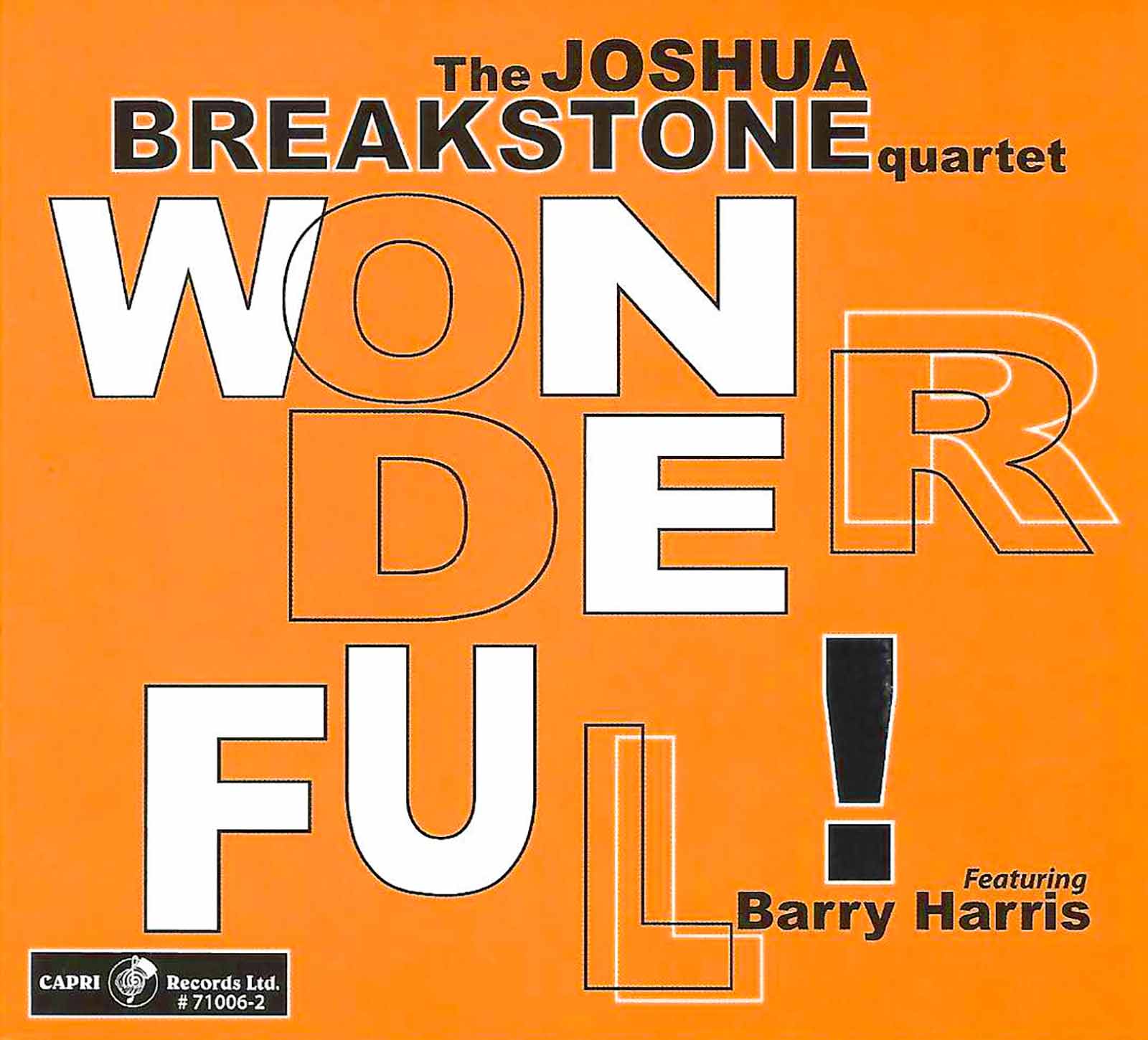
Summary : Joshua Breakstone’s “Wonderful!” is a remarkable jazz album featuring a timeless dialogue between guitar and piano with legendary pianist Barry Harris. A tribute to acoustic jazz tradition, the recording blends elegance, history, and masterful improvisation.
Joshua Breakstone’s “Wonderful!”: A Study in Jazz Continuity, Conversation, and Tradition
There is a particular challenge in reviewing an album rooted in traditional jazz. The language is familiar, the vocabulary established, and the artistic references often connected to a golden age that many listeners already know intimately. It is even more unusual when the recording contains only one original composition by the artist. Yet guitarist Joshua Breakstone’s career provides the necessary context for understanding why such a project deserves attention.
Breakstone is not an artist simply revisiting the past. He has spent decades immersed in the tradition, developing a reputation that extends well beyond the American jazz scene. His musical identity has been shaped by a deep respect for the architects of modern jazz, while maintaining a personal voice built on clarity, elegance, and an unmistakable commitment to acoustic expression.
In 1986, Breakstone recorded four albums for Contemporary Records, working alongside musicians whose names represent some of the finest achievements in jazz history, including Pepper Adams, Kenny Barron, Dennis Irwin, Jimmy Knepper, Tommy Flanagan, Keith Copeland, and Kenny Washington. That year also marked his first tour of Japan, a significant moment in a career that would continue to develop internationally.
His connection with European jazz became another important chapter. In 2004, he recorded “A Jamais” for Capri Records with French musicians Louis Petrucciani and Joël Allouche. A year later, “Memoirs: The French Sessions, Vol. 2”.
Harris’s presence immediately changes the nature of the recording. His piano playing carries the weight of history without becoming an exercise in nostalgia. Having worked with figures such as Miles Davis, Sonny Stitt, and Thad Jones, Harris represents a direct link to an era when jazz musicians developed their voices through nightly performances, constant collaboration, and an almost endless exchange of ideas.
On “Wonderful!”, that history becomes part of the music itself. Harris’s piano is often the dominant voice, not because it overwhelms the ensemble, but because his phrasing and harmonic imagination create the framework around which the performances unfold. Every chord suggests experience, every melodic decision reveals a lifetime spent understanding the architecture of jazz.
Breakstone responds with remarkable sensitivity. His guitar playing avoids unnecessary display, favoring precision, tone, and melodic intelligence. He understands that jazz guitar is not only about individual expression but also about conversation. His lines seem to emerge naturally from Harris’s ideas, creating a dialogue where neither musician is merely accompanying the other.
The album’s appeal lies precisely in that interaction. Many of the selections are well known, yet the performances do not feel like museum pieces. Instead, they demonstrate how traditional jazz remains a living language when played by musicians who understand both its foundations and its possibilities.
Listening to Harris, one can still hear the energy of his early years in Detroit, where he developed his musical vocabulary in local clubs and accompanied visiting artists. Those experiences exposed him to a wide range of styles and personalities, creating the depth and flexibility that became defining characteristics of his playing. Decades later, that knowledge remained intact, transformed into a musical voice that was both authoritative and remarkably fresh.
Breakstone approaches the tradition from another perspective. His role is not to recreate the past but to enter into conversation with it. He creates an environment where the historical importance of the music is respected, while allowing room for individual interpretation. The result is a recording that feels less like a tribute and more like a continuation.
The historical importance of “Wonderful!” is reinforced by its recording location. Captured on May 24, 1984, at Vanguard Studio, the album carries the atmosphere of a room that has witnessed some of the most significant moments in jazz history. The studio hosted recordings by artists including Bill Evans, John Coltrane, and Sonny Rollins, and that legacy gives the performance an additional sense of connection to the broader story of the music.
The closing track, Django Reinhardt’s “Django’s Castle,” is particularly appropriate. Given Breakstone’s long relationship with the jazz guitar tradition, Reinhardt’s presence feels almost inevitable. Yet the interpretation avoids simple homage. Through the musical exchange between guitar and piano, the piece becomes a fresh exploration rather than a historical quotation.
“Wonderful!” succeeds because it understands something essential about jazz: tradition survives through reinterpretation. The music does not remain alive because musicians reproduce what came before them, but because they continue the conversation.
This album will naturally appeal to listeners who appreciate acoustic jazz, exceptional musicianship, and the elegance of classic improvisation. But its value extends beyond nostalgia. Joshua Breakstone and Barry Harris demonstrate that a musical language created generations ago can still communicate with immediacy, intelligence, and emotional depth.
“Wonderful!” is not simply a reminder of where jazz has been. It is evidence that, in the hands of musicians who truly understand the tradition, jazz continues to move forward.
Thierry De Clemensat
Member at Jazz Journalists Association
USA correspondent for Paris-Move and ABS magazine
Editor in chief – Bayou Blue Radio, Bayou Blue News
PARIS-MOVE, August 7th, 2026
Follow PARIS-MOVE on X
::::::::::::::::::::::::
To buy this album (August 21, 2026)
Musicians :
Joshua Breakstone, guitar
Barry Harrys, piano
Leroy Williams, drums
Earl Saul, bass
Track Listing :
S’Wonderful
Soul Train
Sevens-Up
This Is It!
Time On My Hands
Two Not One
DJango’s Castle