| Contemporary music |
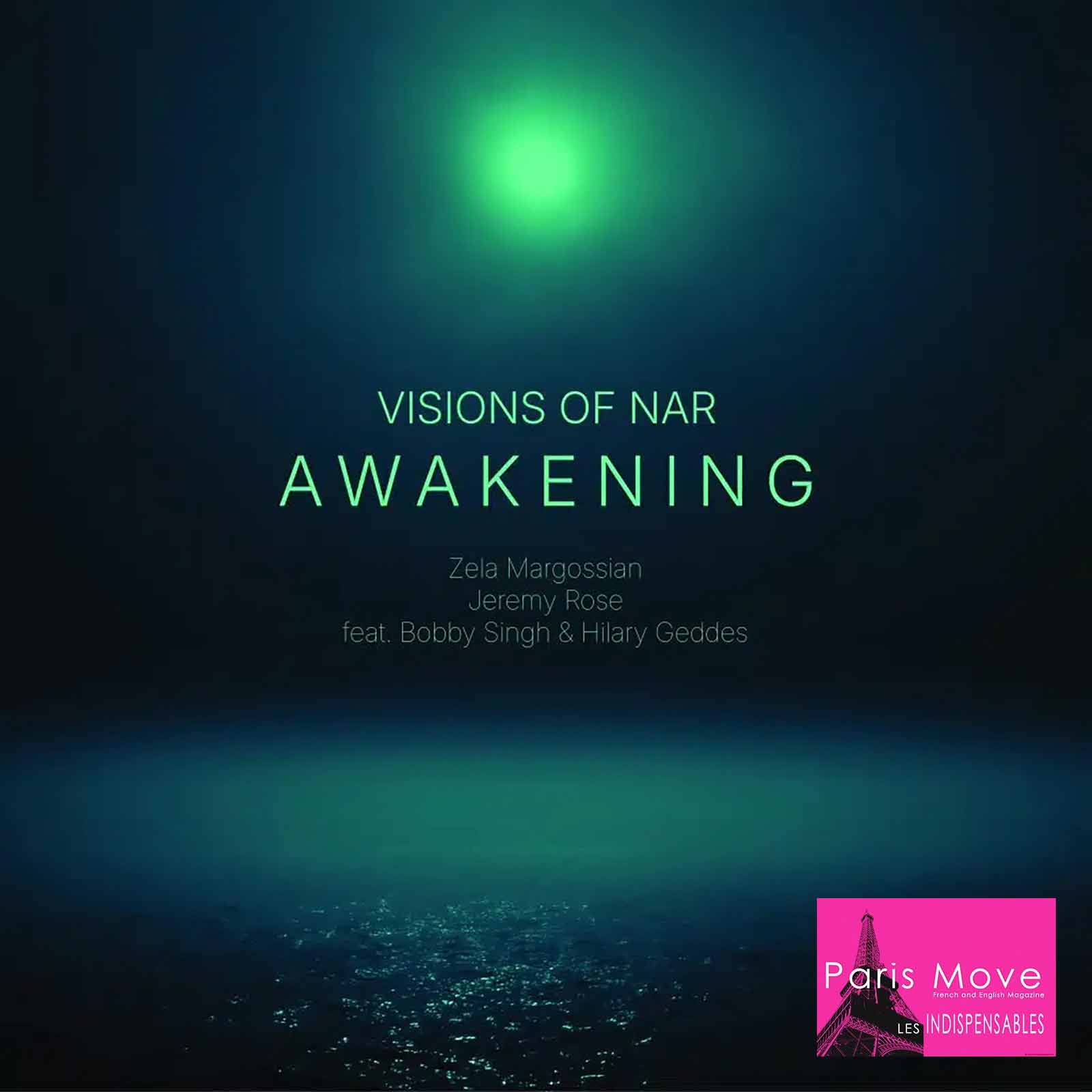
Summary: On Awakening, Visions of Nar transforms Armenian musical traditions, contemporary jazz, and subtle electronic textures into an emotionally rich and deeply immersive listening experience. Led by pianist Zela Margossian and saxophonist Jeremy Rose, the quartet delivers an album that rewards patience, celebrates artistic dialogue, and stands among the most compelling World Jazz releases of recent years.
Awakening: Visions of Nar Crafts a Jazz Journey Where Memory, Culture, and Imagination Converge
There is a growing tendency in contemporary jazz to blur the lines between geography, memory, and imagination. The most compelling albums are no longer satisfied with displaying technical brilliance. They seek to transport the listener somewhere emotionally recognizable yet impossible to locate on any map. Visions of Nar accomplishes exactly that with Awakening, an album that quietly establishes itself as one of the most poetic and intellectually rewarding releases in recent World Jazz.
Following the acclaim of Daughter of the Seas, the Australian ensemble returns with a work that feels broader in scope while becoming even more intimate in its emotional language. Rather than repeating the formula that first drew attention to the group, pianist and composer Zela Margossian and saxophonist Jeremy Rose deepen their artistic partnership, creating music that is less concerned with virtuosity than with atmosphere, conversation, and emotional truth.
Sometimes an album resembles a journey through an imagined country. Anyone who has traveled far from home knows that strange feeling when an unfamiliar street suddenly awakens memories that seem older than memory itself. A particular light, the reflection of a window, the warmth of an afternoon sun, all of it somehow feels familiar even though it belongs to another place. Awakening captures that sensation with extraordinary sensitivity. Close your eyes and the music begins constructing landscapes that exist somewhere between reality and imagination.
That achievement rests upon years of artistic trust. Albums of this depth cannot be manufactured. They emerge through countless conversations, shared performances, and a willingness to listen as carefully as one play. The chemistry between Margossian and Rose has clearly matured into something rare. Every phrase feels less like a performance than an exchange between two storytellers who instinctively understand where the other wishes to go.
Across ten compositions, from the delicate elegance of Cri de Coeur to the heartbreaking lyricism of Sweet Sorrow and the explosive rhythmic momentum of Eat Chaos, the music effortlessly blends Armenian modal traditions, contemporary jazz improvisation, and subtle electronic textures. Yet none of these influences ever feel like stylistic exercises. Instead, they become part of a singular musical language that belongs entirely to Visions of Nar.
“This project has always been about connection,” Rose explains. “Between cultures, between genres, and between musicians. Awakening reflects that spirit. It is music searching for light.” That search for light defines the emotional architecture of the entire album.
Zela Margossian composes with the instincts of a novelist. Her music resembles the notebooks of a writer collecting fragments of history while wandering through unfamiliar cities. Every melody seems to preserve the memory of a landscape, an encounter, or a forgotten tradition. Nothing is overexplained. Instead, she trusts the listener to complete the narrative.
Jeremy Rose becomes the second narrator in that unfolding story. From my perspective, he stands among the most fascinating saxophonists working in Australia today. His playing combines remarkable technical control with an uncommon sense of restraint. He never competes with Margossian’s piano. Instead, he listens, responds, and gently redirects the conversation, allowing every composition to breathe naturally.
This is precisely what distinguishes Visions of Nar from so many contemporary jazz projects. Too often modern ensembles mistake complexity for depth. Here, complexity serves emotion rather than replacing it. Every improvisation exists because it advances the story. Every silence matters just as much as every note.
Having followed Australian jazz for years, I can honestly say that very few recent recordings possess this degree of artistic confidence. Rather than rushing toward immediate impact, Awakening rewards patience. It invites repeated listening because its finest moments rarely announce themselves. They quietly reveal new details with each return.
Recorded live at Pier 2/3 Studios, the sessions preserve the group’s chemistry with remarkable transparency. Nothing feels overproduced. Instead, listeners are placed inside the room alongside the musicians, witnessing conversations unfold in real time. The Steinway D piano becomes the album’s emotional center, producing a tone that is simultaneously powerful, warm, and astonishingly alive.
“Recording at the ACO Studios was a transcendent experience,” Margossian recalls. “The space itself inspired our performances. Every note seemed to shimmer in the air.”
The supporting musicians deserve equal recognition. Guitarist Hilary Geddes contributes luminous textures that often seem suspended between harmony and atmosphere, while Bobby Singh’s tabla playing introduces rhythmic dimensions that expand the album’s cultural vocabulary without ever becoming ornamental. Together they transform every composition into something larger than the sum of its influences.
Rose summarizes the artistic ambition simply: “We wanted to create something timeless. Music that honors our heritage while speaking naturally in today’s language.” That ambition is fully realized.
Listening to Awakening, one occasionally hears echoes extending far beyond jazz. Certain passages recall the conversational intimacy found in Monteverdi’s Madrigals. Elsewhere there are moments whose spacious architecture brings to mind Henry Purcell, not because the music imitates either composer, but because it embraces the same understanding that silence possesses expressive power. The pauses become part of the composition itself, allowing emotion to resonate long after individual notes have disappeared.
One of the album’s defining moments arrives in Eat Chaos. Rose’s saxophone work is nothing short of remarkable. Whether the haunting sonic atmosphere results from reverberation, looping technology, or both is ultimately beside the point. Technology never overshadows expression. Instead, every electronic gesture extends the emotional conversation, creating musical narratives that transcend language itself.
Inspired by Nar, the Armenian goddess associated with water, rain, and the sea, the album explores themes of renewal, migration, memory, and transformation. Water becomes both metaphor and musical principle. Melodies constantly evolve, returning in altered forms much like waves reshaping a shoreline. The symbolism never feels forced because it grows organically from the music itself.
Perhaps the greatest accomplishment of Awakening is its refusal to simplify either its emotions or its ideas. It trusts its audience. It assumes listeners are willing to sit quietly, to wonder, and occasionally to leave questions unanswered. That confidence is increasingly rare in contemporary music.
For those willing to embrace adventurous jazz that values imagination as highly as virtuosity, Awakening offers an unforgettable experience. It is an album that speaks softly yet leaves an enduring impression. Long after the final piano chord fades into silence, its melodies continue to echo somewhere just beyond memory, like sunlight lingering on unfamiliar streets that somehow feel like home.
In an era increasingly driven by speed and instant consumption, Awakening makes a persuasive argument for something altogether different. It asks us to slow down, to listen with intention, and to rediscover the quiet pleasure of music that unfolds gradually rather than demanding immediate attention. Those who accept that invitation will find themselves rewarded with one of the most thoughtful, emotionally resonant, and artistically accomplished jazz recordings of recent years.
Thierry De Clemensat
Member at Jazz Journalists Association
USA correspondent for Paris-Move and ABS magazine
Editor in chief – Bayou Blue Radio, Bayou Blue News

PARIS-MOVE, August 6th, 2026
Follow PARIS-MOVE on X
::::::::::::::::::::::::
Musicians :
Zela Margossian | Piano
Jeremy Rose | Saxophones
Featuring:
Hilary Geddes | Guitar
Bobby Singh | Tabla
Tracklist:
- Cri de Cour (Rose)
- The Little Things (Margossian)
- Gorgeous Nothings (Rose)
- Sweet Sorrow (Margossian)
- Let’s Play in the Fields (Margossian)
- Eat Chaos (Rose)
- Blessings (Margossian)
- Don’t Wait to be Introduced (Rose)
- In Times Like These (Margossian)
- Awakening (Rose)
Recorded at ACO Studios, Pier 2-3, Sydney, 23-24 August 2025, by Bob Scott
Mixed and mastered by Bob Scott
Artwork by Ara Gharakhanian