| Rock Jazz Fusion |
Summary: An in depth review of Jeremy Green’s latest album, a bold fusion of rock and jazz that revives the spirit of 1980s jazz rock with exceptional guitar work, infectious rhythms, and the promise of an artist coming into his own.
Jeremy Green Revives the Spirit of Jazz Rock Fusion With an Album That Defies Contemporary Trends
Few musicians today are willing to embrace jazz rock fusion with the same unapologetic conviction that defined the genre’s golden age. Once a staple of record stores during the 1980s, albums that effortlessly bridged the worlds of jazz virtuosity, arena rock, and FM radio have become increasingly rare. Jeremy Green’s latest release feels like an artifact from that era, not because it imitates the past, but because it proudly carries forward a musical language that many assumed had disappeared.
Across eight tracks, the album evokes the sensation of rediscovering the soundtrack of adolescence. While its production, guitar tones, and recording techniques belong unmistakably to the twenty first century, its spirit remains deeply connected to a period when instrumental excellence and ambitious arrangements were celebrated rather than treated as niche interests. A saxophone occasionally appears to acknowledge the record’s jazz heritage, but this is ultimately a rock album at heart. Jazz exists more as a subtle current running beneath the surface than as its defining voice. Green inhabits a musical universe of his own, one that draws inspiration from the past without becoming imprisoned by nostalgia.
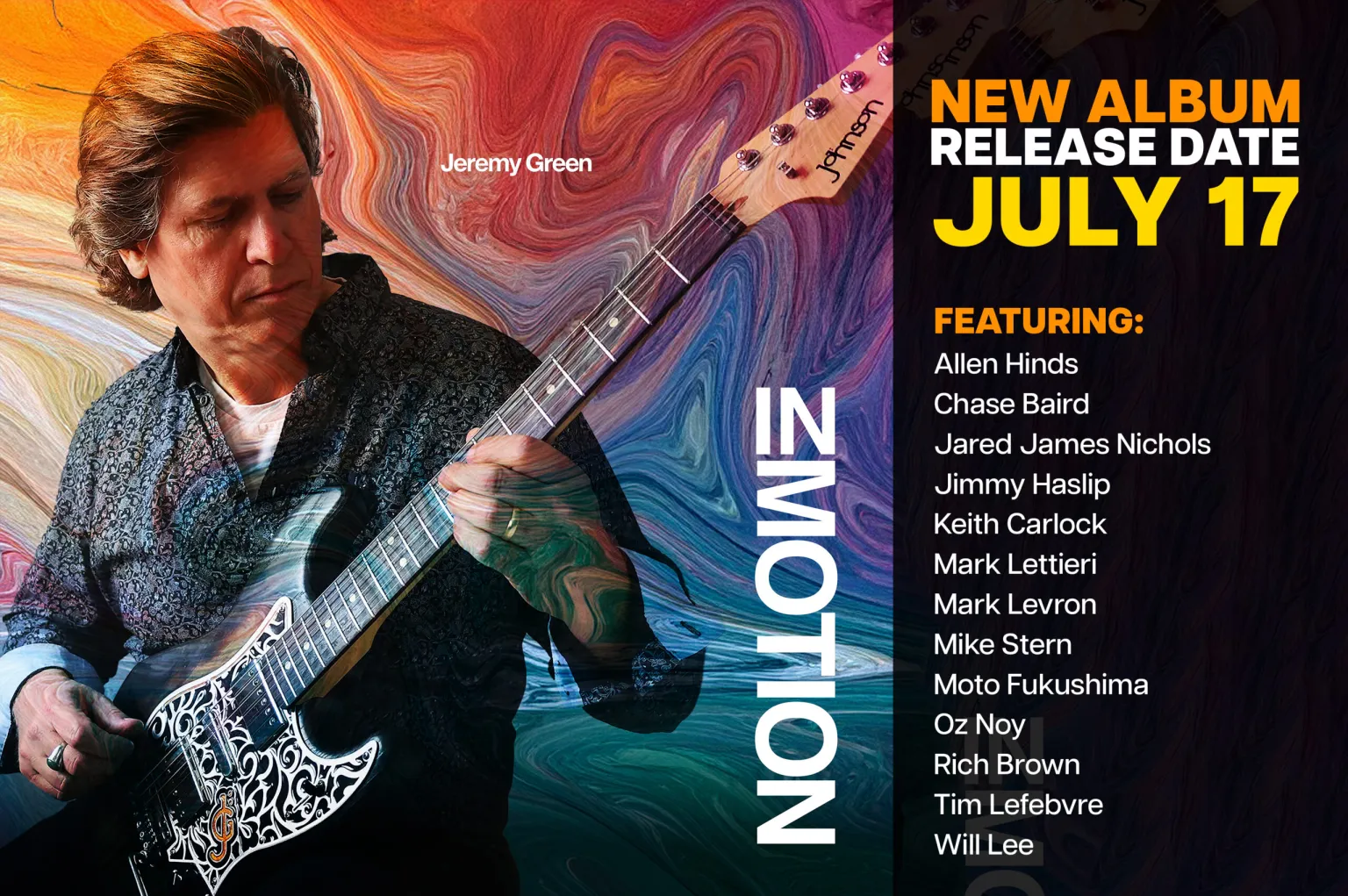
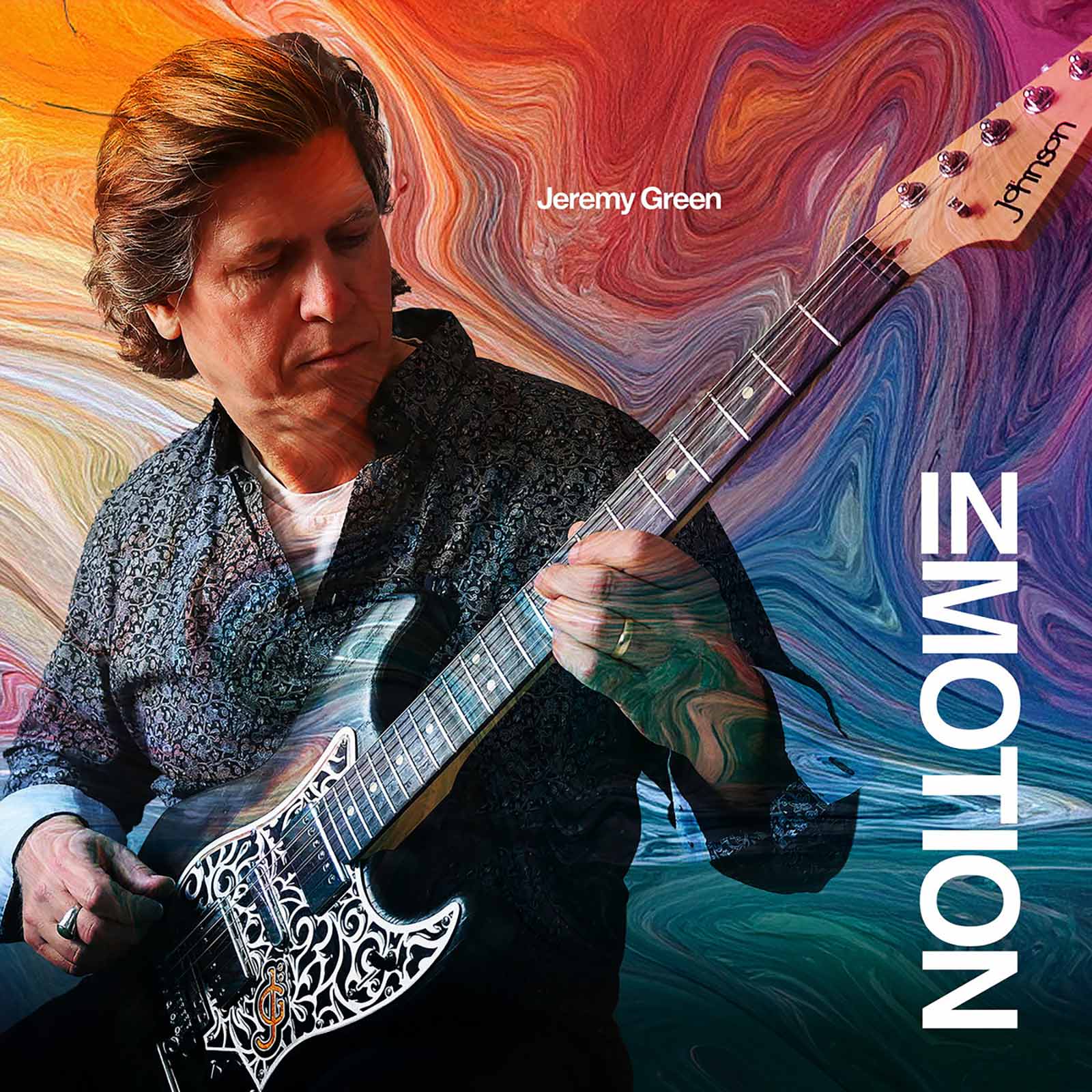
Released on July 17, the album marks the first time Jeremy Green has presented a record composed entirely of his own original material. That milestone carries particular significance. Writing compelling music around multiple electric guitars, looping textures, and dense rhythmic frameworks is a far more demanding exercise than simply showcasing technical ability. Every composition must remain coherent despite layers of sonic complexity.
It is around the third track, “T55,” featuring the remarkable Mike Stern, that the album truly reveals its personality. Stern’s unmistakable phrasing and lyrical improvisation provide a fascinating counterbalance to Green’s more aggressive approach. Rather than functioning as a guest appearance designed merely to impress, Stern introduces greater melodic flexibility and dynamic breathing room, allowing the conversation between the two guitarists to become one of the album’s defining moments. His contribution briefly shifts the focus away from sheer intensity and reminds the listener that restraint can often be as compelling as virtuosity.
Like many first collections of entirely original compositions, however, the record occasionally leans too heavily on constant momentum. Green clearly wants every track to make an immediate impact, but the cumulative effect is that the listener is rarely given an opportunity to pause before another cascade of riffs arrives. The album seldom relaxes. Instead, it moves forward with relentless confidence, sometimes sacrificing contrast in favor of perpetual motion.
Yet this characteristic also reveals the project’s true purpose. These compositions seem conceived primarily for live performance, where their muscular grooves and driving energy would undoubtedly become even more effective. On stage, the uninterrupted momentum would likely feel exhilarating, transforming technical precision into a shared physical experience between performers and audience. Heard through that lens, the album’s structure becomes entirely understandable.
Perhaps no track better illustrates Jeremy Green’s artistic personality than “Queen West.” Rather than relying on dazzling guitar fireworks alone, the composition is anchored by its rhythmic architecture, allowing groove to become the central narrative. It avoids some of the denser riff driven passages found elsewhere on the album, offering a more balanced showcase of Green’s songwriting abilities.
Green’s guitar playing occasionally recalls Eddie Van Halen, although the comparison has little to do with identical phrasing or harmonic vocabulary. Instead, the connection lies in attitude. Both guitarists share an almost fearless commitment to momentum, attacking every phrase with remarkable confidence while allowing technique to serve expressive power rather than mere display. Green’s playing possesses that same sense of urgency, where every note feels intentional and every solo pushes relentlessly forward.
This is, above all, an album for listeners who appreciate exceptional guitar playing and sophisticated rock fusion. Jazz remains present, but largely as an atmospheric fingerprint rather than the album’s primary language. Those expecting traditional jazz fusion may therefore find themselves surprised by how decisively Green embraces the vocabulary of melodic rock.
If there is one aspect that occasionally limits the album’s emotional range, it is the relatively narrow instrumental palette. Green’s guitar work is consistently inventive, but additional colors could have elevated the music even further. Carefully arranged brass sections would have introduced greater dramatic weight while expanding the harmonic spectrum beyond the guitar centered framework. Likewise, keyboards could have provided richer textures, subtle harmonic transitions, and moments of atmospheric relief between the album’s more energetic passages. These additions would not have diluted Green’s identity as a guitarist. On the contrary, they would have created the space necessary for his finest ideas to resonate with even greater impact.
Listening to the album inevitably invites comparisons with the polished productions that dominated sophisticated rock during the mid 1980s. Revisiting albums from that era alongside Green’s latest work reveals a remarkably coherent musical lineage. Echoes of Van Halen, Toto, and other pioneers of technically ambitious rock emerge naturally throughout the record. Yet Green never settles for imitation. Instead, he extends a tradition that has been largely neglected over the past three decades, demonstrating that this style remains capable of evolving rather than merely surviving as an exercise in nostalgia.
For that reason, this album should perhaps be understood not as a finished artistic destination but as the opening chapter of something even more promising. Its greatest achievement lies in its unwavering rhythmic intelligence. Maintaining compelling rhythmic momentum while balancing multiple electric instruments is one of the most demanding challenges in contemporary fusion, and Green demonstrates an impressive command of that discipline from beginning to end. Even when the arrangements become densely layered, the pulse never loses its clarity or purpose.
As a Canadian musician, Green has naturally enjoyed significant exposure through Jazz FM while receiving recognition from respected publications such as Guitar Player Magazine, whose readership has long celebrated technically accomplished rock guitarists. Over the years, he has collaborated and recorded with an extraordinary roster of musicians that includes Mike Stern, Oz Noy, Robben Ford, Mark Lettieri, Keith Carlock, Victor Wooten, Billy Sheehan, Will Lee, Jimmy Haslip, Tim Lefebvre, Michel Cusson, Rich Brown, Paul DeLong, Moto Fukushima, Jared James Nichols, and Allen Hinds. Such a résumé reflects not only exceptional technical credentials but also the respect he commands among many of today’s finest musicians.
Jeremy Green is unquestionably an artist worth following. He has already established himself as a highly respected collaborator, but his greatest achievements may still lie ahead as a composer and bandleader. This first all original recording demonstrates that he possesses both the technical foundation and the artistic ambition to build something lasting. As he continues refining the balance between virtuosity, melodic storytelling, dynamic contrast, and broader orchestration, his musical voice will almost certainly become more distinctive.
At a time when much of contemporary fusion gravitates toward polished minimalism or electronic experimentation, Jeremy Green has chosen a far more difficult path. He is reviving a style that many believed had faded into history while gradually reshaping it according to his own artistic vision. If this album represents the foundation, its successor may well reveal the full breadth of an artist who is only beginning to realize his considerable potential.
Thierry De Clemensat
Member at Jazz Journalists Association
USA correspondent for Paris-Move and ABS magazine
Editor in chief – Bayou Blue Radio, Bayou Blue News

PARIS-MOVE, July 29th, 2026
Follow PARIS-MOVE on X
::::::::::::::::::::::::
Musicians:
Jeremy Green: compositions, rythm & lead guitar
Keith Carlock: drums
Tracklist & Performers:
01 – In Motion (3:57) — Will Lee, Mark Levron, Mark Lettieri
02 – He’s Grinding (4:06) — Will Lee, Mark Lettieri
03 – The 55 (7:13) — Tim Lefebvre, Mike Stern, Chase Baird
04 – Where the Sun Shines the Brightest (6:06) — Rich Brown, Mike Stern
05 – And Ah WHAT? (4:55) — Jimmy Haslip, Allen Hinds
06 – Queen West (4:35) — Moto Fukushima, Jared James Nichols
07 – Tee Shot (4:29) — Oz Noy, Jimmy Haslip, Chase Baird
08 – Sir Robin (6:27) — Jimmy Haslip, Chase Baird