
| Jazz |
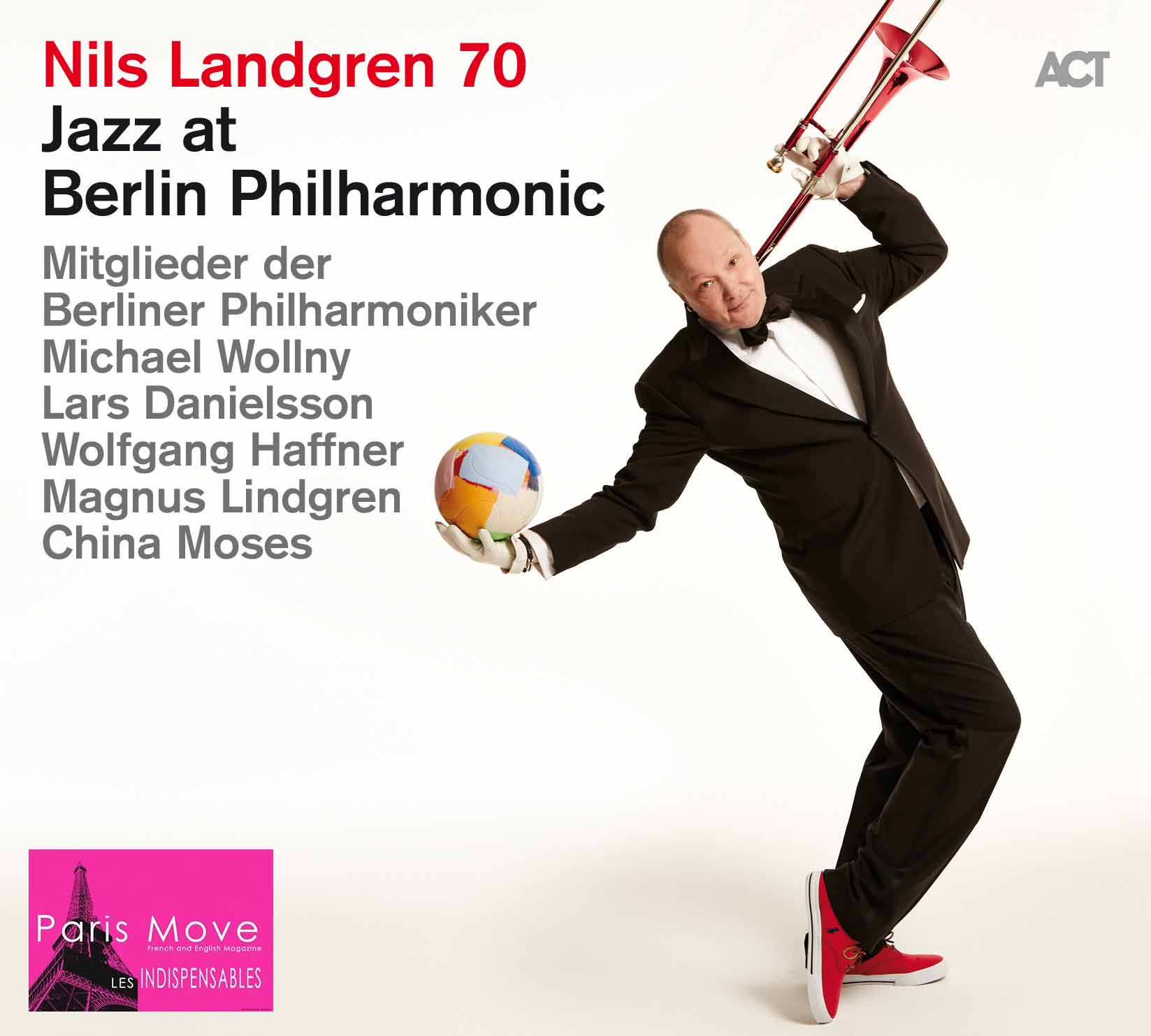
Summary: Nils Landgren celebrates his 70th birthday with Love of My Life, a stunning orchestral jazz album recorded at the Berlin Philharmonie. Featuring tributes to Joe Sample, collaborations with China Moses, Michael Wollny and Magnus Lindgren, this release captures the Swedish trombonist’s unique blend of jazz, soul, funk and classical influences. A powerful celebration of one of Europe’s greatest jazz artists.
Nils Landgren at 70: The Red Trombone That Built a Bridge Between Jazz Worlds
The lights of the Berlin Philharmonie slowly faded, leaving one of Europe’s most prestigious concert halls suspended in silence for a few fleeting moments. Then the orchestra’s opening notes emerged, carrying the unmistakable tension that accompanies truly memorable occasions, setting in motion a musical journey where classical tradition, the freedom of jazz, the soul of American music, and decades of artistic exploration would meet.
On that February evening in 2026, Nils Landgren was celebrating far more than a birthday. He was celebrating a lifetime. For more than four decades, the Swedish musician has stood among the most recognizable figures in European jazz. Few artists have crossed the boundaries between sophisticated jazz, infectious funk, soulful vocals, and ambitious orchestral music with such effortless ease. Known around the world as “Mr. Red Horn” for his iconic crimson trombone, Landgren has become much more than an exceptional instrumentalist. He is a composer, singer, producer, tireless collaborator, and one of jazz’s most passionate ambassadors on the international stage.
With more than sixty albums released under his own name, along with countless collaborations spanning a remarkable range of musical worlds, he has built a career founded not on stylistic boundaries, but on curiosity and conversation. At times performing more than two hundred concerts in a single year, he has maintained an extraordinary level of energy and creativity that has established him as one of the defining voices of contemporary European jazz.
For a milestone like this, there was ultimately only one place worthy of the occasion. The stage. The celebration took place on February 15, 2026, as Nils Landgren 70: Jazz at Berlin Philharmonic XIX launched a project destined to travel through some of Europe’s most celebrated concert halls. Among the many tributes marking his seventieth birthday, one held a particularly special place: Nils Landgren 70: Jazz at Berlin Philharmonic XIX.
Siggi Loch, founder of ACT, Landgren’s longtime friend and steadfast supporter throughout his career, offered him a gift worthy of their shared history: a concert conceived as part of the acclaimed Jazz at Berlin Philharmonic series, performed in the Philharmonie’s magnificent main hall.
It could hardly have been a more fitting setting for an artist whose entire career has been devoted to bringing different musical languages together.
The evening was conceived as a celebration of Landgren’s artistic family. During the first half of the concert, several ACT musicians took the stage to honor Mr. Red Horn, paying tribute to an artist whose influence extends far beyond his own recordings. Their performances reflected the philosophy of a musician who has never viewed jazz as a fixed tradition, but rather as a living conversation passed from one generation to the next.
After the intermission, the atmosphere shifted. When Nils Landgren returned to the stage, he was greeted by a long-standing ovation. From that moment, the concert turned toward one of the deepest musical relationships of his life: his admiration for, and friendship with, Joe Sample.
The pianist, composer, and founding member of The Crusaders embodied many of the values that have shaped Landgren’s own artistic journey. Joe Sample possessed the rare gift of blending sophistication with emotional warmth, technical mastery with accessibility, and jazz with the timeless language of soul, rhythm and blues, and American popular music.
For Landgren, Sample was far more than an influence. He was a musical companion whose spirit has continued to resonate throughout his own work. The tribute program therefore became much more than a sequence of performances. It felt like a conversation between two artists separated by geography but united by the same conviction: music must touch the heart before it can ever reach the mind.
For this extraordinary performance, Landgren was joined by an exceptional ensemble. Alongside him were pianist Michael Wollny, bassist Lars Danielsson, drummer Wolfgang Haffner, vocalist China Moses, and several members of the Berlin Philharmonic Brass. The arrangements were written by Grammy Award winning Swedish musician, composer, and arranger Magnus Lindgren, whose contribution became one of the defining elements of the entire project.
Magnus Lindgren’s role gave the concert its distinctive identity. His goal was never simply to place an orchestra behind a jazz ensemble. Instead, he sought to create a genuine musical dialogue. Classical colors, jazz improvisation, and the traditions of soul music flowed naturally into one another, each finding its own space within the performance.
The orchestra was never reduced to accompaniment. It became another voice in the story. The result was an evening in which musical boundaries seemed to disappear.
The opening moments of the album capture that feeling perfectly. A long orchestral introduction gradually unfolds, creating an almost cinematic atmosphere before gently giving way to jazz. Drawn immediately into this carefully built crescendo, the audience hears Landgren enter with Soul Shadows, delivering a deeply moving interpretation that reveals the artist behind the instrument.
Because the red trombone has never told the whole story. Behind its instantly recognizable sound stands a complete musician whose voice, phrasing, and emotional depth have grown richer with every passing decade. Landgren does not simply play notes. He tells stories. At seventy, he still possesses the rare ability to transform a concert into an intimate experience, even inside one of Europe’s largest concert halls. Perhaps that is the true secret behind his remarkable longevity: his ability to make every performance feel like a personal exchange.
In the liner notes accompanying Nils Landgren 70: Jazz at Berlin Philharmonic XIX, Landgren reflects that the project almost seemed destined to happen. Siggi Loch’s invitation arrived in 2025, when the ACT founder proposed that he headline the Jazz at Berlin Philharmonic series to celebrate his seventieth birthday.
For Landgren, there was only one possible answer. “It was an invitation you simply cannot refuse,” he recalls with the understated humor that has long been one of his trademarks. He adds that it took only a few seconds to accept the challenge. Behind that lighthearted remark, however, lay a much deeper awareness of what this concert truly represented: a rare opportunity to bring together some of the most important musical forces that have shaped his life.
The concept itself was extraordinary. Some of the finest jazz musicians of their generation would perform alongside the brass section of the Berlin Philharmonic, united through Magnus Lindgren’s elegant arrangements. The collaboration perfectly embodied the idea that has guided Landgren throughout his career: creating conversations between musical worlds that are too often thought of as separate.
“I loved the idea of bringing together outstanding jazz musicians with the exceptional brass section of the Berlin Philharmonic through Magnus Lindgren’s arrangements,” he writes.
This vision reflects his artistic identity at its core. Throughout his career, Landgren has consistently refused to confine musical genres within rigid boundaries. For him, jazz, soul, funk, and classical music are not opposing territories. They are simply different expressions of the same deeply human desire to communicate.
To complete the ensemble, Landgren invited vocalist China Moses, whose powerful voice and emotional depth add another dimension to the project. The daughter of legendary jazz singer Dee Dee Bridgewater, she maintains a direct connection to the history of American music while asserting a distinctive artistic identity of her own. Fortunately for Landgren, she embraced the invitation with enthusiasm.
Working alongside Siggi Loch, the Swedish trombonist then began selecting the repertoire. It quickly became clear that every piece needed to carry a personal story. Together they chose compositions associated with Joe Sample, not only because they represent an important chapter in jazz history, but above all because they are songs they genuinely love. That distinction matters.
Nils Landgren 70: Jazz at Berlin Philharmonic XIX never feels like a tribute born of obligation or institutional reverence. Instead, the album gives the impression of close friends gathering around music that has accompanied them throughout their lives.
Magnus Lindgren’s arrangements transformed these familiar compositions into something entirely new. Rather than simply expanding the original orchestrations, he created spaces where the orchestra and the jazz musicians could truly engage with one another.
The result is a richly textured soundscape in which the strings can introduce moments of quiet reflection, the brass can suddenly unleash tremendous energy, and Landgren’s trombone remains at the center, serving both as a voice and as the story’s narrator.
The emotion that runs throughout the concert grows from this delicate balance between precision and spontaneity. Every detail feels carefully considered, yet nothing sounds calculated. The musicians perform with extraordinary command while preserving the human vulnerability that gives jazz its enduring depth. That quality has always defined Landgren’s work.
Few European musicians have embraced the language of American soul, funk, and rhythm and blues with such natural conviction. Through his Funk Unit, he demonstrated a profound understanding of groove, rhythm, and the emotional power that lies at the heart of American popular music.
His relationship with funk has never been an imitation. It has always come from genuine respect and from a lifetime spent listening, learning, and absorbing its language.
Yet his body of work reveals another side of his personality as well. Many of his projects reflect a deeply European sensibility, shaped by Nordic traditions, classical influences, and a refined appreciation for musical architecture.
Landgren has always moved effortlessly between these different worlds without ever belonging entirely to any one of them. Perhaps that unique position explains why his music has traveled so widely. His connection to American soul is equally evident in his singing. At times, his phrasing recalls the great voices of classic soul, carrying that rare ability to communicate emotion with immediate honesty, occasionally evoking artists such as Otis Redding. The comparison is not one of career or style, but rather of a shared gift: expressing feeling through tone, rhythm, and sincerity. Like his trombone, his voice bears the graceful imprint of time.
Those who have worked alongside him often describe the same qualities audiences experience during his concerts: generosity, curiosity, and an extraordinary ability to bring people together. Landgren has earned his reputation not by placing himself above his listeners, but by inviting them into his musical world.
That philosophy lies at the very heart of Nils Landgren 70: Jazz at Berlin Philharmonic XIX. The applause following each performance celebrates more than technical brilliance. It responds to the emotion created on stage. The audience is not merely listening to new arrangements of beloved compositions. They are witnessing a celebration of friendship, memory, and the enduring power of music.
As the final notes dissolve into the vast space of the Berlin Philharmonie, one overwhelming impression remains. This was a moment that cannot easily be recreated. A legendary venue. Extraordinary musicians. A tribute to a friend and a lifelong source of inspiration. And an artist celebrating seventy years of music while continuing to look toward the future.
For those who have followed Nils Landgren’s remarkable journey over the years, Love of My Life represents far more than another album release. It stands as a landmark document, capturing the moment when decades of artistic exploration converge within a single performance.
It brings together everything that has shaped the Swedish trombonist’s musical identity: the elegance of jazz, the emotional power of soul, the energy of funk, and the grandeur of orchestral music. It is the portrait of an artist who has never stopped searching, experimenting, or challenging his own creative boundaries, while never losing sight of what matters most: music exists above all to create human connection.
Hearing Landgren’s instantly recognizable trombone converse with a full orchestra reveals yet another dimension of his artistry. The instrument that made him famous becomes one voice among many, at times taking the spotlight, at others responding to the musicians around him, yet always carrying a signature that belongs to no one else.
The project’s success lies precisely in its balance. Nothing feels excessive. The orchestra never overwhelms the intimacy of the performances. The jazz musicians never compete with the classical colors. Every voice finds its natural place. That equilibrium is one of the album’s greatest achievements.
The audience’s response throughout the concert speaks volumes. After every piece, the applause honors not only the performers’ technical excellence but also the sincerity flowing through the music. There is joy inside the hall, but also a profound sense of gratitude. The audience understands they are witnessing something rare: an artist capable of looking back on his past with gratitude while remaining fully rooted in the present.
Landgren’s career has always been defined by his ability to bring together worlds that once seemed far apart. Through Funk Unit, he has often been regarded as one of the European musicians whose spirit comes closest to the traditions of American funk, soul, and groove. The comparison is easy to understand. His music carries the rhythmic vitality, warmth, and optimism so closely associated with American music, while preserving a distinctly Scandinavian sensibility.
Yet perhaps his greatest strength lies precisely in occupying that unique space. He belongs completely to neither world. And yet he belongs fully to both. He absorbs influences without ever sacrificing his own identity.
His other projects reveal a more distinctly European sensibility, one shaped by meticulous attention to detail, atmosphere, and musical architecture. Whether performing intimate jazz, an ambitious orchestral work, or reimagining timeless soul classics, he consistently brings the same qualities to his music: openness, elegance, and emotional honesty. That unique combination has made him one of the most respected musicians of his generation.
For American listeners who may never have the opportunity to experience one of his European concerts in person, Nils Landgren 70: Jazz at Berlin Philharmonic XIX offers something truly valuable: the chance to step inside the atmosphere of one of the most significant performances of his career. The album captures not only the music itself, but everything surrounding it: the friendship shared among the musicians, the admiration they hold for Joe Sample, and the celebration of a career built across continents. It also serves as a reminder that contemporary jazz can no longer be defined by geography alone.
The dialogue between Europe and America has always been central to the story of jazz, and artists like Landgren continue that conversation today, bringing fresh perspectives and new sensibilities to a tradition that has always thrived on exchange.
Over the years, he has collaborated with an extraordinary range of musicians: jazz innovators, vocalists, composers, and instrumentalists from around the world. Yet despite that remarkable list of partnerships, his own artistic voice has never been overshadowed.
The red trombone remains instantly recognizable. Its sound is unmistakably his. Yet behind that sound stands a musician whose greatest achievement may not be technical virtuosity, but the rare ability to bring people together. An artist of Landgren’s stature deserved a celebration worthy of his remarkable journey. Through ACT and the Jazz at Berlin Philharmonic series, Siggi Loch understood exactly what the moment required.
He did not simply organize a concert. He envisioned a tribute that reflected the man himself. A musician who has devoted his life to building bridges between traditions, inspiring fellow artists, and sharing the joy of music with audiences around the world received the most fitting gift imaginable: a stage surrounded by friends, a hall filled with listeners, and a musical statement that embodies everything he represents.
After seventy years of music, Nils Landgren remains exactly who he has always been: an artist driven less by the pursuit of perfection than by the desire to create genuine human connection. The red trombone has become his symbol. But his true instrument has always been his ability to bring people together.
Nils Landgren 70: Jazz at Berlin Philharmonic XIX is not the conclusion of a remarkable career. It is the opening of a new chapter in a story that is still being written.
Thierry De Clemensat
Member at Jazz Journalists Association
USA correspondent for Paris-Move and ABS magazine
Editor in chief – Bayou Blue Radio, Bayou Blue News
PARIS-MOVE, July 21st, 2026
Follow PARIS-MOVE on X
::::::::::::::::::::::::
CD / Vinyl / digital
Musicians :
Nils Landgren: vocals, trombone
Michael Wollny: piano
Lars Danielsson: double bass and cello
Wolfgang Haffner: drums
China Moses: vocals (3-7)
Magnus Lindgren: direction, arrangements, tenor saxophone & flute
Members of the Berliner Philharmoniker
Tracklisting :
01 Soul Shadows 09:12
02 Keep That Same Old Feeling 07:05
03 One Day I’ll Fly Away 06:43
04 Don’t Take Your Love To Hollywood 13:03
05 Street Life 11:00
06 Same Old Story 08:27
07 Ain’t Nobody 11:37
08 Good Night Berlin 04:33
Music by Joe Sample, lyrics by Will Jennings, except 07 and 08 by Nils Landgren
Recorded live on 05 May 2026 at the Berliner Philharmonie
Live sound by Jan Ugand
Recorded, mixed and mastered by Klaus Scheuermann
Curated and produced by Siggi Loch
Cover photo by Steven Haberland, design by Siggi Loch
Photos by Steven Haberland (back cover), Stefan Rabold (booklet)