| Jazz |
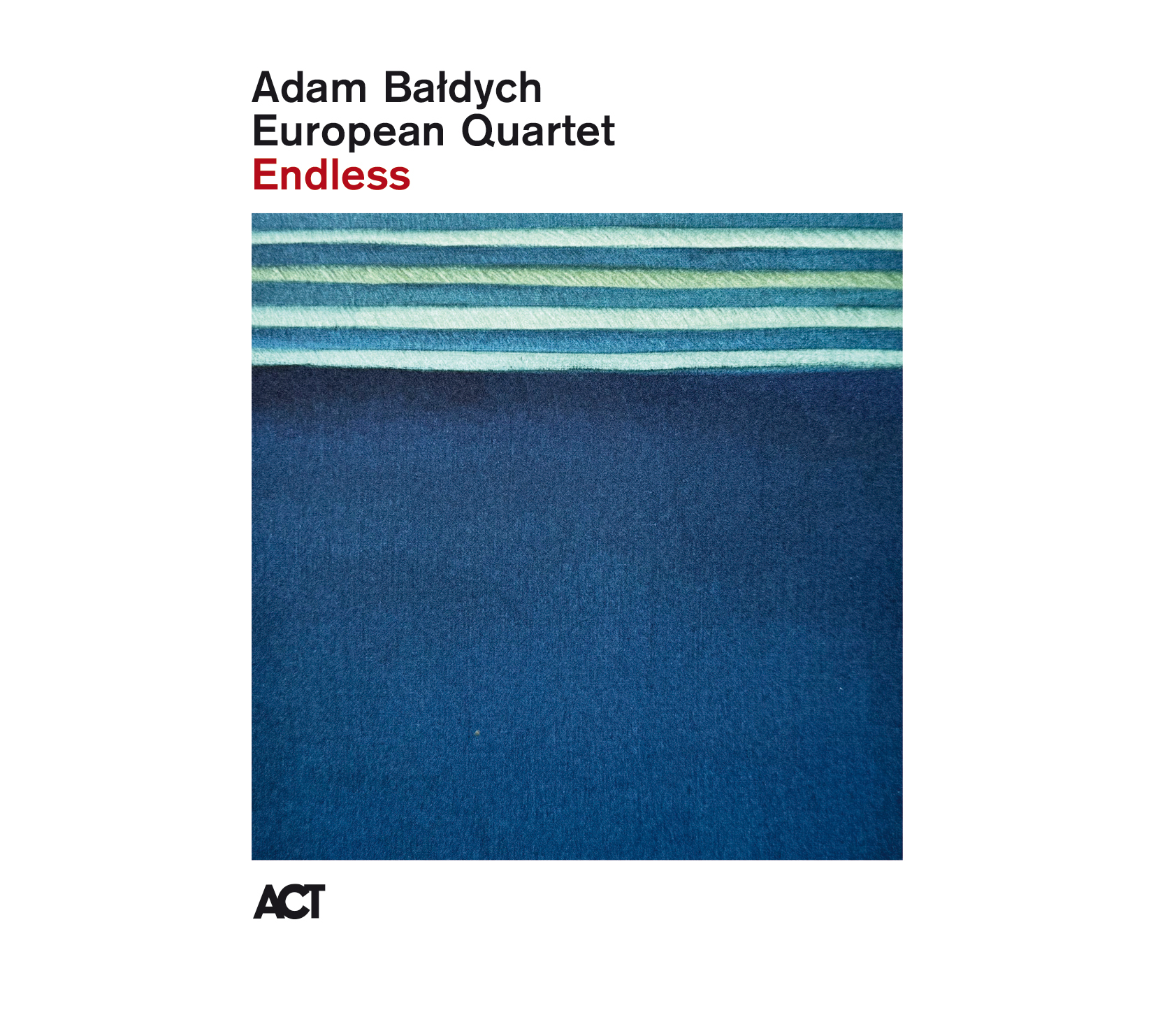
Summary: Adam Bałdych’s Endless is an introspective and beautifully recorded album that explores spirituality, silence and artistic evolution, balancing lyrical beauty with bold creative risks.
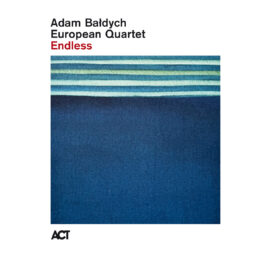
Adam Bałdych’s Endless: A Contemplative Journey Between Jazz, Classical and Folk
Few contemporaryjazz musicians have reinvented themselves as consistently as Polish violinist Adam Bałdych. From the dazzling virtuosity that first propelled him onto the international stage to the increasingly introspective language that has come to define his recent work, Bałdych has never allowed technical brilliance to become an end in itself. With Endless, due for release at the end of August, he takes another decisive step away from spectacle and toward something altogether more personal. This is an album that invites reflection rather than admiration, offering music that unfolds patiently, almost meditatively, and rewards listeners willing to surrender to its unhurried pace.
The title itself is revealing. Endless is more than a poetic choice or an evocative label. It encapsulates Bałdych’s growing fascination with continuity, with the idea that music, memory and identity are never fixed states but part of an ongoing process of transformation. Throughout the album, each composition seems less concerned with reaching a destination than with exploring the journey itself. There are no dramatic declarations here, only a succession of carefully measured conversations that gradually reveal their emotional depth.
The strength of those conversations lies primarily in the dialogue between Bałdych and bandoneon virtuoso Daniele Bonaventura. Their musical relationship has matured into one of remarkable sensitivity, each player instinctively understanding when to lead and, perhaps more importantly, when to step aside. Bonaventura’s warm, almost vocal phrasing blends naturally with Bałdych’s violin, producing moments of genuine lyricism that rank among the album’s most memorable passages. Rather than competing for attention, the two musicians construct melodies together, allowing each phrase to breathe before gently passing it to the other.
The contribution of bassist Michel Benita proves more complex. His playing remains characteristically economical, avoiding unnecessary embellishment and maintaining a quiet rhythmic foundation throughout the recording. Yet the prominence of the bass within the overall mix occasionally works against the remarkable transparency of Bałdych’s writing. It is not a question of performance but of balance. There are moments when the instrument occupies so much of the sonic landscape that some of the finer details in the arrangements become less immediately apparent, slightly reducing the clarity of compositions whose greatest strength often lies in their delicate interplay. Fortunately, these moments remain the exception rather than the rule.
What ultimately defines Endless is the unmistakable influence of Central and Eastern European musical traditions, an aesthetic that has become one of Bałdych’s artistic signatures. Rather than quoting folk melodies directly, he draws upon their emotional vocabulary, embracing melancholy, spaciousness and quiet resilience. The result is music that often feels strikingly cinematic. Wide harmonic landscapes, restrained tempos and carefully sculpted dynamics evoke images more readily than narratives, allowing listeners to project their own experiences onto the unfolding compositions.
This atmosphere serves the album’s deeper philosophical ambitions. Since the beginning of his career, Bałdych has impressed audiences with astonishing technical command, earning recognition as one of the most accomplished jazz violinists of his generation. Over time, however, his priorities have shifted. Virtuosity, once the defining feature of his performances, has gradually become secondary to expression. His extraordinary control of tone and color now functions entirely in service of ideas that are emotional, spiritual and profoundly human.
Those ideas are articulated throughout Endless with unusual restraint. Rather than offering answers, Bałdych poses questions that resonate far beyond music itself. What remains genuinely true in an age of perpetual distraction? What deserves our attention when certainty itself appears increasingly fragile? And once the relentless noise of contemporary life finally fades, what aspects of ourselves endure?
These existential concerns never feel imposed upon the listener. Instead, they emerge naturally through the architecture of the compositions, whose measured pacing encourages contemplation rather than immediate emotional gratification. In a cultural landscape increasingly dominated by urgency and constant reinvention, Bałdych offers something quietly radical: music that values permanence over novelty, patience over speed, and introspection over display.
Rather than demanding attention through technical fireworks, Endless invites listeners into a space where silence carries as much meaning as sound, establishing from its opening moments the reflective atmosphere that will define the entire journey.
Entering Endless requires remarkably little effort. Bałdych has reached a point in his artistic life where his musical language feels entirely coherent, inviting listeners into a world that is immediately recognizable yet never predictable. The youthful ambition that once drove him to astonish audiences with breathtaking technique has evolved into something far more compelling: the confidence to let the music unfold at its own pace. Every composition becomes another chapter in a carefully constructed narrative, each one contributing to a broader emotional landscape rather than existing as an isolated showcase.
That sense of maturity is reflected in the generosity with which Bałdych treats his fellow musicians. Unlike many composer led projects, Endless never revolves exclusively around its principal voice. Instead, it thrives on dialogue, allowing each performer to shape the music in subtle but meaningful ways. This collective approach gives the album a remarkable sense of balance, where individual personalities emerge naturally without disturbing the cohesion of the whole.
Among those collaborators, pianist Jacob Karlzon proves indispensable. His partnership with Bałdych has become one of the most rewarding musical relationships in contemporary European jazz, and Endless only reinforces that impression. Karlzon never competes with the violin for prominence. Instead, he patiently redirects the emotional current of each composition through harmonic choices that are understated yet deeply expressive. His voicings frequently blur the boundaries between jazz, contemporary classical music and Scandinavian lyricism, enriching the music without overwhelming its delicate architecture.
Some of the album’s finest moments emerge when violin and piano are left almost entirely alone. These intimate exchanges possess an extraordinary conversational quality. Rather than presenting a traditional soloist accompanied by a rhythm section, Bałdych and Karlzon seem to think aloud together, finishing each other’s musical sentences with remarkable instinct. Their shared sense of timing and restraint allows even the simplest melodic fragments to acquire unexpected emotional weight. If Endless has a true emotional center, it is surely found in these quiet dialogues.
Over the years, Bałdych has developed what might best be described as the aesthetic of a contemplative violinist. While many jazz violinists naturally emphasize virtuosity and dramatic expression, Bałdych increasingly pursues the opposite direction. His performances are not designed to impress through speed or complexity but to create space for reflection. Listening to Endless often feels less like attending a concert than entering a place of meditation, where every gesture carries deliberate meaning.
There is an almost spiritual quality to his approach. His music resembles a prayer without words, grounded not in grand declarations but in humility and openness. The contact between bow and string becomes an act of quiet devotion, each note carefully shaped, each phrase allowed to resonate fully before giving way to silence. These silences are never empty. On the contrary, they become active participants in the musical conversation, inviting listeners to engage with what remains unspoken.
This ability to embrace silence has become one of Bałdych’s greatest artistic strengths. Rather than attempting to conquer it through constant activity, he allows silence to breathe alongside the music, creating tension, release and emotional depth with remarkable economy. It is an approach that demands patience from both performer and audience, yet the rewards are considerable. In these moments, the violin ceases to function merely as an instrument and becomes a vehicle for contemplation.
Stylistically, Endless also marks another step in Bałdych’s gradual movement toward a musical language increasingly informed by classical and folk traditions. This evolution is not expressed through obvious stylistic quotations or folkloric gestures. Instead, it emerges in the architecture of the compositions themselves. Their measured pacing, carefully balanced structures and lyrical development often owe as much to chamber music as to contemporary jazz. The folk influence is equally subtle, present less in specific melodies than in the emotional directness and understated melancholy that permeate the record.
Equally impressive is the recording itself. Over the years, ACT Music has developed a sonic identity that remains one of the label’s defining achievements, and Endless is another demonstration of that philosophy. The engineers achieve an exceptional balance between precision and atmosphere, capturing every nuance of Bałdych’s remarkably varied tone while preserving the natural interaction between the musicians. The clarity is so refined that listeners could easily mistake the album for a carefully controlled studio production.
Only the occasional sense of acoustic depth and the gentle resonance surrounding the instruments reveal its live origins. Rather than emphasizing audience presence or concert hall ambience, the production preserves an unusual intimacy, allowing listeners to feel almost physically present within the ensemble itself. It is a recording that never calls attention to its technical excellence, yet its transparency plays an essential role in communicating the emotional subtlety of the performances.
Far from serving merely as impeccable documentation of a concert, the production becomes an extension of Bałdych’s artistic vision, reinforcing the album’s atmosphere of quiet introspection while allowing every carefully crafted detail to emerge with remarkable naturalness.
If Endless occasionally falls short of complete artistic fulfillment, it is not because of a lack of ambition. Quite the opposite. The album’s greatest strengths arise from Bałdych’s determination to push beyond familiar territory, yet that same determination sometimes leads him into areas that feel more intellectually persuasive than emotionally compelling.
Several compositions reveal the unmistakable influence of Erik Satie, whose economy of means and understated lyricism have long inspired musicians far beyond the classical world. Bałdych approaches that aesthetic with sincerity, embracing restraint and repetition rather than dramatic development. The intention is entirely consistent with the album’s contemplative philosophy, but the results are uneven. At times, these passages seem to privilege atmosphere over momentum, encouraging admiration more than emotional involvement. While listeners receptive to minimalism may find considerable beauty in this austerity, others may feel that these moments momentarily interrupt the emotional flow established elsewhere on the record.
Another reservation concerns Daniele Bonaventura, whose presence remains one of the album’s great pleasures whenever he is allowed to fully emerge. Few contemporary bandoneon players possess his ability to combine lyricism, warmth and expressive subtlety, qualities that have made him such a compelling partner throughout his collaborations with Bałdych. Here, however, his voice sometimes feels surprisingly restrained. Rather than functioning as a fully equal protagonist, he is occasionally confined to an accompanying role, despite repeatedly demonstrating that his musical personality could have enriched several compositions even further. It is less a question of performance than of opportunity. One cannot help wishing that the album had allowed him greater freedom to shape its emotional landscape.
Yet these observations should not overshadow what Endless ultimately represents. This is not an album seeking immediate gratification, nor does it aspire to become the definitive statement of Bałdych’s career. Instead, it feels like a work in transition, capturing an artist standing between two creative worlds. The lyrical, emotionally direct language that defined many of his earlier recordings remains present, but it increasingly gives way to a quieter and more spacious musical vocabulary, one in which contemplation takes precedence over dramatic expression.
Within that evolving landscape, the exchanges between Bałdych and Jacob Karlzon become the album’s most compelling achievements. Their musical conversations possess an intimacy that transcends technical accomplishment, revealing two artists who have reached a level of mutual understanding where every phrase appears inevitable. These duets embody everything that makes Endless so distinctive: patience, trust, restraint and an unwavering commitment to emotional honesty. They are the moments to which listeners are likely to return long after the record has ended.
Perhaps that is precisely the point. Bałdych has never been an artist content to repeat past successes. Each new recording has challenged both his audience and himself, often refusing the easy satisfaction that accompanies familiar formulas. Such artistic evolution inevitably carries risks. Not every experiment reaches complete resolution, and not every new direction immediately reveals its full potential. But genuine artistic growth rarely follows a straight line, and Bałdych has consistently demonstrated the courage to embrace uncertainty rather than settle into comfort.
In that respect, Endless deserves to be understood not as a conclusion but as a significant milestone within a much broader creative journey. It documents a musician questioning his own language, refining his priorities and searching for new forms of expression without abandoning the emotional sincerity that has always distinguished his work. Even when certain ideas remain more suggestive than fully realized, the ambition behind them commands respect.
For longtime followers of Adam Bałdych, Endless will undoubtedly become an essential chapter in a discography defined by constant reinvention. New listeners, meanwhile, may discover an artist who has moved well beyond the dazzling virtuosity that first established his international reputation, replacing technical display with emotional depth, introspection and remarkable compositional discipline.
It may not be the masterpiece that ultimately defines Adam Bałdych’s remarkable career, but it is arguably one of its most revealing recordings. Endless captures the rare and fascinating moment when an artist chooses exploration over certainty, embracing vulnerability instead of perfection. In doing so, Bałdych reminds us that the most meaningful journeys in music are rarely those that arrive at definitive answers. They are the ones that continue to ask questions, inviting listeners to return, to reflect and, with each encounter, to hear something new.
Thierry De Clemensat
Member at Jazz Journalists Association
USA correspondent for Paris-Move and ABS magazine
Editor in chief – Bayou Blue Radio, Bayou Blue News
PARIS-MOVE, July 21st, 2026
Follow PARIS-MOVE on X
::::::::::::::::::::::::
CD / Vinyl / digital
Physical release in Poland through Imaginary Music
Musicians :
Adam Bałdych: violin, renaissance violin
Daniele di Bonaventura: bandoneon
Jacob Karlzon: piano
Michel Benita: double bass
Track Listing :
Long Way Home
Horizon
Wanderer
Endless
Shine
The Stars Are Closer Than We Think
Rainbow
Traveler
Between Here and Forever
Gnossienne
Michalina
Produced by Adam Bałdych
Composed by Adam Bałdych (except track 11, composed by Erik Satie)
Recorded on January 7– 8, 2026, at the Krzysztof Penderecki European Centre for Music in Lusławice
Music recorded and mixed by Mateusz Banasiuk
Mastered by Magdalena Piotrowska (Hear Candy Mastering)
Photo by Wiktor Franko
Cover art by Manfred Bockelmann, used by kind permission of the artist