
| Jazz |
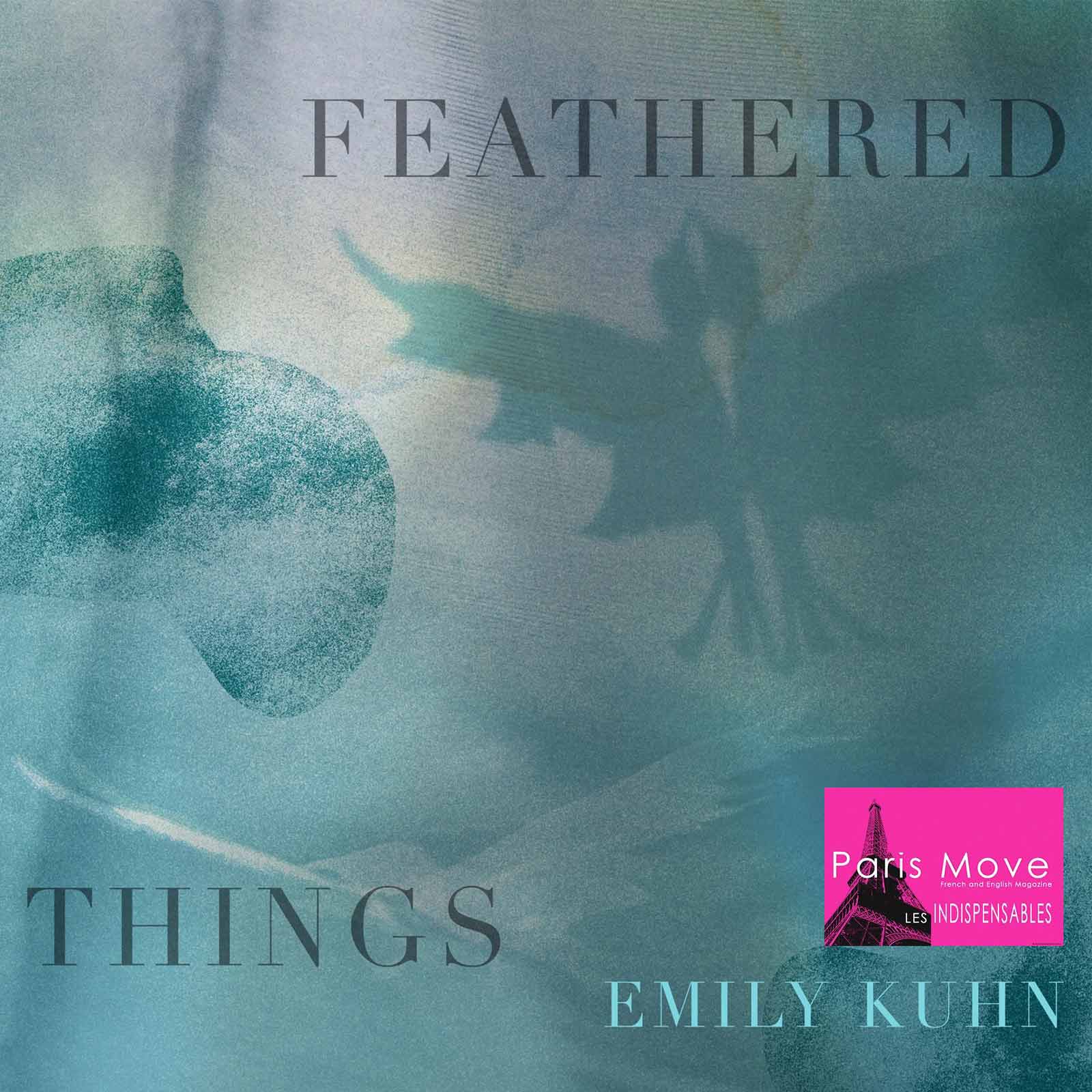
Summary: Emily Kuhn’s Feathered Things is a deeply personal and beautifully crafted contemporary jazz album that blends lyrical trumpet playing with cinematic storytelling. Inspired by the winter landscapes of Michigan, the record explores hope, resilience and memory through eight original compositions, confirming Kuhn as one of the most compelling and distinctive voices in today’s creative jazz scene.
Emily Kuhn’s Feathered Things Review: A Poetic and Cinematic Journey Through Contemporary Jazz
Emily Kuhn’s Feathered Things found its way into my CD player late one winter afternoon, at that quiet hour when daylight begins to fade and familiar surroundings seem to take on a different character. Outside, the world was settling into silence. Inside, I pressed play knowing almost nothing about the trumpeter and composer whose name appeared on the cover. In retrospect, that ignorance was a gift. There were no expectations to satisfy, no previous recordings to compare, only the anticipation that accompanies every genuine discovery. Some albums announce themselves immediately. Others unfold gradually, inviting the listener to meet them on their own terms. Feathered Things belongs unmistakably to the latter category.
The opening track, “Telephone,” establishes that relationship from its very first notes. Kuhn begins alone, manipulating the sound of her trumpet through loops and electronic effects before allowing the melody to emerge with quiet confidence. Rather than serving as a display of technical ingenuity, these textures become the doorway into a musical world where atmosphere is every bit as important as harmony or rhythm. The piece does not demand attention so much as earn it, gently drawing the listener toward an emotional landscape that feels intimate, reflective and unmistakably personal.
As the album unfolds, each composition reveals another facet of Kuhn’s artistic imagination. Nothing feels hurried or overly explained. Instead, the music trusts its audience, allowing melodies to breathe and emotions to surface naturally. It is a remarkably assured approach, particularly from an artist who has chosen not to anchor herself within any single jazz tradition. There are echoes of folk music, hints of chamber music, subtle touches of rock and contemporary classical composition, but these influences never compete for attention. They dissolve into a language that belongs entirely to Kuhn.
The eight original compositions were written during a week-long residency at the Ox-Bow School of Art, an artists’ retreat tucked between the Kalamazoo River and the shores of Lake Michigan. Surrounded by forests, snow-covered landscapes and the vast stillness of a Midwestern winter, Kuhn found both the physical and emotional space from which these works emerged. The imagery that runs throughout the album—feathers, flight, fire and snow—serves as more than poetic decoration. It becomes the vocabulary through which she examines resilience, vulnerability and hope. Here, hope is neither sentimental nor triumphant. It is fragile, restless, stubborn, occasionally painful, yet ultimately indispensable.
Although Feathered Things follows Sky Stories (2020) and Ghosts of Us (2023), it feels less like another chapter than a moment of artistic arrival. One senses an artist who has grown increasingly confident in trusting her instincts, unconcerned with fitting comfortably into established stylistic categories. Contemporary jazz has become a remarkably open landscape, yet few musicians manage to embrace that freedom without sacrificing coherence. Kuhn succeeds because every musical decision seems guided by emotional necessity rather than aesthetic fashion.
Perhaps what struck me most was the album’s cinematic quality. These pieces often unfold like carefully framed scenes rather than conventional jazz compositions built around solos and recurring themes. They recalled, not specific melodies, but the emotional atmosphere of European cinema during the 1950s and 1960s, when directors often allowed music to linger quietly beneath the narrative rather than dominate it. One thinks of the understated elegance found in French and Italian films of that era, where silence carried as much dramatic weight as dialogue. Kuhn possesses a similar understanding of restraint. She rarely tells the listener how to feel. Instead, she creates the conditions in which feeling naturally emerges.
That emotional subtlety is sustained by an exceptional ensemble. Pianist and vocalist Meghan Stagl, guitarist Erik Skov, bassist Kitt Lyles and drummer Gustavo Cortiñas have shared Chicago’s musical landscape with Kuhn for more than a decade, and their collective experience is immediately apparent. Their performances reflect not only technical excellence but deep mutual trust. Ideas circulate effortlessly between the musicians, each voice contributing to an ongoing conversation in which listening becomes every bit as important as playing. Recorded shortly after a tour supported by the SouthArts Foundation, Feathered Things captures a group willing to embrace uncertainty, comfortable enough with one another to leave space for surprise.
Among the album’s highlights, “Vaulted” stands out with particular distinction. It carries an atmosphere that quietly evokes the nocturnal melancholy Miles Davis created for Louis Malle’s Elevator to the Gallows. The connection is emotional rather than stylistic. Like Davis, Kuhn allows the trumpet to inhabit silence, tracing memories that seem suspended somewhere between solitude and consolation. It is a reminder that the instrument is capable of extraordinary tenderness when placed in the service of storytelling rather than spectacle.
From there, the album unfolds like opening an old suitcase discovered in the corner of an attic during the depths of winter. Inside lie photographs whose edges have softened with time. Some faces remain vivid; others have faded almost beyond recognition. Certain memories return with astonishing clarity while others remain tantalizingly incomplete. Kuhn understands that memory rarely unfolds in a straight line. Her music embraces that uncertainty, moving effortlessly between nostalgia, loss and quiet optimism. Even at its most dramatic, the writing remains fundamentally poetic, seeking beauty not through grand gestures but through emotional honesty.
The album’s central five-part suite forms its emotional heart. “For Those Left Behind,” infused with subtle klezmer colors and the character of a prayer, contemplates grief with extraordinary compassion. Rather than dwelling solely on absence, it acknowledges the enduring presence of those who continue to shape us through memory.
“Icarus,” the album’s only vocal composition, transforms the ancient Greek myth into a deeply personal conversation between parent and child. Rather than focusing on ambition or failure, Kuhn explores the delicate balance between the desire to soar freely and the equally powerful need for connection, belonging and safety. The result is one of the album’s most affecting moments.
“Wingspan,” driven by an insistent asymmetrical rhythmic figure, channels anger and sorrow in response to the normalization of violence while refusing to surrender entirely to despair. Its restless energy ultimately points toward resilience rather than resignation.
“As the Crow Flies” offers perhaps the album’s clearest moment of stillness. Inspired by Kuhn’s view from a snow-covered ridge in western Michigan, its melodies unfold with remarkable patience, suggesting the rare clarity that sometimes arrives only after prolonged silence.
The suite concludes with “Gratitude,” composed following a concert and meeting with pianist Brad Mehldau. It functions almost as a quiet benediction, expressing thankfulness for the capacity to create, to listen and to find meaning through art, particularly during life’s most uncertain seasons.
What ultimately distinguishes Feathered Things is not simply the quality of its compositions or the excellence of its performances, but its refusal to mistake complexity for depth. The album never seeks to impress through virtuosity alone. Every note serves a larger emotional purpose, every silence carries intention. In an era when so much contemporary music competes for immediate attention, Kuhn instead rewards careful listening. The experience becomes richer with each return.
This is also an album that quietly expands the possibilities of contemporary jazz without announcing itself as revolutionary. It demonstrates that innovation need not arrive through radical reinvention. Sometimes it emerges through sincerity, patience and the courage to follow one’s own artistic voice wherever it may lead. Kuhn’s music speaks fluently across genres while remaining unmistakably jazz in its openness, curiosity and commitment to collective expression.
Long after the final notes fade, what remains is not a particular melody but a lingering emotional impression, as though one has spent time inhabiting someone else’s memories only to discover reflections of one’s own. Few albums achieve that level of intimacy without becoming self-indulgent. Feathered Things does so with remarkable grace.
Discovering Emily Kuhn through this recording feels less like encountering an emerging artist than recognizing a distinctive voice that has been quietly evolving for years. Inevitably, it sends the listener back toward Sky Stories and Ghosts of Us, not merely to complete the discography but to understand the artistic journey that culminates here.
More importantly, Feathered Things deserves to be heard as more than an impressive personal statement. It stands as one of those increasingly rare jazz recordings that resists easy classification while remaining emotionally immediate, intellectually engaging and profoundly human. It reminds us that the most enduring music often whispers rather than shouts, inviting us not simply to listen, but to pay attention.
Thierry De Clemensat
Member at Jazz Journalists Association
USA correspondent for Paris-Move and ABS magazine
Editor in chief – Bayou Blue Radio, Bayou Blue News
PARIS-MOVE, July 17th, 2026
Follow PARIS-MOVE on X
::::::::::::::::::::::::
Musicians :
Emily Kuhn – trumpet, flugelhorn, effects
Meghan Stagl – piano, vocals
Erik Skov – guitar, effects
Kitt Lyles – bass
Gustavo Cortiñas – drums
All compositions by Emily Kuhn
Track Listing :
Telephone
Vaulted
Feathered Things: I – Fore Those Left Behind
Feathered Things: II – Learus
Feathered Things: III – Wingspan
Feathered Things: IV – As The Crow Flies
Feathered Things: V – Gratitude
Snowfall
Recorded by Andy Shoemaker at Rax Trax Recording (Chicago IL), December 2024
Additional recording by Kitt Lyles at Saluda Records (Chicago IL), March 2025
Mixed by Andy Shoemaker at Rax Trax Recording (Chicago, IL)
Mastered by Anthony Gravino at High Cross Sound (Urbana, IL)
Album art and design by Marine Tempels Black
Songs composed at an artist residency at OxBow School of Art (Saugatuck, MI), sponsored by the Luminarts Cultural Foundation
This project is partially supported by a grant from the Illinois Arts Council