VARV’s interview
by Frankie Pfeiffer
Editor in chief – PARIS-MOVE
July 7th, 2026
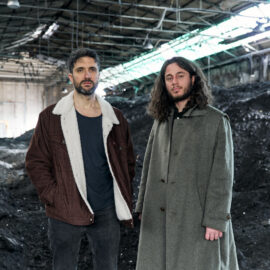
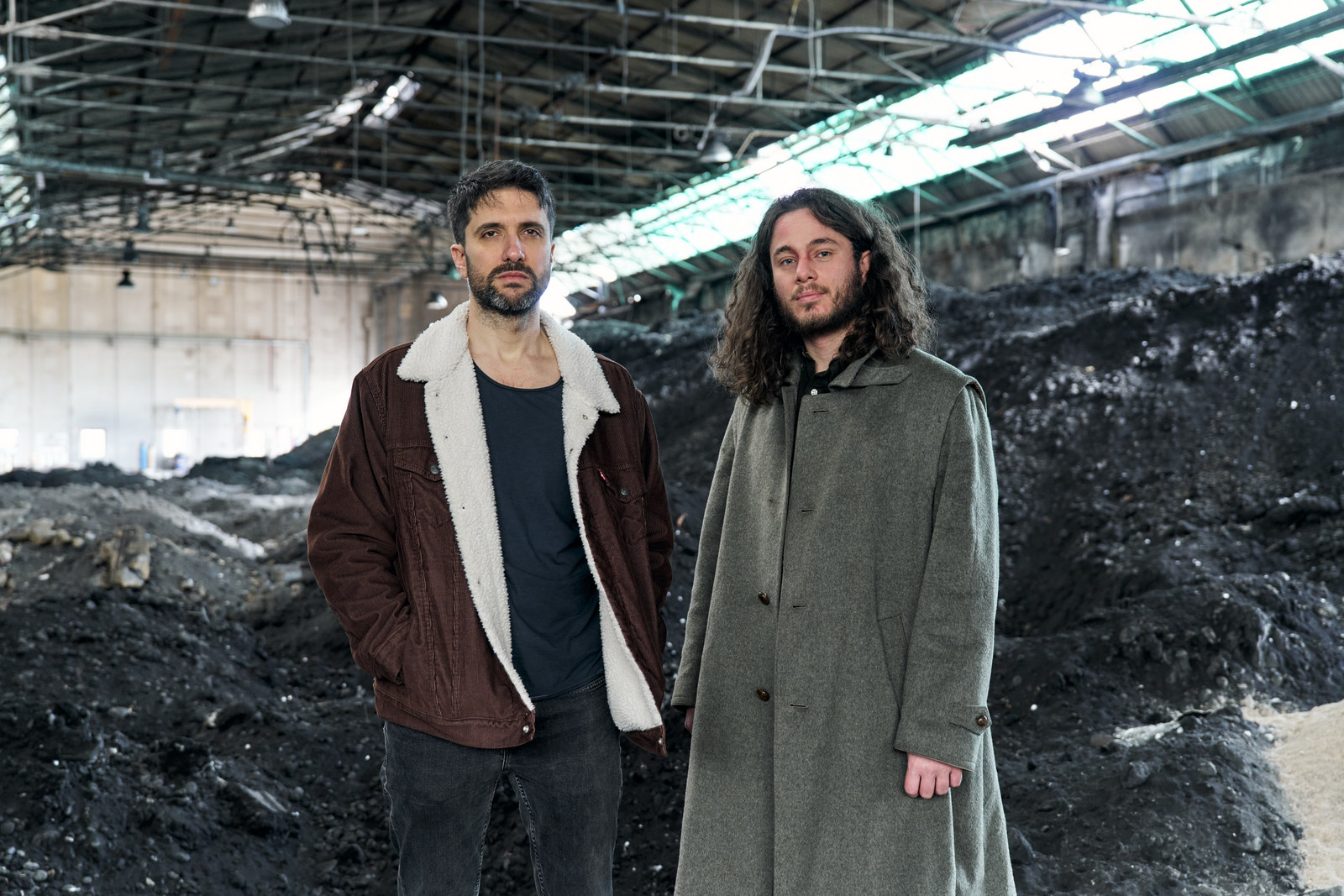
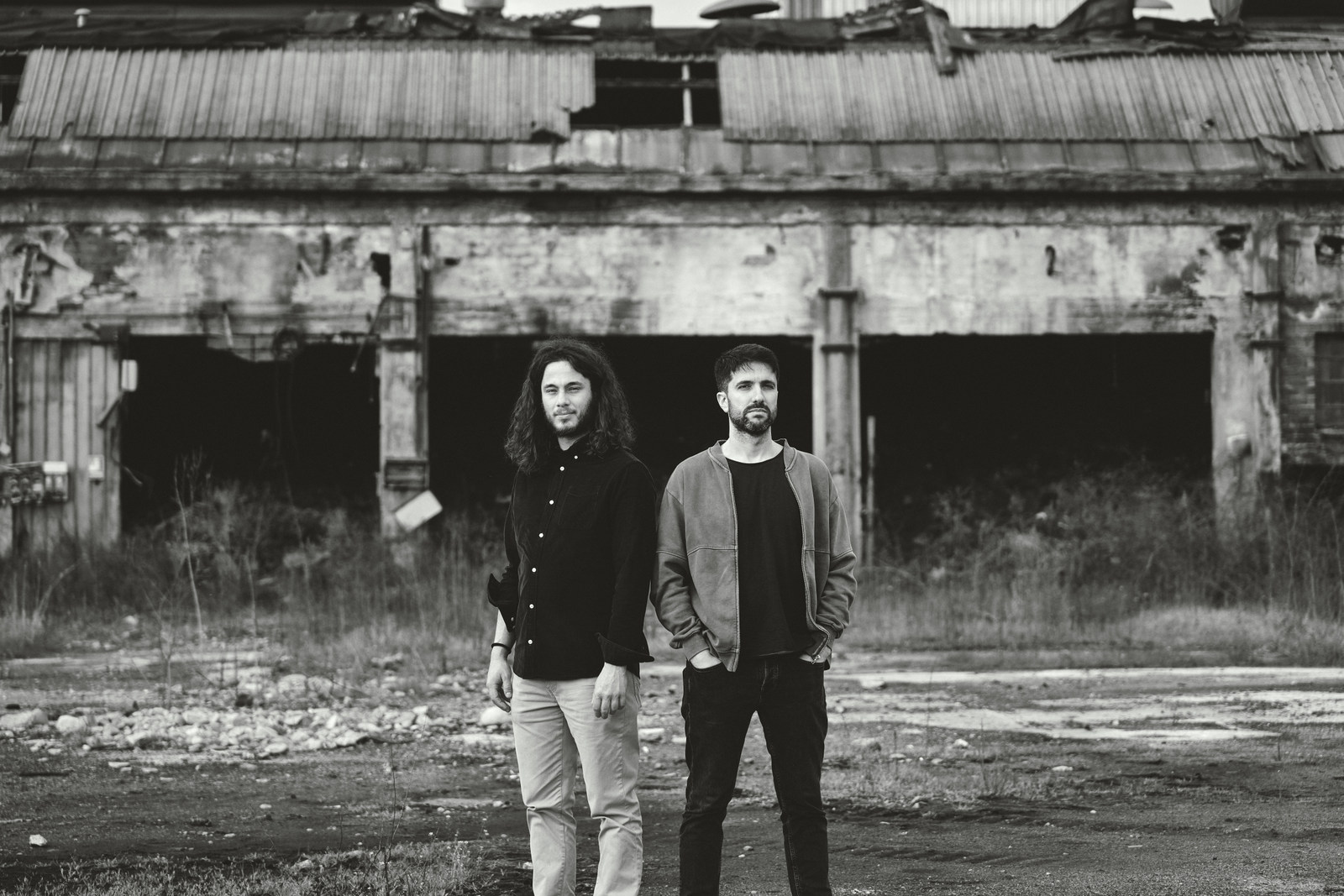
VARV is a duo consisting of keyboardist Andrea Cappi and drummer Francesco Mascolo.
Photo: Davide Piferi de Simoni
After their first album Lowlands, two years ago, the duo VARV continues its journey with Transit, an exciting work which demonstrates VARV’s duo’s commitment to exploring different musical genres, and which lies at the heart of their project. Listening to Transit feels like wandering through a surrealist painting.
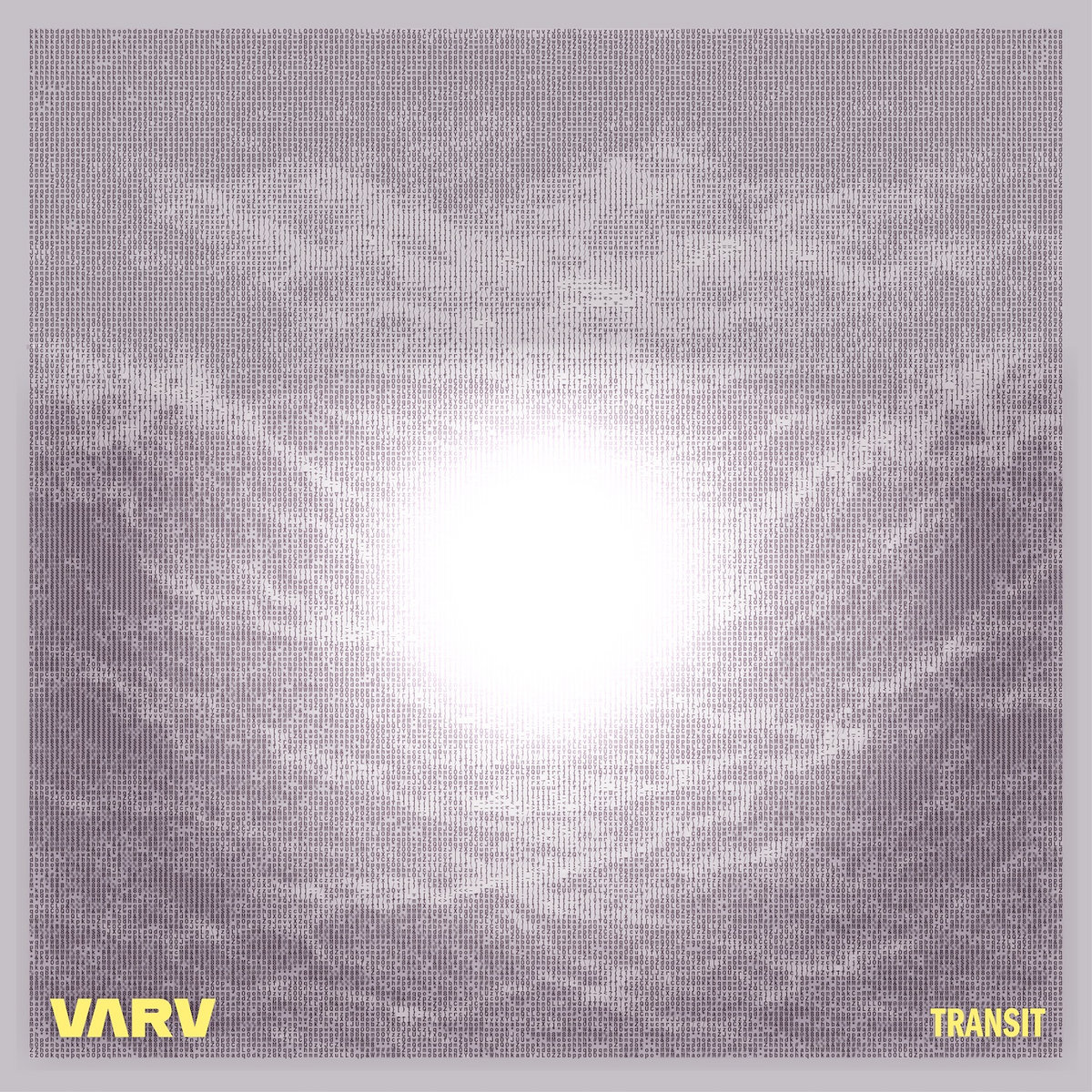
Review of the album on PARIS-MOVE
VARV’s interview
Musicians :
Andrea Cappi: keyboards
Francesco Mascolo: drums
Frankie Pfeiffer: Andrea, can you introduce yourself to the readers of Paris-Move? What is your musical background? What bands have you played in?
Andrea: I started learning the piano as a self-taught musician before taking private jazz lessons, eventually enrolling at the Conservatory, where I graduated in Jazz Piano. Over the years, I have performed in several musical projects, the most significant of which are Flown, Multibox, and Varv. Each of these projects blends different musical genres and combines acoustic and electronic instruments.
Frankie Pfeiffer: Who are the musicians, and keyboard players, especially, who influenced you?
Andrea: The musicians who have influenced me are far too many to list, and the list would probably need to be updated every year. It’s very difficult for me to rank them or choose some names over others. During my years at the conservatory, I listened extensively to pianists such as Thelonious Monk and John Taylor, for example—two musicians who are very different from each other. More recently, I’ve been listening to and drawing a great deal of inspiration from pianists and keyboardists such as Jason Lindner, Bugge Wesseltoft, Jason Moran, Craig Taborn. Other musicians in the jazz world that I’ve listened to extensively over the past few years include Tyshawn Sorey, David Binney, Mark Guiliana, and Dave King.
Frankie Pfeiffer: Which of these keyboard players do you feel closest to?
Andrea: Honestly, I don’t know. I try to take what I like most from different artists’ works and filter it into my own musical context, thereby seeking to develop my own point of view and sensitivity.
Frankie Pfeiffer: How would you respond if, tomorrow, you were asked to be the keyboard player for a prog’rock band like Yes, Dream Theatre or Porcupine Tree?
Andrea: I don’t really consider myself a prog rock keyboardist. It’s a genre I’ve listened to, but I’ve never explored it in depth or studied it in a truly thorough way. That said, staying in the realm of dreams, it would be an incredible experience and a challenge I would definitely consider taking on.
Frankie Pfeiffer: Now, Francesco, can you introduce yourself to the readers of Paris-Move? What is your musical background? What bands have you played in?
Francesco: I began playing drums at the age of 14, studying first with Luciano Galloni and initially focusing on pop and rock music. At 17 I developed a strong passion for jazz, which led me to pursue formal studies at the Conservatories of Mantua and Vicenza, where I completed both my Bachelor’s and Master’s degrees. Over the years I have taken part in several projects across different styles, including Noctua (with whom I recorded Wrapped in a Lush Dream), Varv, and the Syntax Quartet, which released Studio di Curvatura and Spazio Onirico Collettivo. More recently I took part in the Blankrooms quartet, whose debut album Look at Something Closely has just been released.
Frankie Pfeiffer: Who are the musicians and drummer, especially, who influenced you?
Francesco: There are many, but to name just a few: Paul Motian, Brian Blade, Bill Stewart, Kenny Wheeler, Wayne Shorter, D’Angelo, John Mayer, Steve Jordan, Keith Jarrett, Joni Mitchell…
Frankie Pfeiffer: Do you consider yourself more of a jazz drummer than a rock or prog-rock one? How would you respond if, tomorrow, you were asked to be the drummer for a metal rock band like Judas Priest or Alice Cooper?
Francesco: Yes, I do consider myself a jazz drummer, although I use the term in a broad sense. I’m deeply influenced by Black music as a whole, so I also feel a strong connection to the concept of groove. As for the second question, I would probably say no. I’ve never really explored metal, and I don’t feel particularly connected to that style. I think I would struggle not only from a technical perspective, since I’ve never studied the genre in depth, but also from a musical one, because it’s a style that feels somewhat distant from my musical identity. I could see myself much more naturally in pop/rock contexts.
Frankie Pfeiffer: How and where did you two meet? What gave you the idea to form this duo?
Andrea: We used to play together in another group. Then that band split up, and some time later we started studying together and translating the sounds we liked and had in our heads into the context of a keyboard–drums duo.
Frankie Pfeiffer: Transit is your second album. In what frame of mind did you compose the different tracks for this album? How do you compose? Together, or is one of you “leading” the compositions?
Andrea: The tracks on this second album originated from my ideas, which then evolved and, in some cases, changed through playing with Francesco. Several tracks were performed live for almost a year, and in the meantime they changed their shape and, in some cases, even their titles, such as PLACE TO DIGRESS, which is perhaps the piece from this album we have played the most overall.
Frankie Pfeiffer: Lowlands was your debut album. Since that album, how has your approach to composing evolved?
Andrea: I believe I can say that over time we are refining the way we work together. For logistical reasons (Francesco lives in a city that is more than an hour away from me) and time constraints, we no longer have the opportunity to meet often and play together as much as we used to. However, we work a lot remotely. We know each other better than we did in the past, and we often understand what the other wants without even needing to write it down on a score. In this sense, we have grown a lot and have therefore become more agile in making music.
Frankie Pfeiffer: And now, after Transit, how do you see your music evolving?
Andrea: Actually, we already have the third album pretty much ready; we just need to record a couple of tracks. It will be a trio album featuring saxophonist Daniele Nasi, with whom we had already collaborated in the past. The album will be called Orbit and was conceived almost at the same time as Transit, of which it therefore represents a natural continuation.
Frankie Pfeiffer: I mentioned in the review that “Listeners familiar with the celebrated collaborations of Patrick Moraz and Bill Bruford will recognize a similar commitment to interaction and rhythmic sophistication” and that “Comparisons can also be drawn with the work of Giovanni Di Domenico and Mathieu Calleja…”. Do you feel musically close to these two duos, or to one of them? If not, which other “keyboards-drums” duo do you feel closest to?
Andrea: Moraz and Bruford are extraordinary musicians whom we have listened to and whose technical and instrumental excellence we greatly admire. Musicians of that calibre can only be admired from a distance, and we are grateful for having revolutionised the history of progressive rock and music in general. Let’s say that in our music there is completely absent that classical component which permeates much of their work, as well as that of many other prog musicians. Apart from that, we feel fairly connected to their way of perceiving and organising rhythm and, in some cases, also to their use of electronics.
As for Giovanni Di Domenico, he is an artist we really like and whom we have listened to in a duo with Tatsuhisa Yamamoto. This is definitely a duo that feels closer to us and to our musical sensibility, even though we are still talking about music that is quite different from ours. In addition, Di Domenico has also collaborated with Arve Henriksen, an artist whose work with Benjamin Mørk we have greatly appreciated. Some duos we have listened to a lot and from which we have drawn great inspiration are Jason Lindner & Nate Wood and Mehliana (Brad Mehldau & Mark Guiliana).
Frankie Pfeiffer: Andrea, which famous musician(s) would you like to play with? …and why not have them play on one of your next albums?
Andrea: I would really like to make an album with a bassist in the future. Personally, I would love the opportunity to work with Tim Lefebvre, a musician we both greatly admire.
Frankie Pfeiffer: Same question to you, Francesco, which famous musician(s) would you like to play with? …and why not have them play on one of your next albums?
Francesco: There are so many. Combining your two questions, I would say Donny McCaslin, both for his technical, musical, and expressive approach to the saxophone, and for his compositional style, which I really admire and feel would fit our sound extremely well
Frankie Pfeiffer: How do you imagine your next album? Will it be in the same spirit as this second album? Or are you already planning a new direction in your style? Especially you, Andrea?
Andrea: We have already answered this previously when talking about our third work, Orbit, which will be released at the beginning of 2027.
Frankie Pfeiffer: Congratulations, in any case, for this second album! It gets the highest mark on Paris-Move, ‘A must have’!
Andrea & Francesco: Thank you very much, Frankie, and to the entire Paris-Move team.