
| Jazz |
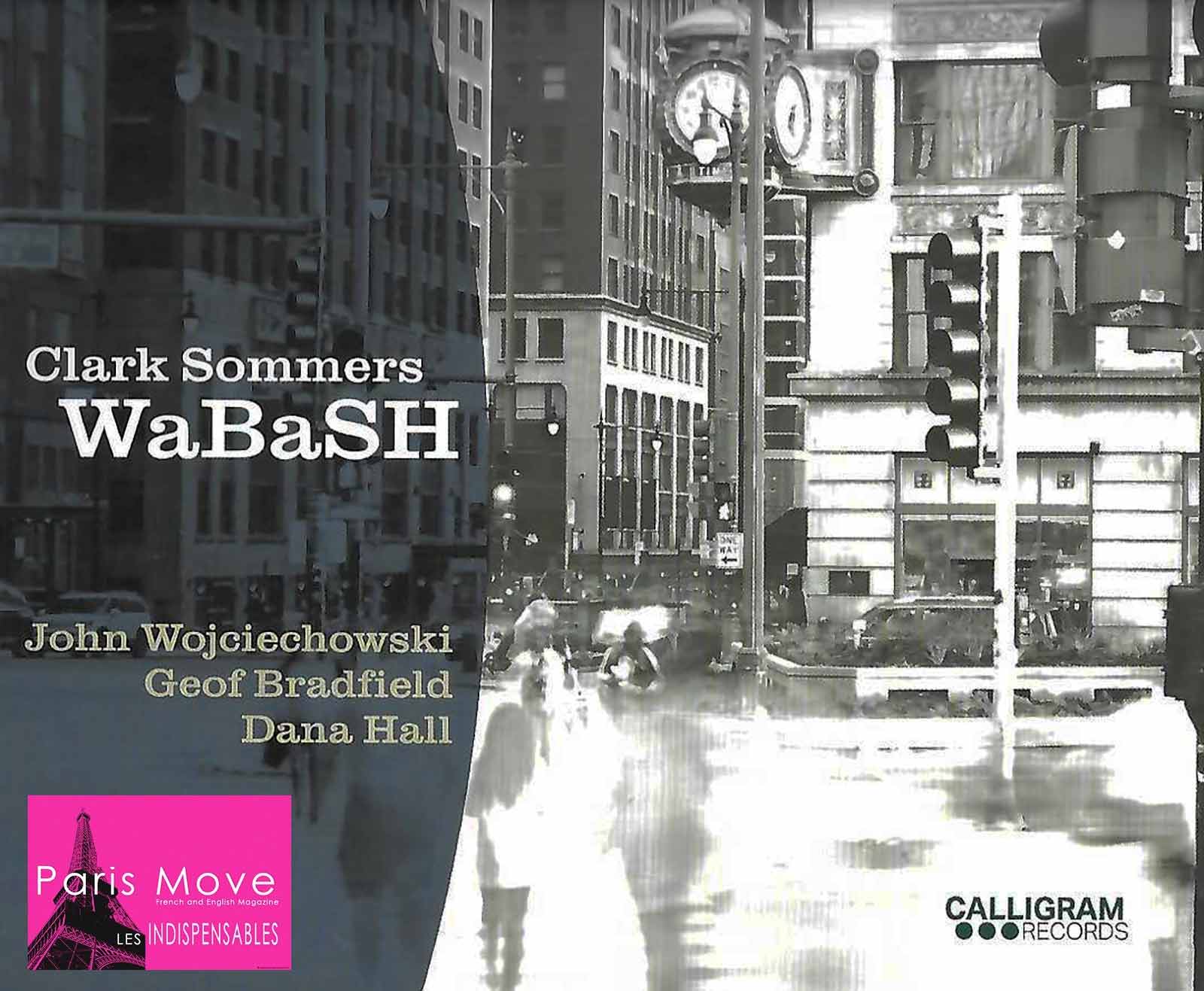
Summary: Clark Sommers’ WaBaSH is a masterfully crafted contemporary jazz album that transforms nearly two decades of shared musical experience into ten richly lyrical compositions. Released by Calligram Records, it stands among the year’s finest acoustic jazz recordings.
Clark Sommers Turns Shared History Into Living Music on WaBaSH
The first sound is almost startling in its restraint. Clark Sommers’ resonant double bass establishes the landscape before a tenor saxophone slowly joins the conversation, each phrase unfolding with quiet purpose. There is no rush to impress, no unnecessary display of virtuosity. Instead, “Points of Reduction,” the opening track on WaBaSH, invites listeners into a world where every note matters and silence carries as much emotional weight as sound. When drummer Dana Hall finally enters, the performance feels less like four musicians beginning a recording than lifelong friends resuming a conversation that has never truly stopped.
It is a fitting introduction to one of the most compelling contemporary jazz releases of the year.
It is rare for a quartet to release its debut album after nearly two decades of performing together in different configurations. Yet that is precisely what makes WaBaSH, the new recording by bassist, composer, and educator Clark Sommers, such a fascinating achievement. Rather than documenting the chemistry of a newly assembled ensemble, the album captures something far more elusive: the confidence, trust, and musical intuition that only years of shared experience can produce.
Released at the end of July by Calligram Records, one of the most respected independent labels devoted to adventurous contemporary jazz, WaBaSH feels perfectly at home within a catalog built on artistic integrity rather than commercial calculation. Sommers has spent his career pursuing those same values, making this collaboration feel less like a new partnership than the natural meeting of two like minded artistic visions.
Although many listeners first came to know Sommers through his long association with Grammy winning vocalist Kurt Elling, his résumé extends far beyond that celebrated collaboration. Over the past two decades he has established himself as one of the most respected bassists on the American jazz scene, performing and recording with an extraordinary range of artists, including Cedar Walton, Brian Blade, Bennie Maupin, Ernie Watts, Darrell Grant, Charles McPherson, Peter Bernstein, Bobby Broom, Von Freeman, Ira Sullivan, Frank Wess, Michael Weiss, Kevin Mahogany, Geof Bradfield, Dana Hall, Jeff Parker, the Chicago Jazz Orchestra, and many others. Those collaborations tell the story of a musician whose reputation has been built not on celebrity but on the unwavering respect of his peers.
Remarkably, WaBaSH marks the first recording by a quartet whose members have long been central figures in Chicago’s vibrant jazz community. Sommers’ musical relationship with tenor saxophonist Geof Bradfield and drummer Dana Hall dates back to the late 1990s, eventually leading to hundreds of performances and numerous recording projects. The quartet itself grew naturally from the convergence of two ensembles: BaSH, Sommers’ trio with Bradfield and Hall, first introduced on its self titled 2013 release, and Hall’s quartet Spring, strengthened by the addition of tenor saxophonist John “Wojo” Wojciechowski. Together they developed their musical language during a two year residency at the legendary Andy’s Jazz Club while also appearing at the Chicago Jazz Festival and the Hyde Park Jazz Festival.
Nothing about this album feels accidental.
From its opening moments, WaBaSH reveals musicians who no longer need to prove anything. Instead, they concentrate on listening. That quality distinguishes the entire recording. Every composition unfolds patiently, allowing melodies to breathe while each player contributes to an evolving conversation. The result is music that rewards attention rather than demanding it.
“Points of Reduction” is an inspired beginning. Deeply lyrical yet emotionally restrained, it moves effortlessly from intimate dialogue to collective improvisation without ever sacrificing its sense of direction. Beyond its undeniable beauty, the composition evokes memory itself. Nostalgic images emerge almost unconsciously, not because the music seeks sentimentality but because it creates enough emotional space for listeners to bring their own experiences into the performance.
That balance between structure and freedom defines the entire album. Although entirely acoustic, WaBaSH never sounds like an exercise in tradition. The quartet draws upon decades of jazz history while remaining unmistakably contemporary. One foot remains firmly planted in the lineage of modern acoustic jazz while the other steps confidently toward new harmonic possibilities.
As Sommers explains, “This music reflects an exploration grounded in a level of trust that can only come from many years of playing together. It represents the culmination of both our individual and collective evolution toward a mature musical vision shared among close friends and longtime collaborators.”
Those words perfectly describe what unfolds across the album’s ten compositions.
Listening to WaBaSH also sheds light on Sommers’ enduring partnership with Kurt Elling. Every composition possesses the architecture of a memorable song. However sophisticated the harmonic language becomes, the music never loses sight of communication. Complexity serves expression rather than intellectual display.
The second track, “Close the Loop,” illustrates that philosophy beautifully. Sommers demonstrates a remarkable command of melody and harmonic development while encouraging every member of the quartet to participate equally in shaping the music. Hall’s drumming deserves particular recognition. Rather than functioning simply as rhythmic support, he becomes a melodic voice in his own right, responding, provoking, and guiding the conversation with extraordinary sensitivity. Bradfield and Wojciechowski, meanwhile, alternate between lyrical elegance and muscular intensity, creating a rich dialogue that never feels competitive. Instead, every solo emerges naturally from the collective sound.
One of the album’s greatest strengths lies in its sequencing. These are not isolated compositions assembled into a convenient collection. WaBaSH unfolds like a carefully constructed narrative whose emotional logic becomes increasingly apparent with each successive track. The listener is invited into parallel musical landscapes where subtle details reveal themselves over repeated listens. This is not an album designed for background listening or digital playlists. It asks for patience and rewards curiosity.
That quality has become increasingly rare in an era dominated by individual tracks and algorithm driven listening habits. WaBaSH insists on the value of the complete album as an artistic statement, encouraging listeners to experience the music exactly as the musicians intended.
The recording also serves as a powerful reminder that Chicago remains one of the world’s great jazz cities. While New York often dominates discussions of contemporary American jazz, Chicago continues to foster artists who balance profound respect for tradition with an unrelenting spirit of exploration. Collaboration has long defined the city’s creative culture, and WaBaSH embodies that philosophy at its finest. It is the product of a musical community where relationships mature over decades, allowing artistic trust to become every bit as important as technical mastery.
Across ten beautifully crafted compositions, WaBaSH stands as one of the year’s most rewarding jazz releases. It promises equally compelling live performances while speaking not only to dedicated jazz audiences but also to listeners drawn to chamber music, contemporary classical composition, and acoustic improvisation. Rather than relying on spectacle, the quartet embraces nuance, subtlety, and emotional honesty.
In the end, WaBaSH reminds us that the finest jazz is rarely about individual brilliance alone. It is about conversation, shared memory, and the willingness to leave space for others. Clark Sommers and his remarkable quartet have created an album that feels timeless without ever sounding nostalgic, sophisticated without becoming inaccessible, and deeply personal while inviting every listener into its world. It is music shaped by friendship, sustained by trust, and elevated by extraordinary musicianship.
WaBaSH will be released at the end of July on Calligram Records. The album features Clark Sommers on double bass, Geof Bradfield and John “Wojo” Wojciechowski on tenor saxophones, and Dana Hall on drums. For anyone interested in the continuing evolution of contemporary acoustic jazz, this recording deserves to be counted among the essential releases of 2026.
Thierry De Clemensat
Member at Jazz Journalists Association
USA correspondent for Paris-Move and ABS magazine
Editor in chief – Bayou Blue Radio, Bayou Blue News
PARIS-MOVE, July 6th, 2026
Follow PARIS-MOVE on X
::::::::::::::::::::::::
Musicians :
CLARK SOMMERS: bass
GEOF BRADFIELD: tenor saxophone, soprano saxophone and bass clarinet
JOHN WOJCIECHOWSKI: tenor saxophone, alto saxophone and flute
DANA HALL: drums and cymbals
Track Listing:
1. Points of Reduction
2. Close The Loop
3. Bass Intro 1
4. Kasbah
5. Group Solitude
6. Contemplation
7. In Your Own Sweet Way
8. Bass Intro 2
9. That Was Then
10. Ornette-Type-Tune
Tracks 1, 2, 9 composed by Clark Sommers, Phrenology Music BMI
Tracks 3, 8 improvised by Clark Sommers
Track 4 composed by Dana Hall, DairyFree Music BMI
Tracks 5, 10 composed by John Wojciechowski, John Wojciechowski Music BMI
Track 6 composed by Geof Bradfield, Geocentric Music BMI
Track 7 composed by Dave Brubeck, Derry Music Company BMI
Produced by Clark Sommers
Recorded, mixed and mastered by Ken Christianson at Pro Musica, Chicago, IL, November 23, 2025
Album layout, design, and photography by Chad McCullough