| Jazz |
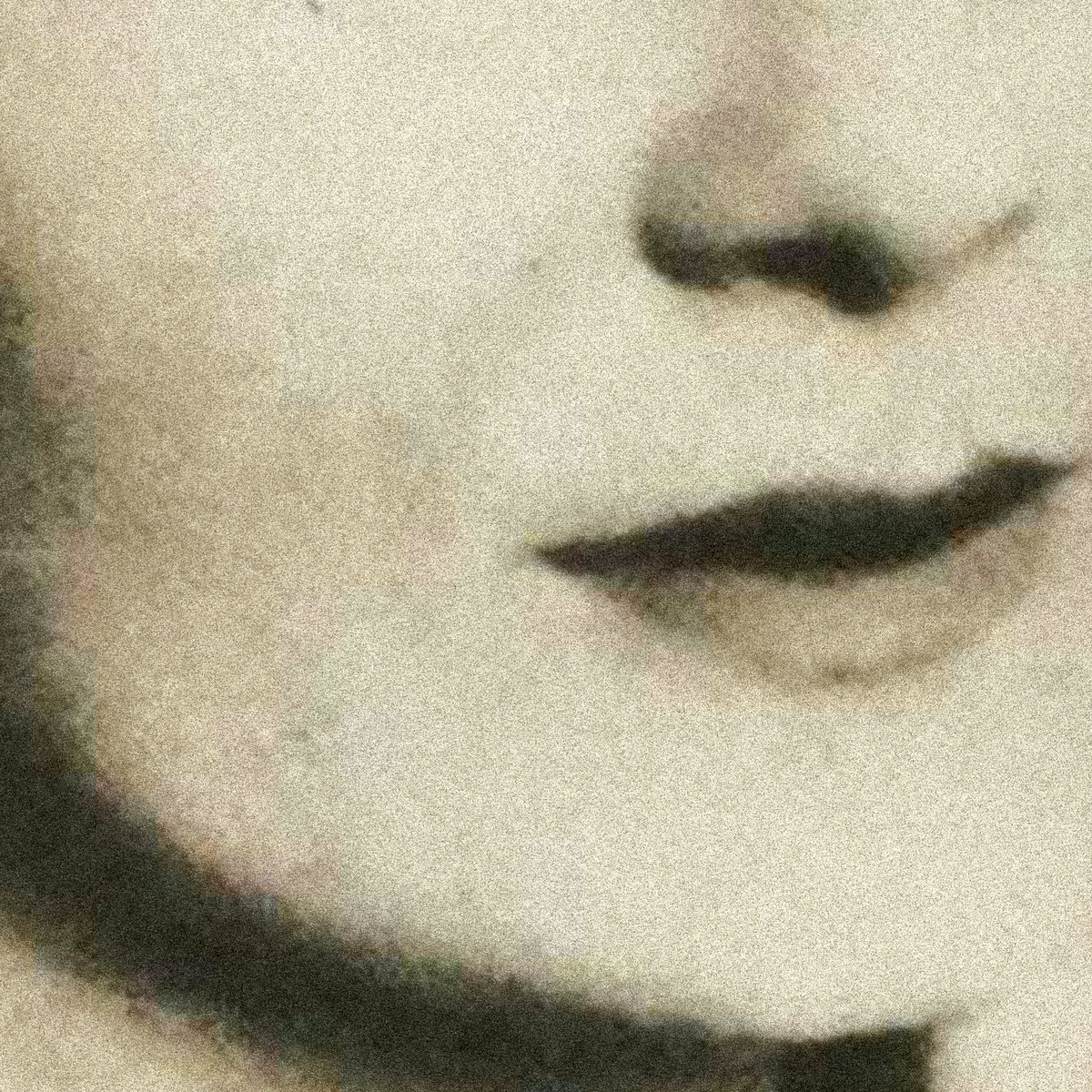
Paying tribute to a musical giant is never an easy undertaking. Paying tribute to Steve Lacy is an even greater challenge. Lacy’s unique artistic universe at the crossroads of jazz, literature, poetry, free improvisation, and contemporary composition, remains one of the most compelling in modern music. To approach it requires not only technical mastery but also imagination, courage, and an understanding that the greatest homage is never imitation. With Le sourire, Jean Derome & Somebody Special achieve precisely that.
Far more than a simple tribute album, Le sourire is an act of artistic dialogue across generations. It is Jean Derome’s second recording devoted to Steve Lacy, following the remarkable Somebody Special (2019), from which the ensemble itself takes its name.
Rather than revisiting Lacy’s music from a nostalgic perspective, Derome and his musicians embrace its restless curiosity, its literary intelligence, and its permanent search for new forms of expression.
The result is an album that perfectly embodies everything that has made Jean Derome one of Canada’s most fascinating musical figures for over four decades.
As co-founder of the legendary Ambiances Magnétiques label, Derome has continuously refused stylistic limitations. Composer, saxophonist, flautist, improviser, filmmaker’s collaborator, theatre composer, explorer of both tonal and atonal worlds, his career is remarkable for its diversity and unwavering artistic integrity. With nearly one hundred recordings (!!) and an equally impressive catalogue of music written for film, theatre, and dance, he has established himself as one of Canada’s most original creative voices.
His numerous distinctions, including six Opus Awards, among them Album of the Year for Musiques de chambres and Résistances, only confirm what attentive listeners have known for years: Jean Derome is one of those rare musicians who continually reinvents himself while remaining instantly recognizable. And that personality is immediately evident throughout Le sourire.
The album explores one of Steve Lacy’s most fascinating achievements: his extraordinary catalogue of songs based on texts by some of the twentieth century’s greatest poets and writers.
Rather than choosing familiar jazz standards, Lacy sought inspiration from voices as diverse as Anna Akhmatova, Samuel Beckett, Robert Creeley, Bob Kaufman, and Judith Malina, transforming their words into musical landscapes of remarkable originality.
Jean Derome and Somebody Special approach this repertoire with profound respect but never with reverence in the limiting sense of the word. Their interpretations remain faithful to Lacy’s spirit while allowing their own collective personality to shine brilliantly.
Indeed, one of the album’s greatest qualities is its remarkable balance between precision and freedom.
The music is unmistakably jazz, yet it constantly stretches beyond conventional expectations. Angular melodies, surprising harmonic turns, subtle rhythmic displacements, and moments of exhilarating improvisation coexist naturally. There are echoes of Thelonious Monk, whose influence on Lacy remains unmistakable, but there is equally the unmistakable voice of Jean Derome, playful, adventurous, slightly mischievous, always inventive.
Throughout the album, swing never disappears, even during the most harmonically adventurous passages. This ability to remain engaging while embracing complexity is one of the defining characteristics of Derome’s music.
The opening “Jack’s Blues”, based on a poem by Robert Creeley, immediately establishes the ensemble’s approach. “The Smile”, from Anna Akhmatova’s poetry, perfectly justifies the album’s title. Delicate yet emotionally rich, it unfolds with quiet elegance, allowing the expressive power of both text and music to emerge naturally. Its companion piece, “The Cuckoo”, explores contrasting moods with remarkable sensitivity.
The remarkable Beckett trilogy, “Sands 1: Stand”, “Sands 2: Jump”, and “Sands 3: Fall”, forms one of the album’s intellectual and musical centres. Beckett’s minimalist, enigmatic language finds an ideal musical counterpart in Derome’s refined arrangements. The three movements gradually evolve through subtle transformations, illustrating how jazz improvisation and literary modernism can nourish one another in fascinating ways.
The two settings of Judith Malina’s poetry, “Love and Politics” and “I Heard the Indian Sage”, deepen the album’s philosophical dimension. Malina’s texts seem particularly well suited to Steve Lacy’s musical imagination, and Jean Derome captures their emotional complexity beautifully.
Judith Malina’s “I Heard the Indian Sage”, dedicated to Allen Ginsberg, carries far more than a literary tribute. Its meditation on impermanence, spiritual awakening, death (“There is death / because we are nothing”), love (“There is love / because we are crazy / And want to be happy / forever”), and the illusion of certainty echoes the ideals that shaped both Ginsberg and the entire Beat Generation, including Jack Kerouac: a relentless quest for truth beyond social conventions, an openness to Eastern philosophies, and a profound belief in artistic and personal freedom. Steve Lacy was naturally drawn to this poetic universe, and Jean Derome & Somebody Special capture its essence with remarkable sensitivity. Throughout Le sourire, one senses that same Beat spirit, a music that values spontaneity, risk, introspection, and the constant crossing of artistic boundaries. Like the writings of Ginsberg and Kerouac, the album invites us not simply to listen, but to embark on an inner journey where poetry, improvisation, and freedom become inseparable.
Steve Lacy wasn’t just a brilliant saxophonist, he was someone who immersed himself in literature. Choosing poets like Beckett, Creeley, Kaufman, Akhmatova, and Malina wasn’t accidental; it reflects his conviction that poetry and jazz share a common language of rhythm, silence, surprise, and freedom.
The album concludes with “Heaven,” another Robert Creeley setting, offering a beautifully understated ending. Rather than seeking dramatic closure, the music gently dissolves into contemplation, leaving the listener with the impression that this conversation with Steve Lacy continues beyond the final note.
Throughout all eleven pieces, the musicians display extraordinary collective sensitivity. Nobody attempts to dominate the ensemble. Every voice contributes to a larger musical conversation in which composition, improvisation, poetry, and silence possess equal importance. Listening becomes an act of discovery, each return revealing new relationships between text and melody, between harmony and rhythm, between written material and spontaneous invention.
One of the album’s greatest accomplishments lies precisely here: Le sourire never feels like an academic reconstruction of Steve Lacy’s music. Instead, it becomes a living continuation of his artistic philosophy. Like Lacy himself, Derome refuses to separate literature from music, intellect from emotion, structure from freedom.
This is contemporary jazz in its finest sense: music that dares to venture beyond established paths without ever abandoning the essential communicative power of jazz itself.
The recording also serves as a reminder of the extraordinary artistic importance of Ambiances Magnétiques, a label that has consistently championed adventurous music while maintaining uncompromising artistic standards. Le sourire fits perfectly within that tradition of creative freedom and intellectual curiosity.
Ultimately, this album is not simply about Steve Lacy. It is about artistic transmission. It is about how great music continues to inspire new generations without becoming frozen in time. Jean Derome and Somebody Special understand that the finest tribute one can pay to an innovator is to continue innovating.
With Le sourire, they have created a recording that is intelligent, moving, playful, provocative, and profoundly musical. It celebrates Steve Lacy while remaining unmistakably Jean Derome. Few tribute albums achieve such a delicate balance.
Like the smile evoked by its title, this magnificent recording reveals itself gradually, subtle, enigmatic, generous, and quietly unforgettable.
A superb tribute to one of jazz’s most singular visionaries, interpreted by one of Canada’s own great musical explorers.
Frankie Pfeiffer
Editor in chief – PARIS-MOVE
PARIS-MOVE, July 3rd, 2026
Follow PARIS-MOVE on X
::::::::::::::::::::::::
Ambiances Magnétiques Bandcamp
Tracklisting:
- Jack’s Blues (Steve Lacy/ Robert Creeley)
- The Smile (Steve Lacy/ Anna Akhmatova)
- The Cuckoo (Steve Lacy/ Anna Akhmatova)
- Sands 1: Stand (Steve Lacy/ Samuel Beckett)
- Stands 2 : Jump (Steve Lac / Samuel Beckett)
- Stands 3 : Fall (Steve Lac / Samuel Beckett)
- Love and Politics (Steve Lacy/ Judith Malina)
- I Heard the Indian Sage (Steve Lacy/ Judith Malina)
- Morning Joy (Steve Lacy/ Bob Kaufman)
- As Usual (Steve Lacy/ Bob Kaufman)
- Heaven (Steve Lacy/ Robert Creeley)
Musicians :
Jean Derome: alto saxophone, bass flute, voice
Karen Young: voice
Alexandre Grogg: piano
Normand Guilbeault: double bass
Pierre Tanguay: drums
Steve Lacy, composition
Lyrics: Robert Creeley (1, 11), Anna Akhmatova (2, 3), Samuel Beckett (4, 5, 6), Judith Malina (7, 8), Bob Kaufman (9, 10)
Recorded at Studio Alchimiste, Montréal (QC)
Recording : Robert Langlois, Charles Coutu, Stratsimir Dimitrov
Editing, Mixing: Robert Langlois
Mastering: Jean Martin, The Farm
Liner notes : Scott Thomson
French translation : Jean Derome
Design : Marie-Pierre Morin
Producer : Jean Derome
Executive Production : DAME