| Jazz |
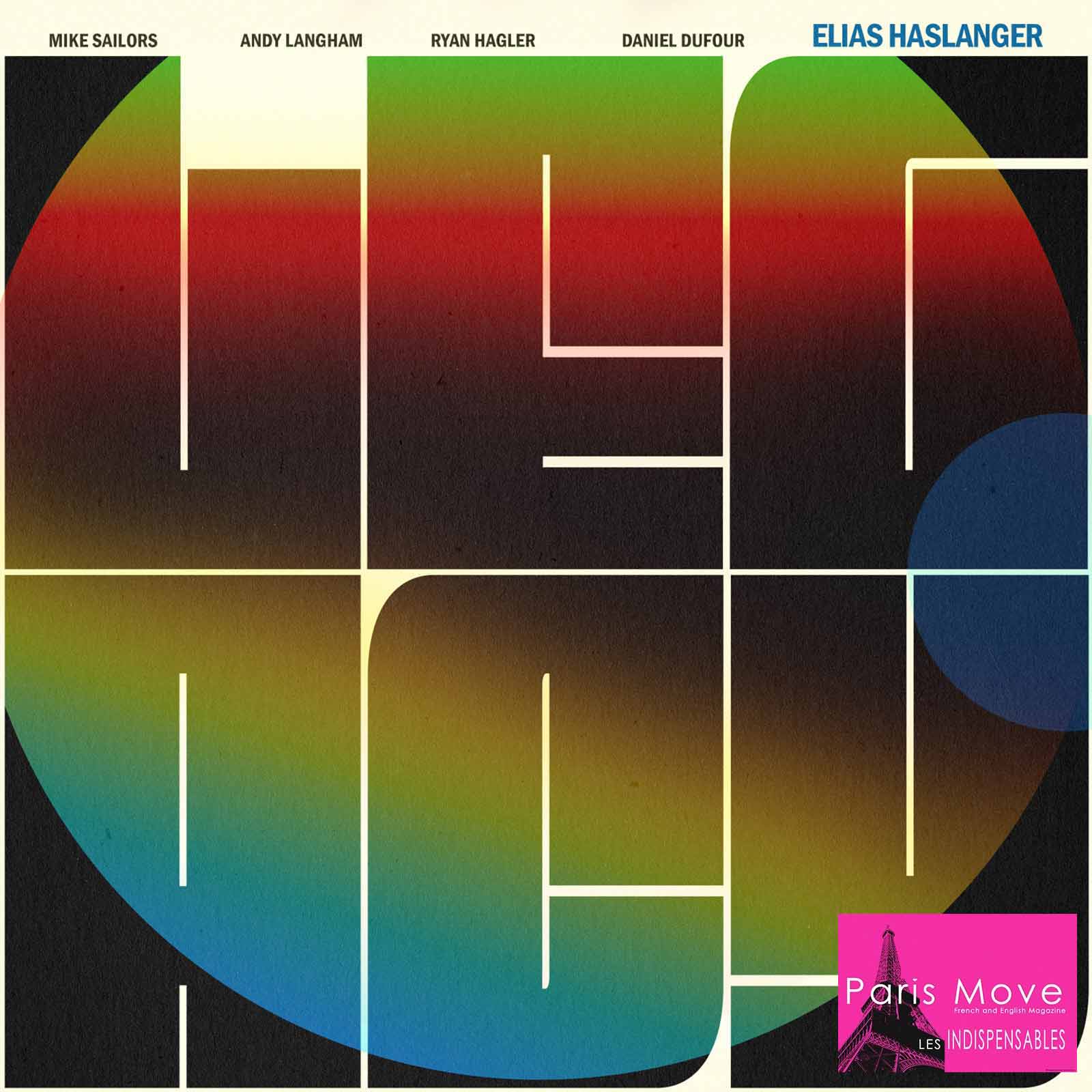
Elias Haslanger’s Legacy: When a Jazz Veteran Finds a New Voice
I still remember arriving in the United States during the height of the pandemic. Leaving France at a time when international travel had nearly come to a standstill felt surreal. Flights were scarce, and my route took me through Switzerland and Canada before I finally landed in Austin, Texas. The city was quieter than anyone could have imagined, yet music remained one of the few constants that survived those uncertain months.
Not long after settling in, I attended my first live performance in Austin. The musician on stage was tenor saxophonist Elias Haslanger. I was immediately struck by the precision of his technique, but what stayed with me was something deeper than virtuosity. Unlike saxophonists such as Céline Bonacina or Lakecia Benjamin, whose work often pushes contemporary jazz into adventurous territory, Haslanger has always represented another tradition. His musical identity is firmly rooted in the classic language of American jazz, preserving its history while continuing to enrich it through his own voice.
That commitment has earned admiration from some of the genre’s most respected figures. Ellis Marsalis once praised Haslanger’s Kicks, writing, “Elias’s CD is very much in today’s jazz group concept. It is obvious he has spent the time to reach a level of excellence that is commendable.” DownBeat’s Michael Jackson was equally enthusiastic, describing Haslanger’s playing as “freewheeling licks that roar with virtuosity and infectious joie de vivre.”
Over the years, Haslanger has shared the stage with an extraordinary range of artists, including Ellis Marsalis, Maynard Ferguson, Dr. James Polk, Christopher Cross, Asleep at the Wheel, Alejandro Escovedo, Charlie Hunter, Sheryl Crow, Spoon, Grupo Fantasma, Black Pumas, The Four Tops and The Temptations. Such collaborations reveal not only technical versatility but also an ability to move comfortably between musical worlds while never losing his own artistic identity.
Yet Legacy represents something entirely different.
At first listen, the album appears to continue the straight ahead jazz tradition that Haslanger has embraced throughout his career. The more time one spends with these compositions, however, the more obvious it becomes that this record occupies a unique place in his artistic journey. It is less about preserving tradition than about revealing the man behind it.
For many listeners in Austin, Elias Haslanger will forever be associated with his celebrated Church on Monday residency at the Continental Club Gallery. For years those performances became part of the city’s musical fabric, introducing audiences to one of Texas’ finest jazz musicians. But to know only those evenings is to know only part of his story.
Legacy reveals another Elias Haslanger.
This is, in my opinion, the most intimate, thoughtful and emotionally complete album he has ever recorded. Rather than relying solely on the powerful swing and impeccable phrasing that have defined his career, he allows the music to breathe. The compositions unfold patiently, revealing layers of emotion that previous recordings only hinted at.
Nowhere is this more evident than on “Faith In Family,” arguably the emotional centerpiece of the album. The opening saxophone solo speaks with remarkable honesty, never chasing technical fireworks simply because they are possible. Instead, every phrase feels deliberate, almost conversational. A reflective piano passage follows, creating a moment of silence that encourages the listener to absorb what has just been said. Few jazz recordings succeed in making silence feel as meaningful as sound. This one does.
Throughout Legacy, Haslanger demonstrates complete confidence in his writing. Every composition possesses its own personality while remaining part of a larger narrative. The musicians surrounding him understand this instinctively. Rather than competing for attention, they contribute to a collective sound that serves the emotional purpose of each piece. Their performances are not merely accomplished. They are deeply empathetic.
Longtime collaborator Mike Sailors is particularly impressive on “Conferring With The Flowers.” His trumpet establishes a fascinating dialogue with Haslanger’s tenor saxophone, creating the feeling of two old friends engaged in an intimate conversation. The exchange is spontaneous, elegant and beautifully balanced, revealing the trust that can only develop through years of performing together.
Listening to Legacy, one cannot escape the feeling that Haslanger has liberated himself from something. The unmistakable energy that has always characterized his playing remains fully intact, but it is now accompanied by greater patience and reflection. He no longer feels compelled to prove anything. Instead, he allows ideas to evolve naturally, giving melodies the time and space they deserve.
Ironically, this may be the least conventional album of his career.
Although deeply respectful of jazz tradition, Legacy occasionally reaches toward a more contemporary musical language. “Reflection” illustrates this beautifully, suggesting new harmonic and rhythmic possibilities without abandoning the foundation that has always defined Haslanger’s music. Rather than rejecting the past, he expands upon it.
The ambition behind this record is impossible to ignore. This is music that deserves to travel far beyond Texas. The quintet possesses the sophistication, maturity and cohesion expected on the stages of the world’s premier jazz festivals. One senses that Haslanger is no longer writing simply for familiar audiences. He is composing with a broader artistic horizon in mind.
Whenever I evaluate a jazz record, one small detail often tells me whether genuine artistic exploration lies ahead: the duration of the tracks. When musicians abandon the constraints of radio friendly running times, they usually give themselves permission to develop ideas rather than merely present them. More often than not, the rewards are substantial.
“Gentle Giant” is one of those rewards.
The piece begins with extraordinary patience, allowing its atmosphere to emerge gradually before introducing the principal theme. There is an unmistakable intellectual dimension to the arrangement, yet it never feels academic. When Haslanger finally enters, his tenor saxophone sounds larger than life, commanding without overwhelming, lyrical without becoming sentimental.
As I listened, I found myself thinking of the great French poet and singer Léo Ferré and his famous celebration of the saxophone in “Beau Saxo.” The comparison may seem unexpected, but both artists understand that the instrument is capable of expressing not only passion but thought itself. On Legacy, every member of the ensemble pushes beyond familiar territory. Comfort gives way to curiosity, and routine yields to genuine artistic discovery.
That is what makes this album so compelling.
Legacy is not simply another excellent jazz record from a respected veteran. It marks an important turning point in the evolution of an artist who has spent decades mastering the language of jazz and now speaks it with complete freedom. Rather than chasing trends or seeking approval, Haslanger delivers music that has clearly matured over many years. Every composition feels earned. Every performance serves a purpose.
At a time when contemporary jazz often finds itself balancing innovation with tradition, Legacy demonstrates that those two impulses are not opposites. Elias Haslanger honors the masters who shaped him while revealing a voice that is unmistakably his own. In doing so, he has created what may well become the defining recording of his career.
It is time. Indeed, it is long past time for audiences far beyond Austin to discover the new Elias Haslanger.
Thierry De Clemensat
Member at Jazz Journalists Association
USA correspondent for Paris-Move and ABS magazine
Editor in chief – Bayou Blue Radio, Bayou Blue News
PARIS-MOVE, July 3rd, 2026
Follow PARIS-MOVE on X
::::::::::::::::::::::::
To buy this album (July 24, 2026)
or send an email to: cherrywoodrecords@gmail.com
Musicians :
Elias Haslanger, tenor saxophone
Mike Sailors, trumpet
Andy Langham, piano
Ross Margitza, piano
Ryan Hagler, bass
Daniel Dufour, drums
Track Listing :
- Legacy 6:21
- Going Home 5:54
- Faith in Family 8:55
- Conferring with the Flowers 6:34
- Reflection 7:38
- Gentle Giant 8:11
- Trouble Down South 7:34
- Swinging at Monks 6:01
- Sweet Relief 8:01
- A View of the City 8:2
Recorded August 30-31, 2025, at Spectrum Studios
Recorded and mixed by Charlie Kramsky
Mastered by Eddy Hobizal
Photo by KTYarbrough Photography
Art by Fumihito Sugawara / Fumanstudios
© 2026 Cherrywood Records.
On the Road Again:
July 6, 2026: Elias Haslanger and Church on Monday, The Continental Club Gallery
July 10, 2026: Elias Haslanger Quintet, The Elephant Room
July 13, 2026: Elias Haslanger and Church on Monday, The Continental Club Gallery
July 20, 2026: Elias Haslanger and Church on Monday, The Continental Club Gallery
July 25, 2026: Elias Haslanger Quintet Legacy Release, Monk’s Jazz
July 27, 2026: Elias Haslanger and Church on Monday, The Continental Club Gallery
August 3, 2026: Elias Haslanger and Church on Monday, The Continental Club Gallery
August 4, 2026: Elias Haslanger Quintet Legacy Release, Jazz TX
August 10, 2026: Elias Haslanger and Church on Monday, The Continental Club Gallery
August 17, 2026: Elias Haslanger and Church on Monday, The Continental Club Gallery
August 24, 2026: Elias Haslanger and Church on Monday, The Continental Club Gallery