| Folk, World |
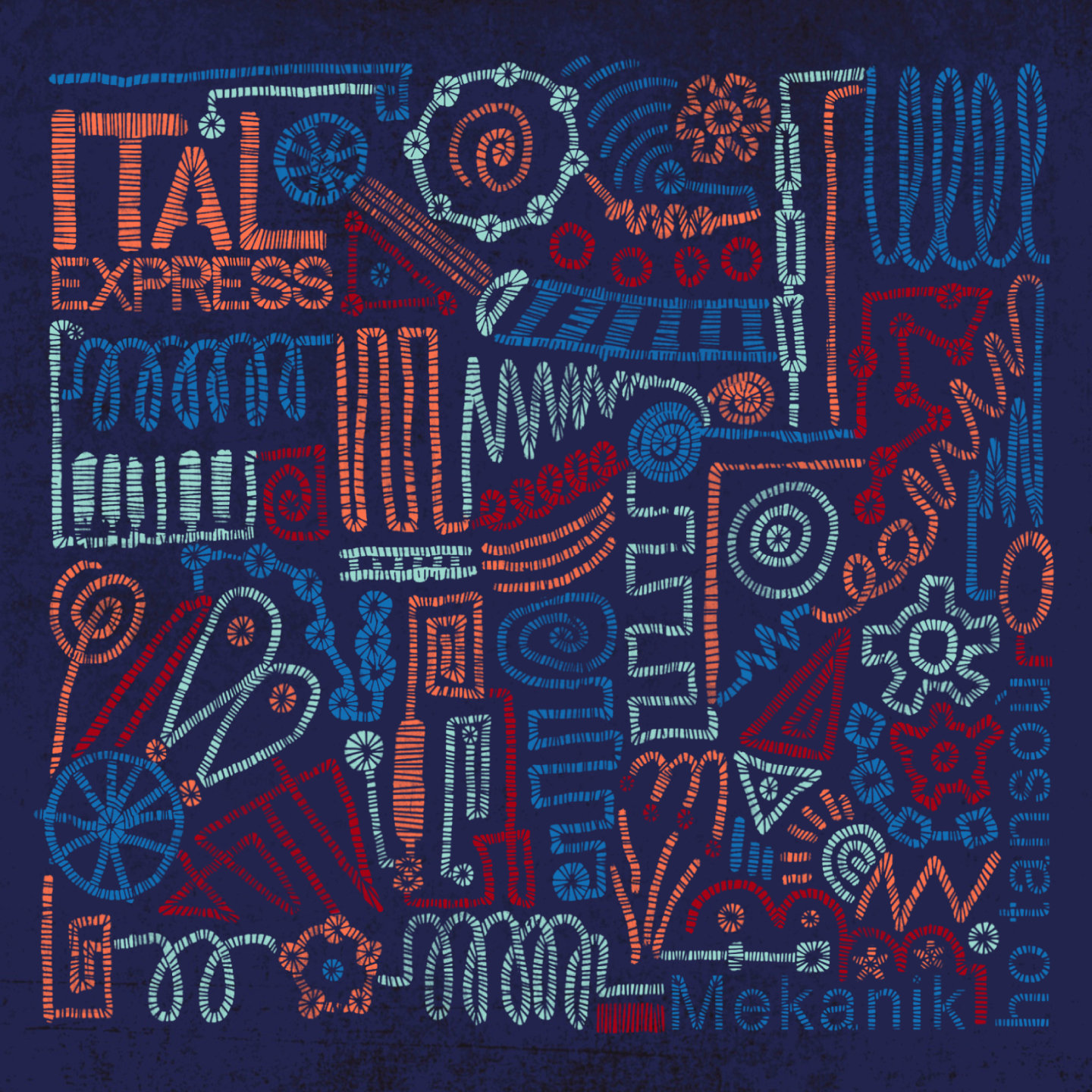
There are traditional music albums that faithfully preserve a repertoire, and there are others that dare to reinvent it without ever betraying its essence. Mekanik ho tansoù, released by the French quartet Ital Express, belongs emphatically to the latter category. It is one of those rare recordings that demonstrates how deeply rooted traditions can remain vibrantly alive when they are approached with imagination, intelligence, and respect.
Ital Express describes itself as a Fest-Noz quartet, but that definition only hints at the richness of its musical universe. The four musicians have created a singular artistic language in which the traditional dance repertoire of the Vannetais region, a territory corresponding to one of the nine ancient bishoprics of Brittany, becomes the starting point for an astonishing exploration of contemporary sound, texture, rhythm, and collective expression.
The title itself, Mekanik ho tansoù (“The Mechanics of Your Dances”), beautifully reflects this balance between movement and construction.
The group’s artistic philosophy is beautifully summarized in its own words: “In our music, the artistic exploration of the repertoire places the tune at the heart of its musical constructions. Rich, radiant and open arrangements come to dress melodies which hint at unexpected pathways. Here, melodic lines meet groove, riffs blend and intertwine, yet the arrangement is and always remains at the service of dance and trance.”
Listening to Mekanik ho tansoù, one immediately understands how perfectly this statement reflects the music itself.
Every harmonic colour, every rhythmic pulse, every instrumental dialogue ultimately exists to preserve the irresistible energy of the dance. This balance between innovation and tradition is perhaps the quartet’s greatest achievement.
The repertoire draws largely upon traditional dance tunes from the Vannetais region, yet Ital Express never treats these melodies as museum pieces. Instead, they become living material, capable of absorbing new influences while retaining their original vitality.
One of the album’s most striking qualities is its extraordinary instrumental palette:
Singer Elouan Le Sauze possesses a voice that is both powerful and remarkably expressive. Deeply rooted in Breton singing traditions, he conveys each text with clarity and conviction, allowing every story to unfold naturally. Whether interpreting traditional lyrics or his own original texts, his singing never becomes theatrical. Instead, it remains direct, sincere, and profoundly human.
At the keyboard, Faustine Audebert brings an entirely fresh dimension to Fest-Noz music through the inspired use of the Fender Rhodes alongside bass keyboards. The warm, velvety sound of the Rhodes introduces colours rarely encountered in Breton traditional music, creating harmonies that are simultaneously modern and surprisingly organic. Her bass lines provide an irresistible groove that anchors even the most adventurous arrangements.
Alan Paranthoën‘s violin serves as one of the principal melodic voices throughout the album. His playing combines the elegance of traditional Breton fiddle with remarkable freedom and inventiveness. At times lyrical, at times fiery, his violin frequently becomes the bridge between ancestral melodies and contemporary musical imagination.
Completing the quartet, Meriadeg Lorho-Pasco‘s clarinet adds warmth, fluidity, and expressive nuance. The instrument moves effortlessly between lyrical passages, rhythmic accompaniment, and intricate contrapuntal lines. Its timbre blends beautifully with both the violin and the Fender Rhodes, contributing significantly to the ensemble’s unique sonic identity.
The interaction among these four musicians is exceptional. No instrument dominates. Instead, melodies circulate freely from voice to violin, from clarinet to keyboards, constantly renewing the listener’s attention. The arrangements are remarkably sophisticated without ever sounding overly complex. They breathe naturally, always allowing the dance to remain the central driving force.
Indeed, one of the album’s greatest accomplishments is its ability to satisfy both dancers and attentive listeners. It is music that invites movement, but it also rewards careful listening through its wealth of subtle details, unexpected harmonic turns, and beautifully crafted instrumental conversations.
The texts themselves deserve special praise. Drawn partly from popular Breton tradition and partly written by Elouan Le Sauze, they reveal an imagination that is at once poetic, humorous, and socially engaged. A hen taking possession of a house alongside other animals becomes an amusing metaphor for coexistence. A small bird poisoned by an oil spill transforms into a poignant ecological allegory. Elsewhere, a succession of tall tales celebrates the rich storytelling tradition of Brittany, while another song cleverly satirizes the greed and excesses of those who seek power.
Far from being simple dance songs, these texts enrich the music with multiple layers of meaning. They remind us that traditional culture has always served not only to entertain but also to question society, preserve collective memory, and express universal human concerns.
Throughout Mekanik ho tansoù, one constantly senses the quartet’s desire to push boundaries while remaining faithful to the spirit of Fest-Noz. Counterpoint intertwines with hypnotic grooves. Repeated riffs gradually evolve into intricate textures. Harmonic colours shift subtly beneath familiar melodies. Yet despite this remarkable sophistication, the music never loses its essential purpose: to generate movement, and communion. Ital Express is surely one of the most exciting ensembles currently exploring Breton traditional music.
Another aspect that deserves enthusiastic praise is the presentation of the album itself. The beautifully produced 16-page booklet is far more than a simple accompaniment to the recording. By including the complete lyrics to every song, it allows listeners to fully appreciate the richness of the texts and the literary dimension of the project. In an age when physical releases often receive minimal attention, such care is deeply appreciated. The booklet reflects the same artistic integrity that characterizes the music itself.
Ultimately, Mekanik ho tansoù succeeds because it never attempts to modernize Breton music for its own sake. Instead, Ital Express demonstrates that tradition is strongest when it continues to evolve naturally through the imagination of gifted musicians.
This is music filled with life, intelligence, generosity, and joy. Music that honours centuries of Breton heritage while speaking confidently in the language of today. Music that invites us not only to dance, but also to listen, reflect, and marvel at the endless vitality of living traditions.
With Mekanik ho tansoù, Ital Express has created one of the most original and compelling contemporary Fest-Noz recordings in recent years. It is an album of remarkable creativity, radiant musicianship, and irresistible energy, one that deserves to be discovered far beyond the borders of Brittany!
In an era where many traditional and world music recordings hesitate between strict preservation and superficial modernisation, Ital Express has found an admirable middle path. Their music honours Breton heritage while embracing creativity with complete confidence.
Mekanik ho tansoù is much more than a fantastic Fest-Noz album. It is a celebration of living tradition, demonstrating that the richest musical inheritances are those that continue to evolve. Ital Express has succeeded in creating something singular, joyful, sophisticated and profoundly human, a music where dance and poetry, tradition and innovation, coexist in perfect harmony.
One can only admire the remarkable artistic vision behind this quartet and hope that Mekanik ho tansoù reaches the wide audience it so richly deserves. It is a magnificent achievement and surely one of the most exciting contemporary contributions to the ever-evolving world of Breton music.
Frankie Pfeiffer
Editor in chief – PARIS-MOVE
PARIS-MOVE, July 2nd, 2026
Follow PARIS-MOVE on X
::::::::::::::::::::::::
Musicians:
Elouan Le Sauze: Chant
Faustine Audebert: Fender Rhodes, Clavier
Alan Paranthoën: Violon, Quinton
Meriadeg Lorho-Pasco: Clarinette
Tracklisting:
1 – Ar gevier (Laride 8 sko)
2 – Ar yarig (Polka)
3 – Toserion an Oriant (Laride 6 sko)
4 – Un deiz ‘oen e pourmen (Kejaj)
5 – Sonenn an akordeon (Laride-Gavotte)
6 – Plumus (Valse)
7 – Jañ bihan poulhesken (Plinn)
8 – Mari chan (Hanter Dro)
9 – Derrière de chez mon père (Baleu)
10 – L’Âne et le loup (Rond de Loudéac)
11 – Re ‘m eus evet (Pourlet)
Alice Dumesnil / Fizalis Graphiste: Graphisme