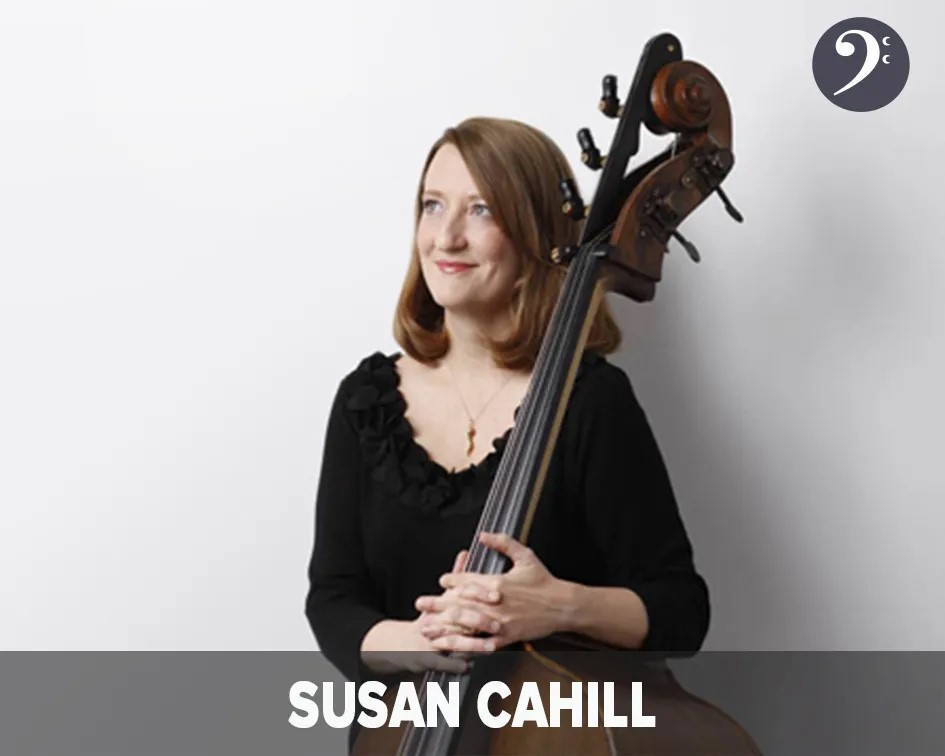
Sue Cahill’s interview
by Frankie Pfeiffer
Editor in chief – PARIS-MOVE
July 2nd, 2026
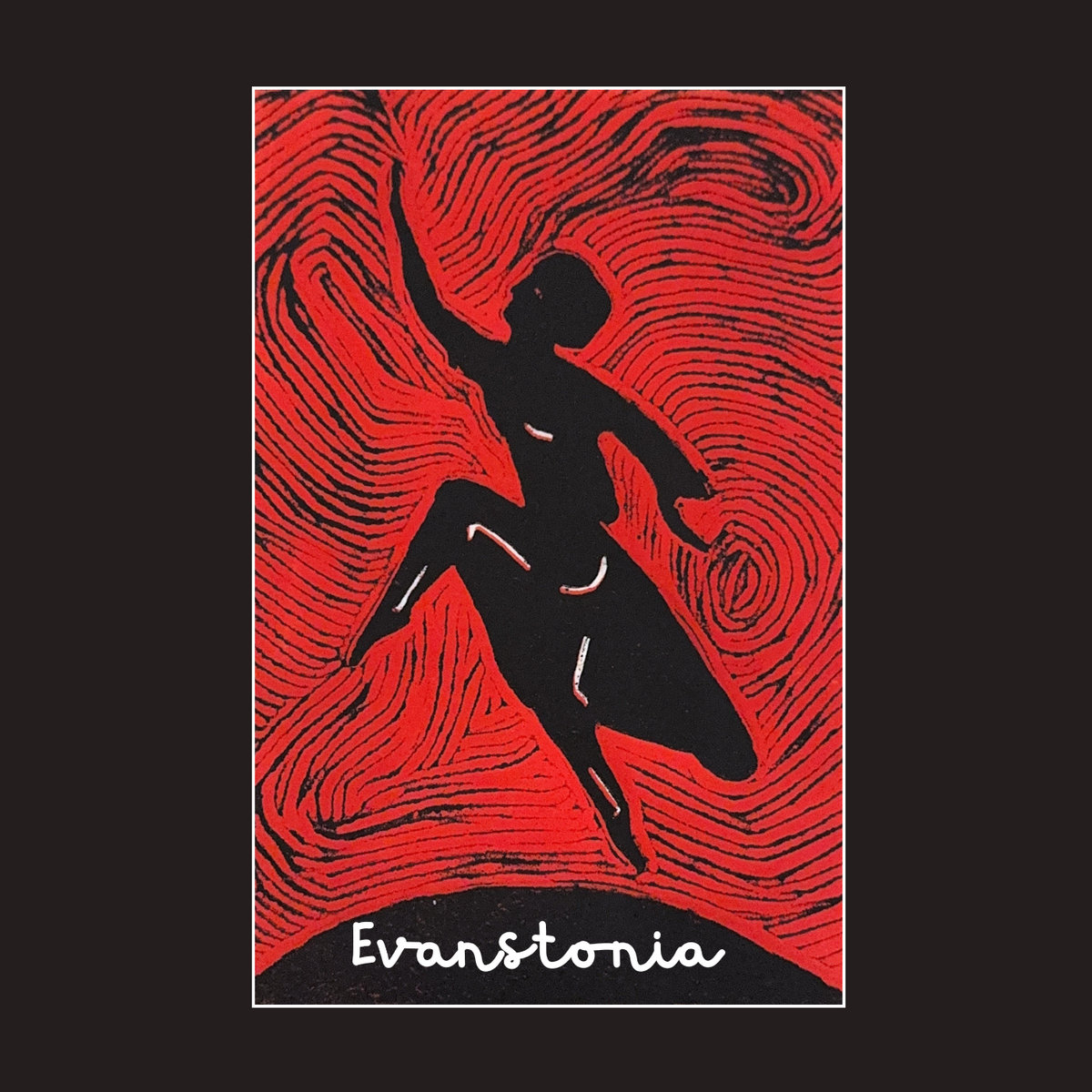
With Evanstonia, bassist and composer Susan Cahill delivers a beautifully crafted album that is both sophisticated and deeply engaging. Joined by pianist Dawn Clement and drummer Dru Heller, she presents seven original compositions that showcase not only her gift as a composer and bandleader, but also the remarkable chemistry shared by the three musicians.
Sue Cahill’s interview
Frankie Pfeiffer: Sue, you are a bassist and composer. Can you introduce yourself to the readers of Paris-Move and why you choose to play double bass?
Sue Cahill: Frankie, first, thank you so much for the chance to speak to you and your readers! I am a bassist, composer and educator originally from the Chicago area, now living in Denver, Colorado. I am currently associate professor of double bass at The University of Colorado Boulder. I spent many years as a bassist in the Colorado Symphony before joining the faculty of CU Boulder, but have always had a foot in chamber music, composition, jazz, folk, and the tango worlds.
Frankie Pfeiffer: What is your musical background? What bands have you played in?
Sue Cahill: I was originally a pianist and started at age 4 and continued through college study. I added bass to my life at about 10 years old at the suggestion of my mother, who knew that opportunities for ensemble playing were much more limited when just playing piano. I am incredibly thankful for her guidance, because I grew to love ensemble playing and chose to major in bass instead of piano in college. Even though I focused on classical bass performance in college, I’ve played in a number of bands and ensembles, starting in high school and continuing with stints on the road with my sister, Beth Cahill, who is a singer song writer, and with the Tango band Extasis when I first moved to Denver. I formed a band called Grand Orquesta Navarre in 2016 with my former bandmates of our tango band, Extasis. Grand Orquesta Navarre is an amazing passion project, and we just are finishing up our first studio release. The music will feature originals by myself and Tom Hagerman (of the rock band Devotchka) as well as quirky music you would have heard in the great hotel salons of the 20’s and 30’s. Aside from that I have put together combos with friends and colleagues along the way, mostly to perform my own music, but also as a way of exploring the jazz standards that I love.
Frankie Pfeiffer: Who are the musicians who influenced you?
Sue Cahill: There are so many. Chicago, where I grew up, was a wonderful musical environment. Because my parents were such classical, jazz and folk lovers I got exposed to all of it at an early age. Any interpreter of Debussy was always a favorite of mine, as were the musicians of the Chicago Symphony or the Lyric opera. When I was old enough, I would go to the Green Mill to hear Kurt Elling and also loved catching guitarist Fareed Haque’s shows on the north shore of the city. I spent a time or two in Buddy Guy’s Lounge as well! I spent 3 years working in New Orleans playing with the orchestra, and although I didn’t perform jazz much while there I completely absorbed the amazing music in the air at the time. At that time Nicholas Payton, Joshua Redman, Johnny Vidacovich, the Marsalis brothers and Ellis Marsalis and many others were either performing regularly or just starting to catch fire. It was an exciting time to be in that city, and my roommate, jazz trombonist Jeff Albert and I spent many nights roaming the city listening to whomever was in town. I was dating a percussionist (now husband) in the New Orleans orchestra who had been in school with Brian Blade, Stanton Moore, Peter Martin and John Cowherd, so we spent lots of time going to their shows. There was a club in New Orleans, The Funky Butt, destroyed by Katrina, unfortunately, where I remember a particularly great show with the Josh Redman Quartet, and was right before the sessions at the Vanguard which produced their “Spirit of the Moment’ album. Unforgettable, that show. Ultimately my parents were some of my biggest musical influences. At our home the radio was always tuned to either the classical or jazz station, and there were many fun nights singing songs from the Great American Songbook at the piano at home. The first piece I ever truly desired to play was a piano piece by Rachmaninov that my mother used to play on the piano. As a bassist I have been incredibly inspired by Jaco Pastorius’s lyricism and Christian McBride’s endless groove.
Frankie Pfeiffer: Can you introduce us to the musicians who accompany you on this album?
Sue Cahill: Dawn Clement and Dru Heller: They are the best! I was fortunate enough to be studying with the amazing pianist Art Lande at the time I was getting ready to record this album. Art recommended Dawn, saying that she was the right person to interpret some of my more out-there ideas. Dawn has a busy touring and teaching career, and I am super lucky to have been able to engage her. Dawn actually introduced me to Dru, who I had heard of before. Dru has this amazing sensitivity that actually reminds me a lot of Brian Blade, and I couldn’t have been happier with all of his contributions on the album
Frankie Pfeiffer: Pianist Dawn Clement provides vocals on the track June, February. Why didn’t you sing it?
Sue Cahill: I wish I was a good enough singer! The truth is that the intervallic relationships and the large range are a big challenge in this song, and I knew I would butcher it! Plus, Dawn has the perfect breathy approach to this song (her new album Dear Ms. Dearie, which is a tribute to Blossom Dearie, is great evidence of her prowess!). I do sing backup for my sister, Beth Cahll, when we perform together, but that is about the extent of my singing. The first time I performed June, February live I actually had a lyric mezzo soprano and a jazz pianist perform it, which also worked well and gave the song a completely different vibe. Since a lot of my compositional style is an amalgamation of classical and jazz I tend to write songs that can be tricky either in the form or the content or both. Dawn absolutely nailed the recording, and turned this rather strange combination of melody and word painting into something that somehow makes sense.
Frankie Pfeiffer: As I mentioned it in the review, June, February is the last track of this album, and after six outstanding instrumental performances, those who approached Evanstonia expecting a purely and inventive instrumental jazz trio album may be surprised by the appearance of vocals on the closing track. For some, this addition will feel like a perfect and moving conclusion; for others, it may slightly alter the character of the album they had come to embrace. Was it a voluntary choice to add a track with vocals after six musical titles, and if so, what is the reason?
Sue Cahill: There have been two separate reactions to June February being on the album, and one was definitely “what was this track doing on this album? It seems a strange choice” and the other was “June, February was my favorite track!”. It just goes to show you that you can’t please everybody! It was definitely a voluntary choice to add the track, and my fabulous engineer, Colin Bricker, was the one who insisted it be the last track. I am a true believer that the artist doesn’t always have the right perspective to judge where, when and how their music should be combined or interpreted. Sometimes you need an outsider to hold the work in their hands, turn it around and figure out where it fits in the puzzle. I knew the track belonged on the album because it was the most deeply personal song I wrote and therefore the best way to introduce myself to my audience. The jazz standards that often touch me the most are the ones with these types of lyrics… songs like ‘But Beautiful’, ‘Strange Fruit’ or ‘Lush Life’- the kind of lyrics that are just so achingly beautiful or that tell a compelling story.
Frankie Pfeiffer: In what state of mind did you compose the seven different tracks of this album? How do you compose? With which instruments do you write your compositions? …because I think you don’t compose using only your double bass… or do you?
Sue Cahill: That’s a great question. Since piano is my first instrument I almost always begin composing there. If I have a good idea for a bass line I will often develop it on the bass first and then work out the rest on piano. As for my state of mind, I grew up in a household that prioritised intellectualism as well as a deep connection to artistic beauty. I don’t think that I could compose a song without somehow incorporating both the cerebral and the emotional. The tracks on this album hopefully allow the listener to have the satisfaction of both the cerebral and the emotional experience.
Frankie Pfeiffer: How is the process of recording the tracks you have composed? How do the recording sessions take place? What role do the other musicians have? Do they have an influence on the recording of your compositions?
Sue Cahill: These tracks were recorded pretty quickly. Since my main performing job over the years has been to produce live music without the possibility of edits, I tend to prioritise capturing the moment versus endless ‘knob turning’ and retakes. Dawn and Dru definitely had a say, however! I would defer to them on many issues of feel, balance and just general musical intuition. This was definitely a group process!
Frankie Pfeiffer: What instructions do you then give to other musicians when you record your compositions? How much freedom to play and improvise do you give/offer them?
Sue Cahill: I always have ideas of what I think can work regarding other instruments and their roles in my tunes. On this album especially, since piano is an instrument of mine, and since I am married to a percussionist I can speak the language of those instruments pretty easily and therefore have a plan of how things could go. That being said, I make it a point to scuttle my opinions if someone else has a better idea, and that definitely happens. And when it comes to solos, I would never, ever interfere. That would be like grabbing the paint brush out of Picasso’s hand mid stroke.
Frankie Pfeiffer: How do you see your music evolving?
Sue Cahill: I am getting ready to write more long form pieces. I would really like to draw my classical colleagues into the magic of improvisation by creating a work that allows for both structure and improv. These types of pieces exist already, and I have played many of them as a classical bassist. Unfortunately, many of them either give too many instructions about an improvised section or the wrong kind of direction for the players that leaves them scratching their heads. It is a tricky balance, and since I have performed many of these pieces I know how hard it is. Billy Childs is a good example of someone who has blended these 3rd stream ideas in a really successful way, and I aspire to do something like this.
Frankie Pfeiffer: Which famous musician(s) would you like to play with? …and have them play on one of your next albums?
Sue Cahill: Wow, so many on this wish list. I can’t even imagine putting myself in this company, but since I am in dream land: of course working with Brian Blade would be a dream, or any of the folks I came up listening to in New Orleans. Ed Simon is a huge favorite of mine, I think he is an amazing composer and pianist.
Frankie Pfeiffer: How do you imagine your next album? With the same musicians? Will it be in the same spirit as this album?
Sue Cahill: I’d be thrilled to work with Dawn and Dru again. I think there is more for us to explore, for sure. As for spirit, all I can guarantee is that it will be, as Art Lande likes to call it, ‘Personal Music’, which I think is a great descriptor. For a long time I had a hang up that I didn’t deserve to write or play ‘jazz’ because I didn’t come up in the traditional jazz eco system. I’ve gotten to the point now that I no longer let that stop me, and freedom is a big part of what jazz is about anyway!
Frankie Pfeiffer: Congratulations, in any case, for this album!
Sue Cahill: Thank you, Frankie, for listening, reviewing and taking the time to ask questions!