| Jazz |
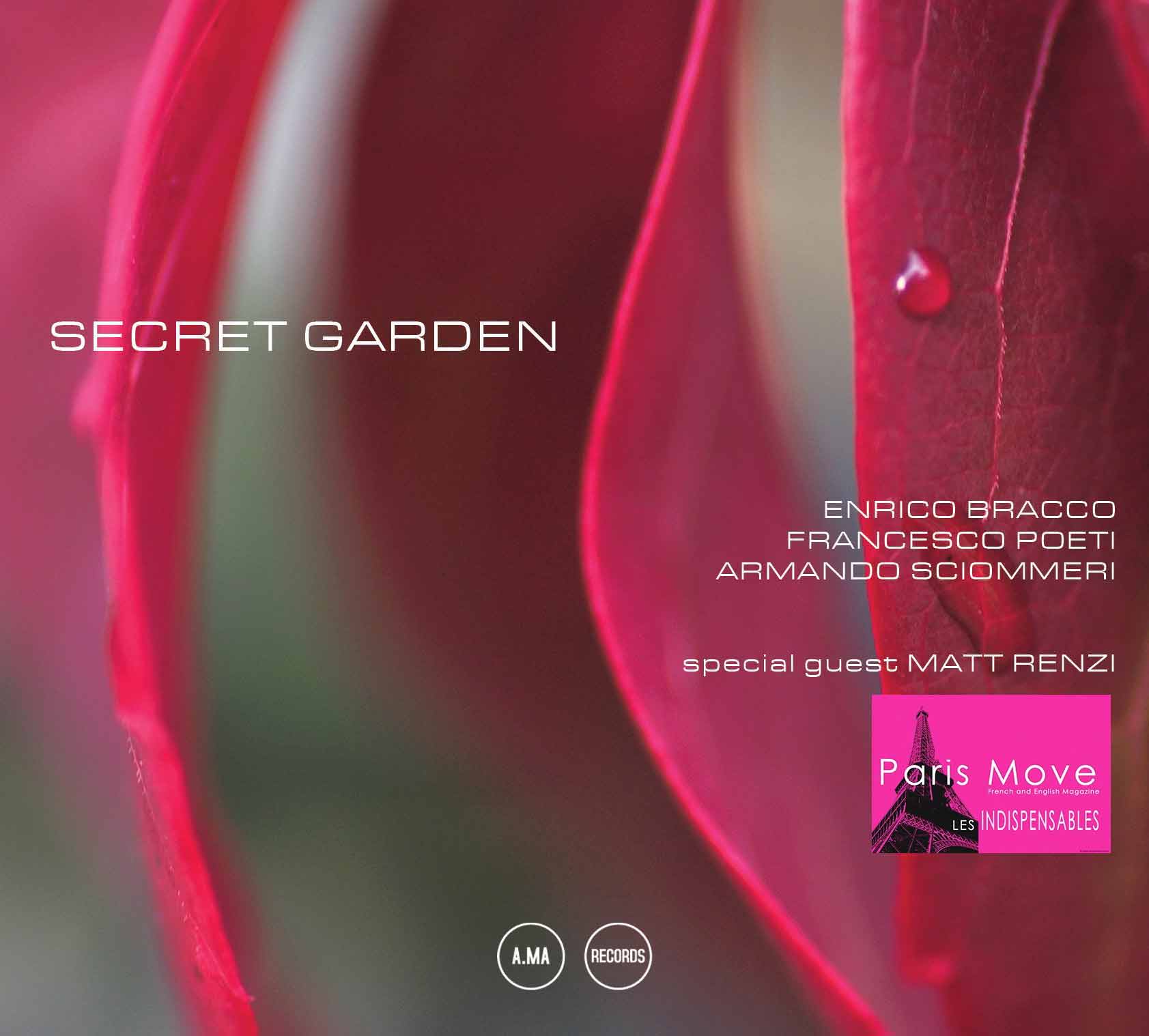
Summary: Blending original compositions with subtle innovation, Secret Garden is an elegant jazz album that bridges the legacy of twentieth century jazz with a fresh, contemporary voice, revealing new layers of beauty with every listen.
Secret Garden: Where Jazz Tradition Meets Quiet Innovation
Some album titles tell you exactly what to expect. Secret Garden appears to be one of them. It evokes intimacy, lyricism and understated elegance, almost like something Michael Franks might once have chosen. Yet the title is quietly misleading, because nothing about this Italian trio is quite as predictable as first impressions suggest.
The opening moments seem to invite the listener into familiar territory, a world of refined, melodic jazz that feels graceful, intelligent and reassuringly traditional. It is beautifully played, almost disarmingly so. Then comes the second track, Stellar Variation, and the landscape shifts. Without warning, the trio ventures into territory that flirts with jazz fusion while remaining remarkably restrained. It is an elegant sleight of hand. Just when the listener believes the destination has become clear, Secret Garden gently changes direction, revealing that beneath its polished exterior lies a restless musical curiosity.
What makes this transition so compelling is that it never feels calculated. The musicians are not interested in surprising their audience for its own sake. Every musical choice grows naturally from the composition itself, making the album feel sincere rather than self conscious. They never treat jazz tradition as a museum piece preserved behind glass. Instead, they approach it as living material, something to reshape through their own sensibility while honoring everything that came before.
Much of the credit belongs to producer Antonio Martino, whose catalog has quietly become one of Europe’s most remarkable success stories. Throughout the years, Martino has demonstrated an exceptional instinct for identifying artists with unmistakable musical identities rather than simply following stylistic trends. Whether rooted in straight ahead jazz, chamber jazz or more contemporary explorations, his productions consistently place artistic integrity above commercial fashion. The result is a European jazz catalog of rare coherence and distinction, one that continues to introduce listeners to musicians whose originality speaks louder than labels ever could. Secret Garden naturally finds its place within that distinguished company.
Listeners expecting dazzling displays of virtuosity or dramatic solos may initially be caught off guard. This is music that thrives on nuance rather than spectacle. Its beauty lives in the details, in gestures so subtle they can easily pass unnoticed during a first listen. Had no one mentioned that these musicians were Italian, many listeners would probably assume they had emerged from New York’s vibrant jazz community. Their musical language feels entirely international, shaped not by geography but by decades of listening, studying and absorbing jazz as a universal art form.
The repertoire consists primarily of original compositions by Enrico Bracco and Francesco Poeti, whose writing complements one another with remarkable cohesion. Their melodic sensibilities intertwine naturally, producing music that is immediately inviting while rewarding careful attention. Harmonically and rhythmically, they rarely settle for predictable solutions. Instead, they favor unexpected pathways that deepen the emotional resonance of every composition without sacrificing accessibility. Each melody possesses an unmistakable lyrical quality that lingers long after the performance has ended.
Their influences are broad without ever becoming derivative. One hears echoes of the creative energy associated with New York’s modern jazz scene alongside the spacious lyricism more commonly found in European jazz traditions. The great American Songbook also remains an essential point of reference, as does the cool intellectual elegance of Lennie Tristano. It therefore comes as no surprise that the album includes Irving Berlin’s timeless How Deep Is the Ocean, alongside imaginative contrafacts built upon the harmonic foundations of classics such as Stella by Starlight and All the Things You Are. Rather than revisiting these familiar structures out of nostalgia, Secret Garden transforms them into starting points for fresh conversations.
Listening to the album often feels like moving effortlessly between different chapters of jazz history. The trio has absorbed the lessons of twentieth century jazz so completely that imitation never becomes an issue. Instead, they reinterpret that legacy through a distinctly contemporary understanding of rhythm, harmony and collective interplay. Their respect for tradition is evident throughout, but it never limits their imagination.
More than once I found myself reaching for the replay button before a piece had even completely faded away. Not because I had missed something obvious, but because every return seemed to reveal another layer that had quietly escaped my attention. This is an album that unfolds gradually. A subtle harmonic movement hidden beneath the melody, a rhythmic inflection from the drums, a fleeting exchange between bass and guitar or a carefully shaped phrase suddenly emerges with greater clarity. The music rewards patience in the most satisfying way.
Whether considering the compositions themselves or the trio’s remarkably thoughtful arrangements, one cannot help admiring the collective intelligence guiding every performance. Their ears seem permanently tuned to one another, allowing the music to breathe with extraordinary naturalness from beginning to end. Nothing feels excessive, nothing exists merely to fill space and every silence carries as much expressive weight as the notes themselves.
The album is further enriched by the presence of American saxophonist Matt Renzi, whose unmistakably personal voice blends seamlessly into the trio’s sound. Having collaborated with these musicians on several previous occasions, Renzi never appears as a featured guest seeking the spotlight. Instead, he becomes another storyteller, extending the conversation with remarkable sensitivity and reinforcing the impression that all four musicians share the same artistic vocabulary.
That shared experience becomes increasingly evident as the album unfolds, revealing itself as something deeper and more conceptually unified than first impressions might suggest. A composition such as Flow perfectly illustrates this evolution. The dialogue between double bass, drums and guitar develops with extraordinary patience. The bass does not simply keep time. It breathes beneath the guitar like a slow current, while the drums resist every temptation to dominate the pulse, choosing instead to illuminate the spaces between the notes. Together they create an atmosphere that feels suspended outside conventional notions of time. When the saxophone finally enters, it does so with the same quiet authority and delicacy that characterizes the trio itself. There is never any sense of cultural contrast between the European musicians and their American collaborator. Instead, what emerges is a remarkable feeling of complementarity, proof that great jazz has always spoken a language that transcends national borders.
Ultimately, the true richness of Secret Garden never resides in what immediately captures the ear. Its greatest rewards are hidden beneath the surface, in the smallest gestures, the subtle intentions, the constantly shifting dynamics and the countless interactions taking place between the musicians. Every composition contributes to the album’s broader architecture, making it particularly rewarding to experience the recording in its intended sequence. Rather than presenting a simple collection of compositions, the trio constructs a continuous narrative that reflects multiple chapters of jazz history while confidently pointing toward its future.
Some albums announce themselves through spectacular gestures and immediate impact. Secret Garden chooses a different path. It invites the listener inside, speaks softly, rewards curiosity and gradually reveals extraordinary emotional and artistic depth.
Long after the final note has disappeared, the silence somehow feels different than it did before the music began. In today’s crowded jazz landscape, that quiet confidence may well be the album’s greatest achievement.
Thierry De Clemensat
Member at Jazz Journalists Association
USA correspondent for Paris-Move and ABS magazine
Editor in chief – Bayou Blue Radio, Bayou Blue News
PARIS-MOVE, June 28th, 2026
::::::::::::::::::::::::
Francesco Poeti’s Facebook page
Musicians :
Enrico Bracco – Guitar
Francesco Poeti – Electric Bass
Armando Sciommeri – Drums
Special guest:
Matt Renzi – Tenor Saxophone
Track Listing :
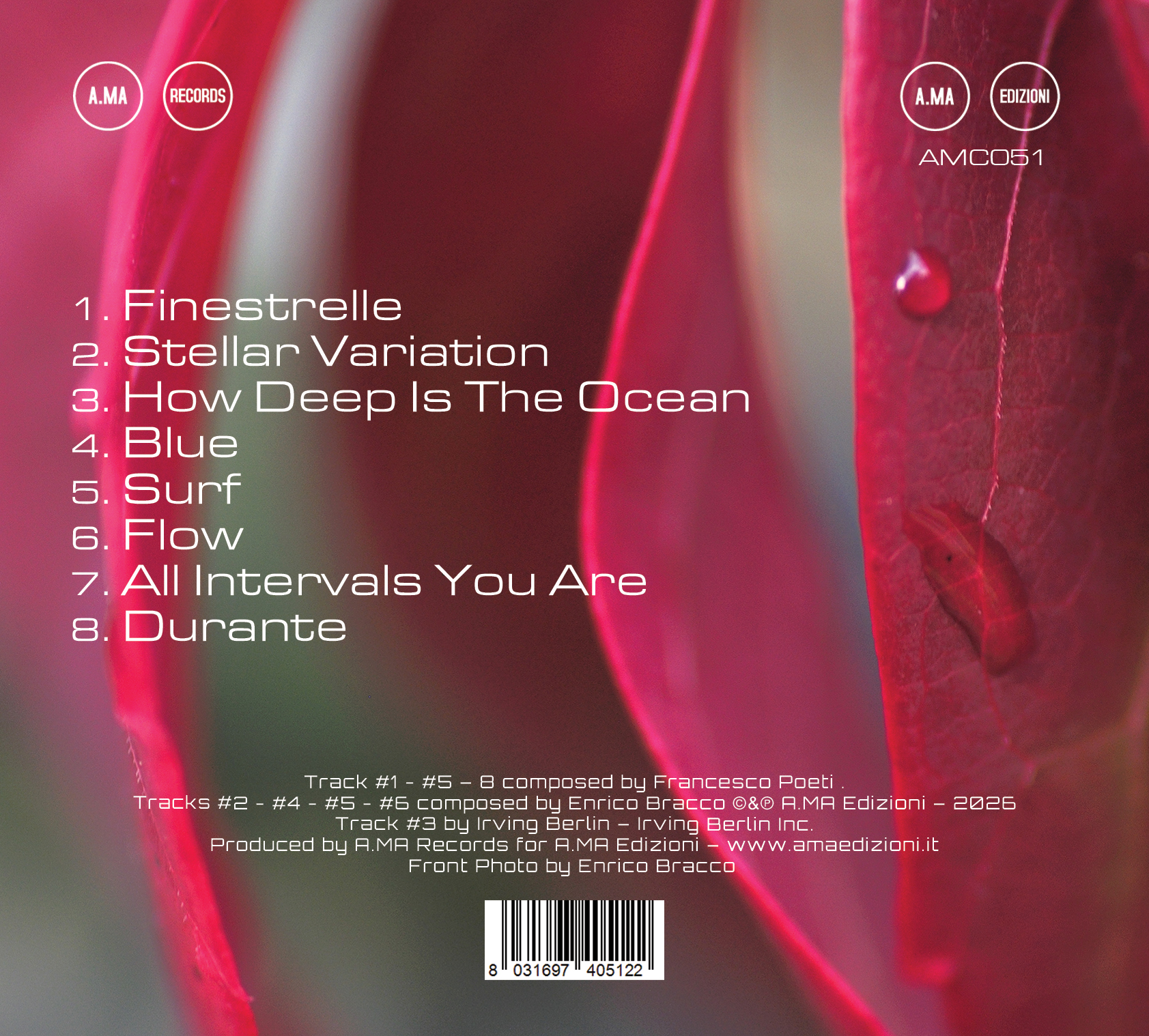
Finestrelle
Stellar Variation
How Deep Is The Ocean
Blue
Surf
Flow
All Intervals You Are
Durante
Recorded at Extrabeat Recording July 2025
Sound Engineer Clive Simpson