| Jazz |
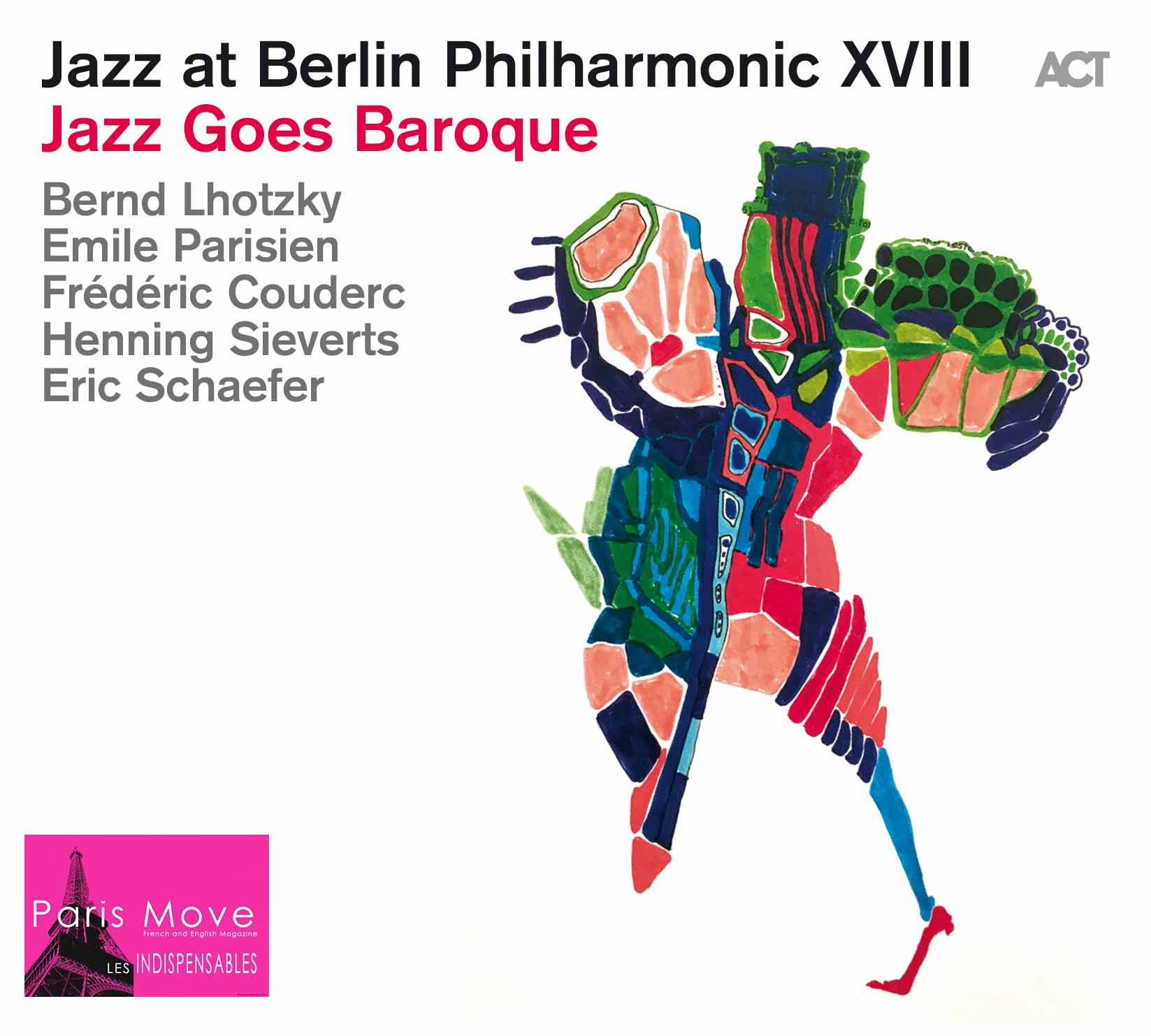
Summary: On Jazz Goes Baroque, Bernd Lhotzky and an exceptional ensemble led by Emile Parisien transform Baroque masterpieces into a vibrant and inventive jazz experience. Recorded live at the Berlin Philharmonic, this ambitious tribute to George Gruntz’s landmark 1964 album stands as one of the most compelling and successful recent encounters between jazz and classical music.
Bernd Lhotzky’s Jazz Goes Baroque: A Brilliant Dialogue Across the Centuries at the Berlin Philharmonic
Few projects illustrate the enduring dialogue between jazz and classical music more vividly than Jazz Goes Baroque. With this ambitious live recording, German pianist and composer Bernd Lhotzky revisits a landmark chapter in European jazz history while simultaneously reimagining it for a contemporary audience. Award-winning and widely respected throughout Germany for his scholarship and musicianship, Lhotzky returns to the spotlight as part of the celebrated Jazz at Berlin Philharmonic series, now reaching its eighteenth release. For those unfamiliar with the concept, the series has become renowned for its ability to bring together seemingly distant musical traditions, creating encounters that are intellectually stimulating, emotionally engaging, and often delightfully unpredictable.
Among the distinguished musicians assembled for this project is Emile Parisien, one of the most influential and inventive voices in contemporary European jazz. A frequent collaborator of Vincent Peirani and an artist whose reputation continues to grow internationally, Parisien proves to be a central figure throughout the performance. His presence is far more than decorative. Again and again, his improvisations provide the vital link between the architectural precision of Baroque composition and the freedom of modern jazz expression. Whether navigating intricate melodic passages or launching into spontaneous flights of invention, Parisien displays a rare ability to make centuries of musical history feel as though they belong in the same conversation.
Jazz Goes Baroque is more than another crossover project. It is the document of an exceptional concert that celebrated two significant milestones. First, it marked the fiftieth performance in the immensely successful Jazz at Berlin Philharmonic series, the brainchild of legendary producer Siggi Loch, founder of ACT Records and one of the most influential figures in European jazz. For more than half a century, Loch has occupied a unique position within the European music landscape, championing artists who challenge convention while remaining deeply connected to jazz traditions. The success of the Berlin Philharmonic series stands as perhaps the clearest embodiment of that vision.
The evening also served as a tribute to one of Loch’s earliest triumphs as a young producer: George Gruntz’s groundbreaking 1964 album Jazz Goes Baroque. That recording became a remarkable artistic and commercial success, introducing Gruntz to a wider audience and laying the foundation for one of the most distinctive careers in modern European jazz. Sixty years later, Lhotzky was entrusted with the delicate task of paying homage to that historic recording while avoiding mere imitation. The result is a program that honors the original spirit while establishing a distinctive identity of its own.
The historical resonance of the occasion was impossible to ignore. Lhotzky directed the ensemble from the harpsichord, just as Gruntz had done six decades earlier, and the performance took place only a short distance from the former Philips studio at Potsdamer Platz where the original recording had been made. The proximity created an almost cinematic sense of continuity, as though the past and present were briefly occupying the same stage.
The album opens with a sense of humor that feels entirely appropriate. Anyone familiar with the musical personalities of Bernd Lhotzky and Emile Parisien could have anticipated that a certain irreverent spirit would be close at hand. From the opening moments of “Monsieur Charpentier Raises the Curtain,” the audience is caught delightfully off guard. The arrangement cleverly juxtaposes stately Baroque motifs with bursts of swing, unexpected rhythmic detours, and moments of playful exaggeration. At times, it feels as though centuries of musical history have been invited into a lively and good natured debate. The audience responds enthusiastically, rewarding the performance with a thunderous ovation. What follows maintains that same exceptional standard. The music is beautiful, witty, adventurous, and executed with remarkable precision, yet never feels academic or self-conscious.
The instrumentation of this elite ensemble deliberately echoes that of the group that recorded the original Jazz Goes Baroque in the 1960s. On that landmark recording, the principal solo voice belonged to Klaus Doldinger, one of the towering figures of German jazz. In this modern reinterpretation, a comparable role is assumed by Emile Parisien, who stands at the very summit of European jazz today. His solos balance dazzling technical command with mischievous spontaneity, often serving as the ideal bridge between Baroque elegance and jazz freedom.
Alongside him are French flutist Frédéric Couderc, bassist and cellist Henning Sieverts, and drummer Eric Schaefer, whose inexhaustible creativity leaves a profound impression throughout the performance. Schaefer’s contributions are particularly striking. His ability to constantly reinvent textures, rhythms, and grooves ensures that even familiar material remains unpredictable. Rather than simply accompanying the ensemble, he becomes an active participant in the musical dialogue, constantly nudging the music toward new possibilities.
The second piece, “Ciacona: La Roue du Hamster,” unfolds with equal imagination. Jazz rock influences gradually emerge from a distinctly Baroque foundation, creating a musical landscape that feels both surprising and entirely natural. The piece accumulates momentum with remarkable patience, transforming its historical source material into something that occasionally resembles progressive jazz. The tension between repetition and release becomes one of the album’s recurring pleasures. Layers of rhythm and melody interact with one another in increasingly inventive ways, demonstrating how effectively Lhotzky can reimagine centuries old material without sacrificing its original character.
Even listeners who normally maintain their distance from either jazz or classical music may find themselves captivated by this recording. Its appeal lies precisely in its refusal to remain confined within traditional stylistic boundaries. Rather than asking listeners to choose between genres, it invites them to experience both simultaneously.
By the time the third track arrives, even a seemingly straightforward gavotte becomes a playground for invention. The performance is so buoyant, energetic, and full of momentum that it occasionally flirts with the spirit of rock music. The result is impossible not to enjoy. One finds oneself smiling almost involuntarily as the musicians transform familiar historical forms into something fresh and exhilarating. Indeed, one of the album’s greatest strengths is its capacity for surprise. Just when the listener believes they understand where the music is heading, another unexpected turn appears.
Perhaps the album’s greatest achievement is its refusal to treat either jazz or classical music as an exclusive domain. Too often, projects that seek to unite these traditions can feel burdened by the weight of their ambitions. Lhotzky avoids that trap entirely. He approaches both musical worlds with affection, curiosity, and a sense of play. The result feels welcoming rather than intimidating. Listeners are invited into the performance rather than asked to admire it from a respectful distance.
Lhotzky, who is perhaps best known for his profound knowledge of early jazz traditions, approaches the relationship between jazz and Baroque music through a lens that is both deeply personal and endlessly imaginative. His method is not rooted primarily in musicological analysis or historical reconstruction. Instead, it emerges from vivid associations and intuitive connections that transform familiar works into something entirely new.
In a melody by Bernardo Pasquini, he hears echoes of Sidney Bechet. A movement by Handel suggests the broad melodic landscapes later associated with Brahms. Beneath the effortless elegance of Vivaldi, he discovers hidden numerical games and intricate structural puzzles. Couperin becomes a source of theatrical mishaps and comic drama, while Pachelbel’s endlessly repeated ostinato transforms into a creature seemingly pleading for freedom after centuries of repetition.
These arrangements are born not from academic dissection but from images, stories, and flashes of inspiration. That imaginative approach gives the music an immediacy that feels strikingly contemporary. The listener is not asked to admire these works as historical artifacts preserved behind glass. Instead, they are invited to experience them as living, breathing creations capable of inspiring fresh interpretations and unexpected emotions.
Few albums manage to be simultaneously intelligent, accessible, humorous, and musically profound. Jazz Goes Baroque accomplishes all four with remarkable ease. It succeeds not merely as a tribute to a beloved recording from the past, but as a bold artistic statement in its own right. By bridging eras, styles, and sensibilities with such confidence and charm, Lhotzky and his collaborators have created something that transcends the limitations often associated with crossover projects.
It is difficult to imagine a more imaginative or engaging contribution to the ongoing conversation between jazz and classical music, and the recording may well come to be regarded as one of the defining crossover achievements of its era. More importantly, it demonstrates that innovation often emerges not from abandoning tradition but from rediscovering it through fresh eyes.
By the end of the performance, what began as a tribute has evolved into something far more compelling. The ghosts of Charpentier, Couperin, Handel, Pasquini, Vivaldi, and Pachelbel are not preserved behind museum glass. They are invited onto the bandstand, where they swing, dance, stumble, laugh, and occasionally astonish. Few albums offer such sustained pleasure while simultaneously making such a persuasive argument for the timelessness of great music. If the twenty first century continues to produce recordings of this caliber, the conversation between jazz and classical music remains far from exhausted. Indeed, Jazz Goes Baroque suggests that it may only be getting more interesting.
Thierry De Clemensat
Member at Jazz Journalists Association
USA correspondent for Paris-Move and ABS magazine
Editor in chief – Bayou Blue Radio, Bayou Blue News
PARIS-MOVE, June 25th, 2026
::::::::::::::::::::::::
CD/ vinyl/ digital
To buy this album
Musicians :
Bernd Lhotzky: harpsichord and musical director
Emile Parisien: soprano saxophone
Frédéric Couderc: flutes
Henning Sieverts: double bass and violoncello
Eric Schaefer: drums
Track Listing :
01 Monsieur Charpentier Raises the Curtain 01:47
02 Ciacona – La roue du hamster 04:25
03 Alma’s Gavotte 04:26
04 Pasquini’s Slow Drag 02:57
05 Double Talk (A Fugue) 04:37
06 Croc-en-jambe, chute fatale 03:30
07 Gavotte en rondeau (Rondeau No. 24) 04:38
08 Affettuoso 04:03
09 Vivaldi 156 04:51
10 Fuge, Flucht und Bedrängnis 02:32
11 Canarie 02:50
All arrangements by Bernd Lhotzky
Live recorded on 25 September 2025 at the Berlin Philharmonie
Recorded, mixed and mastered by Klaus Scheuermann
Produced by Siggi Loch
Cover art by Edi Rama, Untitled, 2016
Courtesy of Marian Goodman Gallery
Design by Siggi Loch