| Jazz |
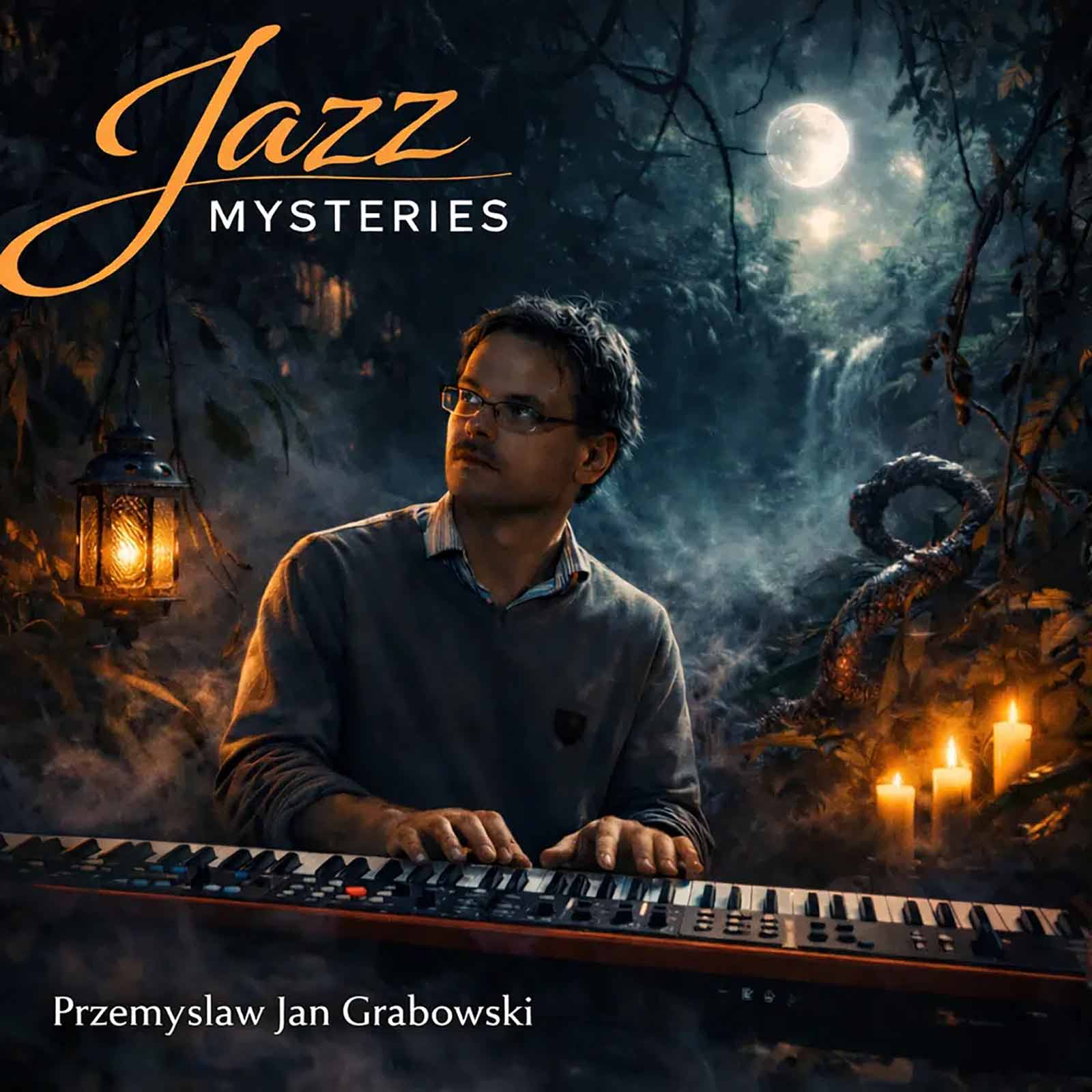
Summary: On Jazz Mysteries, pianist and composer Jan Grabowski blends international influences, elegant improvisation and acoustic warmth into a deeply personal jazz statement. Recorded across Cuba, the United Kingdom and the United States, the album showcases sophisticated musicianship, memorable melodies and a refreshing commitment to authenticity.
Jan Grabowski’s Jazz Mysteries Turns Global Influences Into Intimate, Timeless Jazz
Like many European artists before him, composer and pianist Jan Grabowski ultimately found himself drawn across the Atlantic, settling in Washington, D.C. Yet unlike musicians who travel in search of a particular scene or stylistic tradition, Grabowski’s journey has always been inward as much as geographic. Rather than looking outward for formulas to emulate, he has consistently preferred to mine his own experiences, instincts and imagination for inspiration. The result is a deeply personal musical language, one rooted in acoustic expression and guided by an unwavering commitment to beauty, purity and the timeless essence of jazz.
Unlike New York, whose jazz mythology often overshadows every other American city, Washington has long cultivated a quieter yet equally vibrant musical culture. It is within this environment that Grabowski found the freedom to refine a voice largely untouched by the pressures of stylistic conformity. His music emerges not from adherence to prevailing trends but from an ongoing search for authenticity, allowing him to create work that feels both timeless and remarkably contemporary.
In many ways, Grabowski’s music functions as a bridge between eras. His compositions honor the traditions that shaped the genre while speaking in a voice unmistakably his own. “I wasn’t trying to learn what had already been written, but rather to create my own music and improvise,” Grabowski explains. That philosophy lies at the heart of Jazz Mysteries. Each piece begins as a spontaneous spark before gradually evolving into a fully realized composition, creating music that feels immediate, intimate and remarkably authentic.
The notion of travel, cultural exchange and globalization permeates the album at every level, extending even to its creation. Recorded across multiple locations spanning Cuba, the United Kingdom and the United States, Jazz Mysteries brings together a richly diverse ensemble featuring Camila Cortina Bello on synthesizers and piano, Noam Tanzer on double bass, Kali Rodriguez-Peña on trumpet, Emir Santa Cruz on tenor saxophone, Samer Sharawi on electric bass and Andy Wilder on drums.
At a time when jazz increasingly reflects a global conversation rather than a distinctly American language, Jazz Mysteries stands as a compelling example of how artistic identities are now shaped through international collaboration rather than geographic boundaries. The album’s multinational character never feels forced or symbolic. Instead, it becomes an organic extension of the music itself, enriching the project with a variety of perspectives while maintaining a remarkably cohesive artistic vision.
Named after the elusive quality that resides at the center of improvised music, the album reflects Grabowski’s belief in the transformative power of spontaneity, in the way music created in the moment can communicate emotion, energy and meaning beyond the limits of language.
The second track, “Forward Voyage,” immediately establishes the album’s identity. Built upon a distinctive sonic palette, it unfolds as a continuous conversation among bass, piano, drums and saxophone, each instrument contributing its own accent and personality. The influences of the individual performers emerge naturally, adding color and nuance without ever disrupting the cohesion of the whole. “Forward Voyage” feels exactly as its title suggests: a journey with no desire to return to the point of departure. In many respects, it encapsulates the album’s greatest flaw, namely that its seven tracks leave the listener wanting considerably more. Whether through the strength of the compositions, the sophistication of the arrangements or the consistently engaging performances, every piece invites repeated listening.
One of the album’s most appealing qualities is its refusal to rely on technological excess. There are no overwhelming electronic textures, no gratuitous effects competing for attention. Instead, the focus remains squarely on musicality itself. When an organ appears, it serves a genuine artistic purpose rather than functioning as mere decoration. Every sonic choice feels deliberate, every gesture meaningful.
One of the album’s most striking achievements is its embrace of space. Silence, pauses and breathing room become compositional tools, allowing melodies and improvisations to resonate with unusual clarity. In an age when many recordings seem determined to fill every available second, Grabowski and his collaborators understand the expressive power of restraint. The result is music that breathes naturally, inviting listeners into its atmosphere rather than overwhelming them.
Despite following a largely self-taught path, Grabowski has earned the respect and admiration of accomplished jazz musicians through the originality and strength of his writing. Those qualities have led to collaborations with an international network of performers based in the United Kingdom, the United States and Cuba, relationships forged through live performances and musician-led events. The collective chemistry that emerges throughout Jazz Mysteries is one of the album’s defining strengths.
Particular recognition belongs to drummer Andy Wilder, whose contribution proves indispensable. His performance embodies the rare art of restraint, demonstrating that sophistication in jazz often resides not in what is played but in what is intentionally left unsaid. Intelligent, nuanced and consistently supportive, Wilder possesses an exceptional ability to position himself exactly where each musical moment requires. Rather than dominating the proceedings, he provides the subtle propulsion that allows every instrument to flourish. His presence is felt throughout the album, often in understated ways that become even more impressive with repeated listening.
Ultimately, however, the album’s success stems from something larger than any individual performance. Humanity occupies center stage. The personal histories, cultural backgrounds and artistic identities of each musician become the foundation upon which the project is built. Together, they create music that feels lived rather than manufactured.
As a pianist, Grabowski displays remarkable elegance and restraint. His playing is refined, subtle and consistently purposeful. Every note contributes to the larger landscape surrounding the ensemble. Even during solo passages, he avoids unnecessary displays of virtuosity. Rather than overwhelming listeners with cascades of notes, he favors memorable melodies and carefully chosen phrases that linger long after they have been played.
While listeners may occasionally hear echoes of the introspective lyricism associated with some of contemporary jazz’s most respected pianists, Grabowski’s artistic identity remains distinct. His focus is less on technical exhibition and more on emotional communication, a quality that gives the album much of its enduring appeal.
Listeners admire artists for many different reasons. Some are celebrated for their complexity, technical mastery or intellectual ambition. Grabowski succeeds through a different but equally valuable gift: his ability to transport listeners, to invite them into richly imagined musical worlds and encourage them to dream. The accessibility of his music should not be mistaken for simplicity. Beneath its welcoming surface lies a sophisticated architectural framework of harmonies, rhythms and compositional ideas.
In an era increasingly dominated by algorithm-driven playlists, fragmented listening habits and attention-grabbing production techniques, Jazz Mysteries feels almost radical in its patience. It asks listeners not merely to hear the music but to inhabit it. Rather than chasing immediacy or novelty, Grabowski embraces qualities that remain central to jazz at its finest: conversation, spontaneity, vulnerability and emotional depth.
If Jazz Mysteries serves as an introduction to Jan Grabowski for many listeners, it is an exceptionally persuasive one. The album reveals a composer less interested in following contemporary trends than in building a lasting artistic statement. In a musical landscape often crowded with noise, Grabowski has chosen clarity, sincerity and substance. The choice pays off beautifully.
The greatest mystery surrounding Jazz Mysteries may be why an artist of Grabowski’s maturity, imagination and originality has remained under the radar for so long. If this album is any indication, that may not remain the case for much longer. It introduces a musician whose work rewards curiosity, deepens with repeated listening and suggests that his most compelling artistic chapters may still lie ahead.
Thierry De Clemensat
Member at Jazz Journalists Association
USA correspondent for Paris-Move and ABS magazine
Editor in chief – Bayou Blue Radio, Bayou Blue News
PARIS-MOVE, June 22nd, 2026
Follow PARIS-MOVE on X
::::::::::::::::::::::::
Musicians :
Przemysław Jan Grabowski | Piano, Fender Rhodes
Camila Cortina Bello | Piano, Synths
Emir Santa Cruz | Tenor Saxophone
Kali Rodriguez-Peña | Trumpet
Samer Sharawi | Electric Bass
Noam Tanzer | Acoustic Bass
Andy Wilder | Drums
Track Listing :
My Dearest Christine
Forward Voyage
Footsteps Over The Horizon
Monsieur Green
Counting Sevens
Serenading The Morning Sun
Happy Beluga