| World |
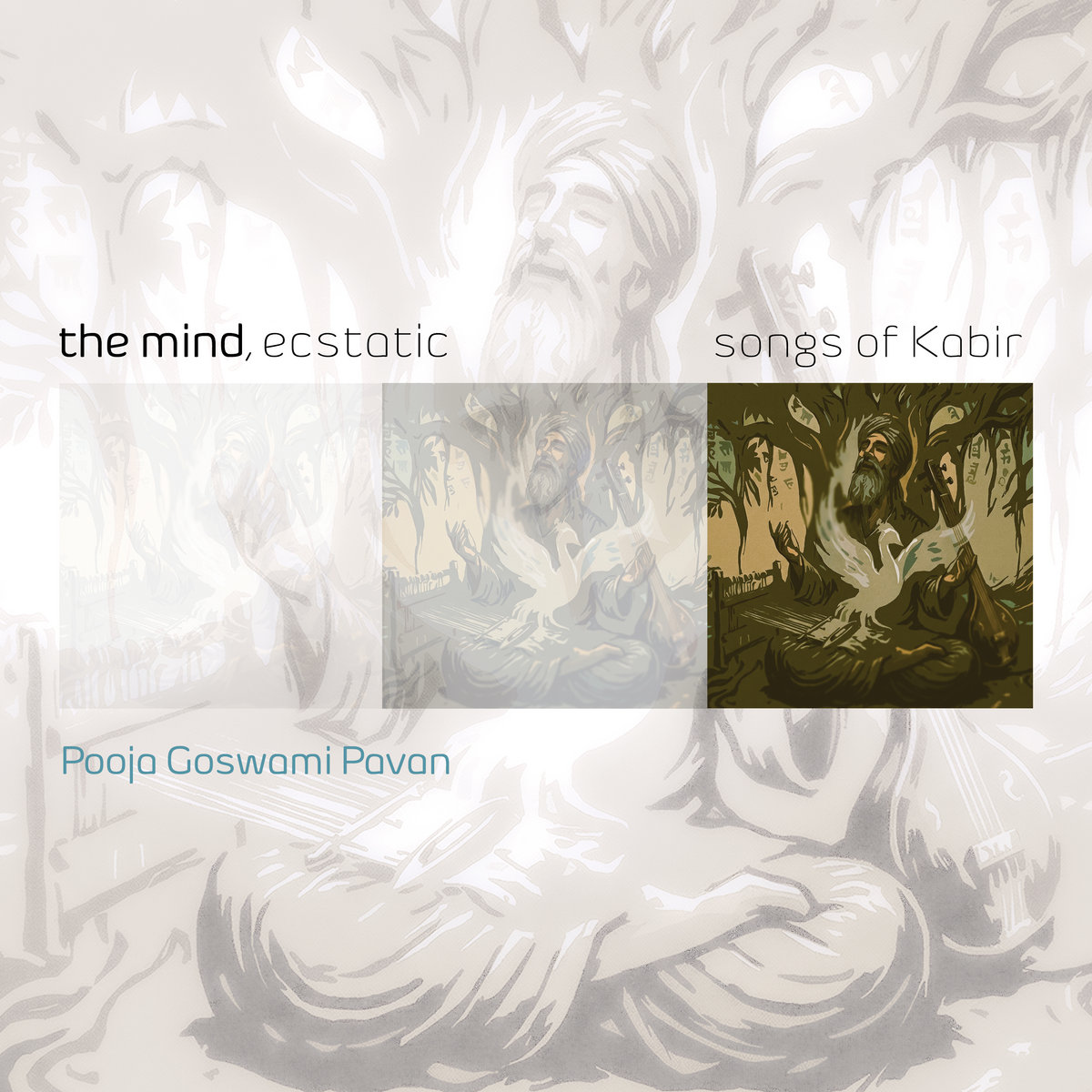
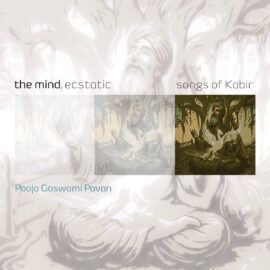
With her new album The Mind, Ecstatic: Songs of Kabir, vocalist and composer Pooja Goswami Pavan offers a profound musical meditation on the timeless poetry of the great Indian mystic Sant Kabir Das. Beautifully balancing the traditions of Hindustani classical music with contemporary compositional sensibilities, the album invites listeners into a world of spiritual inquiry, wisdom, devotion, and self-discovery.
The result is a moving recording that succeeds both as a work of art and as a heartfelt tribute to one of India’s most revered poet-saints.
Kabir, who lived during the fifteenth century, remains one of the most influential voices in Indian spiritual literature. His poetry transcends religious boundaries, emphasizing direct experience of the divine, inner awakening, humility, compassion, and freedom from dogma. More than six centuries after his lifetime, his verses continue to inspire singers, philosophers, and seekers throughout the world. This album demonstrates just how contemporary and relevant his words remain.
Pooja Goswami Pavan is uniquely qualified to undertake such a project. A distinguished Hindustani vocalist, composer, educator, and scholar, she received her early musical training from her father and guru, Pandit Surendra Goswami, and later earned a PhD in Indian Classical Music from the University of Delhi. Her deep understanding of both the musical and philosophical traditions surrounding Kabir is evident throughout this album.
The seven compositions are based on Kabir’s poetry. Five of the musical settings were composed by Pooja Goswami Pavan herself, while two were composed by her father, Pandit Surendra Goswami.
The musicians accompanying Pavan contribute enormously to the album’s success. The instrumental ensemble creates an atmosphere that is both intimate and expansive. Traditional Indian instruments interact gracefully with the voice, never overshadowing the poetry but constantly enriching its emotional and spiritual dimensions.
Throughout the album, the musicians demonstrate remarkable sensitivity, responding to every nuance of the text and every inflection of Pavan’s singing. Their collective artistry transforms each composition into a living conversation between poetry and sound.
The opening track, “In the Cave of the Sky,” immediately establishes the contemplative character of the album. The music unfolds slowly and gracefully, inviting listeners inward. Pavan’s expressive voice illuminates Kabir’s vision of the inner universe, while the instrumental accompaniment creates a sense of spaciousness and wonder.
“I Won’t Come or Go” explores one of Kabir’s central themes: the eternal nature of the soul beyond the illusions of birth and death. The composition possesses a serene beauty, and the performers capture perfectly the poem’s sense of transcendence and spiritual freedom.
On “I’m Terrified and I’m Laughing,” paradox becomes a source of revelation. Kabir frequently expressed profound truths through seemingly contradictory images, and the music mirrors these emotional contrasts beautifully. Pavan navigates the shifting moods with exceptional subtlety and conviction.
“The Wedding Sari Has Come” introduces a more celebratory atmosphere. Drawing upon imagery of union and spiritual fulfilment, the piece radiates warmth and joy.
The title composition, “The Mind, Ecstatic,” serves as the album’s emotional and philosophical centrepiece. Here, music and poetry achieve a remarkable synthesis. The performance conveys a sense of spiritual exaltation while remaining grounded in the disciplined beauty of classical Indian musical expression.
The album concludes with “This Body, a Beautiful Tambura,” one of Kabir’s most evocative metaphors. Comparing the human body to a musical instrument tuned for divine resonance, the poem provides a perfect ending to the journey. Pavan’s interpretation is deeply affecting, and the ensemble brings the recording to a close with a sense of peace, fulfilment, and quiet radiance.
One of the album’s greatest strengths lies in the complementarity between voice, composition, and instrumentation. Pooja Goswami Pavan’s singing combines technical mastery with profound emotional sincerity.
Ultimately, The Mind, Ecstatic: Songs of Kabir is much more than a vocal album. It is a thoughtful artistic statement, a celebration of India’s spiritual and musical heritage, and an invitation to reflect upon life’s deepest questions. Rich in wisdom, elegance, and humanity, it stands among the most compelling contemporary interpretations of Kabir’s poetry and confirms Pooja Goswami Pavan as an artist of remarkable depth, intelligence, and expressive power.
Frankie Pfeiffer
Editor in chief – PARIS-MOVE
PARIS-MOVE, June 17th, 2026
Follow PARIS-MOVE on X
::::::::::::::::::::::::
Tracklisting:
- In the cave of the sky 04:39
- I won’t come or go 04:50
- I’m terrified and I’m laughing 04:37
- The wedding sari has come 05:24
- The mind, ecstatic 05:37
- First get wise, then sing 05:20
- This body, a beautiful tambura 05:03
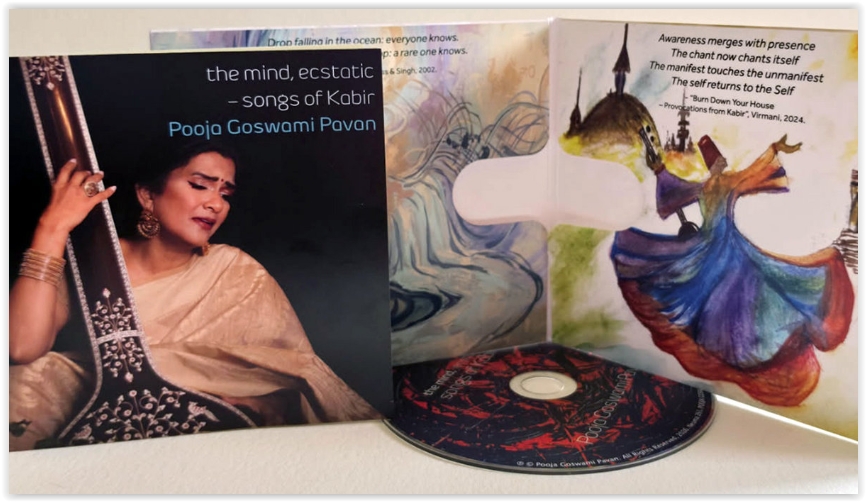
Album information:
Poetry by the 15th-century mystic Sant Kabir Das
7 tracks:
Five musical settings composed by Pooja Goswami Pavan
Two musical settings composed by her father and guru, Pandit Surendra Goswami
Music arranged by Ranjan Sharma (1-6), Greg Schutte (7) and A. Pavan (7)
Musicians:
Bansuri: Ajay Prasanna
Bass Guitar: Keith Peters
Dholak: Prashant Trivedi
Guitar: Nilanjan Samadder, Greg Schutte
Keyboard: Greg Schutte
Pakhawaj: Prashant Trivedi
Plucks: Amar Sangam
Rhythm Programming: Andrew Anderson
Sarangi: Murad Ali Khan
Sarod: Smit Tewari
Side Percussion: Rakesh Bhardwaj, A. Pavan
Tabla: Prashant Trivedi, A. Pavan
Violin: Manas Kumar