Pedro Molina’s interview
by Frankie Pfeiffer
Editor in chief – PARIS-MOVE
June 15th, 2026
Photos – Credits: Aitor Amorim / @torstudio (Instragram)
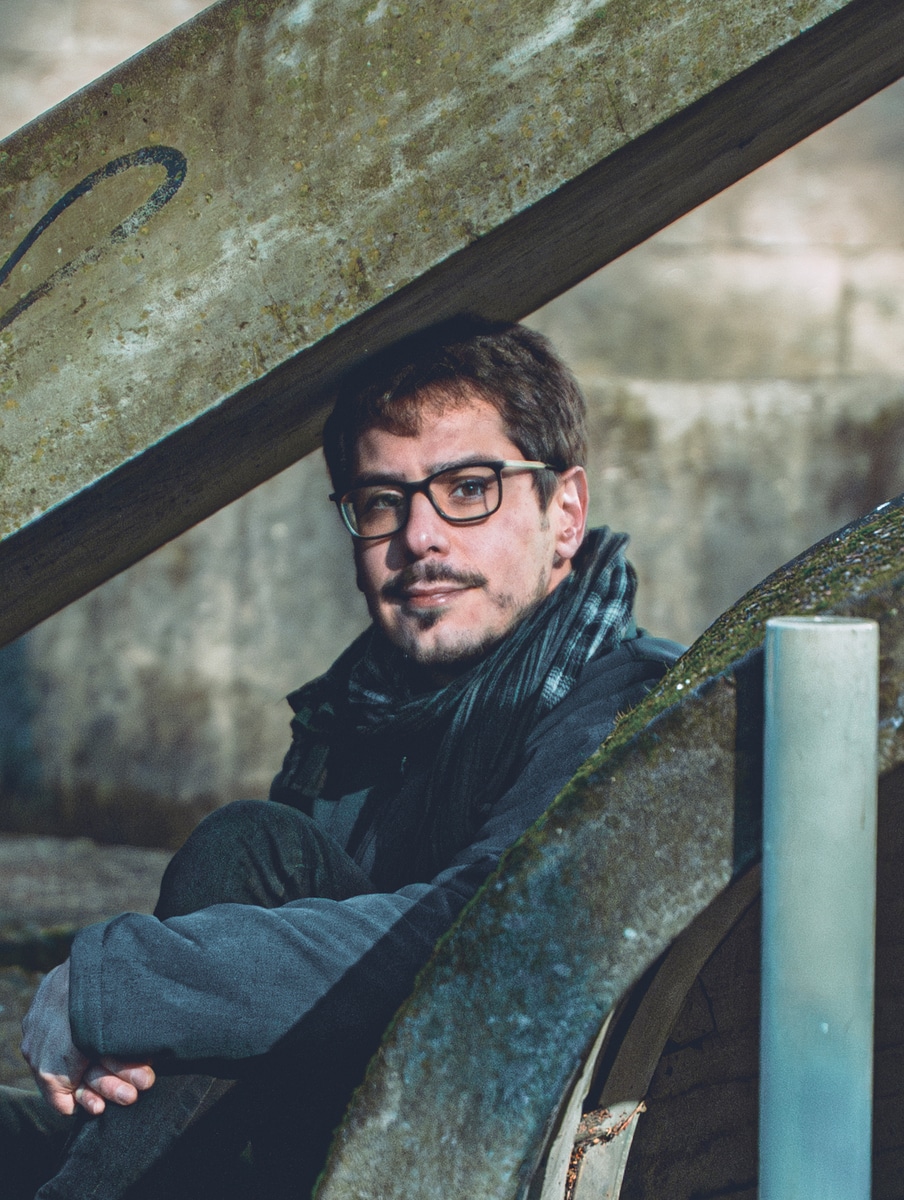
Pedro Molina is a Spanish double bassist based in Porto, Portugal for more than 8 years. A Name I Knew is his second album as a bandleader, a formidable step forward, an ascent involving enormous risk and which allows him to touch the brightest stars.
Review on Paris-Move
To buy the album
Pedro Molina’s interview:
Frankie Pfeiffer: Pedro, you are double bassist and composer, based in Porto, for more than 8 years, but you are Spanish. How did you end up coming to live and play in Portugal
Pedro Molina: It was thanks to a teacher I started studying with in Barcelona some years ago, Jordi Gaspar, who at the time was also the director of Taller de Músics. I began taking lessons with him and would travel once a month from my hometown, Murcia, to Barcelona because I wanted to prepare for the entrance exams to a higher jazz school. At that time, there was no one in my city who could really guide me in that direction. Back in 2015, the train journey took around seven hours, but it was absolutely worth it.
When we both felt I was ready, Jordi was the one who recommended Portugal, and especially Porto, since he knew the school here and was familiar with part of the country’s jazz scene. In those years, money was a real issue, and Portugal seemed like an affordable country (although perhaps not so much when you’re earning a Portuguese salary but that’s another story). Combined with his recommendation, it quickly became an attractive option.
So I came here intending to study, and the rest happened naturally: I finished my degree, fell in love with the country, the city, and the artistic and musical approach that exists here. I started finding work, and eventually I decided to stay.
Frankie Pfeiffer: What is your musical background? What bands have you played in?
Pedro Molina: I started out playing electric bass as a left-handed player in rock and garage bands with friends. I was mostly self-taught, while also taking private lessons in a city where the music scene is very small.
At some point, a friend convinced me to attend some group jazz classes that were taking place near my house. I wasn’t interested in jazz at all, but he told me I could learn modern harmony and then apply it to whatever music I wanted to play. That’s when the “worst” thing happened because I slowly started falling in love with jazz.
Eventually, everything I listened to featured double bass rather than electric bass, and I decided to make the transition to that instrument. Of course, that meant forcing myself to become right-handed for practical reasons; the size of the instrument doesn’t really make being left-handed worthwhile.
As time went on, my passion for both the instrument and the music grew stronger. At the same time, I was studying Telecommunications Engineering, specializing in acoustics. I finished my degree and genuinely enjoyed it, but I reached a point where I realized I didn’t want to wake up one day wondering what might have happened if I had tried to dedicate myself professionally to music. So I made yet another major life change in search of personal happiness and the material poverty that often comes with this lifestyle (hahaha).
In my hometown, the scene was extremely small, and back then even younger musicians weren’t particularly interested in jazz. But because of that and because there were almost no double bass players around I was lucky enough to start playing very early on with musicians who were better than me, and that gave me a tremendous foundation.
In Spain, I studied privately with Jordi Vila and Jordi Gaspar. Later, at ESMAE (Escola Superior de Música e Artes do Espetáculo) in Portugal, I studied with José Carlos Barbosa and Demian Cabaud. Since then, I’ve focused entirely on jazz, working as a sideman in various projects and ensembles, while also trying to develop the kind of music I wanted to make and the kind of musician I wanted to become.
Frankie Pfeiffer: Who are the musicians who influenced you?
Pedro Molina: I hardly know where to begin.
As I mentioned before, I came from the rock world as a teenager. When I discovered jazz, I first became fascinated with those jazz-rock fusions from the 1970s and 1980s. Then I gradually worked my way backwards until I completely fell in love with bebop, and by the time I arrived in Portugal, that’s all I wanted to play.
I even reached that absurd and childish stage where I started rejecting the music I had loved years before. Like a kid who discovers something new and suddenly refuses to accept anything else.
But once I got to Portugal, I started discovering different forms of jazz, new musicians, and people who pushed me in new directions. Eventually, I began asking myself what kind of musician I actually wanted to be. I realized that despite all the tradition I studied and listened to, there were certain musicians I kept returning to unconsciously. When I thought about what they had in common, I realized there were always traces of pop and rock in their music.
And I think the order of those words matters. It’s not the same thing as the rock-jazz fusion of the ’70s and ’80s. It’s closer to the jazz-rock approach you hear in musicians like Aaron Parks, Shai Maestro, or the brilliant Portuguese guitarist André Fernandes. They’re the kind of artists I always find myself coming back to.
At the same time, I love deeply reflective musicians who approach music with a lot of space and calm, even though I don’t necessarily play that way myself. People like Avishai Cohen on trumpet, Thomas Morgan, or the Portuguese trumpeter Susana Santos Silva.
Discovering free jazz and improvised music in Portugal also had a profound influence on me and on my music. Of course there are countless legends in that world, but if I had to mention two contemporary influences that have completely captivated me in recent years because of their unique personalities, they would be pianist Kaja Draksler and the extraordinary trio of Jacob Sacks, Masa Kamaguchi, and Vinnie Sperrazza. I think the way they mistreat tradition with such enormous respect is absolutely brilliant. I was lucky enough to see them live for the first time recently, and I honestly don’t have words for what I experienced.
More recently, I’ve also started exploring the language of Richard Davis. He’s one of those double bassists who is always present in the history of the instrument, but isn’t necessarily the first name people think of. It’s hard to comprehend how one person can contain so much creativity. He’s making me feel very small.
Frankie Pfeiffer: A Name I Knew is your second album as a bandleader. Can you introduce us to the musicians who accompany you on this album?
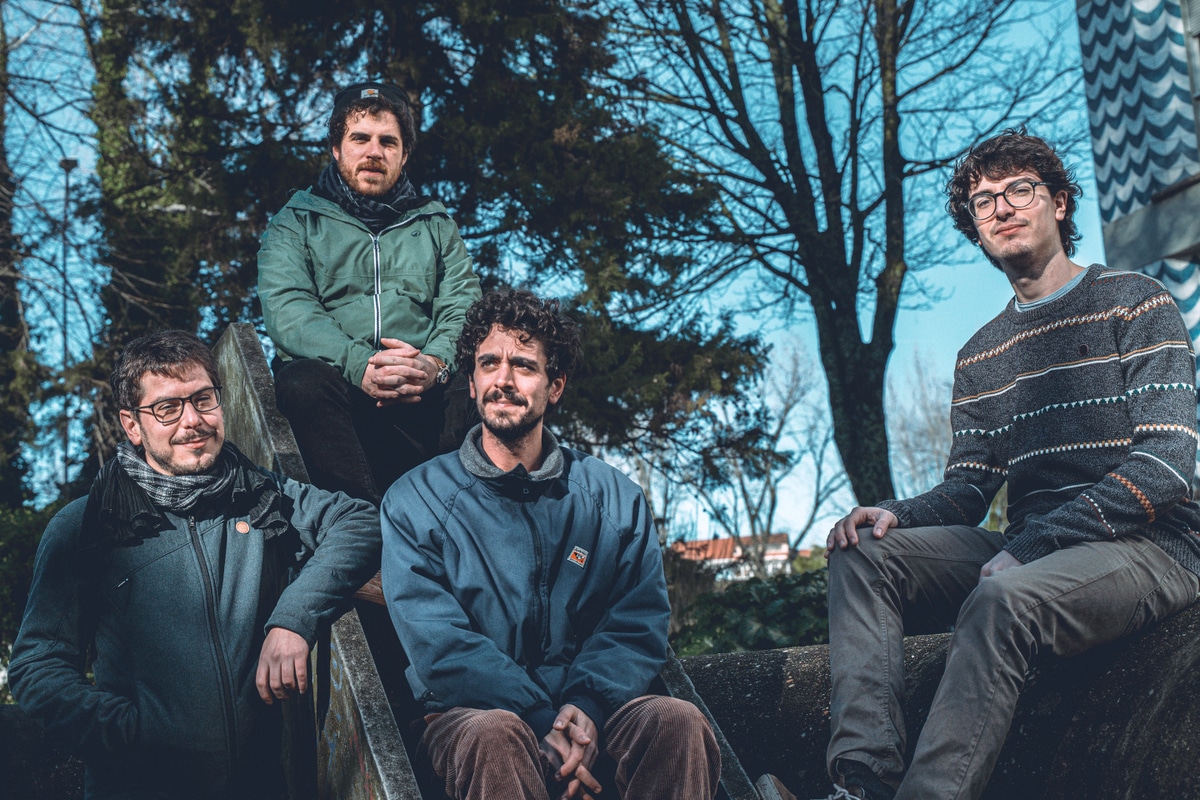
Pedro Molina: The band features Hugo Ferreira on guitar, Miguel Meirinhos on piano, and Gonçalo Ribeiro on drums. They’re three young and brilliant musicians whom I first met while studying and with whom I’ve continued playing both in this project and in many other contexts.
When you’re studying at a conservatory, you meet musicians with very different stylistic interests and artistic paths. But when I conceived this project, I had a very clear idea of the type of musicians I wanted to work with. That made it easy to put faces to the ideas I had in mind and complete the lineup.
We certainly have our differences, but stylistically I feel they are also musicians who are committed to following a personal artistic path. That makes it much easier to create music with a strong sense of identity and personality.
Frankie Pfeiffer: In what state of mind did you compose the different tracks for this album? How do you compose? With which instruments do you write your compositions?
Pedro Molina: It’s probably neither the healthiest nor the most practical approach, but I’m not the kind of musician who sets aside a fixed amount of time every day to compose, whether it’s working on a melodic idea, a rhythm, or a chord progression.
I’m actually quite inconsistent and obsessive at the same time, as contradictory as that may sound (probably because I don’t have anyone waiting for me to deliver a set of compositions). But when I come across an idea that excites me or sounds right, I tend to drop everything else for a few days and focus entirely on it, until something comes out that truly convinces me or until I exhaust myself and put it aside for a while.
Sometimes those ideas eventually become compositions, and sometimes they don’t. It’s not necessarily a method or a solution; it’s simply the way I work. Occasionally it leads to great results, other times to frustration, but I enjoy the process either way.
I think it helps me to have images or emotions in mind before I start writing, so that I’m not facing a completely blank page. In a way, it gives the music some coherence and meaning from the outset. Maybe that’s also why, when I discover an idea I want to develop, I become completely immersed in it until I can see some sort of shape beginning to emerge. It’s almost as if I don’t want to lose the original image or feeling that inspired me to turn it into a piece of music in the first place.
As for the instruments I use when composing, it’s mainly the double bass and the keyboard. Sometimes I use only one of them, other times a combination of both. It’s not something I consciously decide. Depending on where the ideas are leading me, I naturally find myself reaching for one instrument or the other. Although my technical skills as a pianist are terrible, my patience tends to compensate for that quite well.
Frankie Pfeiffer: How is the process of recording the tracks you have composed?
Pedro Molina: I like to treat this band like a garage band and spend time rehearsing. Not because I want everyone to reproduce exactly what I happened to have in my head on a given day, but because rehearsing allows us to get to know each other better musically, to align our moods and ideas—or not. Either way, the goal is to be prepared, comfortable, and open to whatever might happen.
After that, it’s simply a matter of going into the studio—in the case of this album, for two days and feeling relaxed, confident, having a few laughs, and enjoying the experience.
Frankie Pfeiffer: What instructions do you then give to other musicians when you record your compositions?
Pedro Molina: I don’t give many instructions. Since we’ve already rehearsed and talked a lot beforehand, I usually just ask which tune we feel most comfortable with, or which one we’re most excited to record at that particular moment.
That said, much like when I’m composing, I like to use the same visual images or emotional states that inspired the music in the first place.
After the first day in the studio, I go home and listen back to part of what we’ve recorded, not to analyze every detail but simply to get a sense of the energy and pay attention to some of the more delicate sections or the parts that tend to cause the band the most trouble. It’s really about understanding what material we have and deciding which pieces should be prioritized the following day because we still haven’t quite achieved the sound we’re looking for.
Sometimes you’ll have a take from the very beginning of the first day that already sounds great. But for whatever reason, you might want something riskier, a little rougher around the edges. Then you come in the next day and tell the musicians, “We already have a solid version of this tune, so now let’s loosen up and take a few more chances.”
Frankie Pfeiffer: How much freedom to play and improvise do you give them?
Pedro Molina: I like them to take initiative and bring their own personality into the music. They’re musicians I know enjoy interpreting and shaping the material themselves. Of course, every piece has certain boundaries, but I don’t like telling people exactly how they should do things.
I know how they play, I know what they enjoy, and when I chose them for this project it was precisely because I wanted them to be an important part of it and contribute their own voice to the music.
The compositions themselves are also written in a very simple way, more like lead sheets, so they can easily find their own space within the music.
Frankie Pfeiffer: How do the recording sessions take place? What role do the other musicians have? Do they have an influence on the recording of your compositions?
Pedro Molina: You spend many hours in the studio, and it’s very easy to lose track of time or even forget some of the things you’ve done during the session. For me, it’s essential to have time between takes to talk about how we’re feeling, both individually and as a band, and to check in on the overall energy in the room.
Sometimes you make a mistake and have to stop a take, but you can still feel that the energy is there. You notice it because as soon as the take ends, nobody really wants to talk; someone simply says, “This is sounding great, let’s do another take right now.”
Other times you feel the energy dropping and ask whether everyone wants to take a break. Or someone else feels comfortable enough to suggest stopping for a while. When there’s honest and open communication among everyone, everything becomes much easier. It should feel light and effortless.
The same applies when someone feels that a tune should be approached differently because the current approach isn’t working. But those conversations usually happen during rehearsals as well.
That’s why I often say this is a garage band. The compositions are mine, but the more commitment, influence, and feedback I get from the rest of the band, the better it is for all of us and for the music itself.
Frankie Pfeiffer: Is being a musician in Portugal a handicap or not? …to make yourself known in Europe, for example? …to be able to play in clubs or concert halls abroad?
Pedro Molina: Yes, absolutely. Of course, I could talk about the economic situation or about how funding and support are distributed to help internationalize artistic projects. But when it comes to that, and to cultural funding in general, every country has its strengths and weaknesses.
From my point of view, the biggest challenge is geographical. Portugal is a small country located at the southwestern edge of Europe, and that makes reaching other markets more difficult, increasing the production and logistical costs of international touring. It’s not the same as living in Central Europe, where major capitals and cultural hubs are only a few hours away.
I genuinely believe the solution is to identify the problems you cannot change and then focus on the things you can change, figuring out how to tackle the issue from that perspective.
That said, life here is very peaceful, and the food is excellent which is certainly not insignificant. And along the way, opportunities still arise. Critics and media outlets remain open to embracing new music, supporting emerging artists, and allowing themselves to be surprised.
Frankie Pfeiffer: You are still young… How do you see your music evolving?
Pedro Molina: I honestly don’t know and that’s the most beautiful part of it. I definitely want to continue developing the ideas and the musical language of this quartet, but I’m also interested in exploring other styles and formations within jazz.
Fortunately or unfortunately, depending on how you look at it, I don’t have a record label setting deadlines for new releases, so it’s not something that worries me right now. When the ideas and the desire arrive, whether for a completely new project or for new music within an existing one, everything suddenly becomes very clear.
At that point, all that’s left to do is follow the path.
Frankie Pfeiffer: Which famous musician(s) would you like to play with? …and have them play on one of your next albums?
Pedro Molina: What a question! It reminds me of a story I once heard from the Catalan drummer Marc Miralta. He was talking about how some musicians become completely obsessed with an artist they admire. They study their music and language in great depth, and then, through some twist of fate, they eventually get the chance to play with them.
Musically, everything goes wonderfully because you know their music inside out and fit perfectly into their world. But then it turns out that, on a personal level, you simply don’t get along. Maybe one of you is an idiot, or maybe both of you are.
And that’s where the problems begin. You might have several concerts together, and although the playing itself is important, the actual time spent performing is only a small part of life on the road. Most of the time you’re simply living alongside each other, and suddenly you find yourself stuck with someone you don’t really want to be around.
So my answer is that I’d like to play with musicians with whom I feel not only a musical connection, but also a personal one, people whose company I genuinely enjoy.
If they’re famous, that would probably bring greater visibility. But if they’re not famous and they meet those criteria, as is the case with my quartet, that would be wonderful too.
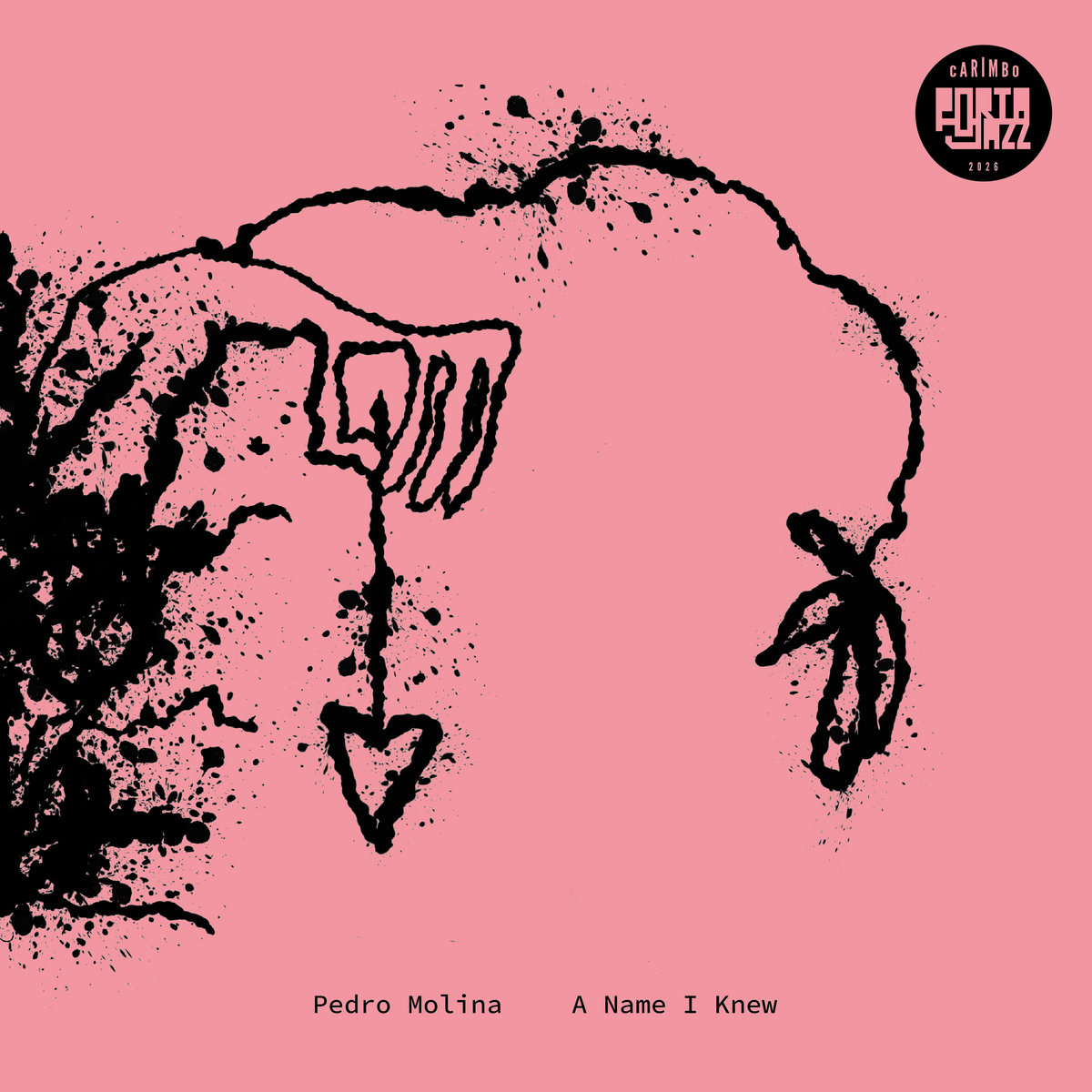
Frankie Pfeiffer: Why did you choose this illustration for the cover of your album? It is original, superb, and contrasts with many of the covers that we receive… Does it have a special meaning for you?
Pedro Molina: The illustration was created by Maria Mónica, who designs all the album covers for Porta-Jazz, the label that released the record.
In the same way that I don’t like imposing too many limitations on my own music, I don’t like doing that with other artists either. She studied and trained for this, and she has her own artistic language. I simply shared the ideas and concepts behind the album and some of the individual pieces. After that, just as I do with my musicians, I trust the artist and hope to be surprised. It’s much more fun that way.
I really loved the design. Those rough, simple lines can suggest innocence, almost like a child’s drawing, while at the same time evoking an unsettling feeling that I still struggle to fully explain. I enjoy that contrast.
I also think it connects very well with a disease such as Alzheimer’s. I see Alzheimer’s as a dark and dramatic regression toward childhood, where you gradually lose your abilities and skills in the reverse order in which you acquired them.
To me, there is something almost tragicomic about that process and in a way, there is something tragicomic about the album cover as well.
Frankie Pfeiffer: How do you imagine your next album? With the same musicians? Will it be in the same spirit as this second album?
Pedro Molina: As I mentioned earlier, I definitely want to continue working with this quartet and exploring new possibilities. For the moment, though, I’d like to take a short break from writing new music for this group, because these two albums have been very closely connected on a personal level.
As soon as I finished recording the first album, I started feeling inspired and developing ideas for the second one. By the time I was presenting the first record, most of the material for the second was already well underway.
Having said that, I might tell you the exact opposite next week.
In any case, I’m also interested in exploring other approaches and different ensembles. I don’t know what will come first, but when the time is right, I’ll know it and I’ll work towards it.
More than anything, I feel that I need a strong new idea, a concept worth pursuing. Once that appears, everything else tends to flow naturally.
Frankie Pfeiffer: Congratulations, in any case, for this second album! A must have!