| Jazz |
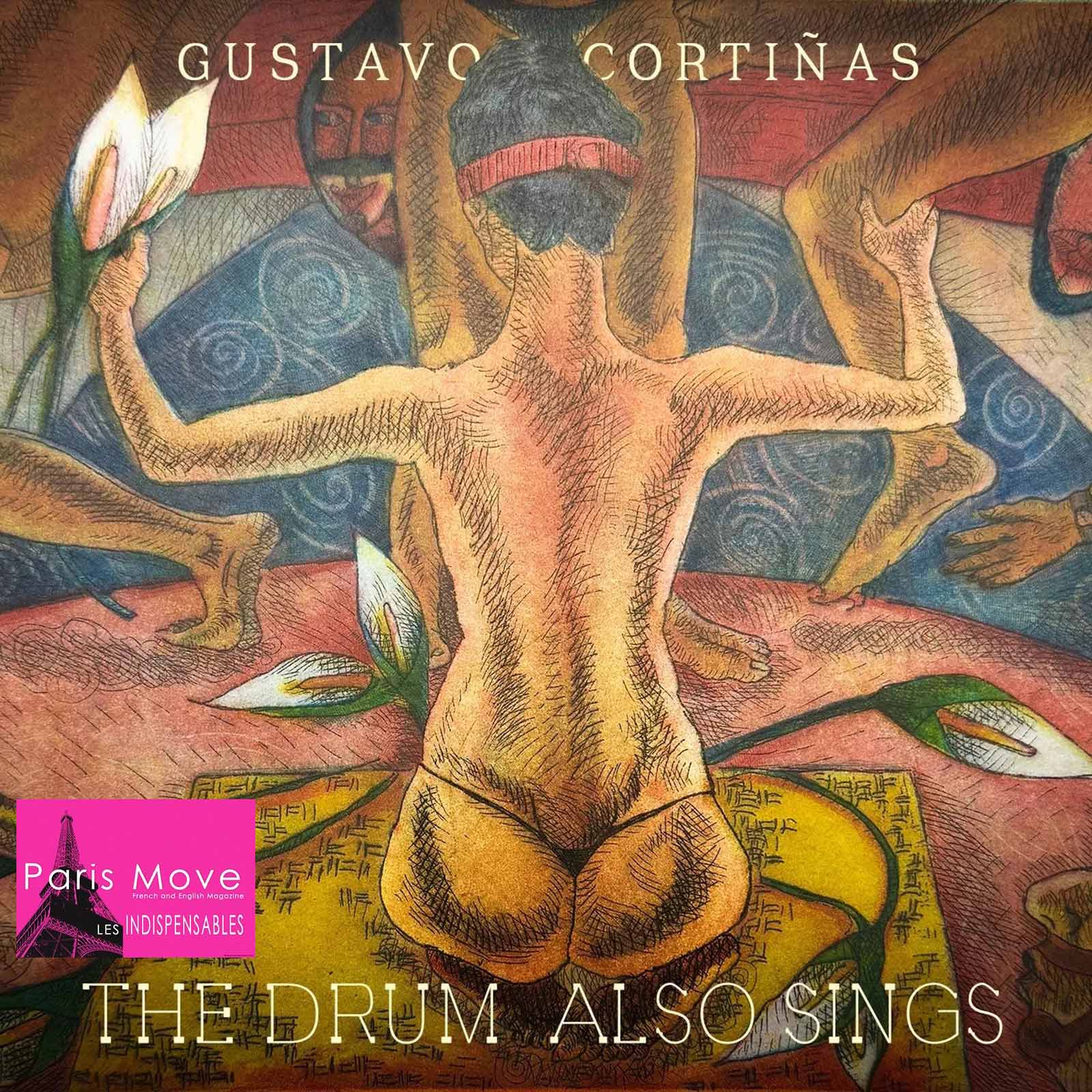
Summary: On The Drum Also Sings, Chicago drummer and composer Gustavo Cortiñas transforms percussion into a vehicle for storytelling, spirituality, and collective resilience. Featuring an international cast of vocalists and drummers, this ambitious work stands among the most compelling and thought-provoking releases of 2026.
Gustavo Cortiñas’ The Drum Also Sings: A Powerful Journey Through Rhythm, Memory, and Healing
Not every remarkable album announces itself immediately. Some demand patience, curiosity, and a willingness to step into unfamiliar territory. The first sounds of The Drum Also Sings feel less like the beginning of a record than the opening of a ceremonial gathering. Drums emerge from the silence, voices appear like distant echoes, and before long the listener is transported into a space where rhythm becomes language and percussion becomes storytelling. Gustavo Cortiñas’s latest work belongs firmly in that category.
It may not be the most accessible record released this year, but culturally and artistically, it stands among the most compelling.
The Chicago-based drummer and composer has assembled an extraordinary collective for this project. Alongside fellow drummers Dave King and Isaiah Spencer, Cortiñas brings together vocalists Angelina Suyul, La Paula Herrera, Maryta de Humahuaca, and Angel Bat Dawid. The result is a work that gives voice to the drum itself, transforming percussion from a supporting instrument into the central narrator of a deeply personal and communal story.
There is no hiding from the album’s premise. Listeners who struggle with percussion-driven music may find themselves challenged. Yet those willing to surrender to its rhythmic language will discover something rare. Conceived during a period marked by both personal hardship and collective uncertainty, The Drum Also Sings uses drumming as both a means of expression and a tool for introspection. It embraces grief and joy simultaneously, recognizing that renewal often emerges from the coexistence of both emotions.
Cortiñas draws strength from community, spirituality, and ancestral memory. Rather than positioning himself as a solitary voice, he insists that resilience must emerge through collective expression. That philosophy shapes every aspect of the album. Three drummers weave together an astonishing range of grooves, textures, and rhythmic conversations, from hypnotic pulse patterns to thunderous ceremonial passages and delicate percussive whispers. Four women from across the Americas contribute singing, spoken word, improvisation, and prayer, creating a dialogue that feels both ancient and urgently contemporary.
“This project emerged from cultivating an inner dialogue during moments that could sometimes feel hopeless, using the drum both as an instrument of expression and as a tool for introspection,” Cortiñas has explained. “This music is intended to heal.”
Listening to the album often feels like entering a sequence of mystical landscapes. The compositions unfold as sonic journeys through spaces that seem suspended between dream and reality, carrying echoes of ritual, spirituality, and shamanic traditions. The music invites the listener into a world that exists somewhere between two realms, neither entirely tangible nor fully imagined.
The narrative quality is striking. Each piece unfolds with the pacing of a novel, revealing new layers as it progresses. When the voices enter, they do so with remarkable authority. Although I neither speak nor understand Spanish, I found myself completely absorbed by the intention behind the performances. The poetic force is unmistakable. If the drums and percussion are singing throughout this album, the voices deepen the emotional drama, adding another dimension to a work already rich with meaning.
For those familiar with Cortiñas’s career, this broader artistic ambition will come as no surprise. He has consistently used music as a platform for exploring ideas that extend far beyond sound itself. His 2021 project Desafio Candente examined heritage, folklore, and colonialism through the contributions of more than thirty collaborators from eleven countries. Kind Regards (2022) turned its attention to the immigrant experience on both sides of the United States-Mexico border. More recently, The Crisis Knows No Borders (2025) confronted climate change and global interdependence, earning a place among DownBeat magazine’s best albums of the year and helping secure Cortiñas recognition as Chicagoan of the Year from the Chicago Tribune.
If Gustavo Cortiñas inspires such admiration, it is because his understanding of art extends far beyond technical mastery. His work is guided by intellectual curiosity, musical sincerity, and a profound sense of humanism. These qualities cannot be separated from the music itself. They strengthen and illuminate everything he creates.
By the time The Drum Also Sings reaches its conclusion, it becomes clear that Cortiñas is doing far more than presenting a collection of compositions. He is tracing a story. He is revealing something of his inner life, his conscience, and his connection to both ancestral memory and contemporary suffering. The album creates a bridge between inherited histories and the challenges of the present moment.
Perhaps the greatest surprise is that I never imagined I would willingly spend so much time with an album centered so heavily on percussion. Yet the richness of the material kept drawing me back. I returned to it repeatedly, captivated by the beauty of its sounds, the power of its voices, and the depth of its vision.
When art possesses genuine substance and purpose, barriers begin to disappear. Labels become secondary. Questions of genre lose their importance. Whether one chooses to call this jazz, contemporary composition, world music, or something else entirely ultimately misses the point.
What matters is that The Drum Also Sings succeeds as a profound artistic statement. It is one of the most fascinating releases of 2026 for anyone interested in drumming, percussion, or adventurous contemporary music.
At a moment when cultural divisions, uncertainty, and social fragmentation often dominate public discourse, Cortiñas offers something increasingly rare: a work that insists on connection rather than separation, dialogue rather than isolation, and collective memory rather than individual spectacle. That may be the album’s most enduring achievement.
This is not simply a jazz album. It is art in its purest form.
Thierry De Clemensat
Member at Jazz Journalists Association
USA correspondent for Paris-Move and ABS magazine
Editor in chief – Bayou Blue Radio, Bayou Blue News
PARIS-MOVE, June 10th, 2026
Follow PARIS-MOVE on X
::::::::::::::::::::::::
Musicians :
Dave King – drum set (right)
Isaiah Spencer – drum set (left)
Gustavo Cortiñas – drum set (center)
Angelina Suyul – spoken word (tk 1)
La Paula Herrera – vocals (tk. 4)
Maryta de Humahuaca – vocals (tk7)
Anget Bat Dawid – vocals and clarinet (tk 10)
Track Listing:
Etinel Skotol T’ixt’unel (Featuring Angelina Suyul)
Mother Tongue
Dialogue With The Ancesters (I)
Tu Resiliencia Es Resistencia (Featuring La Paula Herrera)
Duraznito
Dialogue With The Ancestors (Ii)
Añay Pachamama (Featuring Maryta De Humahuaca)
Fellowship
Dialogue With The Ancestors (Iii)
Psalm 23 (Featuring Angel Bat Dawid)
STUDIOMEDIA RECORDING COMPANY
Recorded by / Grabado por Scott Steinman
Assisted by / Con Asistencia de Lauren MacDonald, Electrical Audio, Chicago, IL
Mixed and mastered by / Mezclado y masterizado por Scott Steinman, GardenView Sound Studio, Evanston, IL
All Lyrics and music written by Gustavo Cortiñas (ASCAP)
Except Etinel skotol t’ixt’unel written by Angelina Suyul, Psalm 23 written by King David, Añay Pachamama by María Farfán Caparros
2026 Gustavo Cortiñas, ALL RIGHTS RESERVED
Gustavo plays Bosphorus Cymbals and Canopus Drums