| Jazz |
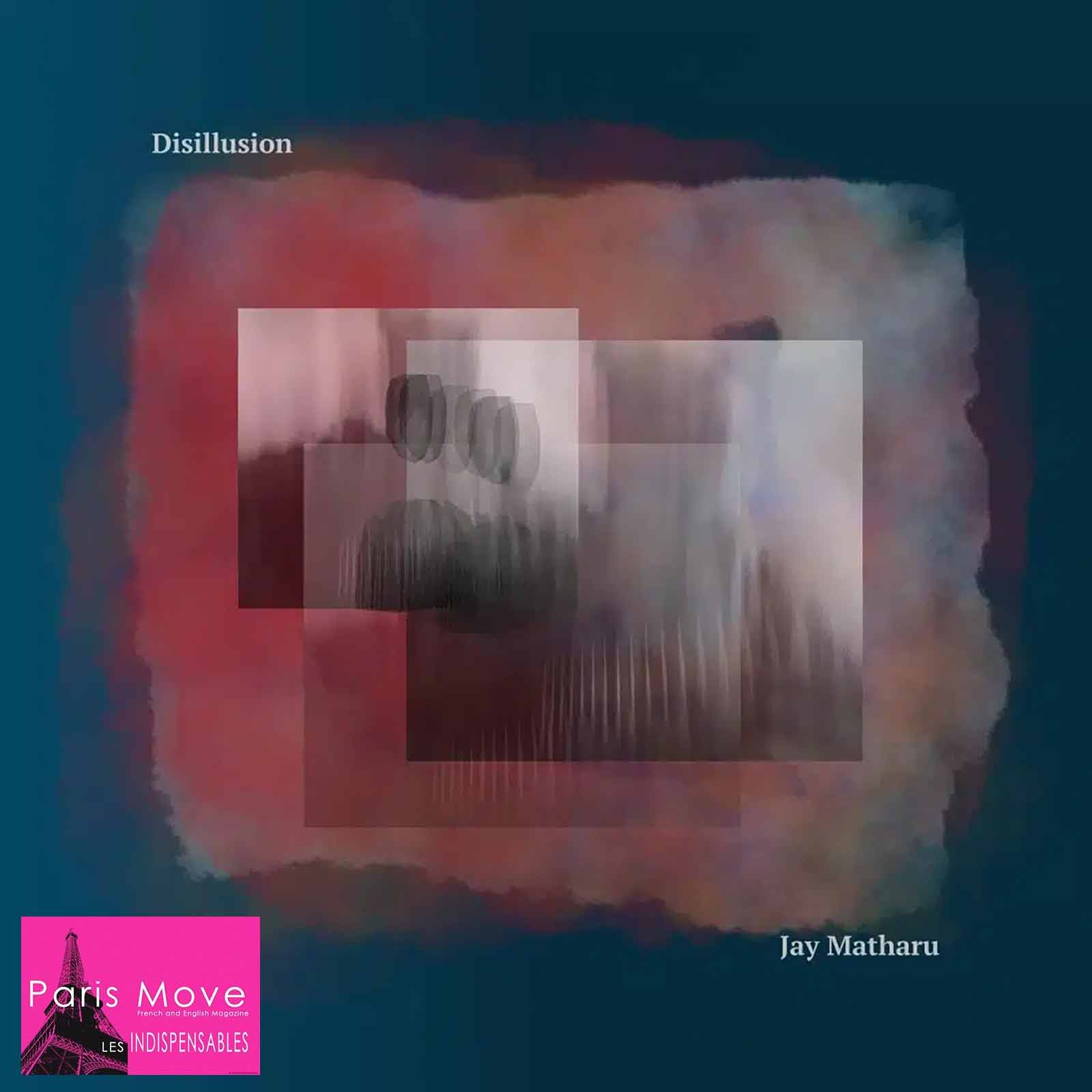
Summary: Drawing on metal, jazz, British rock, and Indian musical traditions, Jay Matharu’s Disillusion emerges as one of the most distinctive and compelling fusion albums in recent years.
Jay Matharu Finds His Own Voice on Disillusion, a Jazz Fusion Journey Beyond Genre
The air outside feels heavy, charged with the kind of humidity that often precedes a summer storm. I step into the studio, settle in front of the monitors, and press play on Disillusion, the latest work from guitarist and composer Jay Matharu. Within moments, a striking form of jazz fusion fills the room, rich in detail and remarkable in its confidence.
There are traces of Indian musical influence woven into the fabric of the album, though they never announce themselves too loudly. They emerge subtly, often through rhythmic accents and the pulse of the drums rather than through overt melodic references. Elsewhere, it is the legacy of British rock that seems to sit closest to the heart of Matharu’s musical identity. One can occasionally sense a distant kinship with bands such as The Who, not in any literal sense, but in the spirit of ambition, dynamics, and emotional intensity. Yet there is no doubt that the language spoken here is jazz.
Now based in Sweden, Matharu has found himself in a country renowned for producing exceptional jazz musicians. It is easy to imagine that this thriving creative environment played a role in attracting him there. The fusion of rock, jazz, and progressive influences recalls certain adventurous recordings from the 1970s and 1980s, but Disillusion never feels nostalgic. Its artistic vision is sharper, more deliberate, and arguably more sophisticated than many of its predecessors. As the album unfolds, track by track, its appeal only deepens. What initially impresses soon becomes genuinely captivating.
The project emerged from Matharu’s Master’s research in musical performance and reflects a period of artistic and personal introspection. Across eight compositions, he explores a succession of emotional landscapes rather than constructing a rigid conceptual narrative. The tension and uncertainty of “Atrophy,” the vulnerability suggested by “Bare,” the meditative calm of “Shruti,” and the hard-earned sense of resolution found in “Bittersweet” each contribute to a larger emotional journey. These pieces function less as isolated statements than as interconnected chapters shaped by lived experience and translated through sound.
What makes the album particularly intriguing is Matharu’s background. Before embarking on this project, he was known primarily as the lead guitarist and co-composer of the metal band Liv Sin. Rather than abandoning that past, he incorporates elements of it into his new musical language. Disillusion serves as a bridge between worlds, transforming experiences forged in metal into a highly personal vision of contemporary jazz fusion.
This refusal to deny his roots is one of the album’s greatest strengths. At the same time, Matharu demonstrates a genuine understanding of jazz as both a tradition and a creative practice. In fact, this is precisely the kind of unconventional and forward-looking release that could comfortably find a home on Germany’s ACT label, a recording that would inject fresh energy into an already adventurous catalogue. It is worth noting that many drummers within the jazz world have emerged from metal backgrounds, bringing with them a heightened sense of power and precision. Guitarists who have made that transition with equal success are far rarer. In that regard, Disillusion feels exceptional. Few recordings manage to sound this fully realised while also projecting such a distinct and unmistakable personality.
Another sign of Matharu’s maturity lies in the role he assigns to the saxophone throughout the record. Rather than functioning as a competing lead voice, the instrument becomes an extension of the composer’s vision. The saxophonist never seeks to impose his own personality or stylistic agenda. Instead, he amplifies Matharu’s musical language, floating above the guitar lines and introducing a subtle sense of drama and narrative tension that deepens the emotional impact of the compositions. There is a distinctly theatrical quality to his contribution, one that enriches the music without ever distracting from its core identity. It is an approach that reveals a composer more concerned with the architecture of the music than with individual displays of virtuosity. The result is a dialogue that feels purposeful and organic, each voice serving the broader emotional arc of the work.
For Matharu, composition begins with improvisation. The pieces developed through an exploratory process, evolving organically while retaining the essence of their earliest sketches. This balance between structure and freedom runs throughout the album. Rather than relying on displays of technical virtuosity, he prioritises expressive phrasing, interaction, and storytelling. His guitar work moves effortlessly between lyrical melodies, layered harmonic textures, and rhythmically driven passages, drawing inspiration from both the vocabulary of jazz and the tonal language of Indian classical music.
What began as a largely solo endeavour gradually expanded into a quartet featuring saxophone, bass, and drums. Together, the musicians navigate complex material with remarkable ease. Despite the sophistication of the compositions, there is never a sense of academic detachment. The music remains alive, vibrant, and emotionally accessible. The quartet often creates the impression of a trio, not because any instrument is absent, but because every player seems committed to serving the collective sound rather than occupying space for its own sake. Complexity is never treated as an end in itself. Instead, it becomes a vehicle for expression, allowing the music to breathe while preserving its emotional immediacy.
By the album’s conclusion, one is left with a feeling of genuine optimism. There is a sense of discovery here, of artistic renewal born from the meeting of cultures, traditions, and experiences. At a time when musical boundaries are increasingly fluid, Disillusion stands as a compelling example of what can happen when different worlds are allowed to collide and coexist.
Potential listeners should nevertheless be aware that this is not an album designed to court mainstream approval. It demands attention and rewards familiarity with both jazz and heavier forms of music. Jay Matharu makes no compromises, and he shows little interest in pursuing easy accessibility. Instead, he presents his artistic vision on his own terms. In an era increasingly crowded with genre hybrids, Jay Matharu’s achievement is not that he combines influences, but that he transforms them into something unmistakably his own.
Thierry De Clemensat
Member at Jazz Journalists Association
USA correspondent for Paris-Move and ABS magazine
Editor in chief – Bayou Blue Radio, Bayou Blue News
PARIS-MOVE, June 7th, 2026
Follow PARIS-MOVE on X
::::::::::::::::::::::::
Musicians :
Jay Matharu | Guitar, Keys
Erik Brandell | Tenor Saxophone
Christine Lanusse | Bass Guitar
Jacob Johnson | Drums
Track Listing
Atrophy
Bare
Cog
Deluge
Shruti
Chalo
Butterflies
Bittersweet