| Jazz |
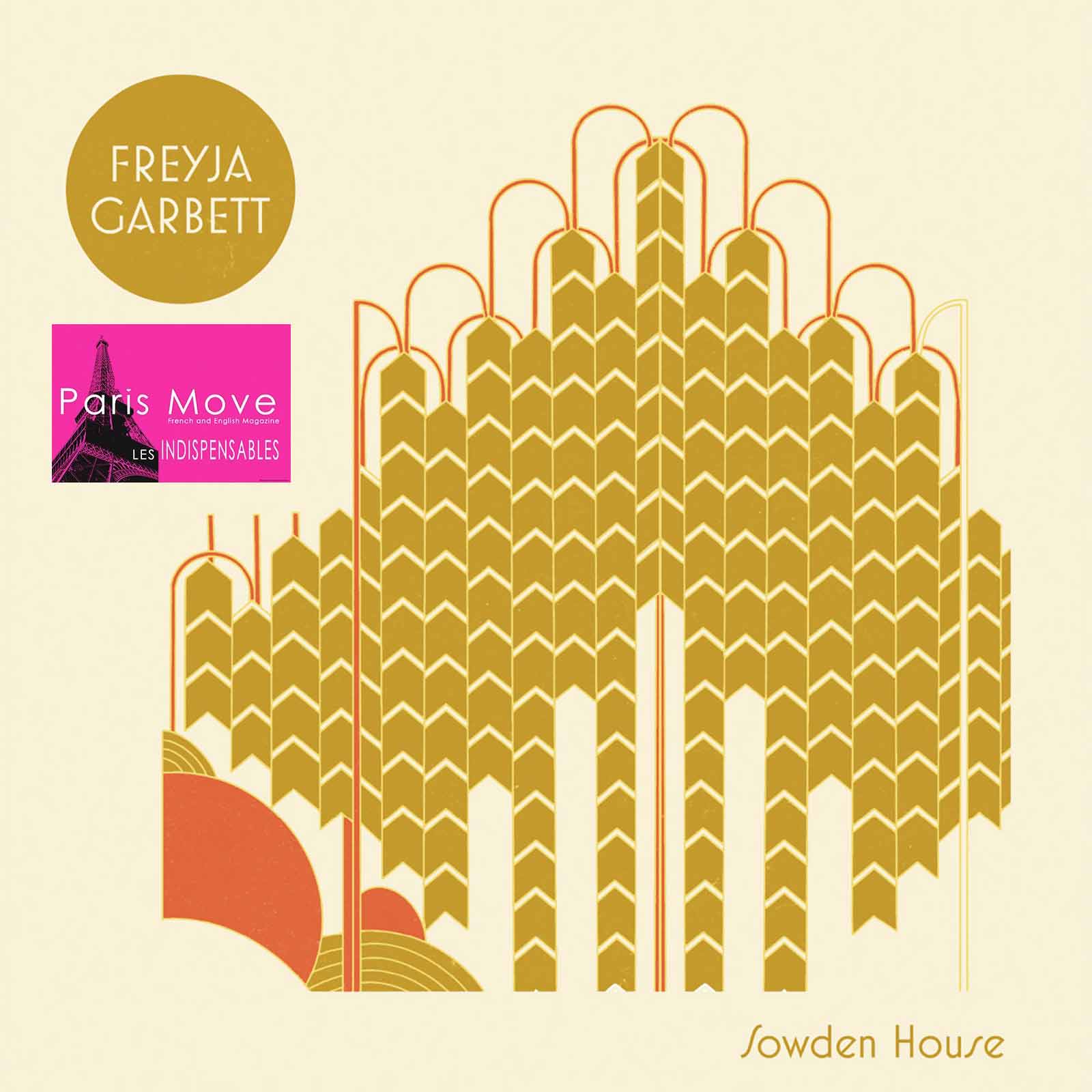
Summary: Freyja Garbett’s Sowden House is a captivating contemporary jazz album that blends orchestral sophistication, cinematic storytelling and psychedelic influences into an immersive listening experience. Inspired by the legendary Los Angeles landmark, the record stands as one of the year’s most ambitious and accessible jazz releases.
Freyja Garbett’s Sowden House Turns Mystery Into Musical Cinema
With Sowden House, Freyja Garbett transforms one of Los Angeles’ most enduring legends into a sweeping and deeply cinematic musical experience, delivering a work that stands among the most ambitious contemporary jazz releases of the year.
Some albums reveal themselves immediately. Others demand patience, repeated listening and careful reflection before their full significance becomes apparent. Sowden House belongs firmly to the latter category. It is the kind of record that lingers long after it ends, inviting listeners back not simply to revisit familiar melodies but to uncover new emotional layers and narrative details hidden within its richly textured soundscape.
From the opening moments of “Genesis,” Garbett establishes a world that feels immersive, evocative and strikingly visual. These first notes are not merely an introduction. They function as an invitation into an atmosphere of remarkable depth, one that recalls the poetic sensibilities of French New Wave cinema while remaining entirely contemporary in its musical language. Before long, the listener realizes that this is not an album designed around individual tracks or radio-friendly moments. It is a complete artistic statement whose pieces derive their greatest power from the way they interact with one another.
An ARIA Award-winning pianist, composer and arranger, Garbett has spent years developing a musical voice that refuses easy categorization. While her roots are firmly grounded in jazz, her work consistently draws from a broader artistic vocabulary that includes orchestral composition, film scoring, experimental textures and contemporary storytelling. That versatility is evident throughout Sowden House, where composition and narrative become inseparable.
For American audiences unfamiliar with her work, Garbett’s achievement here may come as a revelation. Australia has produced a remarkably vibrant and adventurous jazz scene over the past two decades, generating artists who have challenged conventional genre boundaries while maintaining strong connections to improvisation and ensemble performance. Garbett belongs to that tradition while simultaneously carving out a distinctive creative identity of her own. Her approach feels international in scope, capable of speaking to listeners far beyond the geographical context from which it emerged.
The album takes its title from the iconic Sowden House in Los Angeles, a neo-Mayan architectural landmark designed by Lloyd Wright. For decades, the residence has occupied a unique place in American cultural mythology due to its alleged connections to George Hodel and the infamous Black Dahlia murder case. Whether viewed as historical fact, urban legend or something in between, the story has become inseparable from the building itself. Garbett draws not from sensationalism but from the atmosphere surrounding that mythology. Throughout the album, memory, shadow and suggestion become compositional tools, shaping a series of interconnected musical scenes that feel suspended somewhere between dream and reality.
This sense of dramaturgy represents one of the album’s greatest strengths. Garbett understands that mystery is often most effective when approached indirectly. Rather than overwhelming listeners with complexity, she builds tension through nuance and restraint. Her compositions unfold gradually, revealing themselves through subtle shifts in texture, harmony and orchestration. The result is a listening experience that rewards attention without ever becoming inaccessible.
“Ballroom 68” offers a particularly compelling example of that approach. As the piece develops, it feels less like a conventional jazz performance and more like a chapter from an unwritten novel. The saxophone serves as a narrator of sorts, expressive and searching, carrying emotional weight without becoming overly dramatic. The piano enters not as a dominant voice but as a conversational partner, extending and reframing the musical dialogue. Moments later, the trumpet introduces an unexpected warmth, softening the atmosphere and creating a fleeting sense of sunlight breaking through clouds. The interplay between the instruments is exquisite, demonstrating a level of compositional sophistication that never sacrifices emotional immediacy.
Across its expansive sonic landscape, Sowden House continuously blurs distinctions between jazz, orchestral music, psychedelic funk and cinematic ambience. Echoes of 1970s psychological thrillers emerge throughout the album, not as direct references but as emotional influences. The music often feels as though it belongs to an imaginary film, one populated by unreliable memories, hidden rooms and unresolved questions. Yet despite its darker themes, the album never descends into gloom. Beauty remains present in every corner, creating a delicate balance between tension and wonder.
“The music came alive beyond the game,” Garbett has said. “Brendan invited me to compose and record for a video game called Sowden House. Through his generosity, I was able to write for two very different ensembles: an incredible funk band and a large group of remarkable musicians assembled specifically for the project. I will always be proud of this work.”
That pride is entirely justified.
Large-scale jazz projects often struggle to reconcile ambition with coherence. Some become trapped by their own conceptual frameworks, while others lose emotional resonance beneath technical complexity. Sowden House avoids both pitfalls. It is intellectually engaging without becoming academic, emotionally rich without lapsing into sentimentality, and stylistically adventurous without feeling fragmented.
Perhaps most impressively, the album creates meaningful dialogue between multiple musical traditions. Jazz serves as its foundation, but elements of funk, classical music, cinematic composition and contemporary orchestral writing coexist naturally within the same creative space. Garbett never treats these influences as decorative additions. Instead, they become essential components of a unified artistic vision.
It is difficult to fully convey the experience of listening to Sowden House through description alone. The deeper one enters its world, the more immersive it becomes. The arrangements reveal extraordinary attention to detail, while the performances maintain a sense of spontaneity and humanity that prevents the music from feeling overly constructed. Every return visit uncovers something previously unnoticed.
For listeners curious about contemporary jazz yet uncertain where to begin, Sowden House may prove an ideal point of entry. It requires no specialized knowledge and makes no demands beyond a willingness to listen attentively. Its emotional clarity and cinematic accessibility create a welcoming pathway into a genre that is often mistakenly perceived as intimidating or inaccessible.
More broadly, the album arrives at a moment when contemporary jazz continues to expand beyond traditional boundaries. Across the world, a new generation of composers and performers is redefining what jazz can encompass, embracing influences from film music, electronic experimentation, classical composition and global musical traditions. The most successful artists are not abandoning the genre’s foundations but building upon them in imaginative ways. Garbett’s work belongs squarely within that movement.
As audiences increasingly seek immersive artistic experiences rather than isolated songs or streaming-friendly fragments, albums such as Sowden House feel especially significant. They remind us that long-form musical storytelling remains a powerful and relevant art form.
By the end of June, countless new releases will have appeared across every genre. Few, however, are likely to offer a world as complete, immersive and emotionally rewarding as the one Freyja Garbett has created here. Sowden House is not simply another album release. It is a fully realized artistic statement from a composer whose name deserves far greater international recognition, and whose work demands attention from anyone interested in the future possibilities of contemporary jazz.
Thierry De Clemensat
Member at Jazz Journalists Association
USA correspondent for Paris-Move and ABS magazine
Editor in chief – Bayou Blue Radio, Bayou Blue News
PARIS-MOVE, June 7th, 2026
Follow PARIS-MOVE on X
::::::::::::::::::::::::
Musicians :
Freyja Garbett | Keys, Composition, Arrangement, Production
Veronique Serret | Violin
Freya Schack-Arnott | Cello
Jayden Clark | Flute
Thomas Avgenicos | Trumpet
Ellen Kirkwood | Trumpet
Tessie Overmyer | Alto Saxophone
Matthew Keegan | Tenor Sax, Baritone Sax, Clarinet
Michael Avgenicos | Tenor Sax
Matthew Ottignon | Tenor Sax
Alex Silver | Trombone
ilary Geddes | Guitar
Ben Panucci | Guitar
Daniel Pliner | Piano, Keys
Jacques Emery | Electric Bass
Maximillian Alduca | Double Bass
David Symes | Electric Bass
Carlos Adura | Drums
Miles Thomas | Drums
Dominic Kirk | Percussion
Track Listing
Genesis
Los Feliz
Antonio Sanchez
Ballroom ‘68
Tomb Entrance
Echo Chamber
Dream Hall
Franklin Avenue
Art Gallery
Ballroom ‘44
Asylum
Library
Trophy Room
Labryrinth
Drum Ritual