| Jazz |
Summary : Toronto jazz collective Jabfung returns with In Real Life, a sophisticated and deeply reflective album that blends composition, improvisation, and intercultural influences into a powerful meditation on human connection in the digital age.
Jabfung’s In Real Life Finds Humanity and Connection in an Age of Digital Noise
Jabfung is a Toronto-based collective that brings together a remarkable group of musicians whose individual careers are already firmly established. Led by bassist Julian Anderson-Bowes and drummer Anthony Fung, and featuring the exceptional talents of trumpeter Adam O’Farrill, saxophonist Luis Deniz, and pianist Rafael Zaldivar, the ensemble operates at the fascinating intersection of composition and improvisation. O’Farrill, whose work consistently demonstrates extraordinary imagination and technical command, injects a sense of freedom into music that is at once highly structured and strikingly adventurous.
The music of In Real Life often feels like standing at the center of a busy city intersection while somehow remaining completely alone with one’s thoughts. Layers of rhythm overlap and diverge, melodic fragments emerge and disappear, and moments of tension suddenly give way to passages of startling beauty. It is music that demands attention, not through volume or spectacle, but through its insistence on genuine engagement. Every gesture seems connected to a larger conversation unfolding beneath the surface.
With In Real Life, Jabfung returns with a second album that follows the critical success of Epoch. More than a simple continuation, the new recording feels like a statement about what it means to create together in an era increasingly defined by screens, algorithms, and virtual interactions. At a moment when much of contemporary life appears fragmented and uncertain, jazz once again emerges as a vehicle for meaningful reflection, offering not answers but a space in which difficult questions can be explored.
The ensemble itself represents a compelling dialogue between Canadian and Cuban musical traditions. What becomes immediately apparent throughout the album is the extraordinary concentration of its members. Every note carries weight. Every phrase feels considered, absorbed, and fully understood before it is released into the collective conversation. Although this is a studio recording, there is a palpable live energy running through the performances. The music breathes with the spontaneity and responsiveness typically associated with a concert setting.
The album’s eight compositions reflect a genuinely collaborative partnership. Anthony Fung contributes five pieces while Julian Anderson-Bowes provides three, creating a balanced framework that allows the group’s collective identity to emerge naturally. Nowhere is this chemistry more evident than in the deep and exploratory exchanges between Luis Deniz and Adam O’Farrill. Their interactions reveal an extraordinary level of listening and trust, especially remarkable considering that much of the material was developed over the course of only two intense days. O’Farrill’s participation also carries personal significance, reconnecting him with Anderson-Bowes and Fung through friendships forged years earlier at the Monterey Youth Big Band and the Banff Centre for the Arts.
A great deal of the album’s coherence also rests on the contribution of Rafael Zaldivar. The Cuban-born pianist functions as both architect and mediator within the ensemble. At times he anchors the music with harmonies that provide stability amid rhythmic complexity. At others, he opens unexpected pathways, nudging the group toward new directions with subtle voicings and carefully chosen textures. His playing often serves as the connective tissue between Fung’s intricate rhythmic designs, Anderson-Bowes’ grounded bass lines, O’Farrill’s exploratory trumpet work, and Deniz’s searching saxophone melodies. Without ever dominating the conversation, Zaldivar plays a crucial role in shaping the ensemble’s distinctive voice.
This is not an album that offers immediate gratification. It demands attention and rewards patience. All five musicians possess substantial backgrounds in classical music, a foundation that enables them to navigate the album’s intricate rhythmic and melodic architecture with apparent ease. The complexity is never displayed for its own sake. Rather, it serves a larger expressive purpose. Listeners willing to engage deeply with the recording will gradually discover how seamlessly the composed passages evolve into improvisation, and how the thematic material unfolds with remarkable coherence.
That process becomes especially evident on “Methadone For Doomscrolling,” one of the album’s most compelling pieces. Here, the emotional core of the project rises to the surface. The title itself points toward the overwhelming flow of information that defines modern life, and the music responds with a mixture of anxiety, urgency, and clarity. Early in the piece, tightly interlocking rhythmic figures create a sensation of forward momentum that borders on unease. O’Farrill’s trumpet lines weave through the ensemble with a restless energy, while Deniz answers with phrases that seem to question and challenge every musical assumption being established. Beneath them, Fung and Anderson-Bowes construct a framework that feels simultaneously stable and unsettled, mirroring the contradictory experience of being endlessly connected yet emotionally overwhelmed. As the improvisations unfold, moments of dissonance gradually resolve into passages of surprising lyricism, offering fleeting glimpses of calm amid the noise.
These artists are not creating in isolation. They absorb the tensions of the world around them and transform them into melodic and rhythmic narratives that feel both carefully organized and deeply personal. The sincerity of their artistic intent is impossible to miss.
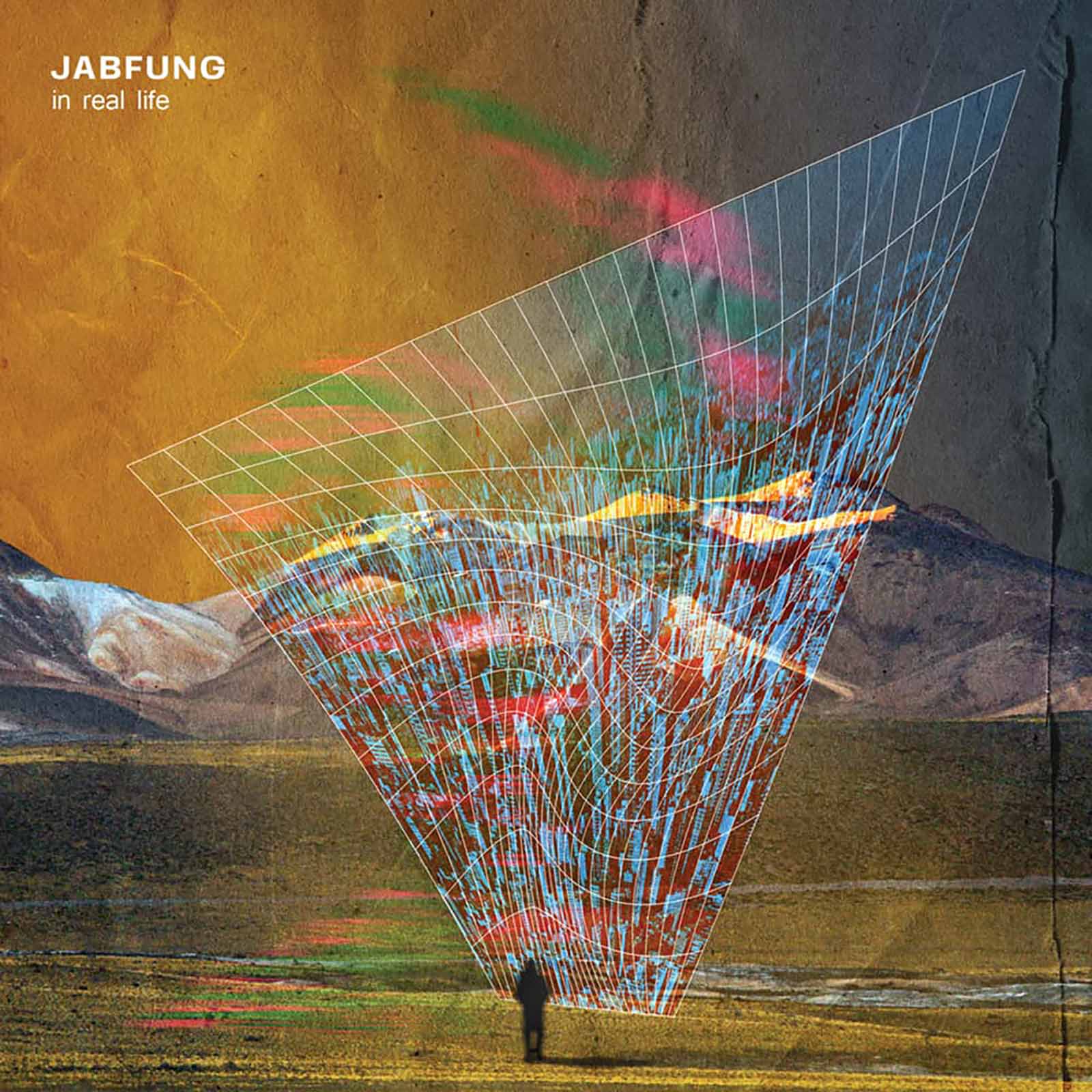
The album’s visual identity reinforces these themes. Designed by artist Klara Vanzella Yang, the cover depicts a holographic city suspended against a minimalist natural backdrop. The image captures the central tension explored throughout the music: the uneasy coexistence of technological connectivity and human presence. It is a visual metaphor that mirrors the album’s broader concerns about how people communicate, create, and remain connected in a rapidly changing world.
Like the best works of theater, In Real Life encourages introspection. It invites listeners to consider their place within a society increasingly driven by distraction, superficiality, and the relentless pursuit of instant reactions. What role remains for thoughtful individuals in a culture that often rewards noise over substance? How does genuine intellectual curiosity survive in public spaces where self-proclaimed experts dominate conversations far beyond their areas of understanding?
What ultimately makes the album so compelling is that it does not merely raise these questions. Through its very method of creation, it proposes an alternative. The music is built upon listening rather than interruption, collaboration rather than competition, and patience rather than immediacy. Every performance on the record demonstrates a willingness to make space for another voice, to respond thoughtfully rather than react instinctively. In that sense, the ensemble’s collective process becomes a quiet but powerful answer to many of the cultural tensions the music explores.
Such concerns may seem far removed from the practical realities of everyday life, yet they are precisely what give this album its relevance. Jabfung’s project could easily be dismissed as an exercise in artistic abstraction. In truth, it feels anything but. At a time when meaningful dialogue is becoming increasingly difficult to sustain, In Real Life stands as a powerful reminder of the value of listening, collaboration, and thoughtful engagement. Its ambitions are considerable, but so too is its significance. Far from being a luxury, this kind of artistic inquiry may be more necessary now than ever.
By transforming collective improvisation into a model for collective understanding, Jabfung has created more than a sophisticated contemporary jazz recording. The group has fashioned a meditation on presence itself, an argument for the enduring importance of human connection in an age increasingly shaped by technological mediation. That achievement gives In Real Life a resonance that extends well beyond the boundaries of jazz, making it one of those rare albums whose artistic and cultural significance continue to unfold long after the final note has faded.
Thierry De Clemensat
Member at Jazz Journalists Association
USA correspondent for Paris-Move and ABS magazine
Editor in chief – Bayou Blue Radio, Bayou Blue News
PARIS-MOVE, June 2nd, 2026
Follow PARIS-MOVE on X
::::::::::::::::::::::::
Musicians :
Luis Deniz: Alto Saxophone
Adam O’Farrill
Rafael Zaldivar: Piano
Julian Anderson-Bowes: Bass
Anthony Fung: Drums
Track Listing :
Changes
Stronger Still
Respite Piano Smash
In Transit
Skander
Methadone For Doomscrolling
Future Tense
Woven
Recorded at Union Sound Company, Toronto ON 2025
Compositions by: Anthony Fung & Julian Anderson-Bowes
Mix & Mastered by: Chase Jackson
Videography by Thom Varey, Brittany Farhat and Matthew Fong
Video Produced and Edited by: Thom Varey
Graphic Design: Klara VY
Instagram: @jabfung
All rights reserved. ©ANTHONYFUNGMUSIC