
| Jazz |
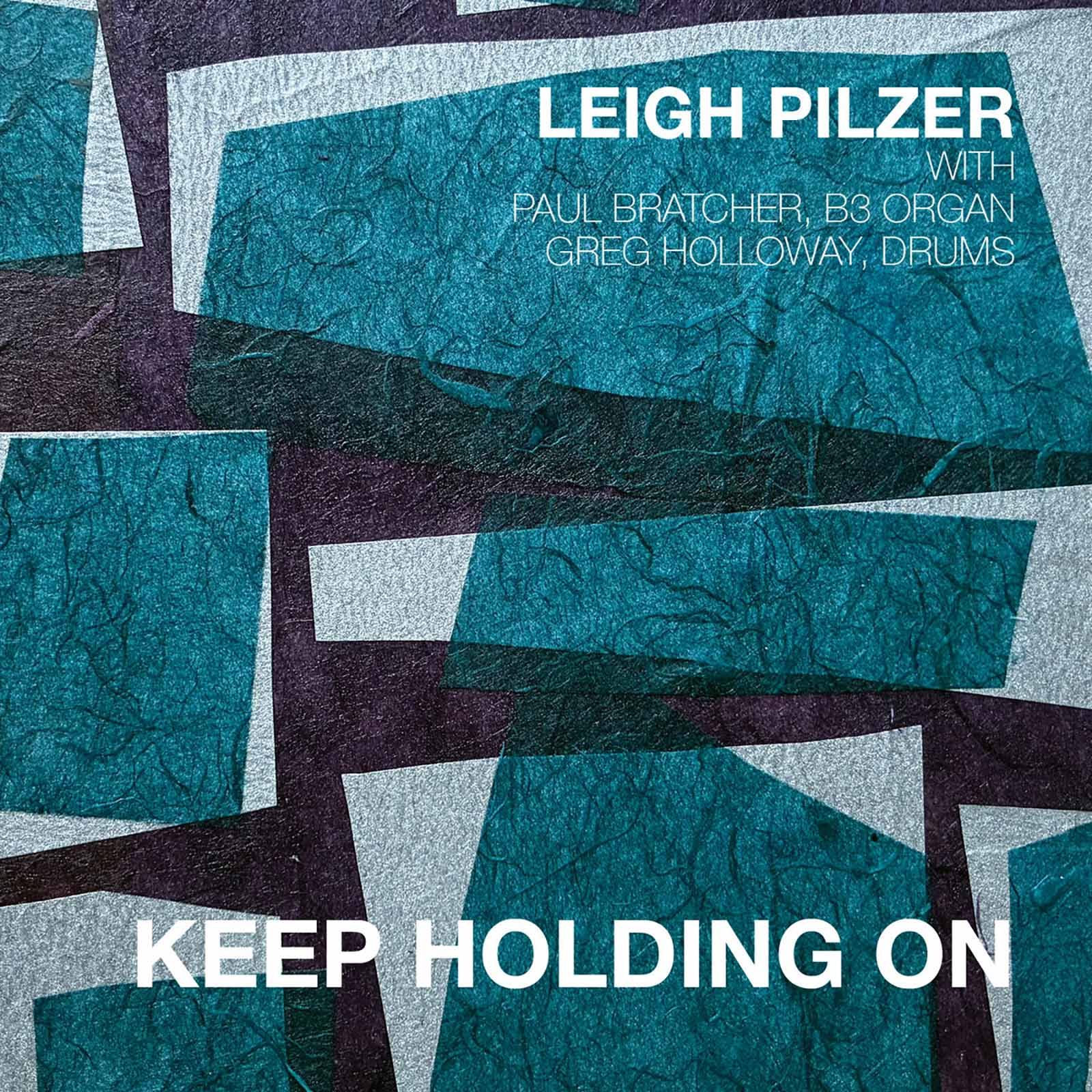
Summary: Baritone saxophonist Leigh Pilzer revives the spirit of classic big-band jazz through elegant arrangements, cinematic storytelling and a deep commitment to preserving the living heritage of American jazz.
Leigh Pilzer Keeps Jazz Tradition Alive With Elegance and Cinematic Grace
In recent years, women baritone saxophonists have increasingly expanded the possibilities of the instrument, reshaping a space once dominated almost exclusively by men. Some artists, like Céline Bonacina, have pushed toward daring experimentation, dense harmonic architecture and fearless stylistic exploration, earning international recognition and repeated praise from publications such as DownBeat. Leigh Pilzer moves in a different direction, not backward, but deeper into the architecture of jazz tradition itself.
That distinction gives her music its identity.
Pilzer is not searching for rupture or provocation. There is no desire here to overturn the language of jazz or chase avant-garde abstraction for its own sake. Instead, she refines and sustains a musical heritage that risks fading from contemporary jazz culture. These compositions are original, but their ambition lies less in innovation than in orchestration, ensemble balance and the preservation of a sophisticated big-band vocabulary that once defined American music.
The spirit behind this work belongs to the great orchestra tradition associated with figures like Tommy Dorsey. It is not necessarily Dorsey’s sound itself that comes to mind, but rather the elegance and discipline of the arrangements. Pilzer has spent years immersed in that lineage through performances with ensembles such as the Smithsonian Jazz Masterworks Orchestra, the DIVA Jazz Orchestra, the Bohemian Caverns Jazz Orchestra, the National Symphony Orchestra and Soulful Symphony. That experience echoes throughout the album’s structure and atmosphere.
The omnipresent organ gives the record the texture of another era, the sound of crowded dance halls, neon-lit lounges and cigarette smoke curling toward low ceilings in postwar America. This is period-infused jazz that recalls the years when orchestral swing and nightclub ensembles animated nearly every major city in the United States. It evokes a time when music spilled from bars and ballrooms late into the night, before much of that culture gradually disappeared during the transformations of the 1970s.
To fully understand Leigh Pilzer’s artistic identity, it is essential to consider her parallel life as an educator. Her years of teaching are audible throughout the album. The arrangements value clarity, structure and ensemble discipline, as though each composition were also quietly demonstrating what jazz fundamentals can achieve when treated with care and seriousness. Miles Davis famously insisted that everything in jazz ultimately comes from Louis Armstrong, and Pilzer appears to have embraced that philosophy completely. In her work, heritage is not nostalgia. It is continuity, transmission and responsibility.
The album itself unfolds almost cinematically. It feels less like a sequence of isolated tracks than a carefully structured narrative moving from chapter to chapter, atmosphere to atmosphere. At moments, the listener is transported into the shadowy elegance of 1950s film noir. Elsewhere, the music recalls the emotional restlessness of the emerging European New Wave. François Truffaut viewed jazz as an essential and living art form because it embodied improvisation, rhythm and complete artistic freedom, principles he sought to apply to cinema itself. Like the filmmakers of the French New Wave, Pilzer embraces movement and spontaneity without abandoning formal precision. Her compositions drift effortlessly between moods, allowing improvisation to function almost like camera movement.
That may be the album’s greatest achievement. These pieces do not merely exist as standalone jazz performances. They become a soundtrack for everyday life itself. One could imagine this music underscoring a late-night film sequence, drifting effortlessly through a summer festival or accompanying strangers dancing beneath dim lights without concern for the passing hour. The music adapts naturally to human experience because it understands atmosphere as deeply as melody.
At a moment increasingly obsessed with speed, disruption and constant reinvention, Leigh Pilzer’s work carries unusual importance. She preserves not only a sound, but an entire artistic discipline rooted in patience, craftsmanship and collective memory.
Jazz survives not only through innovation, but through artists willing to protect its heritage without turning it into a museum piece. In Leigh Pilzer’s hands, that tradition still breathes, moves and remains profoundly alive.
Thierry De Clemensat
Member at Jazz Journalists Association
USA correspondent for Paris-Move and ABS magazine
Editor in chief – Bayou Blue Radio, Bayou Blue News
PARIS-MOVE, May 28th, 2026
Follow PARIS-MOVE on X
::::::::::::::::::::::::
Musicians :
Leigh Pilzer – baritone saxophone
Paul Bratcher – Hammond B3
Greg Holloway – drums, composer
Jen Krupa – trombone (track 2)
Kenny Rittenhouse – trumpet (tracks 4 and 11)
Ally Hany Albrecht – trumpet (track 6)
Joe Jackson – trombone (track 10)
Tracks 1–6 and 8–10 composed and arranged by Leigh Pilzer
Track 7 composed and arranged by Paul Bratcher
Track 11 composed and arranged by Greg Holloway
Track Listing :
Swinging At The Station
Js And Ks
Musing Music
What’s Up, Puppy
Keep Holding On
When It’s Gone
Zingamomma
Just Another Pretty Song
East Coast Andy
Sideburns
G’s Bop