| Jazz |
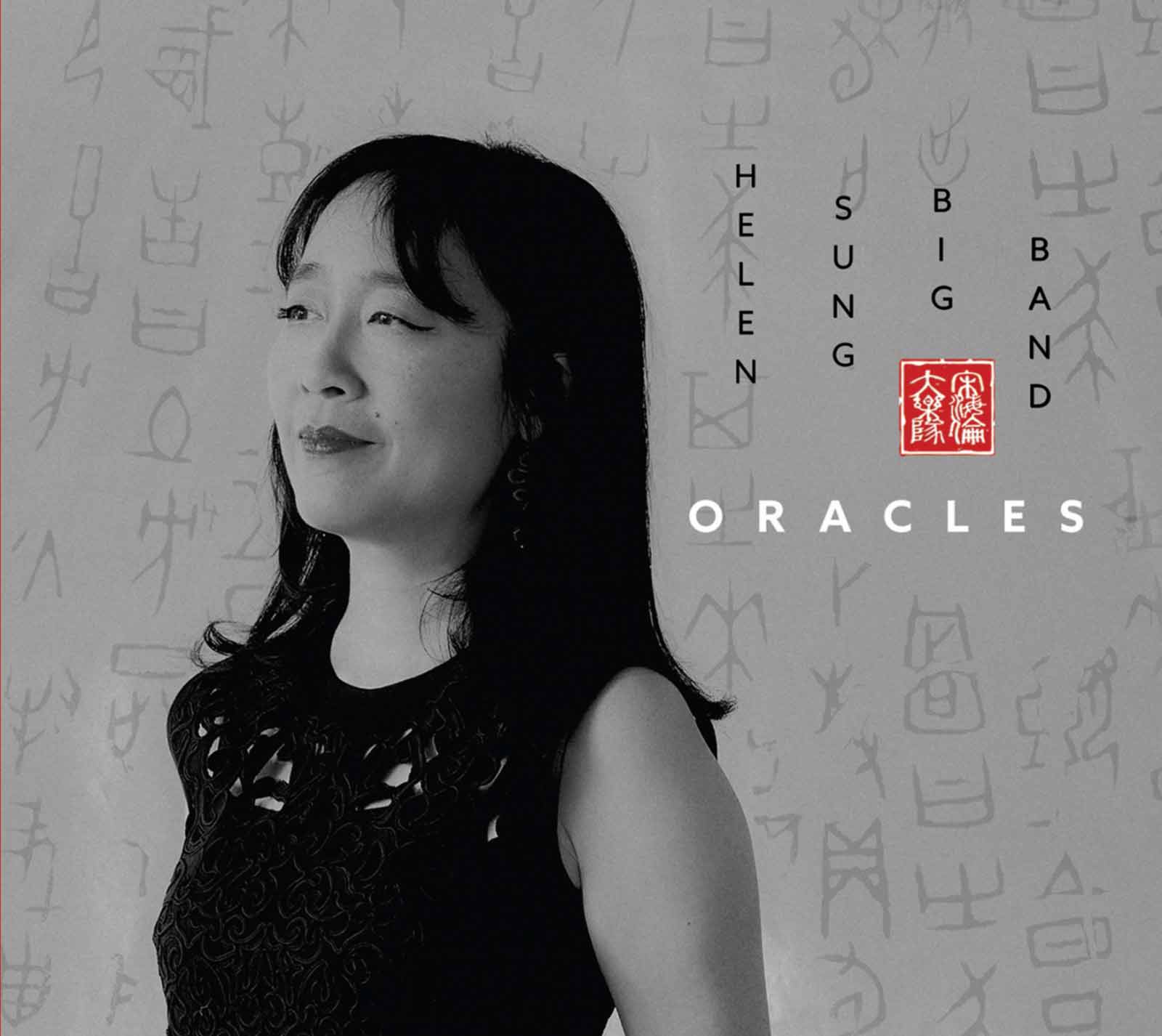
Summary : Helen Sung’s Oracles blends big band jazz, classical precision and emotional storytelling into a bold tribute to her legendary mentors while redefining the possibilities of modern orchestral jazz.
Helen Sung’s Oracles Turns Big Band Jazz Into a Powerful Act of Memory and Reinvention
At the beginning of this project, one has to go back to 2016. The lights inside Jazz at Lincoln Center glowed with the kind of quiet anticipation reserved for special evenings, musicians settling into place beneath the weight of a tradition that has shaped modern American music for generations. That year, the institution commissioned an arrangement of McCoy Tyner’s “Four By Five” for big band, written specifically for performance by the Orchestra. Helen Sung performed the piece alongside the ensemble in a concert that was later recorded and released in 2017 on the live album A Handful of Keys through Blue Engine Records. Nearly a decade later, that first large ensemble experience feels less like a stepping stone and more like the opening chapter of a much larger artistic arc finally coming full circle.
It is therefore hardly surprising that the brilliant artistic director of the Jazz at Lincoln Center Orchestra, Wynton Marsalis, contributed the liner notes for Oracles. His words capture not only Sung’s technical gifts, but also the depth of her artistic identity:
“Helen Sung embodies a shining example of the heroic journey toward self realization through the art of jazz. As a soloist, arranger, composer and bandleader, she has developed a musical vocabulary of remarkable richness, embracing the depth, virtuosity, freedom and humanity that define the very essence of great jazz. Every subtle detail that shapes the identity of this music is faithfully represented here, handled with care and intelligence. That is precisely what makes this album such an extraordinary listening experience. The rest is for you to discover yourself.”
What immediately stands out about Helen Sung is her astonishing ability to weave together jazz and classical music so seamlessly that the borders between the two almost disappear. The arrangements presented throughout Oracles possess a striking intensity and a level of structural complexity that leave absolutely no room for approximation. Every passage feels meticulously calibrated, every instrumental entrance carefully measured with the precision of a master watchmaker. Yet despite this architectural rigor, the music never loses its emotional pulse. It breathes, expands and moves with an elegance that prevents the album from collapsing under the weight of its own ambition.
The inspiration behind the project is rooted in the turbulent and deeply fractured era in which we now live, a period where long standing values are constantly challenged, distorted and sometimes dismantled by voices intoxicated by certainty and power. Out of that uneasy social landscape emerges Oracles, Helen Sung’s very first big band project and arguably one of her most daring artistic statements to date.
Far more than a simple orchestral jazz recording, Oracles unfolds as a series of musical portraits dedicated to extraordinary figures who shaped Sung both personally and artistically. The album stands as a heartfelt tribute to jazz legends such as Clark Terry, Ron Carter, Jimmy Heath, Wayne Shorter, Barry Harris, Kenny Barron, Herbie Hancock and Sir Roland Hanna, all of whom served as mentors during her time in the inaugural class of the Thelonious Monk Institute of Jazz Performance, now known as the Herbie Hancock Institute of Jazz. The project itself was supported by a prestigious fellowship from the John Simon Guggenheim Memorial Foundation awarded to Sung in 2021, with additional support from the New York State Council on the Arts.
Several moments on the album reveal just how deeply Sung understands the emotional possibilities of large ensemble writing. Certain passages unfold with almost cinematic grandeur before retreating into quieter, more intimate exchanges between piano and horns. Elsewhere, the brass sections surge forward with remarkable authority, only to dissolve into harmonies of startling delicacy. Even listeners unfamiliar with the language of contemporary orchestral jazz will recognize the care with which tension and release are shaped throughout the record. Each composition feels less like an isolated piece and more like part of an evolving conversation between memory, mentorship and artistic identity.
And yet, despite the weight of its themes and the sophistication of its construction, Helen Sung’s music never feels consumed by darkness. There is optimism here, sometimes subtle, sometimes radiant. Her years working within the orbit of Jazz at Lincoln Center are deeply perceptible throughout the album, particularly in the clarity of the melodic writing and the strategic way individual instruments are brought forward at precisely the right moments. One cannot help but sense the shadow of Wynton Marsalis hovering somewhere over the project, not as an oppressive influence but as a guiding spirit of orchestral discipline and musical storytelling.
This is also an album that may divide listeners. Admirers of more traditional or conservative forms of jazz may find themselves unsettled by Sung’s adventurous harmonic choices and the almost cinematic scale of her arrangements. Others, especially listeners open to contemporary large ensemble jazz that challenges convention while still honoring tradition, will likely approach Oracles with fascination and admiration.
In many ways, Oracles also speaks to the evolving place of big band jazz in contemporary culture. For decades, large ensemble jazz has often been treated as either a museum piece devoted to preserving the past or an academic exercise admired more for its complexity than its emotional immediacy. Helen Sung refuses both limitations. Her writing acknowledges the architecture and discipline inherited from the masters while pushing toward something more fluid, modern and deeply personal. She belongs to a generation of composers determined to prove that big band music can still surprise, provoke and illuminate the anxieties of the present moment without abandoning the richness of its lineage.
For those discovering Helen Sung through this album, it would be difficult not to encourage a deeper exploration of her work. Visiting her official website and diving into her broader discography quickly reveals the full extent of her artistry, an artist capable of moving effortlessly between intellectual sophistication and emotional immediacy, between discipline and imagination. Oracles is not merely a tribute album or a technical showcase. It feels instead like the sound of an artist reaching a new creative summit while remaining profoundly connected to the lineage that helped shape her voice.
Thierry De Clemensat
Member at Jazz Journalists Association
USA correspondent for Paris-Move and ABS magazine
Editor in chief – Bayou Blue Radio, Bayou Blue News
PARIS-MOVE, May 27th, 2026
Follow PARIS-MOVE on X
::::::::::::::::::::::::
Musicians :
Trumpets & Flugelhorns:
Tatum Greenblatt (lead)
Mike Rodriguez
Alex Norris
Nathaniel Williford
Trombones:
James Burton III (lead)
Sara Jacovino
Willie Applewhite
Gina Benalcázar (bass)
Saxophones:
Dave Pietro (lead alto & doubles)
Alejandro Aviles (alto 2 & doubles)
John Ellis (tenor 1 & doubles)
Nicole Glover (tenor 2 & doubles)
Andrew Gutauskas (Bari & Bass Clarinet)
Rhythm:
Piano – Helen Sung
Bass – Vicente Archer
Drums – Adam Cruz
Percussion – Samuel Torres
Conducted by Alan Ferber
Track Listing :
- Convergence [4:58]
- Samba da Gumz [0:59]
- Positively C.T. (for Clark Terry) [6:44]
- Diana [3:48]
- Wayne’s World (for Wayne Shorter) [6:25]
- Mr. Virtuoso (for Ron Carter) [4:40]
- R.J. [1:35]
- A Little Bird Watchin’ (for Jimmy Heath) [5:44]
- Pianism: I. Barry Harris [5:21]
- Pianism: II. Kenny Barron [4:46]
- Pianism: III. Herbie Hancock [4:10]
- Peace [3:40]
PRODUCTION:
Produced by Helen Sung
Sunnyside Records: Catalog #SSC1799
Recorded February 12 and 13, 2024 by Todd Whitelock at Sear Sound, NYC
Mixed by Brian Montgomery
Mastered by Mark Wilder
Cover Photograph by Evelyn Freja
Cover Concept by Brian Wittman, Design by Wittman, Sung, and Kevin Lovejoy
Graphic Design by Christopher Drukker