| Jazz |
Summary: On Return Trajectory, trombonist and educator Michael Dease transforms a Michigan State University ensemble into a fearless collective voice, blending explosive brass arrangements, daring improvisation and emotional depth into one of the most compelling modern big band recordings of the year.
Michael Dease’s Return Trajectory Turns a University Big Band Into Something Electrifying
Michael Dease has spent much of his career resisting the easy limitations that jazz institutions often place on musicians. Trombonist, composer, educator, arranger and restless collaborator, he has long approached music less as a fixed discipline than as a constantly evolving conversation. That spirit defines Return Trajectory, a recording that could easily have settled for the polished professionalism typical of university ensemble projects but instead emerges as something far more compelling: a collective artistic statement charged with risk, freedom and genuine discovery.
Leading a remarkable ensemble drawn from Michigan State University, Dease steps into the role of mentor and architect rather than central soloist. The album brings together original compositions by Dease and Gregg Hill alongside two classics, “Cherokee” and “Little Dave,” written by the legendary J.J. Johnson, whose influence continues to shape Dease’s musical vocabulary. Yet despite its title, Return Trajectory is not an exercise in nostalgia. It does not look backward with reverence. Instead, it moves forward with the confidence of musicians determined to push inherited traditions somewhere new.
What immediately distinguishes the album is its refusal to sound cautious. Many large ensemble recordings born within academic environments carry a certain rigidity, as though the musicians are too aware of the framework surrounding them. Here, the opposite occurs. The arrangements breathe. Tempos stretch and recoil. Solos wander into uncertain emotional territory before snapping back into focus. The musicians do not merely execute written charts. They inhabit them.
That sense of openness becomes one of the album’s defining strengths. Dease appears less interested in control than in trust, allowing the ensemble enough freedom to shape the music collectively. The result is a recording filled with the unpredictable energy of players still discovering the full reach of their artistic identities. There are moments when the performances feel almost conversational, as though each section of the orchestra is responding instinctively to the others in real time.
“Up South” captures that spirit beautifully. The saxophone solo at its center arrives like a distant transmission drifting through open space, fragile at first before gradually growing more insistent and defiant. Beneath it, the ensemble never overpowers the improvisation. Instead, the band creates an enormous sonic landscape around the soloist, allowing the performance to unfold with patience and emotional gravity. The effect is less about virtuosity than about storytelling. The solo does not simply decorate the composition. It sounds as though it is attempting to carve out its own history inside the music itself.
The groove sustaining the album feels unmistakably rooted in Michael Dease’s artistic identity. Yet what makes the recording so engaging is how naturally that sensibility has been absorbed by the ensemble. Every rhythmic accent, every brass swell and every melodic detour feels driven not by academic obligation but by personal investment. The music possesses an urgency that cannot be taught mechanically.
That urgency is hardly accidental. Over the years, Dease has performed and collaborated alongside artists as varied as Alicia Keys, Paul Simon, Paul Shaffer and the CBS Orchestra, in addition to Elton John, Neil Diamond, Illinois Jacquet, Slide Hampton, Fred Wesley, Maceo Parker, the WDR Big Band, George Gruntz and Billy Harper. Listening to Return Trajectory, one hears not only the influence of those experiences but also Dease’s understanding that great ensembles are built through shared confidence rather than hierarchy.
The album’s internal balance is particularly impressive. The brass sections sound muscular without becoming oppressive, often shifting from explosive ensemble passages into remarkably delicate melodic phrasing within seconds. Meanwhile, the rhythm section anchors the recording with an elasticity that allows the compositions to expand naturally. On “Oasis,” the rhythmic pulse initially feels restrained, almost hypnotic, before slowly opening into something more cinematic and emotionally layered. The percussion draws the listener inward first. Then the harmonic tension begins to rise. Only after that foundation has been carefully established do the solos fully emerge, unfolding with calm authority rather than forced spectacle.
What makes the recording especially rewarding is the degree of risk embedded within it. Dease allows the musicians enough freedom to fail, and because of that, they often achieve something far more interesting than technical perfection. There are passages throughout the album where the ensemble sounds on the edge of instability, not in a careless sense but in the way truly alive jazz often does. The musicians listen, react and reshape the music continuously. That tension gives the album much of its emotional charge.
It also becomes increasingly clear that this is not a conventional Michael Dease record centered solely around his own instrumental presence. In many ways, his greatest performance here may be his restraint. Rather than dominating the material, he creates the conditions necessary for the ensemble to evolve organically. The players are never reduced to anonymous sections inside a carefully managed institution. Their personalities remain visible throughout the recording, and that individuality gives the music much of its warmth.
Some listeners may wish the album extended beyond six tracks. That feeling is understandable. Yet the density and sophistication of the arrangements make clear how much labor stands behind even these relatively concise performances. Big band recordings demand an entirely different level of coordination than small-group sessions. Every chart requires careful construction, repeated rehearsal and endless refinement of dynamics, transitions and internal balance. One can hear that meticulous work throughout the album, though the musicians wisely avoid allowing technical precision to suffocate spontaneity.
More importantly, Return Trajectory never feels trapped by its educational origins. The album sounds less like a conservatory document than a snapshot of artists discovering who they might become together. That sense of becoming, restless, unfinished and fully alive, is ultimately what gives the recording its lasting resonance.
Thierry De Clemensat
Member at Jazz Journalists Association
USA correspondent for Paris-Move and ABS magazine
Editor in chief – Bayou Blue Radio, Bayou Blue News
PARIS-MOVE, May 24th, 2026
Follow PARIS-MOVE on X
::::::::::::::::::::::::
Michael Dease Big Band’s webpage
Musicians :
Michael Dease – trombone, bari sax, conductor
Mason Reinhardt – alto & soprano sax
Stephen Michaels – alto sax
Paloma Ximena – tenor sax
Shane Karas – tenor sax
Andrew Wittmer – bari sax
Aidan Clark – trombone
Miles Cole – trombone
Eli Howell – trombone
Elisabeth Shafer – bass trombone
Scott Belck – trumpet
Joel Reaves – trumpet
Eli Rachlin – trumpet
Andrew Brown – trumpet
Max Gage – piano
Zach Sommerfeld – guitar
Jonathan Hilliard – bass
Sam Melkonian – drums
SPECIAL GUESTS:
Erena Terakubo – alto saxophone
Dennis Adu – flugelhorn
Track Listing:
1 You Know I Love You 5:52
soloists: Dennis Adu (flugel), Erena Terakubo (as),
Michael Dease (tbn)
2 Oasis 7:20
Zach Sommerfeld (gtr), Mason Reinhardt (ss),
Miles Cole (tbn), Joel Reaves (tpt), Michael Dease (tbn)
3 Cherokee 4:03
Michael Dease (bari sax)
4 Shoreline 151 6:44
Max Gage (pno), Scott Belck (tpt), Shane Karas (ts),
Michael Dease (tbn), Zach Sommerfeld (gtr)
5 Up South 4:40
Michael Dease (bari sax)
6 Little Dave 4:32
Eli Rachlin (tpt), Michael Dease (tbn)
Compositions by:
(1,5) Michael Dease; (2,4) Gregg Hill;
(3) Ray Noble; (6) J.J. Johnson
Arrangements by:
(1) Dr. Javier Nero; (2) David Caffey;
(3) Kyle Athayde; (4) Chris Glassman
Production Info:
Produced by Michael Dease
Executive Producer: Gregg Hill
Recorded by Corey DeRushia at Troubadour Studios, Lansing, MI on April 25, 2025
(5) Recorded by Tiff Falls & Paxton Cruzen at The Alluvion, Traverse City, MI on January 10, 2026
Mixed & Mastered by Corey DeRushia at Troubadour Studios, Lansing, MI
(5) Assistant Mixing Engineer: Matthew White, Traverse City, MI
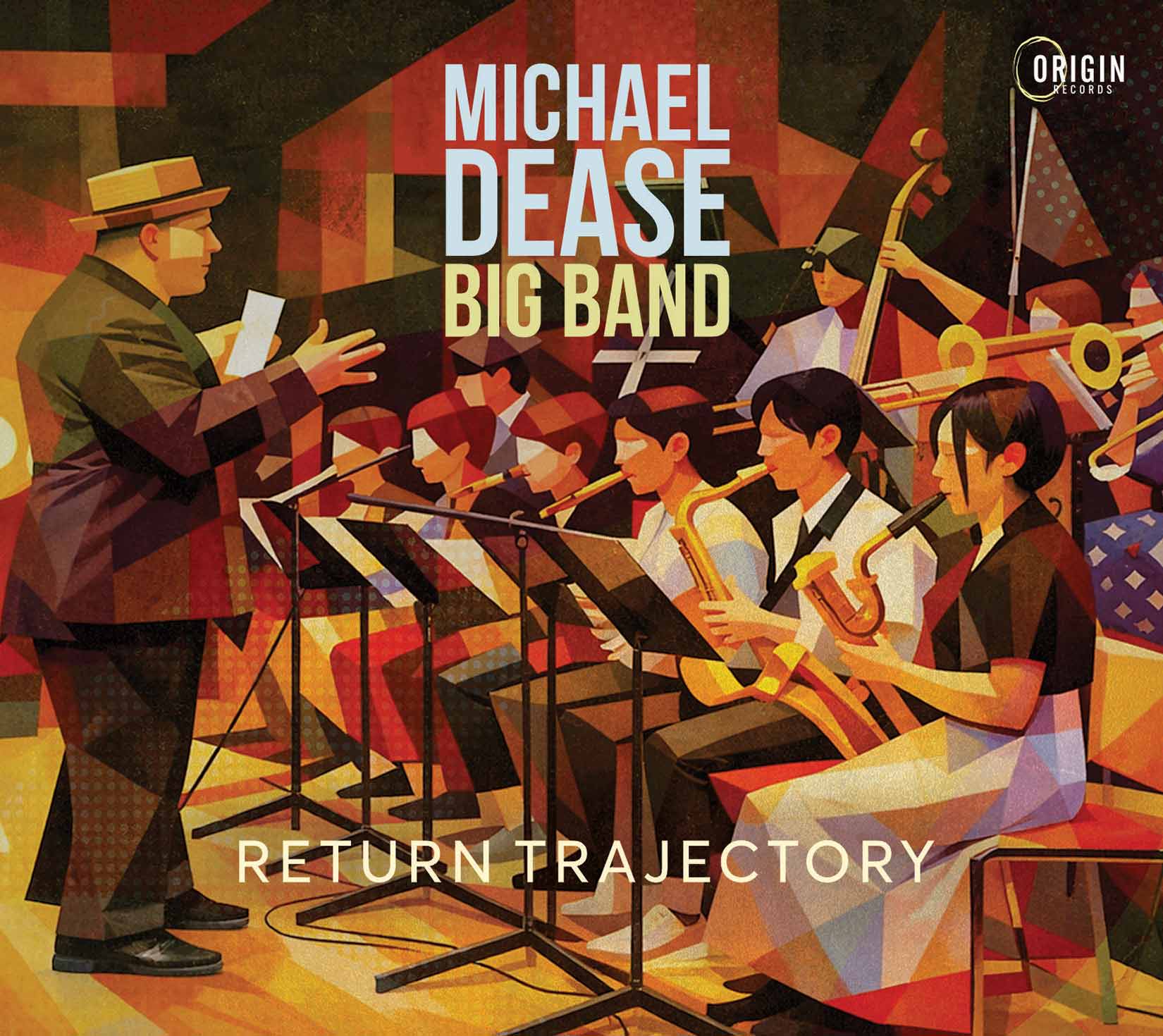
Front cover art by Tomoki Sassa
Cover design & layout by John Bishop