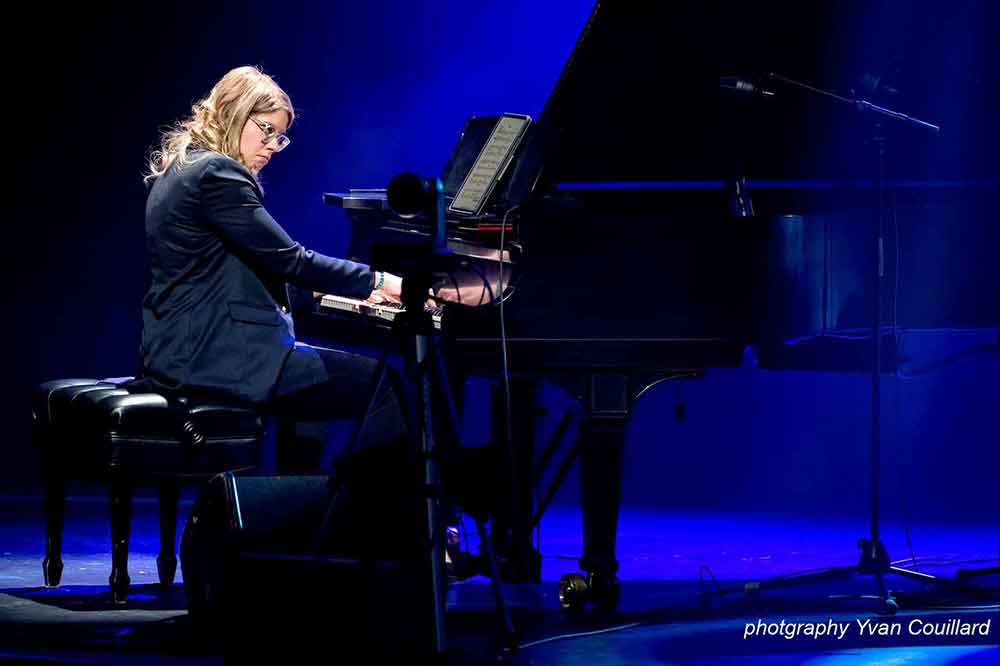
Interview: Emie R Roussel, composer & pianist
by Thierry De Clemensat
Member at Jazz Journalists Association
USA correspondent for Paris-Move and ABS magazine
Editor in chief – Bayou Blue Radio
May 2026
Photo: Yvan Couillard
Follow PARIS-MOVE on X
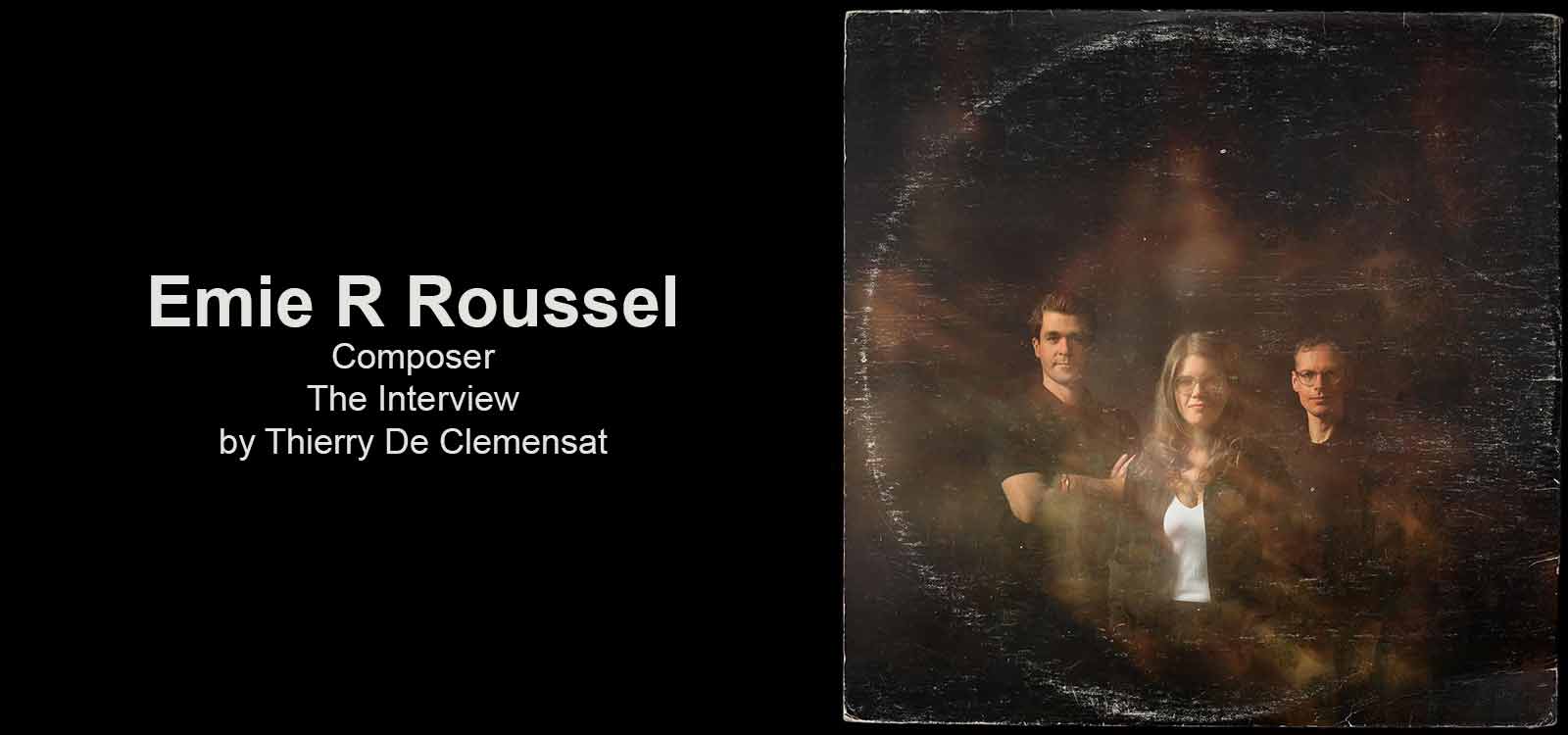
Summary : Jazz pianist Emie R Roussel reflects on her journey, creative process, and evolving musical voice, as heard on her latest album Terr.
Emie R Roussel, the piano as an inner territory
In some musical paths, there is a kind of obviousness that does not erase doubt or effort. Emie R Roussel’s belongs to that rare category where early talent does not mean everything comes easily, where inheritance never replaces hard work. She grew up in a music-filled environment, with a jazz pianist father, and she could have followed a ready-made path. But that does not capture what, for her, feels less like inheritance and more like something earned.
For several years now, within her trio, she has been shaping a living music, balanced between composition and freedom, rigor and breath. From stage to stage, all the way to European events like JazzAhead, her name has established itself not as a promise, but as a presence. A voice.
Because that is what it comes down to: finding a voice, letting it be heard, then transforming it without ever denying it. Her latest album, Terr, carries the trace of that movement, almost a shift. As if, after digging a long groove, it became necessary to step out of it all at once and open new spaces.
In this interview, we talk about memory, silence, the collective, and what in music always escapes words.
::::::::::::::::::::
Thierry De Clemensat: Do you remember your first contact with the piano, not just the gesture, but what it awakened in you?
Emie R Roussel: Coming from a family of musicians, music has always been part of my life. We had a piano at home, of course, and from a very young age I was already drawn to the instrument. At first, what mattered most was having fun, even before learning in a more structured way, so the instrument was a game to me. Over time, it became a game with infinite possibilities and a very important part of my life.
Thierry De Clemensat: Between that first encounter and today, what paths did you take? What were the key stages, the moments of resistance, the turning points?
Emie R Roussel: I was lucky to start lessons very young with my father. At first it was more classical, which is an essential step because that is where you build your technique. I continued like that until I was about twelve, also studying with other teachers. I auditioned for the Conservatory, but unfortunately I ranked fifth for only four available spots. It discouraged me so much that I did not touch the piano for two years. I played a bit of trumpet in the school band, but nothing serious.
During those years, my father kept telling me, “Don’t you want to start playing again? Not classical, I’ll show you chords, how to improvise.” I eventually gave in, and it was a real revelation. In the end, not getting into the Conservatory was a blessing. I was not passionate enough about classical piano to push it that far. If I had been accepted, I might not even be making music today.
But in jazz, I found myself. Jazz gave me a kind of understanding that opens up tremendous freedom. That is what won me over. By mid-high school, I was practicing at least two hours a day. I even skipped classes sometimes just to go to the music room. It was a real turning point. I later continued my studies in college and at university.
Thierry De Clemensat: Composing often requires a moment of withdrawal. How did that become necessary for you? And what remains today of your first attempts at writing?
Emie R Roussel: An idea often comes to me when I start playing in the morning. I usually do not have time to work on it right away, so I record it on my phone. Later, when I have time, I go back to that fragment and develop it. Some ideas I never finish, and that is fine too. If I feel it, I take it further, but I try not to force things.
At university, I took a composition class where we had to write one piece per week, about thirty in total, based on new concepts we were learning. I think that forced me to try things instead of staring at a blank page. Not waiting for divine inspiration. Some of those pieces ended up on my first album, Temps inégal, released in 2010.
Thierry De Clemensat: The trio seems both a constrained and open space. How did this form find its place in your work?
Emie R Roussel: The trio has always felt like the perfect format to have freedom while still offering a range of sounds and textures. It is a really exciting playground. This time, we pushed things further with the possibilities offered by Atmos mixing. We added several overdubs to multiply the sound layers.
Beyond the immersive mix, some elements were already positioned in space during recording. For example, we used a double drum kit, one standard and another placed behind the drummer. That way, the main elements sit more forward while small surprise effects come from the back.
Thierry De Clemensat: Choosing your partners also means choosing a way of existing in music. How did those encounters happen?
Emie R Roussel: Very simply. We met at the Festi Jazz in Rimouski, Quebec. I had heard them play with other groups and really liked their playing. I reached out, and we started playing together. Soon after, we recorded a first album, Transit, which also featured the St-Germain Quartet.
Thierry De Clemensat: Between solitude and sharing, how does music circulate? When does it become collective?
Emie R Roussel: Since we have been working together for a long time, when I write, I already have my bandmates’ playing in mind. Even if the writing happens alone, their influence is still there. Everyone contributes to the arrangements, which makes the process more collective and creates real sharing.
Thierry De Clemensat: Listening to your discography, there is a sense of evolution, almost subtly, until Terr, where something feels more clearly defined. How would you describe that movement?
Emie R Roussel: Finding your own sound, your musical signature, is quite difficult. I think album by album, our identity has taken shape. At the same time, while keeping that identity, we have to keep evolving and going further. For this album, the time that passed, five years since the last one, along with the musical experiences of each member, allowed us to push the musical and sonic ideas further.
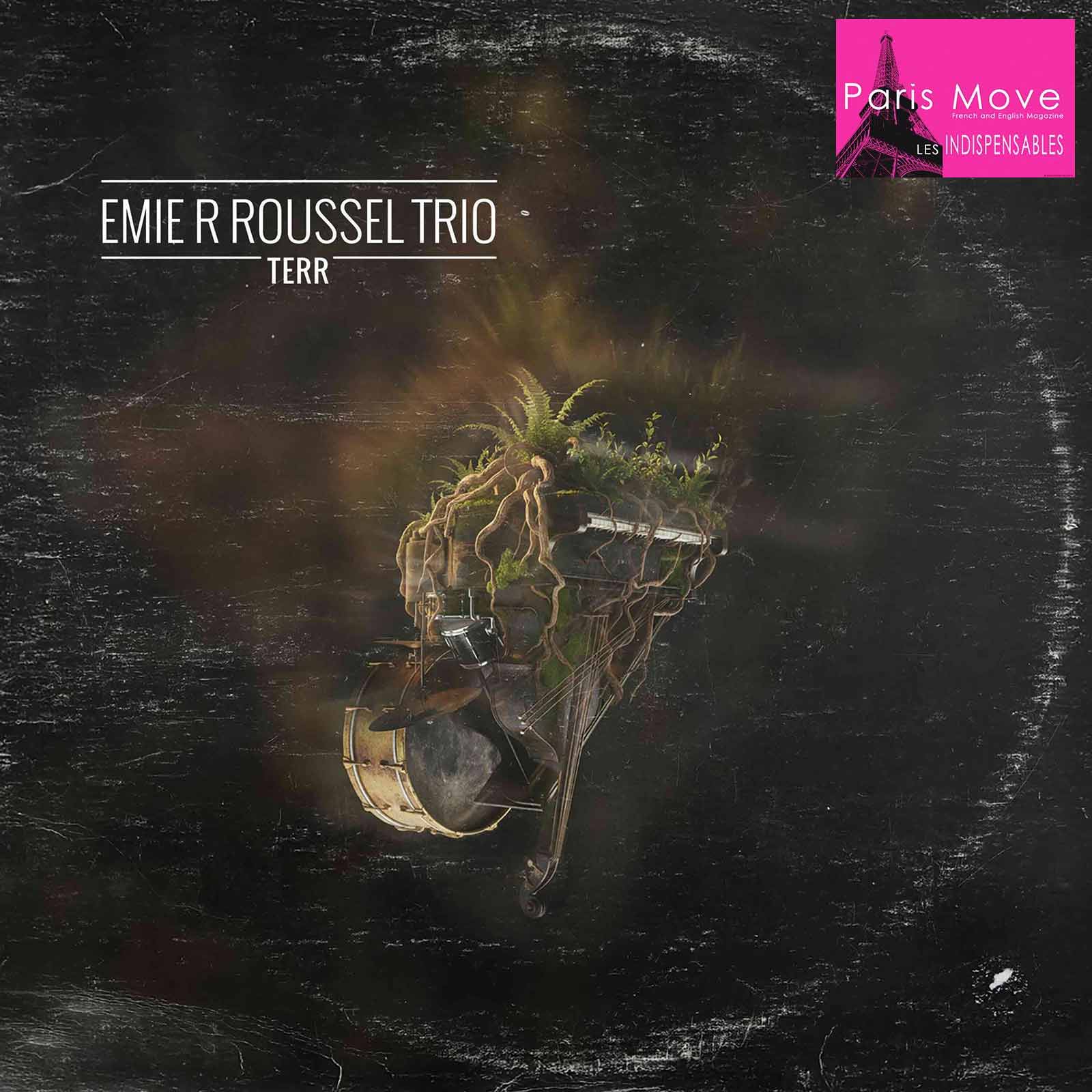
NDR: Find HERE the review of the Terr album on Paris-Move.
To buy the album
Thierry De Clemensat: Acquiring a recording studio often marks a turning point. For you, is it a natural extension of writing or a separate space?
Emie R Roussel: It is closely connected to the trio. We discovered the studio while recording Rythme de passage in 2019 through Dominic, our drummer. Over time, my partner and I learned that the owner was thinking of selling and saw us as the right people to take over. Since we are both musicians, and my partner is also a sound engineer, we had the right profile to keep the place alive.
It happened unexpectedly, but after nearly five years, we can say it was absolutely worth it. Besides our own projects, we host many artists from different backgrounds. It also allows us to meet and collaborate with new people.
Thierry De Clemensat: In your music, what are you trying to hold on to, and what are you trying to let go?
Emie R Roussel: I do not really think about it that way. I try to share music that feels genuine and free of constraints. I think that brings sincerity and truth into the music.
Thierry De Clemensat: Is improvisation, for you, a risk or a return to essentials?
Emie R Roussel: Improvisation is what brought me back to music. The ability to understand how music is built and then express yourself freely is one of the most beautiful aspects for me. In a group, it is also the joy of a dialogue that is always unique.
Thierry De Clemensat: Are your influences still visible, or have they merged into your own language?
Emie R Roussel: Since we are the sum of our influences, I think they are still visible. But I also believe I have found my own musical signature. Beyond our models, the people we collaborate with also shape how we approach music. It is always evolving, never fixed in time.
Thierry De Clemensat: Does the audience, through its quiet or attentive presence, change the way you play?
Emie R Roussel: It definitely has an impact. If we feel the audience’s energy, we get carried by it. On the other hand, a very attentive audience might lead us toward something more introspective. It goes both ways. I think our playing also influences the audience’s reaction. That is what makes every concert unique, and it is a big part of the joy.
Thierry De Clemensat: Was there a moment in your path where everything could have gone differently?
Emie R Roussel: When I stopped playing classical piano, I could have turned to something completely different. My father played a big role in bringing me back to music, this time through jazz. I am glad I let myself be convinced.
Thierry De Clemensat: And today, toward what musical or inner landscapes do you feel drawn?
Emie R Roussel: I try not to control that too much. In recent years, I have had opportunities in worlds I never imagined entering. Those experiences are incredibly formative and help us grow. Since I love water, the sea, lakes, I would say I just let myself be carried by the wave.