
| Jazz |
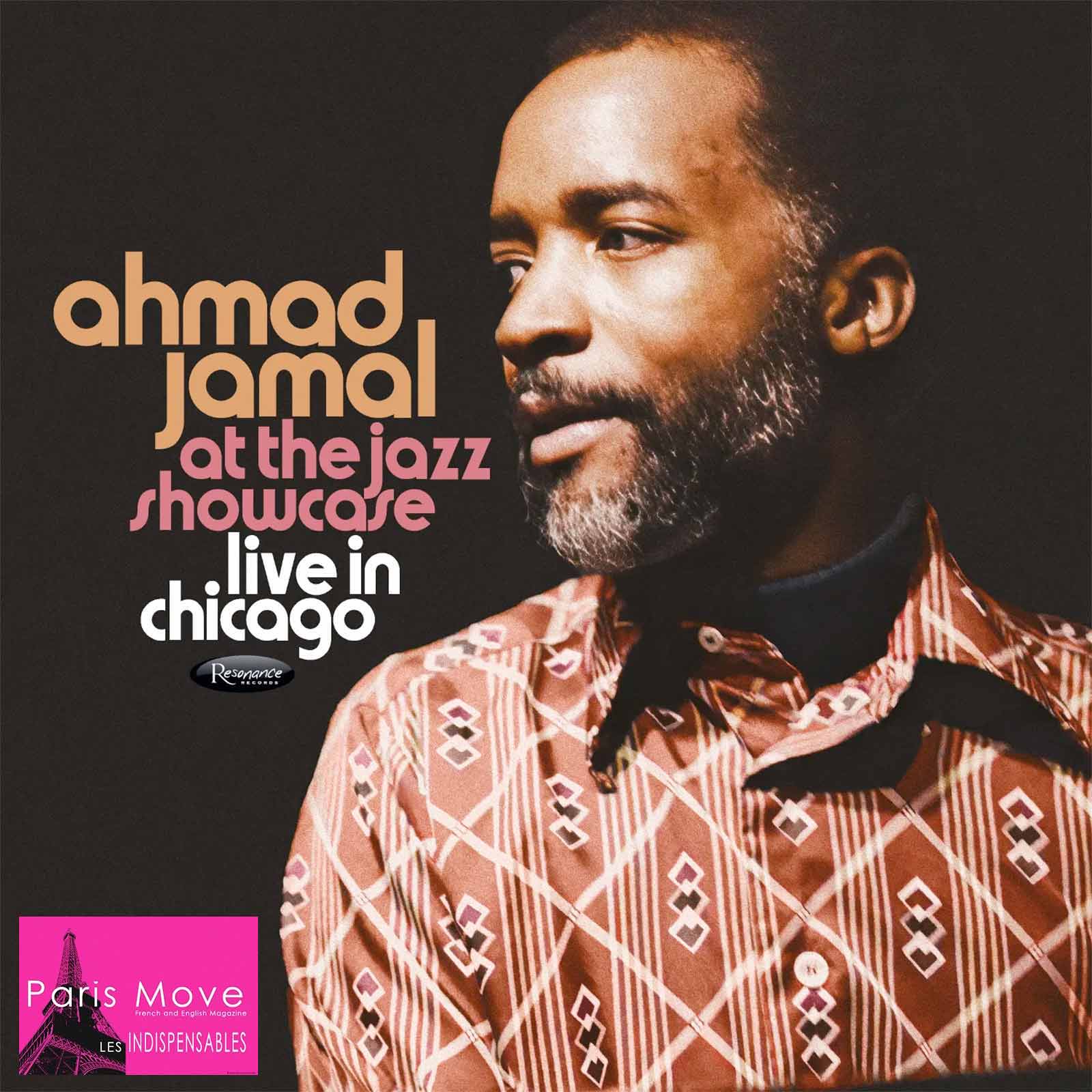
Summary: Resonance Records unveils rare 1976 Chicago recordings of Ahmad Jamal, a landmark jazz release restored from the legendary Jazz Showcase archives.
Ahmad Jamal Live at the Jazz Showcase (1976): A Landmark Archival Release from Resonance Records
In the mid-1970s, beneath the hum of Rush Street nightlife, Chicago’s Jazz Showcase offered something rarer than entertainment: a laboratory of sound. Night after night, in a basement room dense with cigarette smoke and expectation, artists reshaped the language of modern jazz in real time. It is from this charged atmosphere that Resonance Records draws its latest archival releases, four albums arriving in April 2026, each capturing performances by towering figures including Ahmad Jamal, Joe Henderson, Yusef Lateef and Mal Waldron.
Yet the significance of these recordings extends beyond the reputations of the musicians themselves. What Resonance has assembled are not merely live albums, but carefully restored cultural artifacts, documents of a living, evolving art form. Richly annotated and produced with an archivist’s precision, they offer a rare convergence of historical insight and sonic fidelity. This series begins, fittingly, with the late Ahmad Jamal, an artist whose influence continues to ripple through generations of jazz musicians.
The project bears the unmistakable imprint of producer Zev Feldman, often dubbed “the Indiana Jones of jazz” for his tireless excavation of lost recordings. Working from original tapes preserved in the archives of Jazz Showcase founder Joe Segal, the album has been meticulously restored and mastered by engineer George Klabin, Resonance’s founder. Vinyl mastering was completed by Matthew Lutthans at The Mastering Lab in Salina, Kansas, with pressings handled by The Vinylist, an artisanal plant in Quebec known for its audiophile standards.
These tapes are part of a vast private archive Segal began assembling decades ago, documenting performances by nearly every major jazz artist to pass through his club. Feldman first encountered this trove in 2011; today, with the support of Segal’s son Wayne, he continues to explore what the family estimates to be between 8,000 and 10,000 recordings. In an era when so much of jazz history survives only in fragments, this archive stands as one of the most significant rediscoveries in recent memory.
What emerges from these newly restored recordings is a portrait of Ahmad Jamal at a moment of remarkable creative vitality. From the opening notes, rendered with striking clarity, particularly in the CD edition, the listener is immediately immersed in a sound world that is at once controlled and expansive. Jamal’s touch is precise yet exploratory, his phrasing marked by an architectural sense of space that would go on to influence figures such as Miles Davis.
The opening track, “Ahmad’s Song,” serves as both statement and invitation. It rewards close listening: each passage reveals a dialogue between Jamal’s own musical instincts and the diverse traditions that informed his approach. Elements of classical structure surface in the composition’s form, while subtle inflections hint at a broader, globally attuned sensibility. At its core, however, lies a deeply rooted jazz language, one that balances reverence for tradition with a restless, forward-looking energy.
This tension between past and present is central to Jamal’s enduring appeal. Unlike many of his contemporaries, whose innovations leaned toward abstraction or intensity, Jamal pursued a more measured evolution, refining his ideas across decades rather than abandoning them. The result is a performance that feels both grounded and exploratory, intimate yet expansive.
“Joe was one of the most dedicated jazz advocates I have ever encountered,” Feldman writes in the liner notes. “For decades, he brought the very best of jazz to Chicago. Jamal maintained a long-standing relationship with him and performed at the Jazz Showcase countless times.”
For Sumayah Jamal, the pianist’s daughter and steward of his estate, these March 1976 recordings represent more than a rediscovered performance, they mark a return to a formative landscape. Though born in Pittsburgh, Jamal spent crucial years in Chicago between 1947 and 1962. “My father held Joe Segal and the Jazz Showcase in the highest regard,” she notes. “To uncover such a wealth of previously unheard recordings is deeply moving. His musical voice was shaped in Chicago, and these tapes capture that brilliance with striking clarity.”
If there is a critique to be made, it lies not in the music but in its context: for casual listeners, the album’s significance may initially feel archival rather than immediate. Yet that distance quickly dissolves. What begins as historical documentation reveals itself, track by track, as something far more vital, a living performance that resists the constraints of time.
Whether experienced on vinyl or CD, the result is equally compelling. The warmth of the analog pressing offers a tactile intimacy, while the digital version foregrounds the remarkable precision of the restoration. In either format, what Resonance has achieved here is not simply preservation, but reanimation.
These are not merely recordings rescued from obscurity. They are echoes of a moment when jazz was still discovering its future, and reminders that, in the right hands, the past remains vividly alive.
Thierry De Clemensat
Member at Jazz Journalists Association
USA correspondent for Paris-Move and ABS magazine
Editor in chief – Bayou Blue Radio, Bayou Blue News
PARIS-MOVE, April 9th 2026
Follow PARIS-MOVE on X

::::::::::::::::::::::::
Musicians :
Ahmad Jamal – piano
John Heard – bass
Frank Gant – drums
Track Listing :
DISC ONE
• Ahmad’s Song (15:00)
• Wave (13:40)
• Have You Met Miss Jones (9:37)
• Theme from M*A*S*H (11:49)
DISC TWO
• Dolphin Dance (9:59)
• Prelude To A Kiss (9:28)
• A Time for Love (8:27)
• Swahililand (21:19)
• A Nightingale Sang in Berkeley Square (3:11)