| Jazz |
Summary: Champian Fulton celebrates her 40th birthday with a warm, intimate jazz album honoring tradition, memory, and her father Stephen Fulton.
Champian Fulton at 40: A Jazz Celebration Between Tradition and Intimate Memory
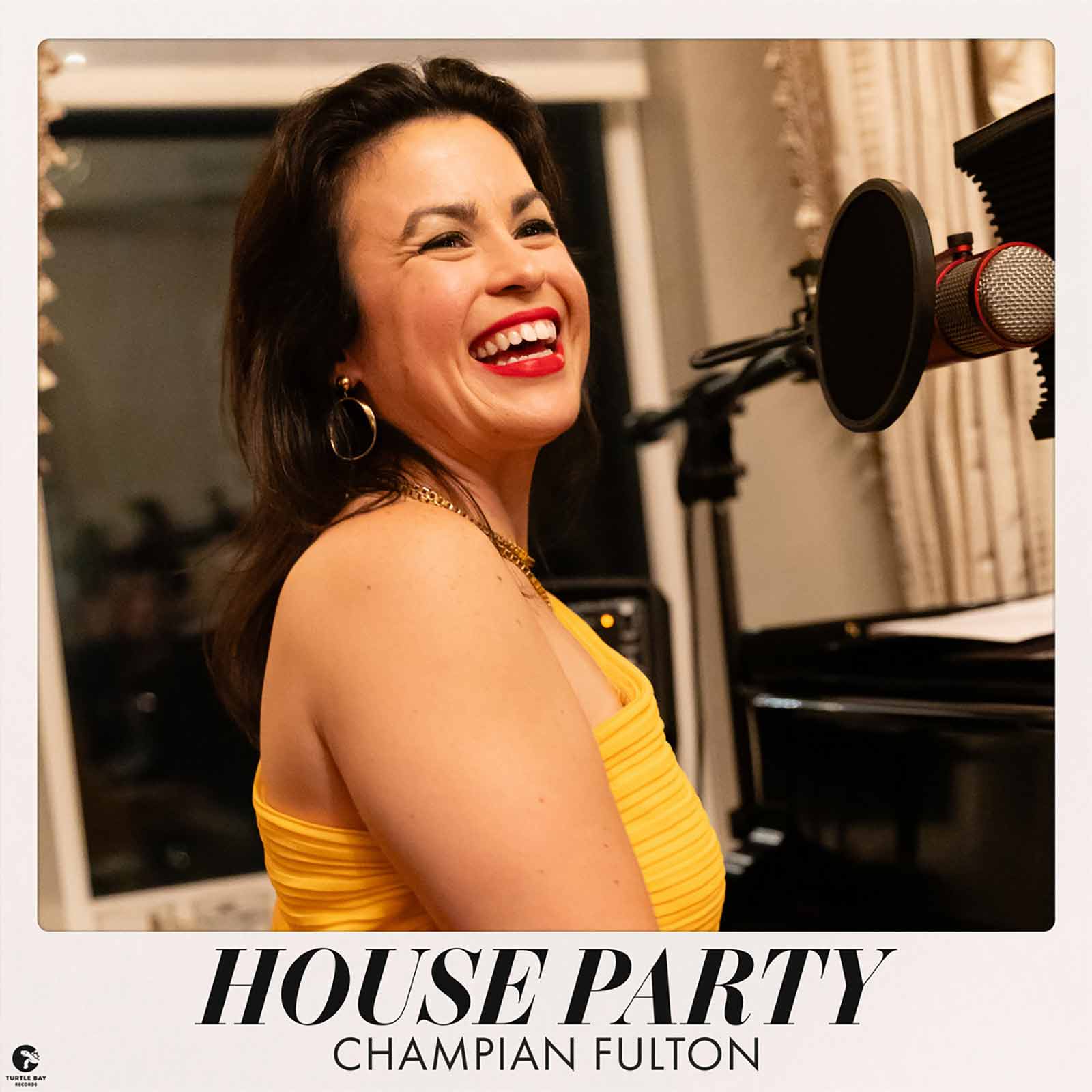
The first sound is not a note but a gesture: the soft pop of a champagne cork, cutting through the room just before the band settles into its opening phrase. It is a small, telling detail, one that immediately situates the listener inside an atmosphere of intimacy rather than performance. What unfolds from there is less a concert than a gathering, a living-room séance of memory and song. For Champian Fulton, who marked her 40th birthday that evening, the occasion becomes both a personal milestone and a musical statement: a reaffirmation that, in jazz, interpretation is itself an act of creation.
Friends, longtime collaborators, and devoted listeners had come for dinner but stayed for the music, the boundary between audience and performer dissolving as the session took shape. The mood recalls the loose, convivial spirit of Dinah Jams!, where conversation, laughter, and improvisation coexisted without hierarchy. Here, too, the recording captures not just songs but the texture of a shared moment, one grounded in tradition yet unmistakably lived-in.
Hovering over the evening is the enduring presence of Fulton’s late father, Stephen Fulton, whose influence is less invoked than felt. Fulton’s relationship to the Great American Songbook is inseparable from that inheritance, but it is not merely reverential. Instead, she approaches the canon as a space of dialogue, between past and present, lineage and individuality.
The program opens with “The One I Love (Belongs to Somebody Else)” by Isham Jones and Gus Kahn, taken at a relaxed, lightly swinging tempo. Fulton’s phrasing sits just behind the beat, unhurried, allowing the melody to breathe without sentimentality. It is a song she first recorded in 2010, but here it feels less like a reprise than a quiet reconsideration, its emotional shading deepened by time.
“I Cried for You,” by Gus Arnheim, Abe Lyman, and Arthur Freed, follows with a more buoyant pulse, the trio locking into an easy swing. Fulton’s piano work, rooted in a blend of stride inflection and modern harmonic restraint, provides both structure and lift, while her vocal line remains clear, centered, and quietly expressive. “I simply never tire of singing and playing this song,” she notes, and the performance bears that out.
A shift in tone arrives with “One by One,” a composition by Wayne Shorter originally associated with the Jazz Messengers. Stripped of its customary horn lines and rendered in a spare trio format, the piece becomes an exercise in space and suggestion. Fulton resists the urge to fill every silence, instead letting phrases taper off, leaving room for the rhythm section to respond in kind. The result is exploratory without becoming abstract, an understated tribute to Shorter’s enduring elasticity.
“Get Out of Town,” by Cole Porter, reintroduces a touch of playfulness, its medium tempo allowing for subtle rhythmic elasticity. Fulton reunites here with bassist Hide Tanaka, revisiting a piece they first recorded together more than a decade ago. Their familiarity is evident in the ease of the exchange: phrases overlap, resolve, and occasionally tease apart, giving the performance a conversational quality that feels both polished and spontaneous.
Throughout the album, Fulton’s voice remains its central axis, consistently precise yet warm, capable of both clarity and depth. She favors understatement over display, shaping lines with care rather than embellishment. The trio, in turn, resists density, leaving generous harmonic and rhythmic space around her. At times, this restraint borders on caution; listeners seeking sharper contrasts or more risk-taking interplay may find the set occasionally too measured. Yet it is precisely this poise that allows the emotional undercurrent, nostalgia, gratitude, quiet fulfillment, to come through without affectation.
That emotional core is perhaps best articulated in Fulton’s own reflection: she recalls arriving in New York at 17, with little money but an unwavering ambition, to become a jazz musician, to collaborate with great artists, to travel, to record. Now, at 40, she recognizes that she is living that once-distant vision. The album, then, is not merely retrospective; it is a point of arrival.
In revisiting standards by figures such as Charlie Parker and Porter, Fulton does not attempt to reinvent the material so much as re-inhabit it. These are familiar songs, but under her touch they feel momentarily unmoored from their histories, restored not as artifacts, but as experiences unfolding in real time.
If the project stops short of challenging the boundaries of the tradition, it nonetheless affirms something equally vital: continuity. This is music that understands where it comes from and chooses, deliberately, to remain in conversation with it. In that sense, Fulton is not preserving the past, she is keeping it alive, one phrase at a time.
Thierry De Clemensat
Member at Jazz Journalists Association
USA correspondent for Paris-Move and ABS magazine
Editor in chief – Bayou Blue Radio, Bayou Blue News
PARIS-MOVE, April 7th 2026
Follow PARIS-MOVE on X

::::::::::::::::::::::::
Musicians:
Champian Fulton – Piano & Vocals
Hide Tanaka – Bass
Fukushi Tainaka – Drums
Klas Lindquist – Alto Saxophone
Cory Weeds – Tenor Saxophone
Track Listing:
The One I Love (Belongs To Somebody Else)
I Cried For You
Stardust
One By One
Get Out Of Town
Billie’s Bounce
Carry Me Back To Old Manhattan
Recording engineer – Michael Perez-Cisneros
Second recording engineer – Kevin Thomas
Mixing engineer – Michael Perez-Cisneros
Mastering engineer – Michael Perez-Cisneros
Producer – Scott Asen
Graphic design – Elvira Broman
Photographer – Margherita Andreani