| Jazz moderne |
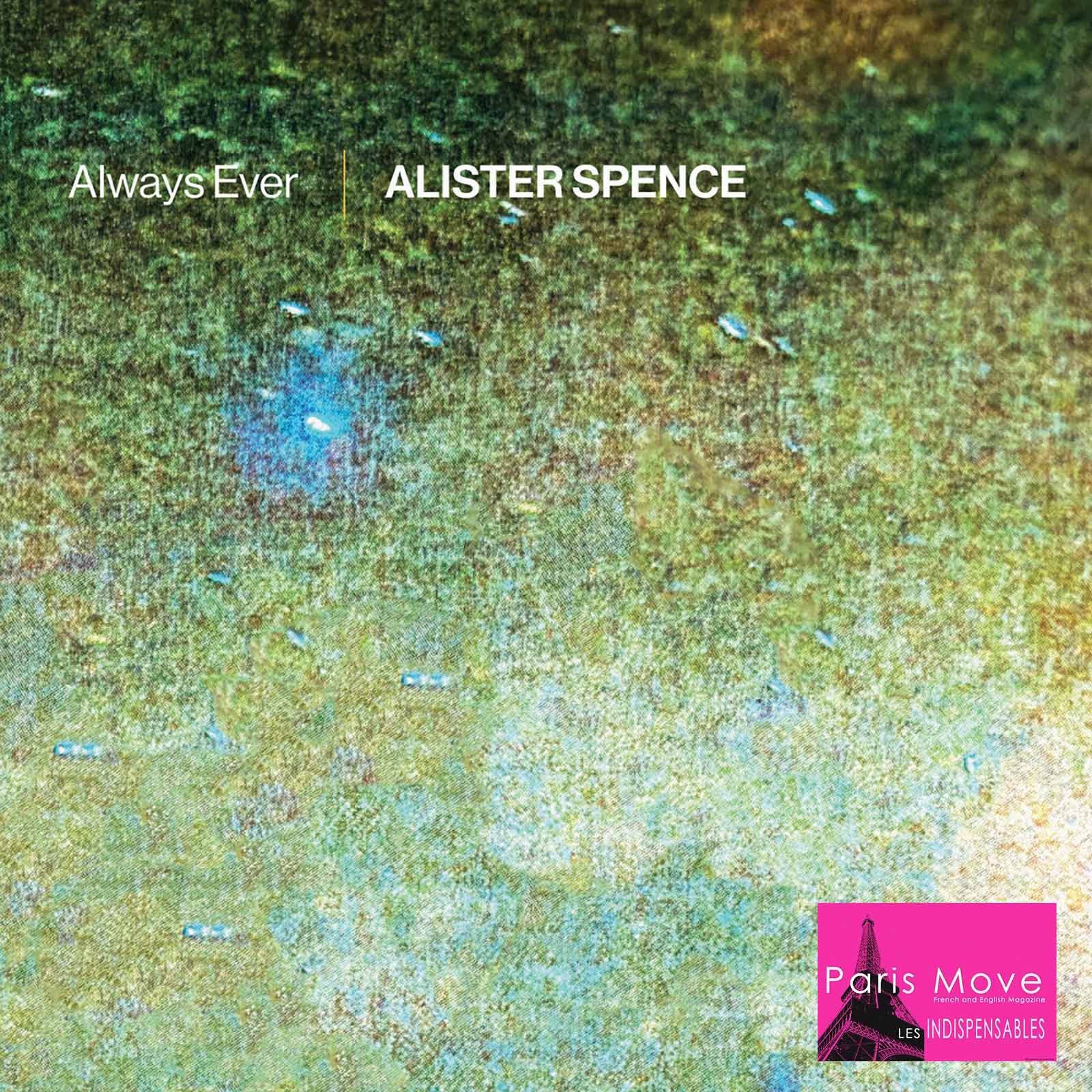
Summary: Alister Spence’s Always Ever is an ambitious improvised piano album, blending risk, texture, and experimentation into a deeply personal listening experience.
Alister Spence – Always Ever Review: A Bold Exploration of Improvised Piano
Improvisation, at its most compelling, is less about freedom than about risk, the willingness to step into the unknown without a map. Few artists embrace that uncertainty as fully as Alister Spence.
An Australian-born pianist, composer, and improviser of uncommon breadth, Spence has long occupied a quietly influential place on the international stage. His collaborations with figures such as Satoko Fujii have only deepened that reputation. In 2017, the two artists launched Kira Kira alongside trumpeter Natsuki Tamura, debuting at the Melbourne International Jazz Festival with drummer Tony Buck, a project that underscored Spence’s affinity for collective invention. Yet for all his collaborative credentials, his latest work turns decisively inward.
Set the context aside. Clear the mind. The album begins.
From its opening moments, Always Ever signals its intentions. “Mystique” emerges not as a theme but as a presence: low-register pulses, scattered tones, fragments that hover and dissolve before they fully cohere. There is rhythm, but it feels provisional, suggested rather than imposed. Silence plays as crucial a role as sound; pauses stretch, breathe, and occasionally unsettle. This is not music that guides the listener. It withholds. It resists definition. Entirely.
And yet, for those attuned to improvised forms, entry is not difficult, only disorienting. What images arise from these first gestures? A shifting landscape? Water in motion? Or something more abstract, less nameable? The answer is necessarily unstable, contingent on the listener’s own imaginative reach.
With “Determination,” a different kind of structure surfaces, though it never settles into convention. Here, Spence’s touch becomes more percussive: clusters struck in quick succession, repeated figures that flirt with minimalism before breaking apart. One hears echoes of classical phrasing, traces of jazz harmony, even hints of mechanical repetition, but none remain intact for long. Ideas are introduced only to be dismantled. Patterns form, then fracture.
This tension points to one of the album’s central paradoxes. While Satoko Fujii’s recordings often serve as extensions of her live performances, Spence’s music feels almost too expansive for the confines of recording. At times, it presses against its own boundaries, as though the physical space of the studio cannot fully contain its kinetic energy. The result is both compelling and, occasionally, frustrating: certain passages seem to demand the visual and spatial dimensions of performance to reach their full impact.
Still, the album’s ambition is unmistakable. Comprising sixteen fully improvised pieces, Always Ever extends the trajectory Spence began with his 2020 release, Whirlpool. Each piece approaches the piano differently, not just as a keyboard instrument, but as a resonant body. There are moments where strings seem to hum beneath the surface, where attacks feel closer to gestures than notes, where the instrument becomes almost sculptural in its presence.
Spence himself frames this evolution with clarity: “Over time,” he explains, “my piano practice has expanded to encompass the instrument as a whole, far beyond simply playing the keys. I’m interested in contingency. I’m interested in accidents and the effects they produce in the music; in fact, I deliberately try to provoke those accidents myself.”
That philosophy is audible throughout. This is music built on controlled instability. Accidents are not interruptions, they are catalysts. A struck note resonates longer than expected; a rhythmic figure collapses under its own weight; a silence arrives too early, or too late. Each deviation becomes material.
It is, in essence, an art of deconstruction. But deconstruction here is never an end point. It is a method of renewal. Motion, restless, continuous, defines the album, most vividly in the piano’s ceaseless transformation. Improvisation becomes exploration, not just of musical ideas but of space, texture, and perception itself.
And yet, amid this abstraction, something surprisingly organic persists. There are passages that evoke rainfall in their irregularity, others that suggest currents or tides through their cyclical motion. Tempo dissolves into something more fluid, more environmental. At times, Spence seems less a performer than a cultivator, shaping, pruning, allowing sounds to grow and recede like elements within a landscape.
This is where the album is most persuasive. And where it occasionally falters. In its most diffuse moments, the music risks losing its internal tension, drifting into gestures that feel less intentional than exploratory for their own sake. Not every experiment resolves. Not every risk pays off.
But perhaps resolution is beside the point.
What emerges, ultimately, is a deeply personal architecture, one that could not easily be replicated in a collective setting. Spence assumes every role here: composer, improviser, builder of forms that appear only to dissolve. The work feels less like a collaboration with others than a dialogue with the instrument itself.
More than a collection of pieces, Always Ever is an experience that demands participation. It asks the listener not only to hear, but to decide, to locate meaning, to question that meaning, and to return again with altered expectations. Each listening reveals something different. Or perhaps, reveals something different in us.
And that may be its quiet provocation. Not to provide answers, but to insist on the value of the search.
Because if art has any enduring function, it is not simply to move us.
It is to unsettle us, just enough to make us listen again.
Thierry De Clemensat
Member at Jazz Journalists Association
USA correspondent for Paris-Move and ABS magazine
Editor in chief – Bayou Blue Radio, Bayou Blue News
PARIS-MOVE, March 29th 2026
Follow PARIS-MOVE on X

::::::::::::::::::::::::
Musician:
Alister Spence – piano, preparations, percussion
Track Listing
1. Mystic 04:26
2. Determination 02:33
3. Play of Light 05:17
4. Distant Cousins
5. Afternoon at Rancom Street
6. Begin from the Middle
7. Rain Phase
8. Semi-Formal Garden
9. Tonal Dance
10. Halo
11. Sparkler
12. Searchlight
13. Top Spinner
14. Random Access Counterpoint
15. Talking Slowly with Lorikeets
16. Scrape Rattle Strike
Recorded at Rancom St Studios, Sydney, 28th September, 2025
Recorded and mixed by Tim Whitten
Mastered by Doug Henderson, micro-moose-berlin
Producer Alister Spence
Design Cheryl Orsini
Cover, inside cover, and disc images from
Limerance in the Afterlight by Heidi Jackson (with Nico Oxley)
All pieces copyright Alister Spence (Control, APRA/AMCOS)
All pieces were played and recorded in real time including using percussion, preparations, and removing them. There was no editing or overdubbing. The beginnings and endings of pieces are intentional and as played.