
| Jazz |
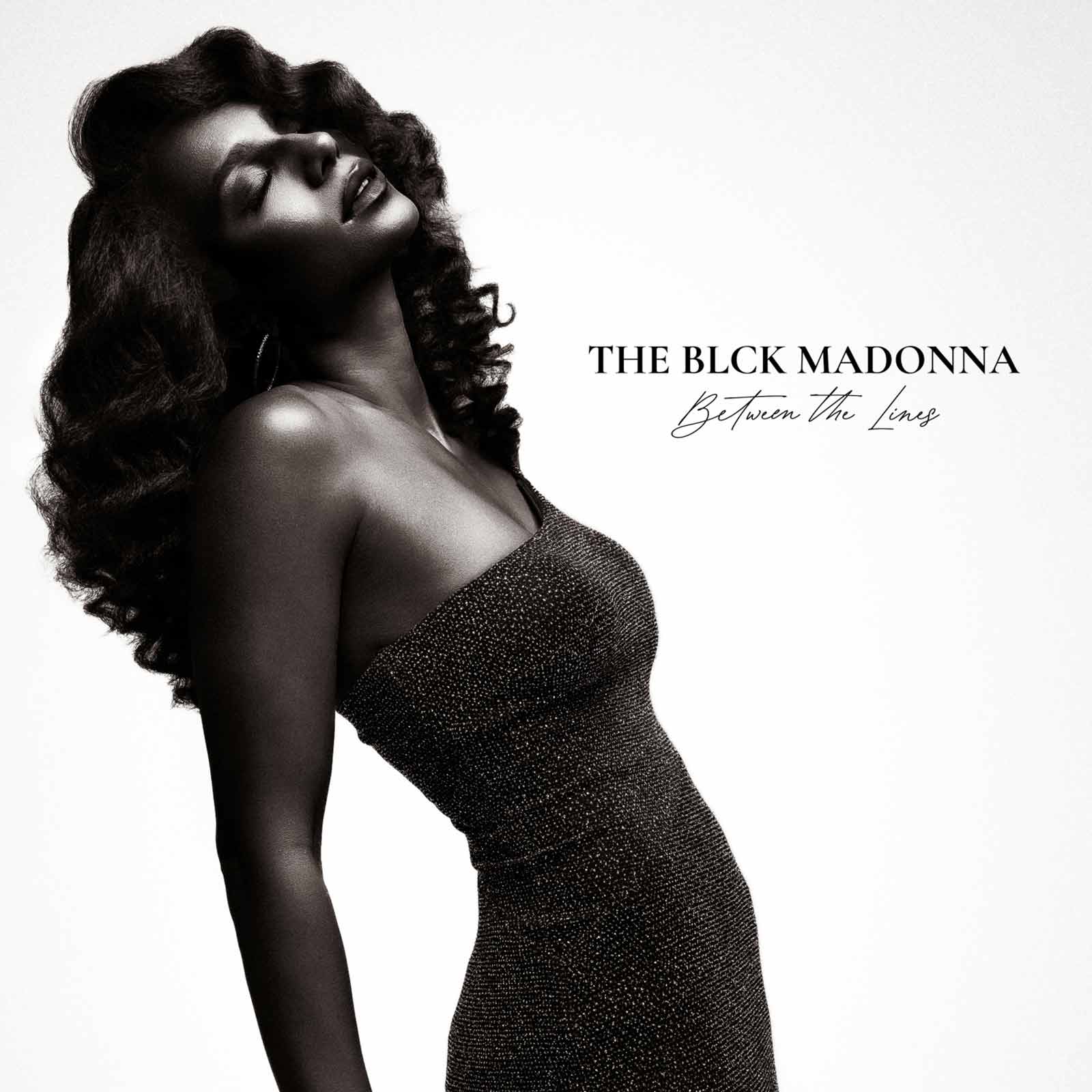
Summary : “The BLCK Madonna, aka Ana Hoffman, delivers a striking jazz debut, reinterpreting classic standards with intelligence, style, and bold artistry.”
The BLCK Madonna (Ana Hoffman): A Bold Jazz Debut Reimagining the Standards
Sometimes the fate of an album can be guessed simply by glancing at its track list. When it consists largely of well-worn standards, songs that have already been recorded hundreds of times, the odds of disappointment rise quickly. Reinterpreting such material requires far more than a pleasant voice. It demands technical command, interpretive imagination, and the rare ability to persuade listeners to hear something new in music they thought they already knew.
That is precisely the risk taken by The BLCK Madonna – the artistic name of singer Ana Hoffman, who makes her recorded debut with an album built largely on the jazz canon. Yet the first surprise arrives even before the music begins. The album cover immediately stands out. Beyond presenting an artist with striking poise, the image itself feels like a carefully composed work of art, something increasingly rare in an era when visual presentation is often treated as an afterthought.
Curiosity sparked, the disc goes into the player. Within seconds, an involuntary smile appears. This is clearly not just another vocalist passing through familiar repertoire. There is the unmistakable sense of an artist with an intellectual relationship to her craft, someone approaching jazz not merely as performance, but as interpretation.
I found myself pausing the playback of “Afro Blue” almost immediately, not out of disinterest but to read the documents accompanying the CD. They reveal the philosophy behind the name The BLCK Madonna, and in many ways they frame the entire project.
“I chose the name ‘The BLCK Madonna’ very intentionally,” Hoffman writes. “It isn’t a reference to religion, but to sacred respect. The word Madonna comes from the Italian ma donna, meaning ‘my lady.’ Historically it became associated with the Virgin Mary, not only as a religious figure but also as a symbol of dignity, feminine authority and spiritual presence. Over time, that meaning was diluted until the word referred either to something purely religious or, in some cases, something provocative. But at its root, Madonna embodies a femininity worthy of reverence. Reclaiming that word as a woman shaped by Black culture felt like a powerful act. It’s about self-authority, about complete possession of oneself, about a presence that asks permission from no one. It’s a sacred concept, but also a deeply personal one.”
After those lines, any lingering doubt quickly dissolves. The tracks begin to unfold, and with them comes the growing sense that this debut album is built on a deliberate artistic vision.
Recording a collection of standards is, in itself, a gamble. Listeners carry these songs in their memory; each new version must compete with decades of celebrated interpretations. That challenge is particularly evident in “My Funny Valentine,” a piece so frequently revisited that it has become almost dangerous territory for any singer. Generations of jazz artists, from Billie Holiday to Chet Baker, have left their imprint on the song.
Yet Hoffman approaches it not as a monument but as a conversation. Her reading restores a sense of fragility and emotional tension to the piece, elevating it through phrasing that feels deliberate and thoughtful. The result is not imitation but transformation.
In that sense, the entire album represents a form of artistic risk-taking. Surprising an audience of experienced listeners with material everyone already knows is no small feat. A beautiful voice alone would not sustain the exercise for long. What makes this project compelling is the interpretive depth behind each performance.
Listening closely, one begins to realize that Hoffman treats these standards almost the way an actor approaches a role. Whether she engages with “‘Round Midnight” or “Body and Soul,” the objective is not simply to sing the melody but to inhabit it, to uncover emotional shades that may have been overlooked in previous readings. The performances unfold like dramatic interpretations, shaped by pacing, tone and narrative sensibility.
Some listeners will undoubtedly embrace this approach; others may resist it. That reaction is not surprising. Artists who attempt to reshape familiar material rarely leave audiences indifferent.
Hoffman herself underscores the conceptual dimension of the project:
“The spelling ‘BLCK’ is deliberate as well,” she explains. “Removing the vowel creates a space. It invites a pause, a reconsideration, a moment to read between the lines. That idea flows directly into my album Between the Lines. I don’t approach jazz standards as museum pieces. I immerse myself in them as living material, allowing my identity and my emotional truth to reshape their language.”
The album’s title becomes more than a metaphor. Each song is treated as a text open to reinterpretation, a structure within which the singer explores the emotional spaces hidden beneath familiar melodies. Rather than preserving the repertoire in formaldehyde, Hoffman approaches it as a living language, flexible, evolving, and capable of absorbing new voices.
She also draws an important distinction between the artist and the person behind the name.
“Ana Hoffman is my birth name. It carries my entire history,” she writes. “But ‘The BLCK Madonna’ is the name I chose for myself. It marks the precise moment when I stopped erasing myself and began asserting who I am through my voice. Once that transformation happened, the music became clearer, and more honest.”
With this debut recording, The BLCK Madonna – Ana Hoffman, appears to secure a promising place within the intimate yet demanding world of jazz. If the album succeeds, it is largely because it refuses to treat the genre as a museum of untouchable classics. Instead, it insists that these songs remain alive.
The real test, however, may lie ahead. A first album built around standards can establish credibility, but it inevitably raises expectations. Many listeners will likely hope that Hoffman’s next project ventures into fully original territory, an album of compositions where her artistic voice can develop without the framework of familiar material.
If the imagination heard here is any indication, that future release could prove even more compelling. And should that day arrive, there is every reason to believe that the surprise awaiting listeners will once again be a welcome one.
Thierry De Clemensat
Member at Jazz Journalists Association
USA correspondent for Paris-Move and ABS magazine
Editor in chief – Bayou Blue Radio, Bayou Blue News
PARIS-MOVE, March 15th 2026
Follow PARIS-MOVE on X

::::::::::::::::::::::::
Musicians :
The BLCK Madonna – Vocals
Rafael Enciso – Upright and Electric Bass
Sam Towse – Piano
Santosh Sharma – Saxophone
Miguel Russell – Drum
TRACK LISTING
Afro Blue – 6:39 / Mongo Santamaria, Oscar Brown Jr.
Round Midnight – 7:45 (radio edit 6:47) / Thelonious Monk, Cootie Williams, Bernie Hanighen
Body & Soul – 6:57 / Johnny Green, Edward Heyman, Robert Sour, Frank Eyton
Night & Day – 4:51 / Cole Porter
Pick Yourself Up – 4:15 / Jerome Kern, Dorothy Fields
My Funny Valentine – 5:33 / Richard Rodgers, Lorenz Hart
Between the Lines – 0:31 / Rafael Enciso
Love is Here to Stay – 4:09 / George Gershwin, Ira Gerswhin