
| Jazz |
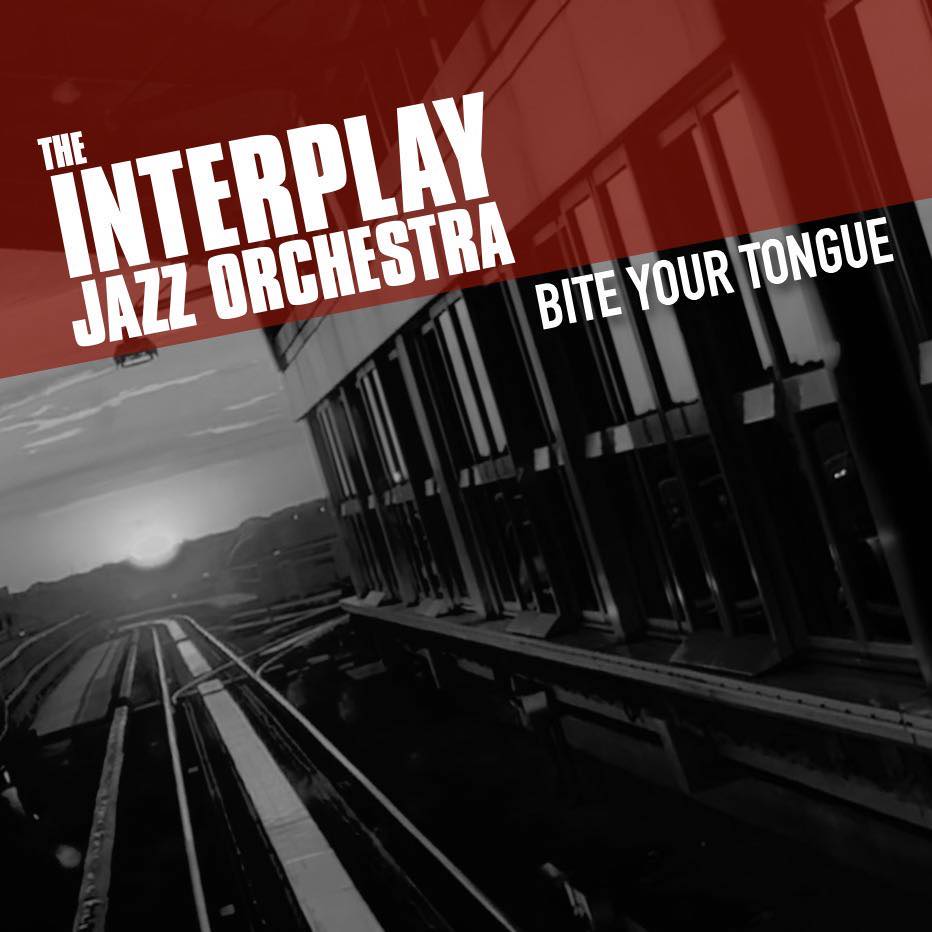
Formed in 2013, The Interplay Jazz Orchestra emerged at a moment when the modern big band was no longer content to serve merely as a custodian of swing-era grandeur. Over the past two decades, large ensembles have increasingly functioned as laboratories, refracting post-bop, funk, European jazz lyricism and contemporary classical textures through brass and reed sections once associated primarily with Count Basie and Duke Ellington. Into that evolving lineage steps this orchestra’s second album: a recording that embraces tradition without bowing to it.
From the outset, the ensemble plants its feet in the language of post-bop, those harmonically sophisticated, rhythmically agile forms that followed the bebop revolution,while allowing just enough elasticity to brush against funk. The groove never dominates, but it lingers at the edges, lending propulsion and lift. The overall effect is refreshingly unforced. This is not an album preoccupied with reinvention for its own sake; rather, it is animated by the deep satisfaction of musicians who command their idiom completely and take visible pleasure in shaping it.
The orchestra itself appears to be a mid-sized big band,roughly four trumpets, four trombones, five saxophones and a rhythm section, though detailed documentation remains elusive. Beyond a modest social media presence, the group has left little in the way of an official narrative tracing its development from 2013 to the present. That absence of biography only sharpens the focus on the music. At the helm are figures such as Joey Devassy and Gary Henderson, whose imprint is most clearly felt in the intricacy and balance of the arrangements.
Devassy, in a brief comment accompanying the release, described the ensemble’s philosophy as “conversation rather than proclamation”, a telling phrase. Henderson, for his part, has emphasized the importance of “letting the charts breathe, even when the harmonies grow dense.” Those guiding principles are audible throughout. The arrangements do not overwhelm with bombast; instead, they unfold with a patient architectural logic.
The horns, trombone, saxophone and trumpet, are the primary narrators. Each section is granted space not only for precision ensemble work but also for luxuriant, character-rich solos. These are not decorative interludes but structural pivots. In “My Foolish Heart,” the melody is introduced almost austerely before being reharmonized with subtle inner-voice movement: a shifting lattice of chords that gently destabilizes the listener’s expectations. A tenor saxophone solo follows, stretching phrases across bar lines, creating a delicate tension between rhythmic grounding and melodic freedom.
Similarly, “Night and Day” benefits from rhythmic displacement: the familiar Cole Porter pulse is nudged slightly off-center, the rhythm section teasing the beat while muted brass injects sly commentary. The effect is both surprising and enveloping. Elsewhere, one hears carefully calibrated modulations, key changes that arrive not as dramatic announcements but as organic expansions of emotional space. These techniques, while never ostentatious, reveal a sophisticated compositional hand at work.
The repertoire leans on standards, those durable pillars of the jazz canon, but the orchestra resists mere replication. Instead, it reframes them. There are passages where nostalgia drifts in like fine dust, evoking the glow of mid-century ballrooms. Yet just as quickly, contemporary gestures emerge: sharper harmonic clusters, dynamic swells that feel almost cinematic, rhythmic patterns borrowed from more modern grooves. The ensemble moves fluidly between eras, rendering categorization difficult and perhaps beside the point.
One of the album’s more evocative moments arrives with “Strasbourg–Saint-Denis,” a title that conjures a bustling Paris métro station more associated with urban grit than lyric romance. Here, however, the music is radiant, sunlit brass figures dancing over a buoyant rhythm section, saxophones trading phrases with playful agility. The irony underscores a larger truth: art has always possessed the capacity to transfigure place, to illuminate what daily life leaves unadorned.
If there is a limitation to the recording, it may be that its full dimensionality seems to strain against the confines of the studio. Those broad brass voicings, those swelling crescendos and sudden dynamic drop-offs, suggest a music designed for physical space, for air vibrating between stage and audience. One imagines the ensemble in a resonant hall, trumpets lifting in unison, trombones answering in warm counterpoint, the rhythm section locking into a groove that ripples outward. A live performance would likely magnify the music’s scale and underscore the communal interplay that Devassy alludes to.
Ultimately, this second release confirms that The Interplay Jazz Orchestra is less interested in spectacle than in craft. It honors the big band tradition while quietly extending it, balancing formal discipline with moments of poetry. Above all, it is an album of pleasure, generous, immersive and quietly ambitious. For listeners willing to enter its world, it offers not escape so much as reorientation: a reminder that even the most familiar melodies can, in the right hands, reveal new contours.
Thierry De Clemensat
Member at Jazz Journalists Association
USA correspondent for Paris-Move and ABS magazine
Editor in chief – Bayou Blue Radio, Bayou Blue News
PARIS-MOVE, February 23rd 2026
Follow PARIS-MOVE on X

::::::::::::::::::::::::
To buy this album (February 26, 2026)
Musicians :
Saxes:
Alto sax:
Chris Donohue
James Miceli tracks 2,3,4,6,8
Luke Norris tracks 1,5,7,9,10
Tenor sax:
John Marshall
Alejandro Aviles
Bari sax:
Chris Scarnato
Trombone:
Brent Chiarello
Joey Devassy
Steve Barbieri Tracks2,3,4,6,8
John Passannante tracks 1,5,7,9,10
Eric Gottesman
Trumpet:
Mike Rubenstein
Damien Pacheco
Baron Lewis
Gary Henderson
Piano: Jay Orig
Bass: Dave Lobenstein
Drums: Cameron Escovedo
Vocals: Joe Scarnato
Track Listing :
The Congregation (Featuring D. Pacheco, B. Chiarello)
Bite Your Tongue (Featuring D. Pacheco, J. Marshall, C. Escovedo)
Go Figure (Featuring A. Aviles, C. Escovedo)
My Foolish Heart (Featuring D. Pacheco)
It’s Been A Long, Long Time (Featuring J. Marshall, C. Donohue)
Strasbourg-St. Denis ( Featuring C. Donohue, B. Lewis)
The Downside Up (Featuring A. Aviles)
Night And Day (Featuring C. Scarnato, C. Donohue)
Blues For Adrian (Featuring J. Miceli, B. Lewis, J. Devassy)