
| Jazz |
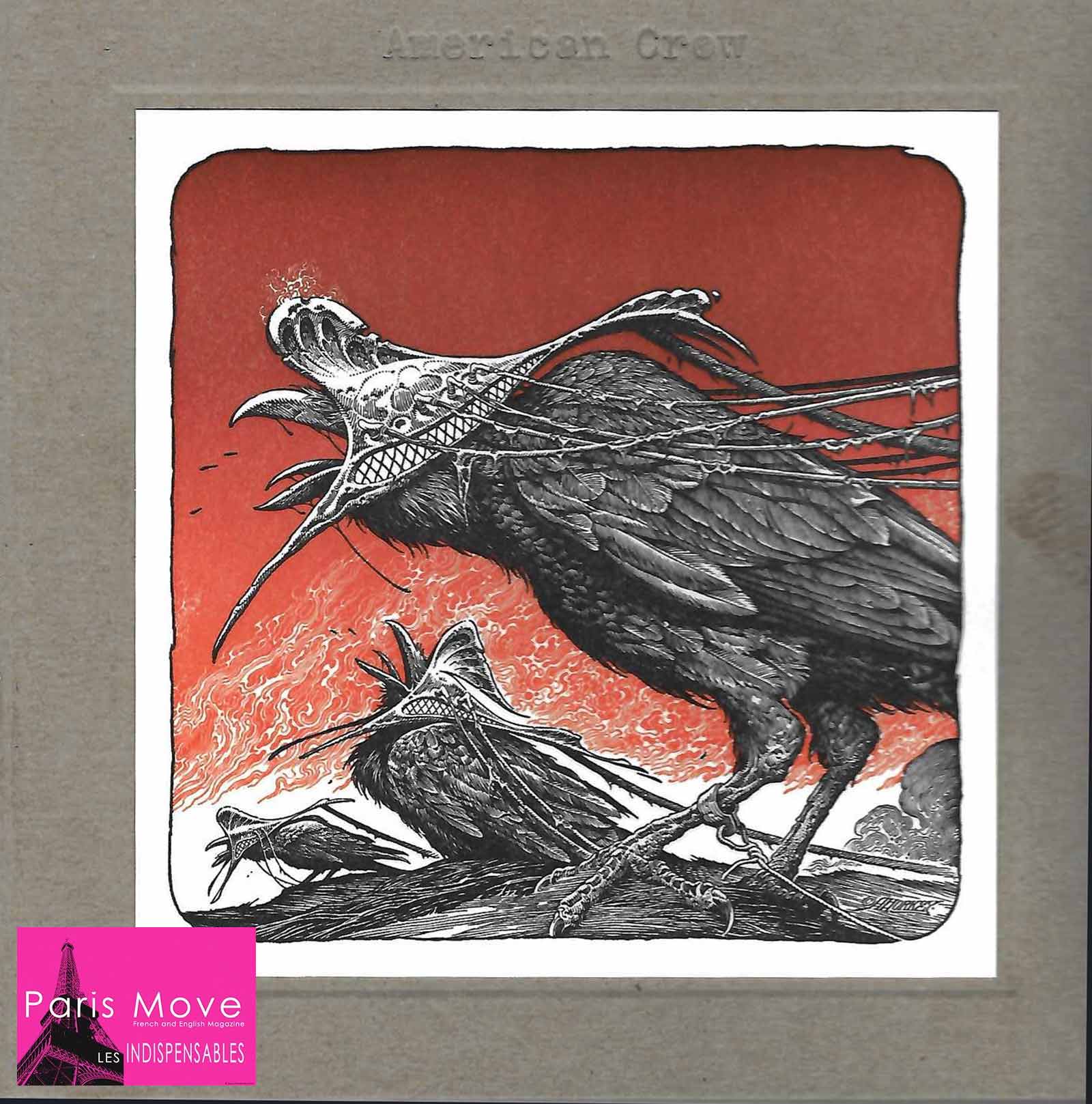
There are mornings when the light through the office window feels newly minted, when the city hum outside seems to anticipate something before you do. On this particular morning, I pressed play before I had even set down my coat. The first notes unfurled, dark and deliberate, and suddenly the day tilted toward possibility. I have admired Maria Schneider for years, yet by some quirk of circumstance her albums had never landed on my desk, until now. This new EP, expansive enough to rival a full-length release, arrives not as a minor statement but as a fully formed meditation.
Schneider, leader of the Grammy-winning Maria Schneider Orchestra and one of the most distinctive large-ensemble composers of her generation, has long treated jazz not merely as sound but as civic language. Improvisation, she suggests, is an ethical act. “Improvisation invites each of us to question our certainties and, through listening, offers the opportunity to discover ourselves. Jazz illuminates what slips away in our fragile, fractured world, making our art more relevant than ever.”
In American Crow, that fragility takes wing. From the opening measures, low reeds murmur beneath a suspended brass chord, and the ensemble gathers like a shifting sky. Do you hear the crows? They circle in clustered harmonies, first as distant shapes, then as insistent presence. For some, crows are omens; for others, they are emblems of intelligence and survival. Here, they become something more layered, figures of migration, whether forced, endured or simply natural. In a century defined by displacement, of people, of species, of certainties, the metaphor feels unmistakable.
Schneider’s orchestration is meticulous without ever feeling airless. Flutes flicker at the edge of perception. A muted trumpet threads through the texture like a solitary voice in a crowd. The brass swells not in bombast but in breath, expanding and contracting with tidal patience. Beneath it all runs a steady rhythmic undercurrent, less a beat than a pulse, as if the music itself possessed a circulatory system. Even at its most intricate, the writing remains generous, attentive to the listener’s ear. A sharpened note here, a softened interval there, each decision calibrated for color and emotional temperature.
A companion video broadens the work’s imaginative terrain, underscoring the composer’s multidisciplinary sensibility. Images of sky and motion echo the ensemble’s shifting formations, reinforcing the idea that this is not simply a composition but a meditation on movement, across borders, across seasons, across inner landscapes.
Much has been written about Schneider’s singular voice, yet what remains striking is how her music feels both architectural and intimate: a philosophical choreography of the present tense. Listening, one is reminded of the spare, searching lines of Paul Auster:
Shadow to Shadow
Against the facade of evening:
Shadow fire and silence,
Not even silence, but it is fire…
The shadow
Cast by breath.
To enter the silence of this wall,
I must leave myself behind.
The poem’s tension between presence and erasure mirrors Schneider’s art. Her writing asks the listener to relinquish certainty, to inhabit the space between sound and silence. That, perhaps, is its quiet political force: not slogan or manifesto, but attention. In a fractured public sphere, attention itself can feel radical.
Few composers of the 21st century have married intellectual rigor and emotional immediacy with such assurance. American Crow does more than reward careful listening; it enlarges it. In the slow arc of its harmonies and the lift of its final ascent, the music leaves behind not just resonance, but room, room to reflect, to question, to feel the air shift overhead.
Thierry De Clemensat
Member at Jazz Journalists Association
USA correspondent for Paris-Move and ABS magazine
Editor in chief – Bayou Blue Radio, Bayou Blue News
PARIS-MOVE, February 20th 2026
Follow PARIS-MOVE on X

::::::::::::::::::::::::
Musicians :
Reeds:
Steve Wilson
Dave Pietro
Rich Perry
John Ellis
Scott Robinson
Trumpets:
Tony Kadleck
Greg Gisbert
Nadje Noordhuis
Mike Rodriguez
Trombones:
Keith O’Quinn
Ryan Keberle
Marshall Gilkes
George Flynn
Accordion: Julien Labro
Guitar: Jeff Miles
Piano: Gary Versace
Bass: Jay Anderson
Drums: Johnathan Blake
Compositions by Maria Schneider
Track Listing :
American Crow is an EP in a creative art piece package (7 x 7″), artwork by Aaron Horkey and design by Cheri Dorr.
- American Crow – Mike Rodriguez, trumpet
- A World Lost – Jeff Miles, guitar
- field recording: American Crow vocalizations
- American Crow Revisited (alternate take) Compositions by Maria Schneider
Produced by Brian Camelio & Maria Schneider
Recorded at Power Station, May 26th, 2025
Engineered by Brian Montgomery
Assisted by Ben Miller
Edited and Mixed by Alex Venguer
Mastered by Gene Paul and G&J Audio
American Crow vocalizations recorded by Jay McGowan, Dec. 26, 2019 Tompkins, NY, Macaulay Library, Cornell Lab of Ornithology.
“America Crow” was commissioned by Emory University.
Artwork: Aaron Horkey
Package design: Cheri Dorr
Print production: Franklin Press, Inc.