
| Jazz |
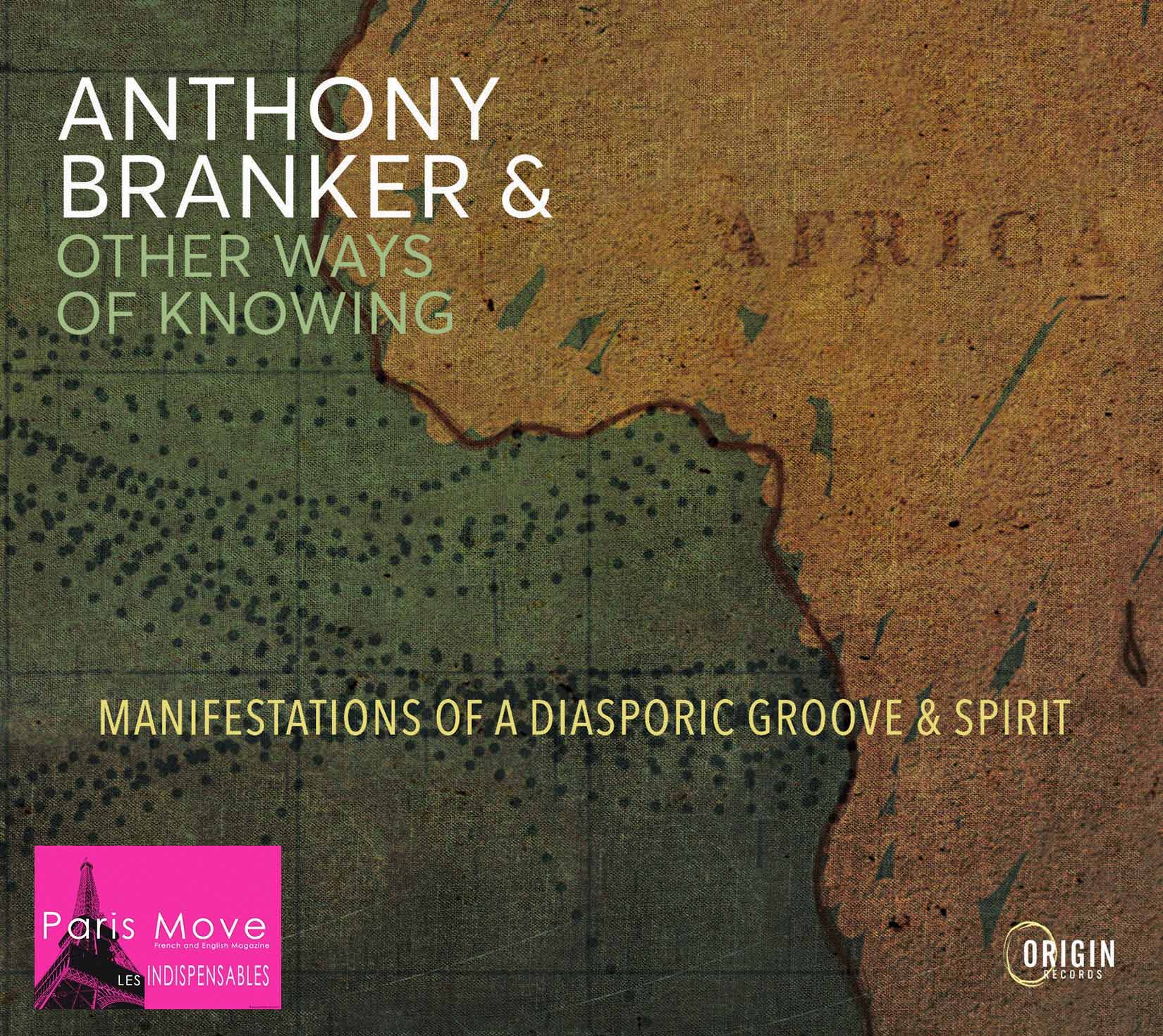
To write about Anthony Branker is to risk superlatives. And yet restraint feels almost dishonest. He stands, more than likely, among the most important and influential American composers working today, not simply because of the sophistication of his craft, but because of the intellectual and moral architecture that sustains it. Once again, Branker delivers a work that is forceful, searching, at moments even unsettled, a score that bears the imprint of an era marked by civic fracture, cultural realignment and a pervasive sense of historical acceleration. In times such as these, when democratic ideals feel strained, when public discourse hardens into echo chambers, the arts do not remain untouched. Branker’s music absorbs this turbulence and transforms it into reflection.
For Branker, composition is not merely construction; it is authorship. His music unfolds with the density and deliberation of serious literature, recalling the interior gravity of Marguerite Yourcenar or the existential lucidity of Paul Auster. Nothing is incidental. Motifs do not decorate, they interrogate. Harmonies do not resolve easily; they hover, asking questions before permitting answers. These new works carry emotion that feels less aligned with aesthetic seduction than with ethical inquiry. They breathe doubt, complexity, layered truth. Branker does not traffic in absolutes. Instead, he proposes musical theses, carefully weighed, rigorously examined, emotionally alive.
The album’s most immediate human presence arrives through the luminous voice of Aimee Allen. In one particularly arresting passage, a spare harmonic field opens beneath her, low brass suspended in restrained dissonance while muted piano figures circle a fragile tonal center. Allen enters almost tentatively, her phrasing elongated, resisting rhythmic certainty. The effect is one of suspended time. As the orchestration gradually thickens, woodwinds adding a subtle shimmer, percussion brushing the margins rather than asserting pulse, the voice becomes both narrator and conscience. It is in such moments that the album’s emotional core reveals itself: not as spectacle, but as interior reckoning.
To compose is among the loneliest of vocations. It demands the translation of private turbulence into shared language. Over the years, Branker has grown not only in depth but in clarity. The essential now outweighs the ornamental. His intentions feel sharpened, distilled. There is a quiet bravery in this evolution. For an artist to expose his interior landscape, and then allow the work to live beyond him, is an act of trust. Increasingly, I find it difficult to write about Branker with conventional critical distance. The deeper one enters his universe, the more porous the boundary between reviewer and witness becomes. Analysis begins to feel like participation.
This work deserves confrontation, with listeners, with live acoustics, with collective breath. It carries an urgency equal to the impulse that produced it. Branker’s language moves fluidly between traditions. Counterpoint suggests classical discipline; rhythmic elasticity gestures toward the outer territories of contemporary jazz. Listeners versed in both idioms will recognize the synthesis immediately, yet the music does not exclude the uninitiated. Even without technical vocabulary, one can feel the architecture, the tension and release, the interplay of density and space, the recurring thematic threads that bind disparate movements into a coherent whole.
The musicians gathered for the project are not decorative collaborators; they are interpreters aligned with Branker’s philosophical and aesthetic vision. Their improvisations do not fracture the structure but illuminate it from within. The ensemble functions less as accompaniment than as collective inquiry.
One inevitably recalls What a Place Can Be For Us, an earlier landmark in Branker’s catalog. That recording articulated space, geographic, communal, spiritual, as possibility. This new album feels like its continuation, though not its repetition. If the earlier work asked where we belong, this one seems to ask who we become under pressure. Branker’s creative gestation is deliberate; he does not rush toward statement. With time, his language has moved closer to essence. Paradoxically, this inward distillation brings him into sharper dialogue with society at large. His propositions are measured, intellectually rigorous, yet deeply felt.
Comparison proves difficult. Branker inhabits a universe distinctly his own, in perpetual expansion. Just as one believes one understands the contours of his compositional voice, a new work recalibrates expectations. This is not music produced for visibility or career maintenance. It is essential music, music that enlarges the listener’s interior life. In another stylistic sphere, only Maria Schneider evokes in me a comparable sense of conviction: that composition can still aspire to moral and imaginative consequence.
If there is a final recommendation, it is this: seek the work not only on recording but in performance. Music of this scale acquires additional dimension in shared space, the resonance of brass against architecture, the fragile hush before a vocal entrance, the collective silence at a movement’s close. Such experiences remind us that art, at its highest level, is not content but encounter.
It is time, perhaps past time, to discover Anthony Branker, if you have not already. In an age saturated with distraction, he offers concentration. In a climate of certainty, he offers thoughtful doubt. And in a cultural moment hungry for meaning, he offers music that thinks as deeply as it feels.
Dear Anthony: thank you for this searching, luminous work. May you continue, for many years to come, to challenge and enlarge us with art of such power.
Thierry De Clemensat
Member at Jazz Journalists Association
USA correspondent for Paris-Move and ABS magazine
Editor in chief – Bayou Blue Radio, Bayou Blue News
PARIS-MOVE, February 19th 2026
Follow PARIS-MOVE on X

::::::::::::::::::::::::
Musicians :
Steve Wilson – alto & soprano saxophones/ flute
Pete Mccann – electric & acoustic guitars
Simona Premazzi – piano
John Hébert – double bass
Rudy Royston – drums
Aimée Allen – vocals (2, 5)
Anthony Branker – composer & musical director
Track Listing:
1 The Children of Lyles Station 9:11
2 Song for Marielle Franco 8:03
3 Beautiful Dancing People 8:32
4 Freedom Water March (at Igbo Landing) 9:44
5 Stolen Sisters 8:25
6 When Past is Prologue 7:03
7 Afro Mosaic Soul Babies 7:07
All music by Anthony Branker (J Prof Music, BMI)
(5) lyrics by Aimée Allen
Produced by Anthony Branker
Recorded by Mike Marciano of Systems Two, NY at Samurai Hotel Recording Studios, Astoria, NY, September 25, 2025
Mixed & Mastered by Mike Marciano & Anthony Branker at Systems Two, NY
Cover design & layout by John Bishop