
| Jazz |
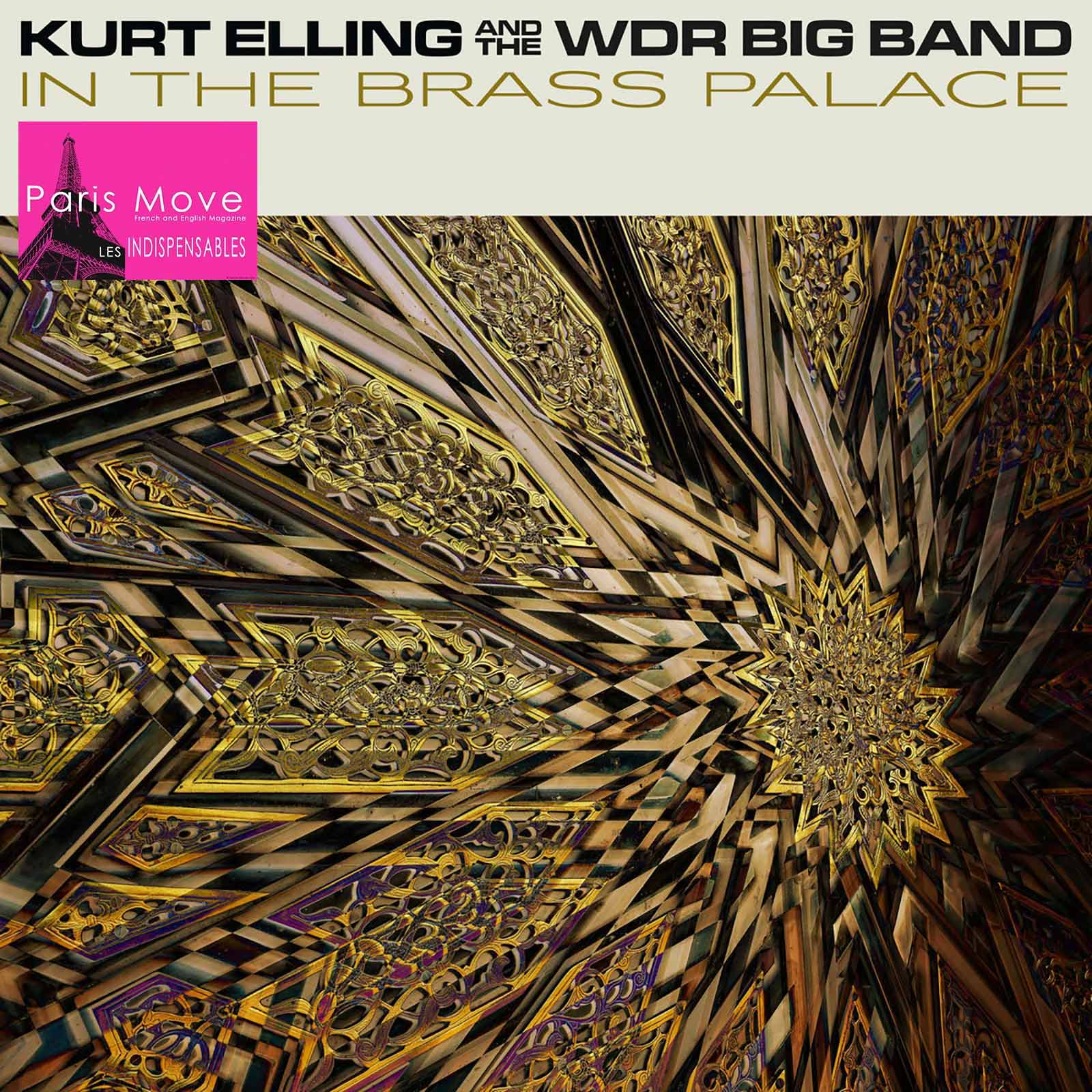
Kurt Elling, the Big Band, and the Expanding Horizon of Vocal Jazz
Though a Grammy Award winner, Kurt Elling remains, at heart, a lifelong enthusiast of the voice and of jazz itself, an artist who has consistently elevated everything he touches.
For several weeks, excerpts have circulated online from a live recording made at Germany’s WDR, home to the internationally celebrated WDR Big Band. Over time, the ensemble has become a source of national pride and a fixture on the international jazz circuit, hosting artists ranging from Yellowjackets to guitarist Nguyên Lê. For American readers unfamiliar with WDR, the institution can be thought of as a cultural hybrid, combining elements of NPR and PBS in its public mission and programming.
A Big Band Setting That Breathes
This album, featuring arrangements by Bob Mintzer and Elling himself, stands apart not merely for its ambition but for its sense of play. Elling sounds not only confident but delighted, shaping phrases with wit and agility, trading lines with the orchestra as though engaged in a spirited conversation.
One hears this immediately in the opening passages of several tracks, where the brass rises in broad, cinematic swells before dropping away to leave Elling nearly alone, suspended over a pulse of bass and brushed cymbals. In another moment, a saxophone section builds a slow, velvet-toned crescendo, only for Elling to enter softly, almost speaking the first line, drawing the listener inward before unleashing a soaring, sustained note that seems to ride the entire orchestra like a cresting wave.
There are also passages of striking rhythmic tension: muted trumpets snapping against the beat while the rhythm section shifts subtly underneath, giving Elling space to stretch syllables and bend time in ways that feel at once spontaneous and inevitable. These are not merely performances but small dramatic scenes, unfolding in real time.
The recording arrives at a particularly dynamic period in Elling’s career. Last autumn, he made his Broadway debut to wide acclaim in the role of Hermes in the musical Hadestown on Broadway, an experience that seems to have deepened his sense of narrative pacing and theatrical color, qualities that resonate throughout this project.
“Recording an album with a big band had been on my wish list almost since my very first record,” Elling has said. “I’ve been extraordinarily fortunate to work with some of the greatest big bands in the world, and I’ve had a long history with the WDR Big Band, a group of exceptional virtuosity.”
A Tradition, and a Departure
Elling’s influence on vocal jazz is difficult to overstate. Modern singers such as Michael Mayo have emerged in a landscape shaped in part by Elling’s insistence that the voice can function not merely as a vehicle for melody, but as an improvising instrument equal to any horn.
In this, he stands in a lineage that includes pioneers like Jon Hendricks, whose vocalese transformed bebop solos into lyrical narratives, and Mark Murphy, whose elastic phrasing and daring harmonic sense expanded the emotional range of jazz singing. Yet Elling’s approach is distinctly his own, more architectural, perhaps, in its shaping of large musical forms, and more overtly literary in its use of poetry and spoken text.
On this album, the repertoire may appear more traditional than some of his earlier, more experimental work. What is less conventional is the way these pieces are transformed into something approaching a jazz opera, with the orchestra moving in sweeping arcs and Elling inhabiting each lyric as though it were a dramatic monologue. The WDR Big Band, for its part, plays with unusual freedom, responding to Elling’s vocal intentions as if collectively improvising a single, evolving gesture.
“I always try to create something new, if possible,” Elling explains. “I wanted the spirit of this album to meet expectations of what a big band can be, while also breaking free from those conventions.”
The Art of Reinterpretation
Among the album’s most striking moments is Elling’s return to “I Like the Sunrise,” a composition by Duke Ellington that he first recorded on Nightmoves in 2007. Where the earlier version was intimate and restrained, this new interpretation unfolds in luminous orchestral colors, emphasizing the optimistic lyricism of the piece, originally part of Ellington’s Liberian Suite of 1947.
Here, Elling’s vocalese weaves together a poem by Rumi with a recorded solo by the late Chicago saxophone legend Von Freeman, creating a layered meditation on memory, gratitude, and continuity in jazz tradition.
“I’m only an intermediary,” Elling has said. “For years I searched for a way to honor Von, to thank him and show my affection.”
Looking Ahead
If this album proves anything, it is that Elling remains not only one of the defining voices of the 21st century, but also one of its most restless musical thinkers. Working with a large orchestra is among the most delicate of artistic challenges, requiring a rare combination of authority and openness. Elling brings both in abundance.
More intriguingly, the recording suggests new possibilities for the future of big-band jazz itself. In an era when large ensembles often struggle to find audiences and funding, projects like this point toward a path forward: collaborations that embrace theatricality, literature, and cross-genre storytelling without sacrificing swing, improvisation, or emotional immediacy.
It is tempting to imagine Elling pursuing even more ambitious works, extended suites, staged jazz productions, perhaps further ventures that blur the line between concert hall and theater. If so, this album may come to be seen not merely as a triumph in its own right, but as a signpost toward the next chapter of an art form still capable of renewal.
And if any doubts linger, one need only listen: Elling’s voice, supple and searching, continues to carry forward a tradition that stretches from Frank Sinatra to the present day, still evolving, still alive.
Thierry De Clemensat
Member at Jazz Journalists Association
USA correspondent for Paris-Move and ABS magazine
Editor in chief – Bayou Blue Radio, Bayou Blue News
PARIS-MOVE, February 16th 2026
Follow PARIS-MOVE on X

::::::::::::::::::::::::
Musicians :
Kurt Elling – voice
Bob Mintzer – saxophone, conductor
WDR Big Band Cologne:
Piano: Billy Test
Bass: John Goldsby
Drums: Hans Dekker
Trumpets: Wim Both, Rob Bruynen, Andy Haderer, Ruud Breuls, Carlo Nardozza ,
Trombones: Jonathan Böbel, Raphael Klemm, Andy Hunter, Mattis Cederberg ,
Saxes/ Woodwinds: Johan Hörlén, Karolina Strassmayer, Ben Fitzpatrick, Paul Heller, Jens Neufang
Track Listing :
Steppin’ Out
Desire
My Very Own Ride
I Like The Sunrise
They Speak No Evil
Current Affairs
Production & Recording Info
Recorded Oct 1-5 2024 – Köln (D), Studio 4
Produced by Kurt Elling and Christian Schmitt for WDR Big Band
Executive Producer: Arndt Richter for WDR Big Band , Bryan Farina for Big Shoulders Records
Producer : Christian Schmitt Recording Engineer: Walter Platte Recording Technician: Dirk Franken Mixed and Mastered by: Christian Schmitt
Package Design: Spencer Cole Porter
℗ A production of Westdeutscher Rundfunk, 2025
© 2026 WDR mediagroup GmbH, under exclusive license to Big Shoulders Records