| Jazz |
A Trio Beyond Categories: Andy Emler and the Art of Collective Sound
Among the many ensembles created by Andy Emler, the Trio E.T.E. may be the most musically distinctive and conceptually demanding. Formed in 2002 with drummer Éric Échampard and double bassist Claude Tchamitchian, the group brings together three musicians who move with a shared sense of direction, balancing improvisation and composition in a way that has become central to Emler’s artistic identity.
This is music shaped by poetic and urban sensibilities inherited from the twentieth century yet firmly rooted in the present. Nostalgia plays little role here. Instead, the trio’s work feels animated by urgency, curiosity, and a restless desire to push form and language forward.
A Composer Shaped by Many Worlds
Born and raised in Paris, Emler first encountered music through rock before entering the Conservatoire National Supérieur de Musique, where he studied composition and graduated with a prize in counterpoint.
Over the decades he has worked across a wide spectrum of styles and ensembles, collaborating with major figures in European jazz and touring internationally. His work has ranged from large-ensemble writing to chamber settings, theater music, and solo piano projects.
In 1989 he founded the Andy Emler MegaOctet, a large ensemble that has toured continuously in France and across Europe and served as a laboratory for his compositional ideas.
Recognition has followed: multiple Django d’Or awards, two Victoires du Jazz, and in 2014 the title of Chevalier des Arts et des Lettres, reflecting both his artistic influence and his contribution to contemporary music.
What defines Emler’s work, perhaps more than any single stylistic marker, is a sustained search for balance: between improvisation and written form, between direction and collective initiative, and between intellectual rigor and expressive freedom.
The Trio: Piano, Bass, Drums, and Something More
At its core, the Trio E.T.E. is a piano trio, but describing it that way hardly captures the reality of the music.
The piano often sets the harmonic landscape, but rarely dominates it. The double bass, bowed or plucked, shapes long, resonant lines that sometimes feel almost narrative in character. The drums shift constantly between propulsion and color, at times erupting with the force of urban energy, at others dissolving into textures so delicate they seem to suspend time itself.
Listening closely, one notices how the trio frequently blurs traditional roles. Rhythm may emerge from the piano, while harmony and momentum flow from bass and drums. The music advances in waves rather than predictable patterns, creating moments when the listener may struggle, productively, to determine where the pulse truly lies.
This interplay reflects Emler’s long-standing interest in collective expression. Each musician contributes not merely as a performer but as a co-architect of the sound.
A Discography That Traces an Evolution
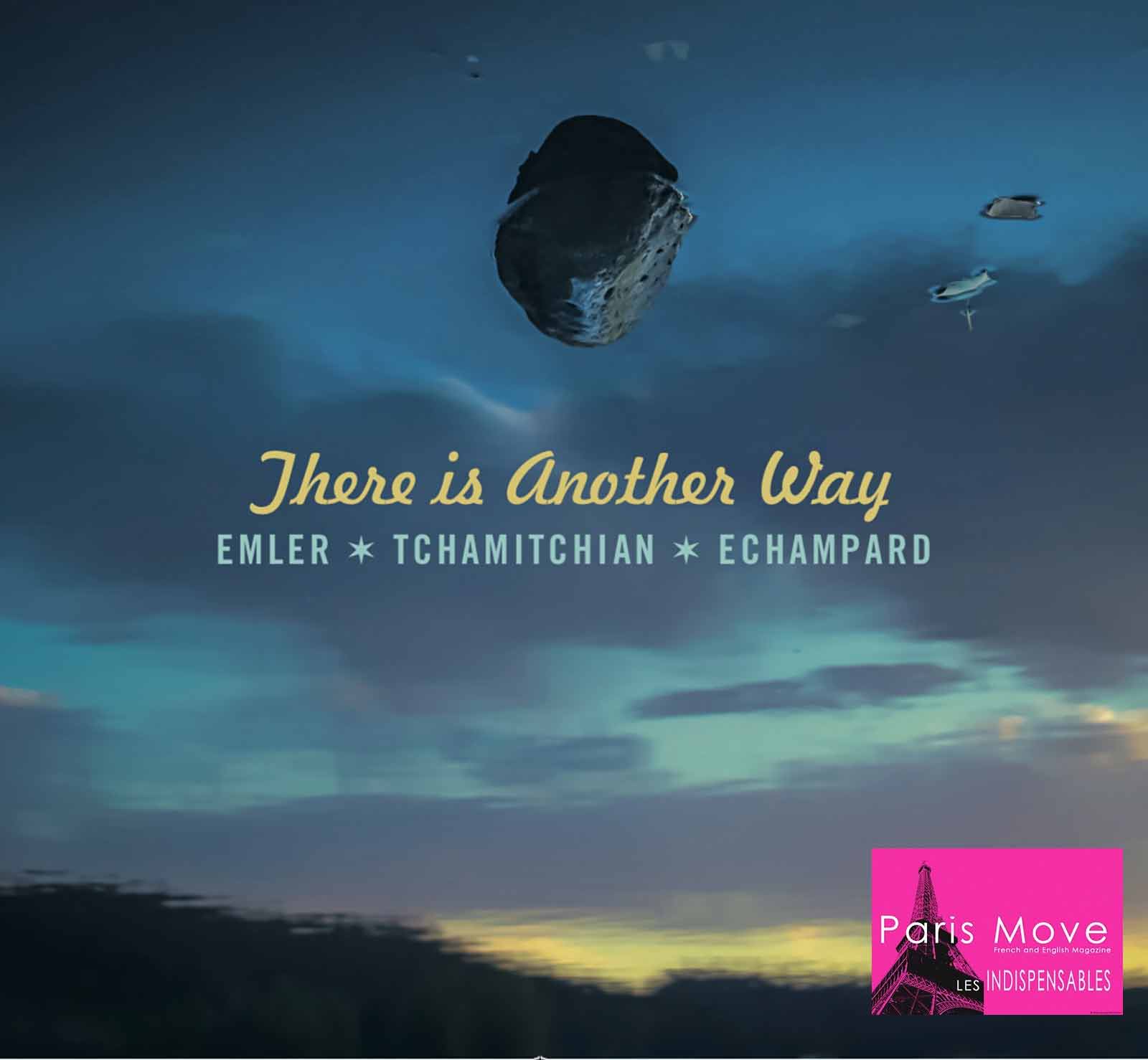
The trio’s latest recording, There Is Another Way (2026), follows a long sequence of releases that chart both continuity and change in Emler’s writing. Previous albums, from early trio recordings to large-ensemble works and solo projects such as My Own Ravel, reveal recurring ideas that reappear in new forms, sometimes like fleeting echoes embedded within more overtly jazz-driven passages.
This new album suggests a further evolution. Where earlier recordings sometimes emphasized structure, here the trio often seems to move with greater openness, allowing forms to expand, dissolve, and reassemble in real time.
Artistic Kinships
Within the landscape of contemporary jazz and composition, Emler’s work shares affinities with artists who pursue similarly uncompromising paths, figures such as Dave Liebman, with whom he has collaborated, and Maria Schneider, whose large-scale writing also places artistic integrity above commercial calculation.
What unites such musicians is not a common style but a common stance: a refusal to dilute complexity, and a belief that audiences are capable of deep listening.
Listening to the Album
To approach There Is Another Way is to encounter music that rewards attention. Certain passages unfold in dense layers of rhythm and harmony; others open into spare, almost suspended moments in which silence becomes part of the composition.
One hears, at times, the legacy of classical writing, at others the spontaneity of jazz improvisation, and occasionally echoes of folk or popular idioms, never quoted directly, but absorbed into a personal language.
This is not music designed for casual background listening. It demands, and repays, concentration.
Why This Trio Matters
In today’s European creative music scene, the Trio E.T.E. occupies a distinctive place. It demonstrates how the piano trio format, one of jazz’s most traditional forms, can still become a space of exploration and risk.
Emler has never been an artist who creates projects merely to add to a catalogue. His work reflects something closer to necessity, a conviction that composition and performance are ways of understanding the world.
Three exceptional musicians, working beyond convention.
An album for listeners who believe that the word art still carries weight, and that music can still challenge, surprise, and enlarge the imagination.
Thierry De Clemensat
Member at Jazz Journalists Association
USA correspondent for Paris-Move and ABS magazine
Editor in chief – Bayou Blue Radio, Bayou Blue News
PARIS-MOVE, February 16th 2026
Follow PARIS-MOVE on X

::::::::::::::::::::::::
Musicians :
Andy Emler – compositions, Piano
Claude Tchamitchian – Contrebasse
Eric Echampard – Batterie
Track Listing :
There is an other way
Incipit
Drum habits die hard
Enough
The hard way
There is our way
Mess around the mood