| Chanson |
A Voice Against the Clock: Michael Moody’s Minimalist Homage to the American Songbook
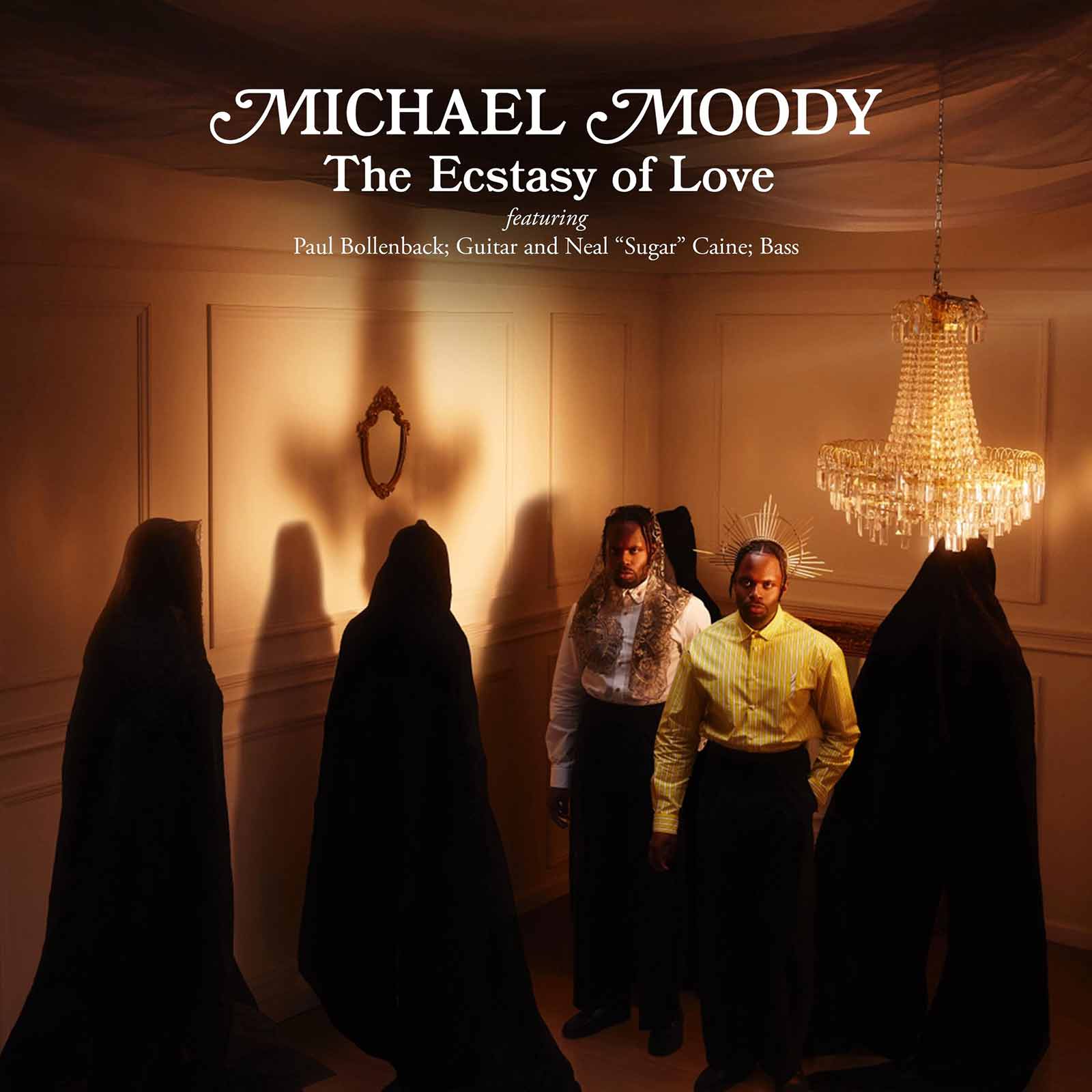
Ordinarily, I tend to dismiss albums that contain no original compositions. In an era when authenticity is so often measured by songwriting credits, recordings built entirely on reinterpretation can feel more archival than creative. Yet the latest album by singer Michael Moody manages to escape that fate, thanks above all to the undeniable quality of his voice and the clarity of its artistic intention.
The most evident risk of this recording lies in its stark acoustic minimalism. The spare arrangements, voice, guitar, and double bass, leave nowhere to hide. Every breath, every inflection, every shift in tone becomes part of the architecture of the music. Such an approach inevitably recalls an earlier tradition, familiar to older listeners: the years following the Second World War, when celebrated performers frequently recorded albums of standards, songs that did not belong to them but had already become part of the collective memory. Moody’s album follows in that lineage, reviving a format that once flourished and then seemed, for a time, to disappear.
A crooner and a tenor, Moody draws influence from an eclectic constellation of artists: Carmen McRae and Billie Holiday among vocalists, Sonny Stitt and Dexter Gordon among instrumentalists. Over the years, this New York, born singer has built a solid reputation, distinguished in part by his use of classical vocal technique applied to songs that most listeners already know by heart.
With accompaniment stripped to guitar and double bass, credibility depends almost entirely on vocal command. It is a demanding format, one that exposes weakness instantly. Moody meets the challenge fully, delivering performances that are both disciplined and expressive, controlled yet warm.
At a moment when the world seems in such need of tenderness, this album arrives like a modest but genuine gift. The production is consistently refined; the instrumental playing is sensitive and balanced, and the voice remains the undeniable center of gravity. Nothing feels excessive, and nothing feels neglected. Instrument and voice exist in quiet equilibrium.
The project can best be understood as an homage to the American song tradition, a journey through successive eras in which the work of George Gershwin intersects with that of Carl T. Fisher, Irving Gordon, Johnny Green, and many others. The minimalist arrangements suit the repertoire well. Like many classical performers, Moody has created a program that could easily be transposed into intimate venues, where audiences might gather not for spectacle but for atmosphere: a small stage, a dimly lit room, a glass in hand, and the quiet pleasure of hearing a beautiful voice carried by elegant accompaniment.
In this sense, the album feels almost outside of time, far removed from the restless pulse of smartphones and glowing screens. It invites listeners to slow down, to listen closely, to inhabit the space of a song rather than merely consume it.
Inevitably, the recording may appeal more strongly to listeners with an affinity for classical music than to those who favor contemporary jazz. The structure itself is unusual by modern jazz standards; this is far removed from the adventurous vocalese of Kurt Elling or the stylistic fluidity of Michael Mayo. Instead, Moody offers a respectful return to an earlier aesthetic, executed with care and fidelity to the craft.
It is also a departure from the energy he has displayed in clubs such as Smalls and Dizzy’s in New York. Yet Moody’s voice has always allowed him to reach different audiences, and his career reflects that versatility. Collaborations with musicians as varied as Randy Brecker and Sullivan Fortner testify to an artist comfortable moving across stylistic boundaries.
For these reasons, the album should be taken for what it is, and not for what it is not. It does not seek to reinvent jazz or to redefine the vocal tradition. Instead, it offers a finely wrought demonstration of vocal artistry, something those already familiar with Michael Moody have long recognized.
Reflections and Suggestions
If there is one area in which a project of this kind might evolve further, it lies in the delicate balance between reverence and reinterpretation. Minimalism is compelling, but the inclusion of one or two subtly reimagined arrangements, perhaps a change in tempo, a reworked harmonic passage, or a more daring phrasing, could add moments of surprise without compromising the album’s coherence.
A broader emotional pacing across the program might also strengthen its impact. When every performance is intimate and restrained, individual tracks risk blending together in the listener’s memory. A single piece with greater rhythmic drive or a more pronounced dynamic rise could provide welcome contrast.
Another possibility would be the inclusion of a brief instrumental interlude. A guitar-and-bass performance placed midway through the record could serve as a kind of palate cleanser, allowing the ear to reset before returning to the voice. Many classic vocal albums used this device to great effect.
The storytelling dimension of the repertoire also offers fertile ground. Because these songs come from different eras of American songwriting, listeners might be drawn even deeper into the experience through liner notes, spoken introductions in concert, or contextual material that illuminates the lives of the composers and the histories of the songs themselves.
There is also the question of atmosphere. Recording one or two tracks in a live setting, perhaps in a small room with a carefully chosen audience, could bring an additional layer of spontaneity and air to future projects, creating a contrast with the precision of studio recordings.
Finally, clarity of presentation remains essential in bringing such a work to a broader audience. A minimalist tribute album benefits greatly from a clearly articulated concept, one that allows listeners and critics alike to understand immediately the artistic intention: not innovation for its own sake, but the celebration of melody, poetry, and the enduring power of a human voice.
Thierry De Clemensat
Member at Jazz Journalists Association
USA correspondent for Paris-Move and ABS magazine
Editor in chief – Bayou Blue Radio, Bayou Blue News
PARIS-MOVE, February 9th 2026
Follow PARIS-MOVE on X

::::::::::::::::::::::::
Musicians :
Michael Moody-vocals
Paul Bollenback-guitar
Neal “Sugar Caine” bass
Track Listing :
The Nearness Of You
Embraceable You
Unforgettable
Easy To Love
Body And Soul
I’m Lost
Good Morning Heartache
Don’t Explain
Ghost Of A Chance
You’ve Changed
I’m Gonna Lock My Heart
Old Rugged Cross