| Jazz |
Like in the United States, a new generation of musicians is taking flight across Europe, producing work that is both striking in its ambition and rigorous in its execution. At the center of this quiet renaissance is a cohort of artists whose music draws freely from classical tradition, pop immediacy, and folk introspection, all gathered beneath the wide, porous banner of ultra-contemporary jazz. Among the most compelling of these voices is Mammal Hands, a trio formed in Norwich in 2012 that has steadily become emblematic of how European jazz is evolving in the 21st century.
From the outset, Mammal Hands signaled that they were operating on a different wavelength. Early praise from influential figures such as Bonobo, Tom Ravenscroft, Jamie Cullum, and Gilles Peterson was less a marketing boost than a recognition of a shared intuition: this was a group capable of bridging scenes, audiences, and aesthetics without diluting its artistic core. Over the course of five critically acclaimed albums released on Gondwana Records, including Gift from the Trees (2023), the trio cultivated a loyal international following and earned a reputation for live performances that are intense, immersive, and almost ritualistic in their effect.
That immersive quality has always been central to Mammal Hands’ appeal, and it comes into even sharper focus with their latest chapter on the ACT label. More than a change of address, the move feels like a statement of intent. The production is of exceptionally high caliber, designed not to polish the music into submission but to open it up spatially. The listener is placed at the very center of the trio, as if a chair had been set down among the musicians, allowing every pulse, resonance, and harmonic shift to unfold from within. It is an experience that borders on the dystopian, not in a narrative sense, but in its ability to dislocate the listener from passive consumption and demand full presence.
At the heart of Mammal Hands are brothers Nick Smart on piano and Jordan Smart on saxophone, whose telepathic interplay has long defined the group’s sound. The departure of drummer Jesse Barrett in 2024, however, forced a moment of reckoning. Rather than attempting a seamless replacement, the trio used the transition to interrogate its own essence. Enter Rob Turner, who now serves as the group’s rhythmic backbone.
“We’ve known Rob since the very beginning, more than ten years ago,” Nick Smart explains. “We all came up through the British jazz scene together, sharing instincts and musical curiosities. We needed to rediscover the soul of our music, and Rob turned that process into something that both preserves our heritage and allows it to evolve.”
On the surface, Mammal Hands’ music can appear disarmingly accessible. The melodies are clear, the grooves hypnotic, the structures seemingly straightforward. Yet this accessibility is something of a sleight of hand. Beneath it lies a sophisticated architecture built on repetition, subtle variation, and long-form development. At times, the music evokes the eerie propulsion of Goblin, the Italian group whose soundtracks haunted Dario Argento’s films in the 1970s, though here those shadows are refracted through a thoroughly modern sensibility. Listeners will inevitably bring their own cultural frameworks to the experience, finding echoes across genres and eras. Still, one influence feels almost unavoidable: Philip Glass, whose minimalist language of cyclical progression seems to hover quietly over the trio’s work.
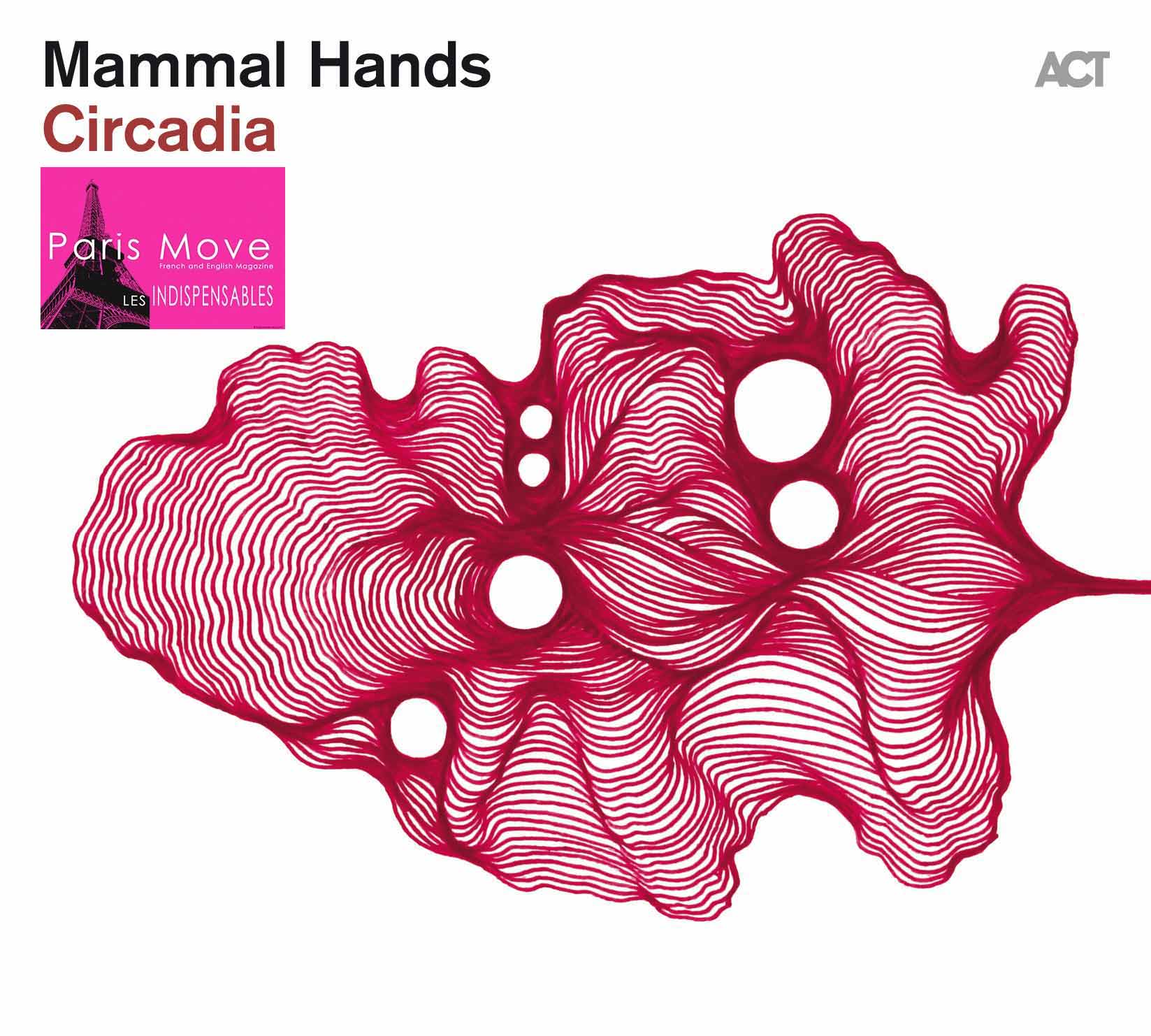
That sense of cyclical motion, of return and renewal, extends beyond the music itself. It is embedded in the album’s title, which alludes to circadian rhythm, and mirrored in the band’s transition from Gondwana to ACT. For Turner, the symbolism is especially potent. “The Esbjörn Svensson Trio has been one of my greatest influences,” he says. “Releasing an album on ACT feels like a return to the source and a new beginning at the same time. It’s one of the most meaningful moments of my career.”
Taken as a whole, this album marks a decisive turning point for Mammal Hands. Everything feels as though it has been stripped back, deconstructed, and reassembled with renewed purpose. Rhythm carries the sound; the sound, in turn, hovers and envelops the listener. These are not gestures toward novelty for its own sake. Rather, they reflect a broader truth about contemporary creation: music today rarely invents from nothing, it advances by recycling cultures, reorganizing them through personal vision, intuition, and context. In that process lies the true engine of 21st-century creativity.
In this sense, Mammal Hands stand not only as a successful trio navigating a pivotal transition, but as a case study in the wider European jazz renaissance, one that mirrors developments in the United States while retaining its own distinct identity. Their latest release on ACT does more than document a band in motion; it invites the listener into a shared space, where past influences, present instincts, and future possibilities converge.
Thierry De Clemensat
Member at Jazz Journalists Association
USA correspondent for Paris-Move and ABS magazine
Editor in chief – Bayou Blue Radio, Bayou Blue News
PARIS-MOVE, February 4th 2026
Follow PARIS-MOVE on X

::::::::::::::::::::::::
Musicians :
Nick Smart, piano
Jordan Smart, saxophone
Rob Turner, drums
Track Listing :
01 Window to Your World 05:15
02 Helios 04:11
03 Alia’s Abandon 04:22
04 Paper Boats 04:11
05 Fallow Tide 02:24
06 Forgotten Friend 04:0
07 A Thread in the Dark 05:23
08 Four Flowers 04:48
09 Submerge 06:31
Recorded March 20th to March 24th 2025 at Giant Wafer Studios, Wales
Recorded by Ben Capp, Mixed by Ben Capp, Mastered by Shawn Joseph
Composed by Mammal Hands
Produced by Mammal Hands and Ben Capp
Photo by Tania Blanco
Cover art by Cecily Eno