
| Jazz |
The room is dim, imaginary but instantly familiar. A bass line rises from the shadows, unhurried, confident, as if it has all the time in the world. Somewhere between the clink of glasses and the soft murmur of an audience settling in, the music begins to breathe. This is not nostalgia as reenactment, but memory as atmosphere, the kind that arrives before you have time to name it.
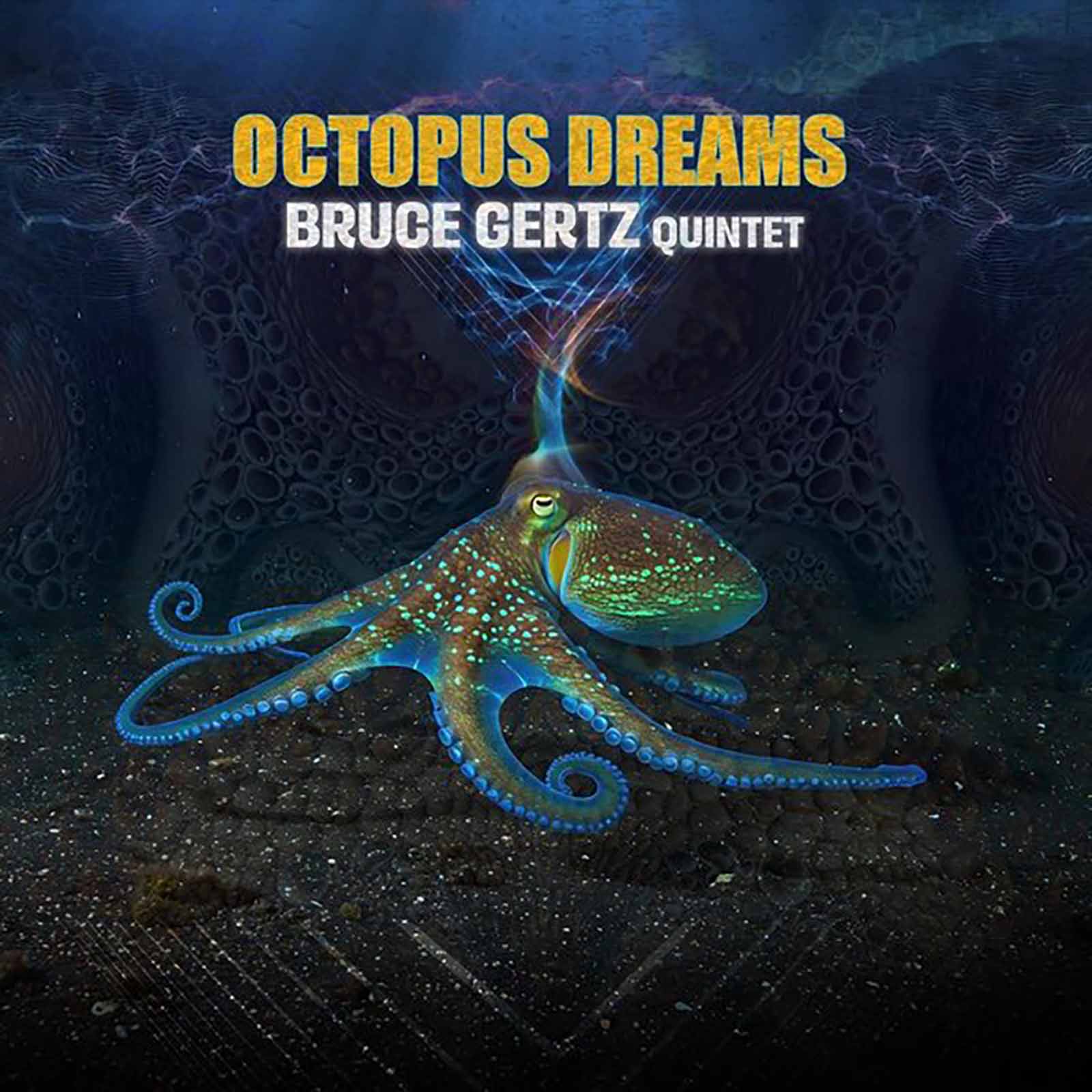
If one ever wondered what an octopus might dream about, Bruce Gertz and his quintet seem determined to offer an answer. An octopus, after all, is a creature of intelligence and reach, its tentacles extending simultaneously in many directions. Octopussy Dream behaves much the same way. It stretches backward into the golden age of the jazz club while remaining firmly anchored in the present, feeling its way through decades of influence with quiet assurance.
At its core, the album offers a form of jazz that is unmistakably classic, melodic, balanced, deeply rooted in swing and post-bop traditions, yet it never feels static or museum-bound. Instead, it invites the listener into a sonic space reminiscent of 1950s clubs, where intimacy mattered more than volume and where craftsmanship was its own form of seduction. In the midst of a festive season saturated with excess, this record feels like a welcome pause: reflective, generous, and deeply human.
There is something profoundly collective in the way this music resonates. It awakens fragments of shared cultural memory, scenes from old films, passages from books read too young, or perhaps just imagined, glimpses of eras never personally lived but somehow inherited. That sensation makes perfect sense when one looks at the life behind the music. Each morning in Melrose, Massachusetts, Bruce Gertz, internationally renowned bassist, composer, and jazz educator, brews a cup of coffee and sits at the grand piano in his living room. Surrounded by plants, by records that shaped him, and by the physical evidence of his own long career, he composes daily. No deadlines required. No grand occasion necessary. “Sometimes,” Gertz has said, “I only have a small idea, but it can become the seed of a beautiful composition.”
That philosophy runs like a quiet current throughout Octopussy Dream. The album is immediately accessible, yet beneath its apparent ease lies a network of remarkably intelligent arrangements and a deep trust among the musicians. This is not surprising from a man who teaches double bass at the Berklee College of Music and whose career includes collaborations with Gary Burton, Jerry Bergonzi, John Abercrombie, Kenny Werner, Mick Goodrick, Kurt Rosenwinkel, Billy Hart, Bill Frisell, George Cables, Tom Harrell, Joe Lovano, Dave Brubeck, Cab Calloway, Maynard Ferguson, and many others who collectively form a living archive of modern jazz.
What emerges here is not imitation but distillation. In an era when much contemporary jazz leans toward electronic textures, hybrid genres, or overt experimentation, Octopussy Dream quietly asserts another path: that classic jazz language still has unexplored depth when handled with imagination and restraint. The rhythmic section plays a crucial role, providing both grounding and elasticity, while each musician contributes propositions that feel personal rather than performative. The result is a sound that is neither retro nor revisionist, but confidently situated in the 21st century.
This sense of layered time becomes especially clear on the track “Redacted.” Almost without noticing, the listener is guided from past to present through subtle shifts in harmony and rhythm. Nothing announces itself loudly; instead, the music moves like memory itself, by association, by suggestion, by gentle accumulation. One moment you are hearing echoes of an earlier jazz vocabulary, the next you are firmly in the now, without ever feeling the seam.
And so, the octopus’s dream takes hold. Its tentacles wrap themselves around different decades, different listening habits, different emotional registers. In an age of playlists and distracted streaming, Octopussy Dream asks for something increasingly rare: that we sit down, listen carefully, and return again. When the album begins to loop on the CD player, or the turntable, or the digital queue, it signals that something essential has happened. Not a revelation shouted from the rooftops, but a quiet, enduring conversation. Which, in jazz as in dreams, is often the most lasting kind.
Thierry De Clemensat
Member at Jazz Journalists Association
USA correspondent for Paris-Move and ABS magazine
Editor in chief – Bayou Blue Radio, Bayou Blue News
PARIS-MOVE, December 23rd 2025
Follow PARIS-MOVE on X

::::::::::::::::::::::::
Musicians:
Bruce Gertz-Composer/Bass
Phil Grenadier-Trumpet, Flugelhorn
Rick DiMuzio-Tenor Saxophone
Gison Schachnik-Piano
Gary Fieldman-Drums