
| Blues |
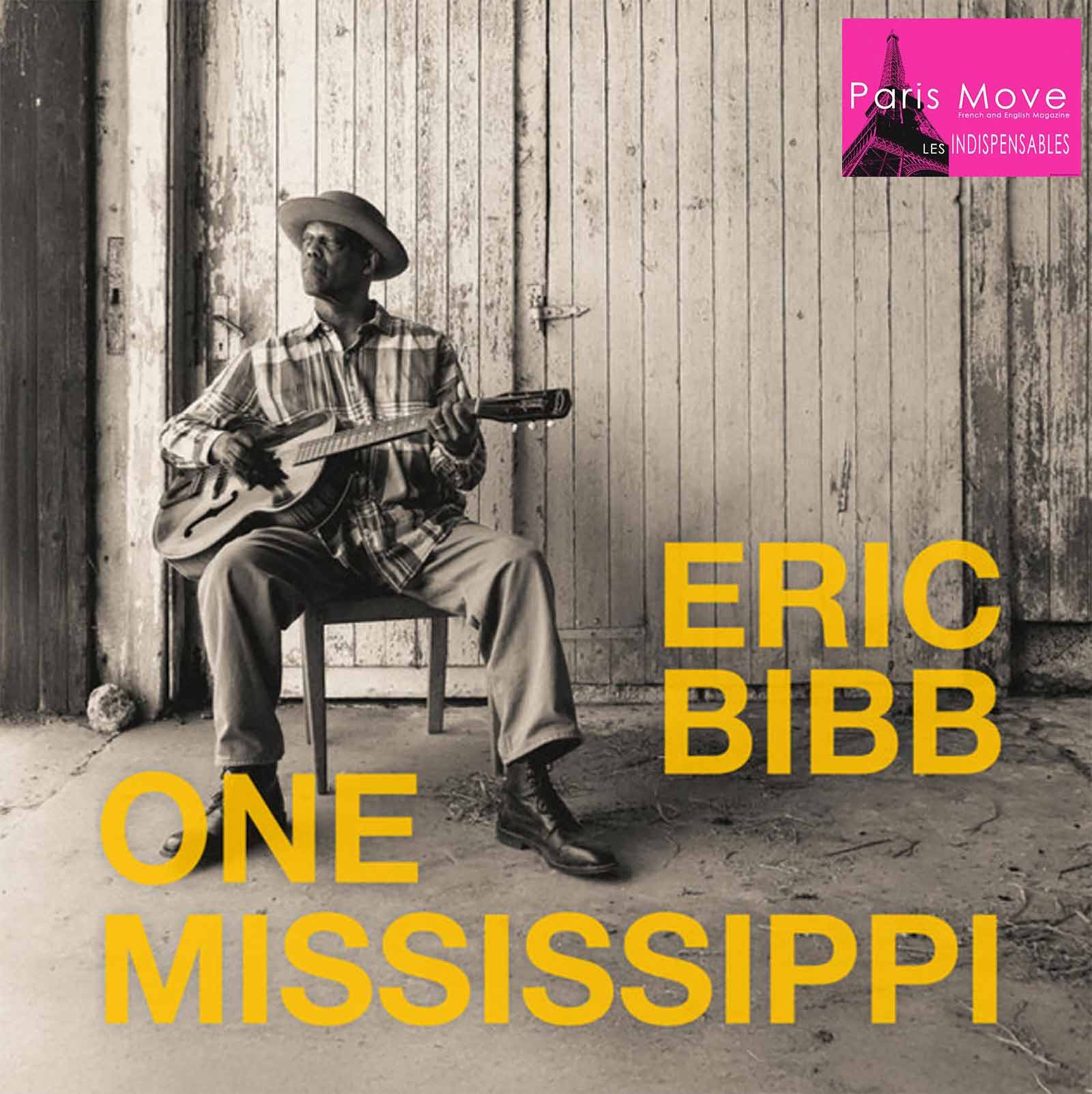
On a cold afternoon in Stockholm earlier this winter, the kind of northern light that dissolves into the studio windows like thin watercolor, Eric Bibb sat with his guitar, quietly adjusting a phrase that producer Glen Scott was still shaping at the console. It was one of those moments when time seems to fold inward, when an artist, years into a celebrated career, reaches for something both familiar and startlingly new. This was our first glimpse of One Mississippi, Bibb’s long-awaited return to the studio, scheduled for release on January 30. Even in that unfinished form, it was clear the album belonged to the small category of works that feel both rooted and revelatory. And soon, listeners of Bayou Blue Radio will be able to experience it as well.
Recorded in Sweden, One Mississippi brings together a remarkable ensemble: Robbie McIntosh on electric slide, dobro, and resonator guitars; Paul Jones on harmonica; Sven Lindvall on tuba; and Bibb himself on vocals and acoustic guitar. The chemistry is immediate, even palpable. “I’m thrilled to have Paul Jones and Robbie McIntosh by my side,” Bibb tells us. “‘Muddy Waters’ is one of my favorite tracks. Glen Scott’s production is a full-on masterclass in funk.” The album, he adds, is in many ways a love letter, addressed not only to the Mississippi River and its musical legacy, but also to the histories, injustices, and triumphs that run along its banks like geological strata.
Tracing Bibb’s artistic trajectory means acknowledging the lineage he carries. He grew up in a home where civic engagement was not a philosophical stance but a lived practice, his father marched alongside Dr. Martin Luther King Jr., a proximity to history that shaped Bibb’s worldview long before he found his own voice as a musician. You can hear that inheritance in his writing: the moral clarity, the sense of memory, the deliberate pacing of each lyric. His blues is modern, reflective, and weighted with intention. Each note feels like the afterimage of a meditation. Each phrase arrives as though sifted through years of life, thought, and observation.
Placed within today’s musical landscape, One Mississippi stands out because it doesn’t cling to a single identity. Though the blues forms its backbone, Bibb, like Keb’ Mo’, and like the generation of artists who see genre as a starting point rather than a boundary, moves between musical worlds with a quiet elegance. The album carries traces of folk’s open textures, jazz’s harmonic curiosity, funk’s syncopated urgency. Some passages feel so intuitively blended that one suspects there are influences embedded there that defy easy labeling.
What grounds the album, however, is its intimacy. On several tracks, Bibb offers a kind of quiet confession, as if speaking directly to the listener across a campfire or a kitchen table. In this sense, One Mississippi recalls the understated but meticulous productions of the late ’70s and early ’80s, albums built not to dazzle but to linger, with melodies sculpted with care and arrangements that are simple in structure yet striking in effect. There are no bombastic gestures here, no gratuitous ornamentation. The power lies in the clarity.
A closer listen reveals the album’s internal architecture. “Muddy Waters,” already mentioned by Bibb, stands as an anchor point, part homage, part reinvention. Another track, “Godown O’Hanna,” reaches deeper into his emotional reservoir: a cry from the heart, articulated through spare instrumentation and resonant vocal delivery. Throughout the album, one senses the artists who have shaped Bibb’s inner landscape: Dylan’s narrative precision, Baez’s moral insistence, Seeger’s activist tenderness, Odetta’s gravity, Richie Havens’s warmth, Taj Mahal’s elasticity. These influences do not appear as stylistic imitations but as echoes, woven into the fabric of his sound.
And yet the most striking achievement of One Mississippi may be its ability to inhabit multiple temporalities at once. It is an album that looks backward, to the Mississippi’s stories, to the blues masters who carried those stories in their voices, to Bibb’s own family history. But it also looks forward, insisting that the blues remains not an archive but a living art form, capable of absorbing and refracting the turbulence of our own era. In a time when cultural identities are increasingly fragmented, Bibb offers a rare sense of continuity.
Listening to the record several times, because this is not an album one absorbs in a single sitting, it becomes clear that its richness lies not only in its craftsmanship but also in its patience. Bibb does not rush. He invites the listener to slow down, to inhabit the music rather than merely consume it. It is, perhaps, the way one should always listen to blues, just as one listens to jazz or classical music: with attention, with depth, with the willingness to discover something new each time.
If there is a blues album to keep on your radar for 2026, One Mississippi may well be the one. It is an album of substance and spirit, shaped by history but unafraid of reinvention. And it reminds us, quietly, powerfully, why Eric Bibb remains one of the most resonant voices in contemporary American music.
Thierry De Clemensat
Member at Jazz Journalists Association
USA correspondent for Paris-Move and ABS magazine
Editor in chief – Bayou Blue Radio, Bayou Blue News
PARIS-MOVE, December 11th 2025
Follow PARIS-MOVE on X

::::::::::::::::::::::::
To buy this album (January 30, 2026)
Tracklist:
01 One Mississippi
02 Muddy Waters
03 This One Don’t
04 Didn’t I Keep Runnin’
05 Go Down Ol’ Hannah
06 It’s A Good Life
07 No Clothes On
08 Crossroads Marilyn Monroe
09 New Window
10 If You’re Free
11 Change
12 Waiting On The Sun
13 Show Your Love
14 We Got To Find A Way
Musician Credits:
Eric Bibb – Lead Vocals, Acoustic Guitar, Banjo, 6-String Banjo, 12-String Acoustic Guitar, Nylon-String Guitar.
Glen Scott – Drums, Percussion, Bass, Electric Guitar, Acoustic Guitar, Piano, Hammond Organ, Wurlitzer, Clavinet, Synths, MiniMoog, Melodica, Brass Programming, String Programming, Crowd, Backing Vocals.
Robbie McIntosh – Electric Guitar, Slide Guitar, Dobro, Resonator, Angelus Guitars, Electric Solo Guitar.
Esbjörn Hazelius – Fiddle, Octave Fiddle.
Zosha Warpeha – Hardanger Fiddle.
Staffan Astner – Additional Electric Rhythm Guitar.
Greger Andersson – Harmonica.
Paul Jones – Harmonica.
Sven Lindvall – Tuba.
Bendjii Allonce – Congas.
Sara Bergkvist Scott – Backing Vocals, Crowd, Handclaps.
Shaneeka Simon – Backing Vocals, Crowd, Handclaps.
Album Credits:
Produced, Arranged, Mixed & A&R: Glen Scott.
Executive Producer: Jesper Wikström.
Engineers: Glen Scott.
Additional Engineers: Robbie McIntosh, Esbjörn Hazelius, Staffan Astner, Zosha Warpeha, Chris McGreevy, Greger Andersson, Piers Mortimer @ Headline Studios.
Mastered by: Larry O’Malley – Audiobec Canada.
String Arrangements & Orchestration: Glen Scott.
Recorded & Mixed at: Hackspett Studios, Läby, Uppsala.
Label Management: SGO Music.
Product Management: Glen Scott, Sophia Ongley.
Artwork Photography: Jan Malmström.
Artwork Design: Jan Malmström.
Artist Management: R.A.M (Repute Artist Management).
Artist PA: Ulrika Bibb.
Videography: Jesper Wikström & Glen Scott – R.F.P (Repute Film Productions).
Lyric Videos: Shaye Smith – customlyricvideos.com.
Additional Photography & Videography: Ulrika Bibb, Daniel Eberhöfe (Blues Fever Festival, Vienna).
Publishers: IAX Music Publishing Ltd / SGO Music Publishing Ltd, BMG UK Ltd.